Kirjojen hintavertailu. Mukana 12 657 676 kirjaa ja 12 kauppaa.

Kirjailija

Orit Bashkin

Kirjat ja teokset yhdessä paikassa: 7 kirjaa, julkaisuja vuosilta 2008-2017, suosituimpien joukossa Impossible Exodus. Vertaile teosten hintoja ja tarkista saatavuus suomalaisista kirjakaupoista.

7 kirjaa

Kirjojen julkaisuhaarukka 2008-2017.

Impossible Exodus

Impossible Exodus

Orit Bashkin

Stanford University Press
2017
pokkari
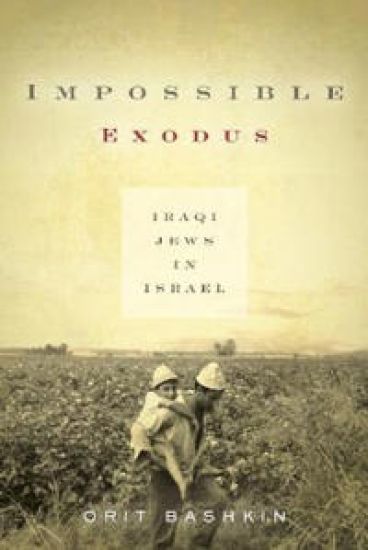
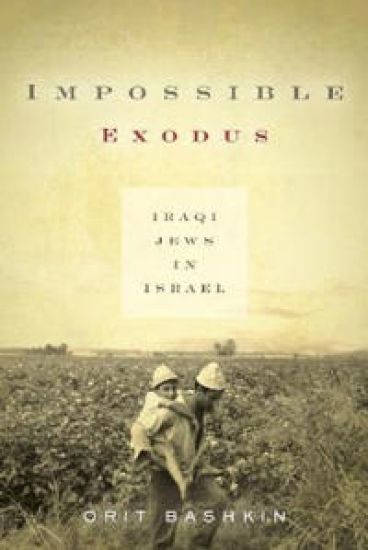
Between 1949 and 1951, 123,000 Iraqi Jews immigrated to the newly established Israeli state. Lacking the resources to absorb them all, the Israeli government resettled them in maabarot, or transit camps, relegating them to poverty. In the tents and shacks of the camps, their living conditions were squalid and unsanitary. Basic necessities like water were in short supply, when they were available at all. Rather than returning to a homeland as native sons, Iraqi Jews were newcomers in a foreign place. Impossible Exodus tells the story of these Iraqi Jews' first decades in Israel. Faced with ill treatment and discrimination from state officials, Iraqi Jews resisted: they joined Israeli political parties, demonstrated in the streets, and fought for the education of their children, leading a civil rights struggle whose legacy continues to influence contemporary debates in Israel. Orit Bashkin sheds light on their everyday lives and their determination in a new country, uncovering their long, painful transformation from Iraqi to Israeli. In doing so, she shares the resilience and humanity of a community whose story has yet to be told.
Impossible Exodus

Impossible Exodus

Orit Bashkin

Stanford University Press
2017
sidottu
Between 1949 and 1951, 123,000 Iraqi Jews immigrated to the newly established Israeli state. Lacking the resources to absorb them all, the Israeli government resettled them in maabarot, or transit camps, relegating them to poverty. In the tents and shacks of the camps, their living conditions were squalid and unsanitary. Basic necessities like water were in short supply, when they were available at all. Rather than returning to a homeland as native sons, Iraqi Jews were newcomers in a foreign place. Impossible Exodus tells the story of these Iraqi Jews' first decades in Israel. Faced with ill treatment and discrimination from state officials, Iraqi Jews resisted: they joined Israeli political parties, demonstrated in the streets, and fought for the education of their children, leading a civil rights struggle whose legacy continues to influence contemporary debates in Israel. Orit Bashkin sheds light on their everyday lives and their determination in a new country, uncovering their long, painful transformation from Iraqi to Israeli. In doing so, she shares the resilience and humanity of a community whose story has yet to be told.
Civilizing Emotions

Civilizing Emotions

Margrit Pernau; Helge Jordheim; Orit Bashkin; Christian Bailey; Oleg Benesch; Jan Ifversen; Mana Kia; Rochona Majumdar; Angelika C. Messner; Myoung-kyu Park; Emmanuelle Saada; Mohinder Singh; Einar Wigen

Oxford University Press
2015
sidottu
At the beginning of the twenty-first century, the vocabulary of civility and civilization is very much at the forefront of political debate. Most of these debates proceed as if the meaning of these words were self-evident. This is where Civilizing Emotions intervenes, tracing the history of the concepts of civility and civilization and thus adding a level of self-reflexivity to the present debates. Unlike previous histories, Civilizing Emotions takes a global perspective, highlighting the roles of civility and civilization in the creation of a new and hierarchized global order in the era of high imperialism and its entanglements with the developments in a number of well-chosen European and Asian countries. Emotions were at the core of the practices linked to the creation of a new global order in the nineteenth century. Civilizing Emotions explores why and how emotions were an asset in civilizing peoples and societies - their control and management, but also their creation and their ascription to different societies and social groups. The study is a contribution to the history of emotions, to global history, and to the history of concepts, three rapidly developing and innovative research areas which are here being brought together for the first time.
New Babylonians

New Babylonians

Orit Bashkin

Stanford University Press
2012
pokkari
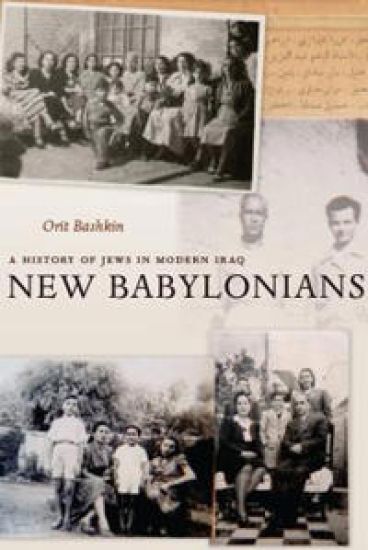
Although Iraqi Jews saw themselves as Iraqi patriots, their community—which had existed in Iraq for more than 2,500 years—was displaced following the establishment of the state of Israel. New Babylonians chronicles the lives of these Jews, their urban Arab culture, and their hopes for a democratic nation-state. It studies their ideas about Judaism, Islam, secularism, modernity, and reform, focusing on Iraqi Jews who internalized narratives of Arab and Iraqi nationalisms and on those who turned to communism in the 1940s. As the book reveals, the ultimate displacement of this community was not the result of a perpetual persecution on the part of their Iraqi compatriots, but rather the outcome of misguided state policies during the late 1940s and early 1950s. Sadly, from a dominant mood of coexistence, friendship, and partnership, the impossibility of Arab-Jewish coexistence became the prevailing narrative in the region—and the dominant narrative we have come to know today.
New Babylonians

New Babylonians

Orit Bashkin

Stanford University Press
2012
sidottu
Although Iraqi Jews saw themselves as Iraqi patriots, their community—which had existed in Iraq for more than 2,500 years—was displaced following the establishment of the state of Israel. New Babylonians chronicles the lives of these Jews, their urban Arab culture, and their hopes for a democratic nation-state. It studies their ideas about Judaism, Islam, secularism, modernity, and reform, focusing on Iraqi Jews who internalized narratives of Arab and Iraqi nationalisms and on those who turned to communism in the 1940s. As the book reveals, the ultimate displacement of this community was not the result of a perpetual persecution on the part of their Iraqi compatriots, but rather the outcome of misguided state policies during the late 1940s and early 1950s. Sadly, from a dominant mood of coexistence, friendship, and partnership, the impossibility of Arab-Jewish coexistence became the prevailing narrative in the region—and the dominant narrative we have come to know today.
The Other Iraq

The Other Iraq

Orit Bashkin

Stanford University Press
2010
pokkari
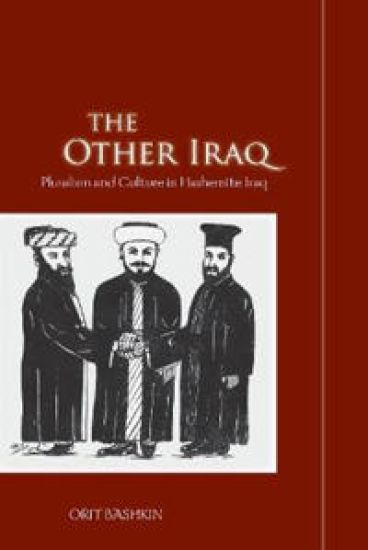
The Other Iraq challenges the notion that Iraq has always been a totalitarian, artificial state, torn by sectarian violence. Chronicling the rise of the Iraqi public sphere from 1921 to 1958, this enlightening work reveals that the Iraqi intellectual field was always more democratic and pluralistic than historians have tended to believe. Orit Bashkin demonstrates how Sunni, Shi'i, and Kurdish intellectuals effectively created hyphenated Iraqi identities, connoting pride in their individual heritages while simultaneously appropriating and integrating ideas and narratives of Arab and Iraqi nationalism. Illustrating three developmental stages of Iraqi intellectual history, she follows Iraqi intellectuals' changing roles, from agents of democracy, to specialists who analyze the population, to deeply entrenched members of society committed to change. Based on previously unexplored material, this eye-opening work has significant contemporary implications.
The Other Iraq

The Other Iraq

Orit Bashkin

Stanford University Press
2008
sidottu
The Other Iraq challenges the notion that Iraq has always been a totalitarian, artificial state, torn by sectarian violence. Chronicling the rise of the Iraqi public sphere from 1921 to 1958, this enlightening work reveals that the Iraqi intellectual field was always more democratic and pluralistic than historians have tended to believe. Orit Bashkin demonstrates how Sunni, Shi'i, and Kurdish intellectuals effectively created hyphenated Iraqi identities, connoting pride in their individual heritages while simultaneously appropriating and integrating ideas and narratives of Arab and Iraqi nationalism. Illustrating three developmental stages of Iraqi intellectual history, she follows Iraqi intellectuals' changing roles, from agents of democracy, to specialists who analyze the population, to deeply entrenched members of society committed to change. Based on previously unexplored material, this eye-opening work has significant contemporary implications.