Kirjojen hintavertailu. Mukana 12 595 353 kirjaa ja 12 kauppaa.

Kirjailija

Orrin H. Pilkey

Kirjat ja teokset yhdessä paikassa: 46 kirjaa, julkaisuja vuosilta 1984-2024, suosituimpien joukossa Vanishing Sands. Vertaile teosten hintoja ja tarkista saatavuus suomalaisista kirjakaupoista.

46 kirjaa

Kirjojen julkaisuhaarukka 1984-2024.

Living with the Alabama/Mississippi Shore

Living with the Alabama/Mississippi Shore

Wayne F. Canis; William J. Neal; Orrin H. Pilkey

Duke University Press
1985
sidottu
The Alabama-Mississippi shoreline along the Gulf of Mexico boasts some of the world's most beautiful beaches and balmiest climes. Ever-increasing numbers of retirees, recreation lovers, and industries with work forces are being attracted to the "Sun Belt." On a soft April day the Gulf's waters look as peaceful as a pond. Yet this same serene shoreline has been ravaged by seven major hurricanes during this century. Several years more than one fearful storm has come hurtling in during a single "season." Loss of life an property damage have been devastating. And newcomers seem almost unaware of the potential dangers.The authors of this book offer a vivid, historical overview for understanding the environment of the Alabama-Mississippi shore. They describe the risks faced by new residents, and they point the way toward safe and sane coastal development.
Living with the Louisiana Shore

Living with the Louisiana Shore

Joseph T. Kelley; Alice R. Kelley; Orrin H. Pilkey

Duke University Press
1984
sidottu
Nowhere in America is there a more beautiful, more varied, or more endangered shoreline than in Louisiana. Because of its setting at the mouth of the Mississippi River, Louisiana differs from other coastal states. In addition to long stretches of sandy beach there are 12,000 square miles of marsh along the coast. Although the state's shoreline has not yet experienced the urban sprawl of a New Jersey or Florida, two-thirds of all Louisianans now live within a two-hour drive of salt marsh. The oil industry is expanding and competing for space and resources. But the most striking feature of Louisiana's coastline is rapidly accelerating change, which means (1) some coastal parishes may literally disappear by the year 2000; (2) the loss of marshland will damage the prolific seafood industry; (3) a retreating coastline could cost the state hundreds of millions of dollars in tax revenues from offshore oil facilities; (4) present and potential shoreline residents will face many new problems and possibilities.
Living with the Louisiana Shore

Living with the Louisiana Shore

Joseph T. Kelley; Alice R. Kelley; Orrin H. Pilkey

Duke University Press
1984
pokkari
Nowhere in America is there a more beautiful, more varied, or more endangered shoreline than in Louisiana. Because of its setting at the mouth of the Mississippi River, Louisiana differs from other coastal states. In addition to long stretches of sandy beach there are 12,000 square miles of marsh along the coast. Although the state's shoreline has not yet experienced the urban sprawl of a New Jersey or Florida, two-thirds of all Louisianans now live within a two-hour drive of salt marsh. The oil industry is expanding and competing for space and resources. But the most striking feature of Louisiana's coastline is rapidly accelerating change, which means (1) some coastal parishes may literally disappear by the year 2000; (2) the loss of marshland will damage the prolific seafood industry; (3) a retreating coastline could cost the state hundreds of millions of dollars in tax revenues from offshore oil facilities; (4) present and potential shoreline residents will face many new problems and possibilities.
Living with Long Island's South Shore

Living with Long Island's South Shore

Larry McCormick; William J. Neal; Orrin H. Pilkey

Duke University Press
1984
sidottu
The south shore of Long Island, one of New York's greatest recreational assets, is receding at the rate of up to six feet per year. In many cases, efforts to halt this erosion actually have increased it. Buildings cone thought safely constructed back from high tidemarks today protrude far into the water.Even more, the number of homes an facilities built too close to the sea's edge has dramatically increased, making the south shore probably less ready to withstand a major storm than at the time of the cataclysmic hurricane of 1938.Thus, the question of what to do now to overcome and avoid these hazards takes on real urgency. Pointing to past mistakes, many Long Islanders insist that only by acting in an informed reasonable way can safe and environmentally sound development be possible for everyone.
Living with Long Island's South Shore

Living with Long Island's South Shore

Larry McCormick; William J. Neal; Orrin H. Pilkey

Duke University Press
1984
pokkari
The south shore of Long Island, one of New York's greatest recreational assets, is receding at the rate of up to six feet per year. In many cases, efforts to halt this erosion actually have increased it. Buildings cone thought safely constructed back from high tidemarks today protrude far into the water.Even more, the number of homes an facilities built too close to the sea's edge has dramatically increased, making the south shore probably less ready to withstand a major storm than at the time of the cataclysmic hurricane of 1938.Thus, the question of what to do now to overcome and avoid these hazards takes on real urgency. Pointing to past mistakes, many Long Islanders insist that only by acting in an informed reasonable way can safe and environmentally sound development be possible for everyone.
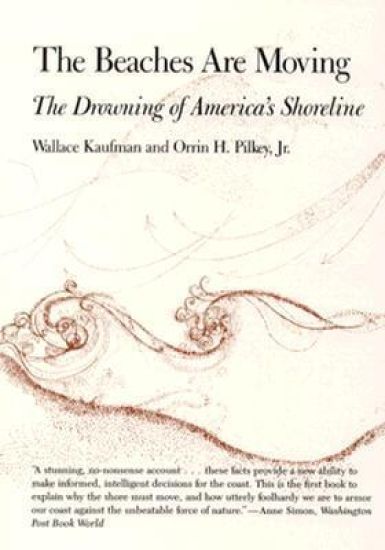
The Beaches Are Moving

The Beaches Are Moving

Wallace Kaufman; Orrin H. Pilkey

Duke University Press
1984
pokkari
Our beaches are eroding, sinking, washing out right under our houses, hotels, bridges; vacation dreamlands become nightmare scenes of futile revetments, fills, groins, what have you-all thrown up in a frantic defense against the natural system. The romantic desire to live on the seashore is in doomed conflict with an age-old pattern of beach migration. Yet it need not be so. Conservationist Wallace Kaufman teams up with marine geologist Orrin H. Pilkey Jr., in an evaluation of America's beaches from coast to coast, giving sound advice on how to judge a safe beach development from a dangerous one and how to live at the shore sensibly and safely.