Kirjojen hintavertailu. Mukana 12 295 057 kirjaa ja 12 kauppaa.

Kirjailija

Oscar Castillo

Kirjat ja teokset yhdessä paikassa: 41 kirjaa, julkaisuja vuosilta 2001-2025, suosituimpien joukossa Chemical Optimization Algorithm for Fuzzy Controller Design. Vertaile teosten hintoja ja tarkista saatavuus suomalaisista kirjakaupoista.

41 kirjaa

Kirjojen julkaisuhaarukka 2001-2025.

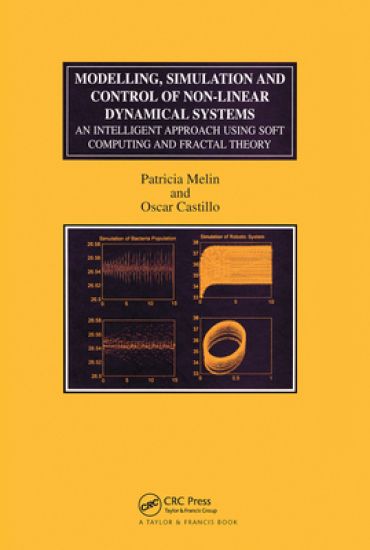
Modelling, Simulation and Control of Non-linear Dynamical Systems
These authors use soft computing techniques and fractal theory in this new approach to mathematical modeling, simulation and control of complexion-linear dynamical systems. First, a new fuzzy-fractal approach to automated mathematical modeling of non-linear dynamical systems is presented. It is illustrated with examples on the PROLOG programming language. Second, a new fuzzy-genetic approach to automated simulation of dynamical systems is presented. It is illustrated with examples in the MATLAB programming language. Third, a new method for model-based adaptive control using a neuro-fussy fractal approach is combined with the methods mentioned above. This method is illustrated with MATLAB. Finally, applications of these new methods are presented, in the areas such as biochemical processes, robotic systems, manufacturing, food industry and chemical processes.
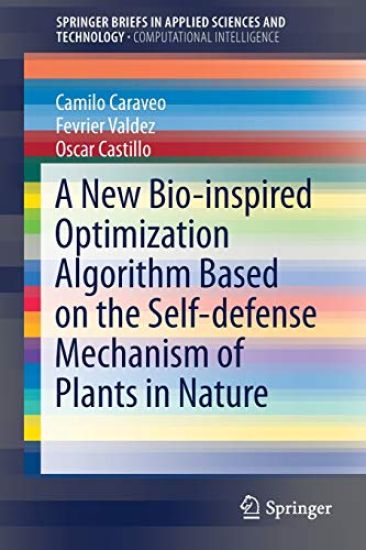
A New Bio-inspired Optimization Algorithm Based on the Self-defense Mechanism of Plants in Nature

A New Bio-inspired Optimization Algorithm Based on the Self-defense Mechanism of Plants in Nature

Camilo Caraveo; Fevrier Valdez; Oscar Castillo

Springer Nature Switzerland AG
2019
nidottu
This book presents a new meta-heuristic algorithm, inspired by the self-defense mechanisms of plants in nature. Numerous published works have demonstrated the various self-defense mechanisms (survival strategies) plants use to protect themselves against predatory organisms, such as herbivorous insects. The proposed algorithm is based on the predator–prey mathematical model originally proposed by Lotka and Volterra, consisting of two nonlinear first-order differential equations, which allow the growth of two interacting populations (prey and predator) to be modeled. The proposed meta-heuristic is able to produce excellent results in several sets of benchmark optimization problems. Further, fuzzy logic is used for dynamic parameter adaptation in the algorithm.
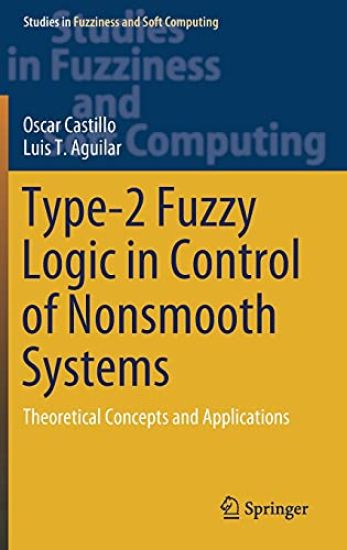
Type-2 Fuzzy Logic in Control of Nonsmooth Systems

Type-2 Fuzzy Logic in Control of Nonsmooth Systems

Oscar Castillo; Luis T. Aguilar

Springer Nature Switzerland AG
2018
sidottu
This book presents the synthesis and analysis of fuzzy controllers and its application to a class of mechanical systems. It mainly focuses on the use of type-2 fuzzy controllers to account for disturbances known as hard or nonsmooth nonlinearities. The book, which summarizes the authors’ research on type-2 fuzzy logic and control of mechanical systems, presents models, simulation and experiments towards the control of servomotors with dead-zone and Coulomb friction, and the control of both wheeled mobile robots and a biped robot. Closed-loop systems are analyzed in the framework of smooth and nonsmooth Lyapunov functions.
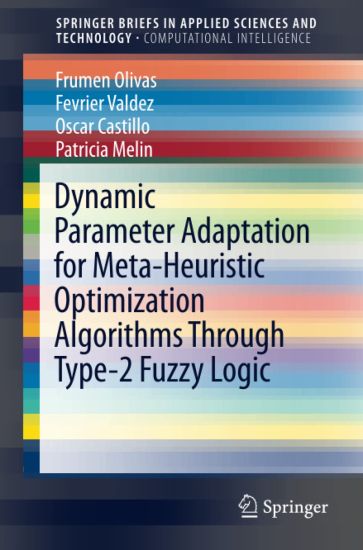
Dynamic Parameter Adaptation for Meta-Heuristic Optimization Algorithms Through Type-2 Fuzzy Logic

Dynamic Parameter Adaptation for Meta-Heuristic Optimization Algorithms Through Type-2 Fuzzy Logic

Frumen Olivas; Fevrier Valdez; Oscar Castillo; Patricia Melin

Springer International Publishing AG
2018
nidottu
In this book, a methodology for parameter adaptation in meta-heuristic op-timization methods is proposed. This methodology is based on using met-rics about the population of the meta-heuristic methods, to decide through a fuzzy inference system the best parameter values that were carefully se-lected to be adjusted. With this modification of parameters we want to find a better model of the behavior of the optimization method, because with the modification of parameters, these will affect directly the way in which the global or local search are performed.Three different optimization methods were used to verify the improve-ment of the proposed methodology. In this case the optimization methods are: PSO (Particle Swarm Optimization), ACO (Ant Colony Optimization) and GSA (Gravitational Search Algorithm), where some parameters are se-lected to be dynamically adjusted, and these parameters have the most im-pact in the behavior of each optimization method.Simulation results show that the proposed methodology helps to each optimization method in obtaining better results than the results obtained by the original method without parameter adjustment.
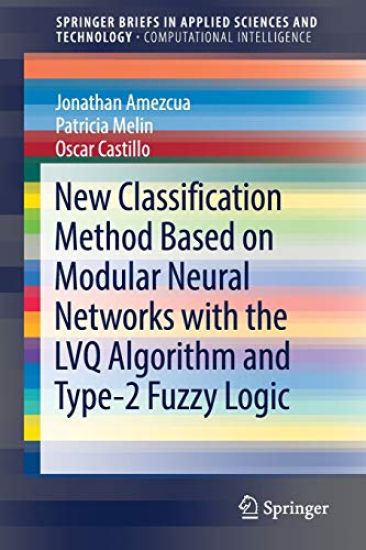
New Classification Method Based on Modular Neural Networks with the LVQ Algorithm and Type-2 Fuzzy Logic

New Classification Method Based on Modular Neural Networks with the LVQ Algorithm and Type-2 Fuzzy Logic

Jonathan Amezcua; Patricia Melin; Oscar Castillo

Springer International Publishing AG
2018
nidottu
In this book a new model for data classification was developed. This new model is based on the competitive neural network Learning Vector Quantization (LVQ) and type-2 fuzzy logic. This computational model consists of the hybridization of the aforementioned techniques, using a fuzzy logic system within the competitive layer of the LVQ network to determine the shortest distance between a centroid and an input vector. This new model is based on a modular LVQ architecture to further improve its performance on complex classification problems. It also implements a data-similarity process for preprocessing the datasets, in order to build dynamic architectures, having the classes with the highest degree of similarity in different modules. Some architectures were developed in order to work mainly with two datasets, an arrhythmia dataset (using ECG signals) for classifying 15 different types of arrhythmias, and a satellite images segments dataset used for classifying six different types ofsoil. Both datasets show interesting features that makes them interesting for testing new classification methods.
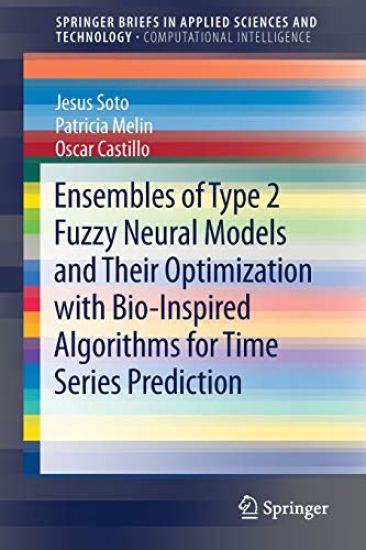
Ensembles of Type 2 Fuzzy Neural Models and Their Optimization with Bio-Inspired Algorithms for Time Series Prediction

Ensembles of Type 2 Fuzzy Neural Models and Their Optimization with Bio-Inspired Algorithms for Time Series Prediction

Jesus Soto; Patricia Melin; Oscar Castillo

Springer International Publishing AG
2017
nidottu
This book focuses on the fields of hybrid intelligent systems based on fuzzy systems, neural networks, bio-inspired algorithms and time series. This book describes the construction of ensembles of Interval Type-2 Fuzzy Neural Networks models and the optimization of their fuzzy integrators with bio-inspired algorithms for time series prediction. Interval type-2 and type-1 fuzzy systems are used to integrate the outputs of the Ensemble of Interval Type-2 Fuzzy Neural Network models. Genetic Algorithms and Particle Swarm Optimization are the Bio-Inspired algorithms used for the optimization of the fuzzy response integrators. The Mackey-Glass, Mexican Stock Exchange, Dow Jones and NASDAQ time series are used to test of performance of the proposed method. Prediction errors are evaluated by the following metrics: Mean Absolute Error, Mean Square Error, Root Mean Square Error, Mean Percentage Error and Mean Absolute Percentage Error. The proposed prediction model outperforms state of the art methods in predicting the particular time series considered in this work.
Optimization of Type-2 Fuzzy Controllers Using the Bee Colony Algorithm

Optimization of Type-2 Fuzzy Controllers Using the Bee Colony Algorithm

Leticia Amador; Oscar Castillo

Springer International Publishing AG
2017
nidottu
This book focuses on the fields of fuzzy logic, bio-inspired algorithm; especially bee colony optimization algorithm and also considering the fuzzy control area. The main idea is that this areas together can to solve various control problems and to find better results. In this book we test the proposed method using two benchmark problems; the problem for filling a water tank and the problem for controlling the trajectory in an autonomous mobile robot. When Interval Type-2 Fuzzy Logic System is implemented to model the behavior of systems, the results show a better stabilization, because the analysis of uncertainty is better. For this reason we consider in this book the proposed method using fuzzy systems, fuzzy controllers, and bee colony optimization algorithm improve the behavior of the complex control problems.
Edge Detection Methods Based on Generalized Type-2 Fuzzy Logic

Edge Detection Methods Based on Generalized Type-2 Fuzzy Logic

Claudia I. Gonzalez; Patricia Melin; Juan R. Castro; Oscar Castillo

Springer International Publishing AG
2017
nidottu
In this book four new methods are proposed. In the first method the generalized type-2 fuzzy logic is combined with the morphological gra-dient technique. The second method combines the general type-2 fuzzy systems (GT2 FSs) and the Sobel operator; in the third approach the me-thodology based on Sobel operator and GT2 FSs is improved to be applied on color images. In the fourth approach, we proposed a novel edge detec-tion method where, a digital image is converted a generalized type-2 fuzzy image. In this book it is also included a comparative study of type-1, inter-val type-2 and generalized type-2 fuzzy systems as tools to enhance edge detection in digital images when used in conjunction with the morphologi-cal gradient and the Sobel operator. The proposed generalized type-2 fuzzy edge detection methods were tested with benchmark images and synthetic images, in a grayscale and color format.Another contribution in this book is that the generalized type-2 fuzzy edge detector method is applied in the preprocessing phase of a face rec-ognition system; where the recognition system is based on a monolithic neural network. The aim of this part of the book is to show the advantage of using a generalized type-2 fuzzy edge detector in pattern recognition applications.The main goal of using generalized type-2 fuzzy logic in edge detec-tion applications is to provide them with the ability to handle uncertainty in processing real world images; otherwise, to demonstrate that a GT2 FS has a better performance than the edge detection methods based on type-1 and type-2 fuzzy logic systems.
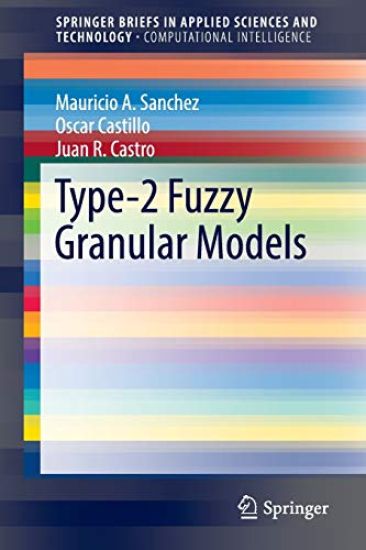
Type-2 Fuzzy Granular Models

Type-2 Fuzzy Granular Models

Mauricio A. Sanchez; Oscar Castillo; Juan R. Castro

Springer International Publishing AG
2016
nidottu
In this book, a series of granular algorithms are proposed. A nature inspired granular algorithm based on Newtonian gravitational forces is proposed. A series of methods for the formation of higher-type information granules represented by Interval Type-2 Fuzzy Sets are also shown, via multiple approaches, such as Coefficient of Variation, principle of justifiable granularity, uncertainty-based information concept, and numerical evidence based. And a fuzzy granular application comparison is given as to demonstrate the differences in how uncertainty affects the performance of fuzzy information granules.
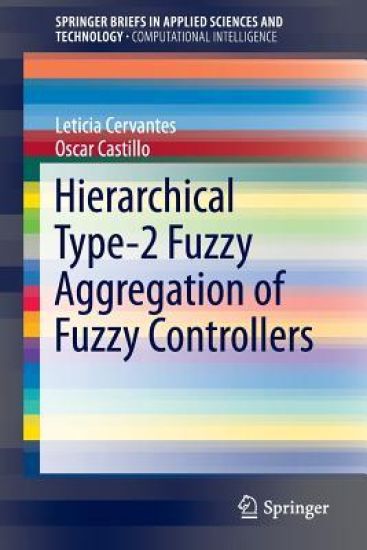
Hierarchical Type-2 Fuzzy Aggregation of Fuzzy Controllers

Hierarchical Type-2 Fuzzy Aggregation of Fuzzy Controllers

Leticia Cervantes; Oscar Castillo

Springer International Publishing AG
2015
nidottu
This book focuses on the fields of fuzzy logic, granular computing and also considering the control area. These areas can work together to solve various control problems, the idea is that this combination of areas would enable even more complex problem solving and better results. In this book we test the proposed method using two benchmark problems: the total flight control and the problem of water level control for a 3 tank system. When fuzzy logic is used it make it easy to performed the simulations, these fuzzy systems help to model the behavior of a real systems, using the fuzzy systems fuzzy rules are generated and with this can generate the behavior of any variable depending on the inputs and linguistic value. For this reason this work considers the proposed architecture using fuzzy systems and with this improve the behavior of the complex control problems.
Type-2 Fuzzy Logic in Intelligent Control Applications

Type-2 Fuzzy Logic in Intelligent Control Applications

Oscar Castillo

Springer-Verlag Berlin and Heidelberg GmbH Co. K
2013
nidottu
We describe in this book, hybrid intelligent systems based mainly on type-2 fuzzy logic for intelligent control. Hybrid intelligent systems combine several intelligent computing paradigms, including fuzzy logic, and bio-inspired optimization algorithms, which can be used to produce powerful automatic control systems. The book is organized in three main parts, which contain a group of chapters around a similar subject. The first part consists of chapters with the main theme of theory and design algorithms, which are basically chapters that propose new models and concepts, which can be the basis for achieving intelligent control with interval type-2 fuzzy logic. The second part of the book is comprised of chapters with the main theme of evolutionary optimization of type-2 fuzzy systems in intelligent control with the aim of designing optimal type-2 fuzzy controllers for complex control problems in diverse areas of application, including mobile robotics, aircraft dynamics systems and hardware implementations. The third part of the book is formed with chapters dealing with the theme of bio-inspired optimization of type-2 fuzzy systems in intelligent control, which includes the application of particle swarm intelligence and ant colony optimization algorithms for obtaining optimal type-2 fuzzy controllers.
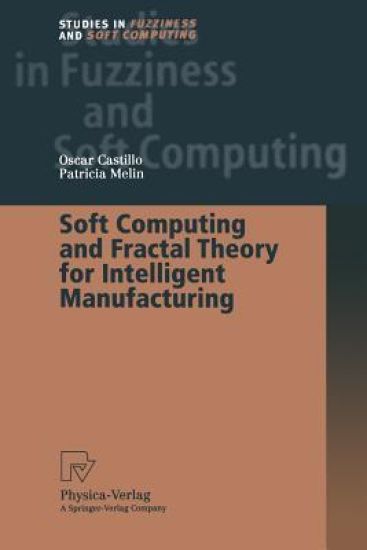
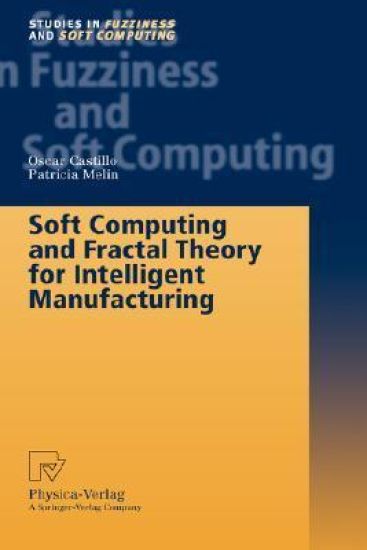
Soft Computing and Fractal Theory for Intelligent Manufacturing

Soft Computing and Fractal Theory for Intelligent Manufacturing

Oscar Castillo; Patricia Melin

Physica Verlag,Wien
2012
nidottu
We describe in this book, new methods for intelligent manufacturing using soft computing techniques and fractal theory. Soft Computing (SC) consists of several computing paradigms, including fuzzy logic, neural networks, and genetic algorithms, which can be used to produce powerful hybrid intelligent systems. Fractal theory provides us with the mathematical tools to understand the geometrical complexity of natural objects and can be used for identification and modeling purposes. Combining SC techniques with fractal theory, we can take advantage of the "intelligence" provided by the computer methods and also take advantage of the descriptive power of the fractal mathematical tools. Industrial manufacturing systems can be considered as non-linear dynamical systems, and as a consequence can have highly complex dynamic behaviors. For this reason, the need for computational intelligence in these manufacturing systems has now been well recognized.We consider in this book the concept of "intelligent manufacturing" as the application of soft computing techniques and fractal theory for achieving the goals of manufacturing, which are production planning and control, monitoring and diagnosis of faults, and automated quality control. As a prelude, we provide a brief overview of the existing methodologies in Soft Computing. We then describe our own approach in dealing with the problems in achieving intelligent manufacturing. Our particular point of view is that to really achieve intelligent manufacturing in real-world applications we need to use SC techniques and fractal theory.
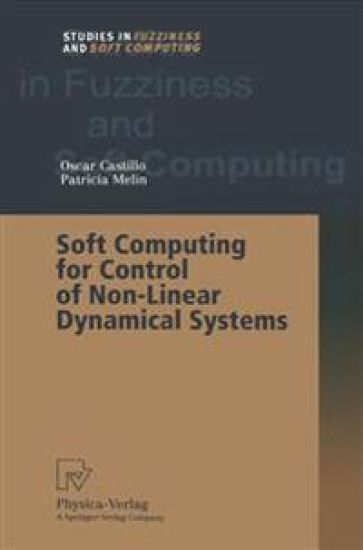
Soft Computing for Control of Non-Linear Dynamical Systems

Soft Computing for Control of Non-Linear Dynamical Systems

Oscar Castillo; Patricia Melin

Physica Verlag,Wien
2012
nidottu
This book presents a unified view of modelling, simulation, and control of non- linear dynamical systems using soft computing techniques and fractal theory. Our particular point of view is that modelling, simulation, and control are problems that cannot be considered apart, because they are intrinsically related in real world applications. Control of non-linear dynamical systems cannot be achieved if we don't have the appropriate model for the system. On the other hand, we know that complex non-linear dynamical systems can exhibit a wide range of dynamic behaviors ( ranging from simple periodic orbits to chaotic strange attractors), so the problem of simulation and behavior identification is a very important one. Also, we want to automate each of these tasks because in this way it is more easy to solve a particular problem. A real world problem may require that we use modelling, simulation, and control, to achieve the desired level of performance needed for the particular application.
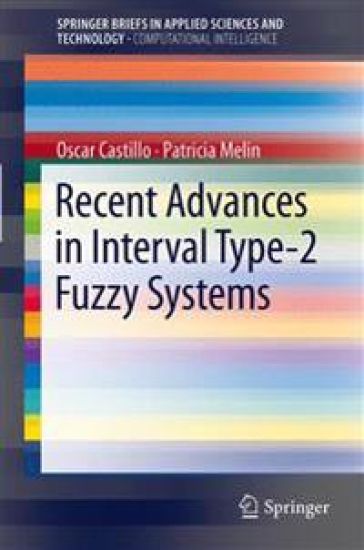
Recent Advances in Interval Type-2 Fuzzy Systems

Recent Advances in Interval Type-2 Fuzzy Systems

Oscar Castillo; Patricia Melin

Springer-Verlag Berlin and Heidelberg GmbH Co. K
2012
nidottu
This book reviews current state of the art methods for building intelligent systems using type-2 fuzzy logic and bio-inspired optimization techniques. Combining type-2 fuzzy logic with optimization algorithms, powerful hybrid intelligent systems have been built using the advantages that each technique offers. This book is intended to be a reference for scientists and engineers interested in applying type-2 fuzzy logic for solving problems in pattern recognition, intelligent control, intelligent manufacturing, robotics and automation. This book can also be used as a reference for graduate courses like the following: soft computing, intelligent pattern recognition, computer vision, applied artificial intelligence, and similar ones. We consider that this book can also be used to get novel ideas for new lines of re-search, or to continue the lines of research proposed by the authors.
Type-2 Fuzzy Logic in Intelligent Control Applications

Type-2 Fuzzy Logic in Intelligent Control Applications

Oscar Castillo

Springer-Verlag Berlin and Heidelberg GmbH Co. K
2011
sidottu
We describe in this book, hybrid intelligent systems based mainly on type-2 fuzzy logic for intelligent control. Hybrid intelligent systems combine several intelligent computing paradigms, including fuzzy logic, and bio-inspired optimization algorithms, which can be used to produce powerful automatic control systems. The book is organized in three main parts, which contain a group of chapters around a similar subject. The first part consists of chapters with the main theme of theory and design algorithms, which are basically chapters that propose new models and concepts, which can be the basis for achieving intelligent control with interval type-2 fuzzy logic. The second part of the book is comprised of chapters with the main theme of evolutionary optimization of type-2 fuzzy systems in intelligent control with the aim of designing optimal type-2 fuzzy controllers for complex control problems in diverse areas of application, including mobile robotics, aircraft dynamics systems and hardware implementations. The third part of the book is formed with chapters dealing with the theme of bio-inspired optimization of type-2 fuzzy systems in intelligent control, which includes the application of particle swarm intelligence and ant colony optimization algorithms for obtaining optimal type-2 fuzzy controllers.
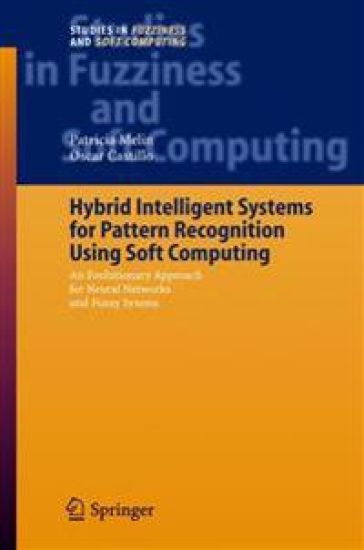
Hybrid Intelligent Systems for Pattern Recognition Using Soft Computing

Hybrid Intelligent Systems for Pattern Recognition Using Soft Computing

Patricia Melin; Oscar Castillo

Springer-Verlag Berlin and Heidelberg GmbH Co. K
2010
nidottu
This monograph describes new methods for intelligent pattern recognition using soft computing techniques including neural networks, fuzzy logic, and genetic algorithms. Hybrid intelligent systems that combine several soft computing techniques are needed due to the complexity of pattern recognition problems. Hybrid intelligent systems can have different architectures, which have an impact on the efficiency and accuracy of pattern recognition systems, to achieve the ultimate goal of pattern recognition. This book also shows results of the application of hybrid intelligent systems to real-world problems of face, fingerprint, and voice recognition. This monograph is intended to be a major reference for scientists and engineers applying new computational and mathematical tools to intelligent pattern recognition and can be also used as a textbook for graduate courses in soft computing, intelligent pattern recognition, computer vision, or applied artificial intelligence.
Type-2 Fuzzy Logic: Theory and Applications

Type-2 Fuzzy Logic: Theory and Applications

Oscar Castillo; Patricia Melin

Springer-Verlag Berlin and Heidelberg GmbH Co. K
2010
nidottu
We describe in this book, new methods for building intelligent systems using type-2 fuzzy logic and soft computing techniques. Soft Computing (SC) consists of several computing paradigms, including type-1 fuzzy logic, neural networks, and genetic algorithms, which can be used to create powerful hybrid intelligent systems. In this book, we are extending the use of fuzzy logic to a higher order, which is called type-2 fuzzy logic. Combining type-2 fuzzy logic with traditional SC techniques, we can build powerful hybrid intelligent systems that can use the advantages that each te- nique offers. We consider in this book the use of type-2 fuzzy logic and traditional SC techniques to solve pattern recognition problems in real-world applications. We c- sider in particular the problems of face, fingerprint and voice recognition. We also consider the problem of recognizing a person by integrating the information given by the face, fingerprint and voice of the person. Other types of applications solved with type-2 fuzzy logic and SC techniques, include intelligent control, intelligent manuf- turing, and adaptive noise cancellation. This book is intended to be a major reference for scientists and engineers interested in applying type-2 fuzzy logic for solving problems in pattern recognition, intelligent control, intelligent manufacturing, robotics and automation.
Type-2 Fuzzy Logic: Theory and Applications

Type-2 Fuzzy Logic: Theory and Applications

Oscar Castillo; Patricia Melin

Springer-Verlag Berlin and Heidelberg GmbH Co. K
2008
sidottu
We describe in this book, new methods for building intelligent systems using type-2 fuzzy logic and soft computing techniques. Soft Computing (SC) consists of several computing paradigms, including type-1 fuzzy logic, neural networks, and genetic algorithms, which can be used to create powerful hybrid intelligent systems. In this book, we are extending the use of fuzzy logic to a higher order, which is called type-2 fuzzy logic. Combining type-2 fuzzy logic with traditional SC techniques, we can build powerful hybrid intelligent systems that can use the advantages that each te- nique offers. We consider in this book the use of type-2 fuzzy logic and traditional SC techniques to solve pattern recognition problems in real-world applications. We c- sider in particular the problems of face, fingerprint and voice recognition. We also consider the problem of recognizing a person by integrating the information given by the face, fingerprint and voice of the person. Other types of applications solved with type-2 fuzzy logic and SC techniques, include intelligent control, intelligent manuf- turing, and adaptive noise cancellation. This book is intended to be a major reference for scientists and engineers interested in applying type-2 fuzzy logic for solving problems in pattern recognition, intelligent control, intelligent manufacturing, robotics and automation.
Hybrid Intelligent Systems for Pattern Recognition Using Soft Computing

Hybrid Intelligent Systems for Pattern Recognition Using Soft Computing

Patricia Melin; Oscar Castillo

Springer-Verlag Berlin and Heidelberg GmbH Co. K
2005
sidottu
This monograph describes new methods for intelligent pattern recognition using soft computing techniques including neural networks, fuzzy logic, and genetic algorithms. Hybrid intelligent systems that combine several soft computing techniques are needed due to the complexity of pattern recognition problems. Hybrid intelligent systems can have different architectures, which have an impact on the efficiency and accuracy of pattern recognition systems, to achieve the ultimate goal of pattern recognition. This book also shows results of the application of hybrid intelligent systems to real-world problems of face, fingerprint, and voice recognition. This monograph is intended to be a major reference for scientists and engineers applying new computational and mathematical tools to intelligent pattern recognition and can be also used as a textbook for graduate courses in soft computing, intelligent pattern recognition, computer vision, or applied artificial intelligence.
Soft Computing and Fractal Theory for Intelligent Manufacturing

Soft Computing and Fractal Theory for Intelligent Manufacturing

Oscar Castillo; Patricia Melin

Physica-Verlag GmbH Co
2003
sidottu
We describe in this book, new methods for intelligent manufacturing using soft computing techniques and fractal theory. Soft Computing (SC) consists of several computing paradigms, including fuzzy logic, neural networks, and genetic algorithms, which can be used to produce powerful hybrid intelligent systems. Fractal theory provides us with the mathematical tools to understand the geometrical complexity of natural objects and can be used for identification and modeling purposes. Combining SC techniques with fractal theory, we can take advantage of the "intelligence" provided by the computer methods and also take advantage of the descriptive power of the fractal mathematical tools. Industrial manufacturing systems can be considered as non-linear dynamical systems, and as a consequence can have highly complex dynamic behaviors. For this reason, the need for computational intelligence in these manufacturing systems has now been well recognized. We consider in this book the concept of "intelligent manufacturing" as the application of soft computing techniques and fractal theory for achieving the goals of manufacturing, which are production planning and control, monitoring and diagnosis of faults, and automated quality control. As a prelude, we provide a brief overview of the existing methodologies in Soft Computing. We then describe our own approach in dealing with the problems in achieving intelligent manufacturing. Our particular point of view is that to really achieve intelligent manufacturing in real-world applications we need to use SC techniques and fractal theory.