Kirjojen hintavertailu. Mukana 12 152 606 kirjaa ja 12 kauppaa.

Kirjailija

Oswald Campesato

Kirjat ja teokset yhdessä paikassa: 66 kirjaa, julkaisuja vuosilta 2011-2026, suosituimpien joukossa Python 3 Using DeepSeek. Vertaile teosten hintoja ja tarkista saatavuus suomalaisista kirjakaupoista.

66 kirjaa

Kirjojen julkaisuhaarukka 2011-2026.

Python 3 Using DeepSeek

Python 3 Using DeepSeek

Oswald Campesato

TAYLOR FRANCIS LTD
2026
sidottu
This book is your definitive guide to mastering DeepSeek, a leading open-source Large Language Model (LLM), and leveraging its power through practical Python programming. It is structured to build your expertise from foundational Python data structures and object-oriented programming to advanced model deployment. The initial chapters establish a strong technical base in Python's core features, including comprehensions, iterators, and the OOP paradigm. The focus then shifts entirely to DeepSeek, detailing its innovative Mixture-of-Experts (MoE) architecture, its superior performance on code-centric benchmarks like HumanEval, and its efficiency advantages. You will gain crucial insight into model management, specifically through the concept of quantization and local deployment with tools like Ollama, which is essential for maximizing performance while minimizing resource usage. The final chapter provides numerous, practical Python mini-projects, allowing you to immediately apply DeepSeek's capabilities to a range of real-world tasks from basic web scraping and data visualization to advanced object-oriented programming and linear regression. Python 3 Using DeepSeek is essential reading for Python developers (intermediate to advanced), machine learning practitioners, and data scientists. It is your guide to integrating high-performing, open-source LLMs into your workflows, particularly for code generation, algorithmic reasoning, and highly efficient local model deployment.
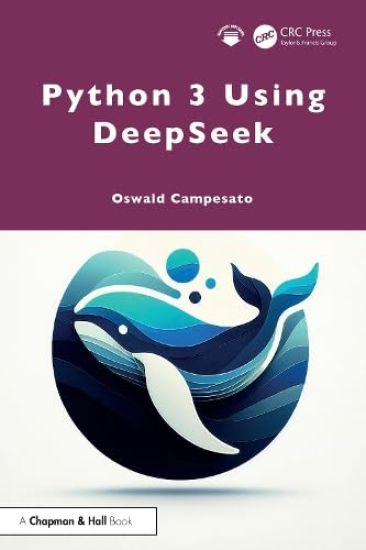
Python 3 Using DeepSeek

Python 3 Using DeepSeek

Oswald Campesato

TAYLOR FRANCIS LTD
2026
nidottu
This book is your definitive guide to mastering DeepSeek, a leading open-source Large Language Model (LLM), and leveraging its power through practical Python programming. It is structured to build your expertise from foundational Python data structures and object-oriented programming to advanced model deployment. The initial chapters establish a strong technical base in Python's core features, including comprehensions, iterators, and the OOP paradigm. The focus then shifts entirely to DeepSeek, detailing its innovative Mixture-of-Experts (MoE) architecture, its superior performance on code-centric benchmarks like HumanEval, and its efficiency advantages. You will gain crucial insight into model management, specifically through the concept of quantization and local deployment with tools like Ollama, which is essential for maximizing performance while minimizing resource usage. The final chapter provides numerous, practical Python mini-projects, allowing you to immediately apply DeepSeek's capabilities to a range of real-world tasks from basic web scraping and data visualization to advanced object-oriented programming and linear regression. Python 3 Using DeepSeek is essential reading for Python developers (intermediate to advanced), machine learning practitioners, and data scientists. It is your guide to integrating high-performing, open-source LLMs into your workflows, particularly for code generation, algorithmic reasoning, and highly efficient local model deployment.
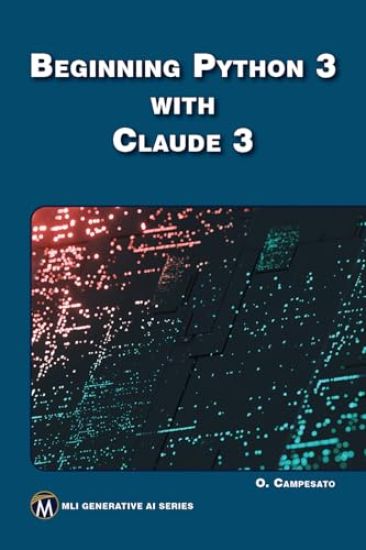
Beginning Python 3 with Claude 3

Beginning Python 3 with Claude 3

Oswald Campesato

De Gruyter
2025
isokokoinen pokkari
This book is a comprehensive guide designed to teach the fundamentals of Python programming while introducing the exciting possibilities of Generative AI. Whether you’re a novice or a developer looking to integrate Claude 3 into your workflow, this book offers a clear, step-by-step path to mastering Python and leveraging AI-driven code generation. It begins by covering Python fundamentals, including data types, string manipulation, loops, conditional logic, and exception handling. It then introduces Python collections, such as lists, dictionaries, and sets, along with their practical applications. Readers will explore essential Python libraries like NumPy and Pandas, learning how to manipulate data and perform advanced operations. The last two chapters cover Generative AI and Claude, distinguishing it from conversational AI and provides hands-on examples of Claude-generated Python code to solve various programming tasks. Readers will find a balanced mix of theory, practical examples, and Claude-generated code to build both foundational programming skills and an understanding of AI-driven development.FEATURES• Covers Python programming basics and popular libraries like NumPy and Pandas, with a focus on practical applications• Introduces Generative AI concepts and Claude, showcasing its use in generating Python code• Includes companion files with code and images -- available from the publisher for downloading (with proof of purchase)
Large Language Models for Developers

Large Language Models for Developers

Oswald Campesato

De Gruyter
2025
isokokoinen pokkari
This book offers a thorough exploration of Large Language Models (LLMs), guiding developers through the evolving landscape of generative AI and equipping them with the skills to utilize LLMs in practical applications. Designed for developers with a foundational understanding of machine learning, this book covers essential topics such as prompt engineering techniques, fine-tuning methods, attention mechanisms, and quantization strategies to optimize and deploy LLMs. Beginning with an introduction to generative AI, the book explains distinctions between conversational AI and generative models like GPT-4 and BERT, laying the groundwork for prompt engineering (Chapters 2 and 3). Some of the LLMs that are used for generating completions to prompts include Llama-3.1 405B, Llama 3, GPT-4o, Claude 3, Google Gemini, and Meta AI. Readers learn the art of creating effective prompts, covering advanced methods like Chain of Thought (CoT) and Tree of Thought prompts. As the book progresses, it details fine-tuning techniques (Chapters 5 and 6), demonstrating how to customize LLMs for specific tasks through methods like LoRA and QLoRA, and includes Python code samples for hands-on learning. Readers are also introduced to the transformer architecture’s attention mechanism (Chapter 8), with step-by-step guidance on implementing self-attention layers. For developers aiming to optimize LLM performance, the book concludes with quantization techniques (Chapters 9 and 10), exploring strategies like dynamic quantization and probabilistic quantization, which help reduce model size without sacrificing performance.FEATURES• Covers the full lifecycle of working with LLMs, from model selection to deployment• Includes code samples using practical Python code for implementing prompt engineering, fine-tuning, and quantization• Teaches readers to enhance model efficiency with advanced optimization techniques• Includes companion files with code and images -- available from the publisher
Beginning Python 3 with Grok 2

Beginning Python 3 with Grok 2

Oswald Campesato

De Gruyter
2025
isokokoinen pokkari
This book is a comprehensive guide designed to teach the fundamentals of Python programming while introducing the exciting possibilities of Generative AI. Whether you’re a novice or a developer looking to integrate Grok into your workflow, this book offers a clear, step-by-step path to mastering Python and leveraging AI-driven code generation. It begins by covering Python fundamentals, including data types, string manipulation, loops, conditional logic, and exception handling. It then introduces Python collections, such as lists, dictionaries, and sets, along with their practical applications. Readers will explore essential Python libraries like NumPy and Pandas, learning how to manipulate data and perform advanced operations. The last two chapters cover Generative AI and Grok, distinguishing it from conversational AI and provides hands-on examples of Grok-generated Python code to solve various programming tasks. Readers will find a balanced mix of theory, practical examples, and Grok-generated code to build both foundational programming skills and an understanding of AI-driven development.FEATURES• Covers Python programming basics and popular libraries like NumPy and Pandas, with a focus on practical applications• Introduces Generative AI concepts and Grok, showcasing its use in generating Python code• Includes companion files with code and images -- available from the publisher for downloading (with proof of purchase)
CSS3 and SVG with Meta AI

CSS3 and SVG with Meta AI

OSWALD CAMPESATO

De Gruyter
2024
isokokoinen pokkari
This book provides an introduction to generative AI and how to use Meta AI to generate graphics code using various combinations of HTML, CSS3, and SVG. It covers various aspects of modern web development and AI technologies, with a particular emphasis on Generative AI, CSS3, SVG, JavaScript, HTML, and popular web features like 3D animations and gradients. By exploring these topics, readers will gain a deeper understanding of how AI can enhance web development processes and how to leverage AI models like Meta AI to streamline development workflows. Web developers, UI/UX designers, and software engineers seeking to blend traditional web development skills with the latest AI technologies will find this book to be a valuable resource.
CSS3 and SVG with Perplexity

CSS3 and SVG with Perplexity

Oswald Campesato

De Gruyter
2024
isokokoinen pokkari
This book provides an introduction to generative AI and how to use Perplexity to generate graphics code using various combinations of HTML, CSS3, and SVG. It covers various aspects of modern web development and AI technologies, with a particular emphasis on Generative AI, CSS3, SVG, JavaScript, HTML, and popular web features like 3D animations and gradients. By exploring these topics, readers will gain a deeper understanding of how AI can enhance web development processes and how to leverage AI models like Perplexity to streamline development workflows. Web developers, UI/UX designers, and software engineers seeking to blend traditional web development skills with the latest AI technologies will find this book to be a valuable resource.
Large Language Models

Large Language Models

Oswald Campesato

De Gruyter
2024
isokokoinen pokkari
This book begins with an overview of the Generative AI landscape, distinguishing it from conversational AI and shedding light on the roles of key players like DeepMind and OpenAI. It then reviews the intricacies of ChatGPT, GPT-4, and Gemini, examining their capabilities, strengths, and competitors. Readers will also gain insights into the BERT family of LLMs, including ALBERT, DistilBERT, and XLNet, and how these models have revolutionized natural language processing. Further, the book covers prompt engineering techniques, essential for optimizing the outputs of AI models, and addresses the challenges of working with LLMs, including the phenomenon of hallucinations and the nuances of fine-tuning these advanced models. Designed for software developers, AI researchers, and technology enthusiasts with a foundational understanding of AI, this book offers both theoretical insights and practical code examples in Python. Companion files with code, figures, and datasets are available for downloading from the publisher.
CSS3 and SVG with Claude 3

CSS3 and SVG with Claude 3

Oswald Campesato

De Gruyter
2024
isokokoinen pokkari
This book explores the synergy between Claude3, a cutting-edge AI model, and Web technologies such as HTML, CSS3, and SVG, providing both novices and experienced developers with the tools to create visually stunning Web graphics and animations. It introduces the fundamental concepts of Generative AI, the key players in the field, and the distinctive features of Claude3, while also mastering the art of prompt engineering to interact effectively with AI models. The book covers creating dynamic 3D animations with CSS3, including effects like glowing, image fading, and rotating, and demonstrates how to leverage Claude3 to generate sophisticated SVG graphics and animations, thereby enhancing Web designs with advanced visual effects. FEATURES Covers generative AI fundamentals to advanced CSS3 and SVG techniques, offering comprehensive material on modern web development technologiesFeatures both manually created and AI generated code samples, security issues, crafting prompts, and accessibility needsBalances theoretical knowledge and practical examples, so readers gain hands-on experience in implementing AI-driven design solutions using Claude-generated codeIncludes companion files with code, datasets, and images from the book -- available from the publisher for downloading (with proof of purchase) TABLE OF CONTENTS1: The Generative AI Landscape. 2: Prompt Engineering. 3: Introduction to CSS3. 4: CSS3 3D Animation.5: CSS3 and Claude 3. 6: Introduction to SVG. 7: SVG and Claude 3. Index.
CSS3 and SVG with Gemini

CSS3 and SVG with Gemini

Oswald Campesato

De Gruyter
2024
isokokoinen pokkari
This book is designed to equip you with the knowledge and skills necessary to navigate the intersection of web development and artificial intelligence (AI). It covers various aspects of modern web development and AI technologies, with a particular emphasis on Generative AI, CSS3, SVG, JavaScript, HTML, and popular web features like 3D animations and gradients. By exploring these topics, readers will gain a deeper understanding of how AI can enhance web development processes and how to leverage AI models like Google Gemini to streamline development workflows. Web developers, UI/UX designers, and software engineers seeking to blend traditional web development skills with the latest AI technologies will find this book to be a valuable resource.
CSS3 and SVG with GPT-4

CSS3 and SVG with GPT-4

Oswald Campesato

De Gruyter
2024
isokokoinen pokkari
This book is designed to equip you with the knowledge and skills necessary to navigate the intersection of web development and artificial intelligence (AI). It covers various aspects of modern web development and AI technologies, with a particular emphasis on Generative AI, CSS3, SVG, JavaScript, HTML, and popular web features like 3D animations and gradients. By exploring these topics, readers will gain a deeper understanding of how AI can enhance web development processes and how to leverage AI models like GPT-4 to streamline development workflows. Web developers, UI/UX designers, and software engineers seeking to blend traditional web development skills with the latest AI technologies will find this book to be a valuable resource.
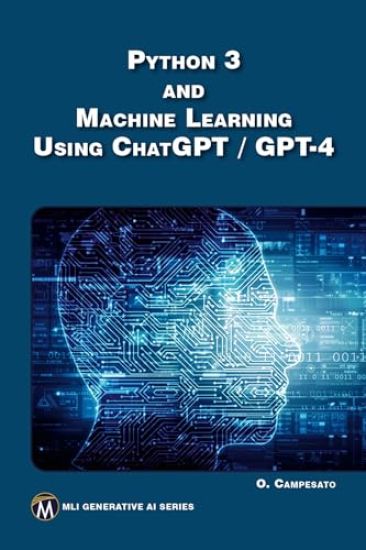
Python 3 and Machine Learning Using ChatGPT/GPT-4

Python 3 and Machine Learning Using ChatGPT/GPT-4

Oswald Campesato

De Gruyter
2024
isokokoinen pokkari
This book is designed to bridge the gap between theoretical knowledge and practical application in the fields of Python programming, machine learning, and the innovative use of ChatGPT-4 in data science. The book is structured to facilitate a deep understanding of several core topics. It begins with a detailed introduction to Pandas, a cornerstone Python library for data manipulation and analysis. Next, it explores a variety of machine learning classifiers from kNN to SVMs. In later chapters, it discusses the capabilities of GPT-4, and how its application enhances traditional linear regression analysis. Finally, the book covers the innovative use of ChatGPT in data visualization. This segment focuses on how AI can transform data into compelling visual stories, making complex results accessible and understandable. It includes material on AI apps, GANs, and DALL-E. Companion files are available for downloading with code and figures from the text.
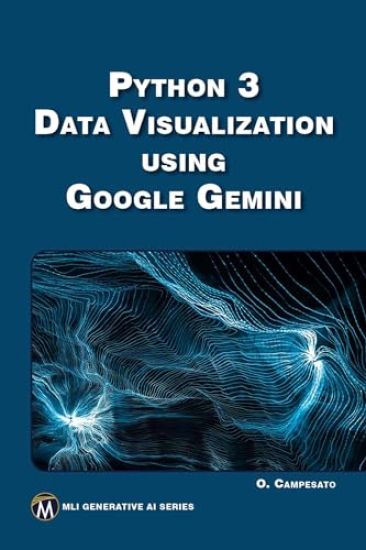
Python 3 Data Visualization Using Google Gemini

Python 3 Data Visualization Using Google Gemini

Oswald Campesato

De Gruyter
2024
isokokoinen pokkari
This book offers a comprehensive guide to leveraging Python-based data visualization techniques with the innovative capabilities of Google Gemini. Tailored for individuals proficient in Python seeking to enhance their visualization skills, it explores essential libraries like Pandas, Matplotlib, and Seaborn, along with insights into the innovative Gemini platform. With a focus on practicality and efficiency, it delivers a rapid yet thorough exploration of data visualization methodologies, supported by Gemini-generated code samples. Companion files with source code and figures are available for downloading.FEATURES: Covers Python-based data visualization libraries and techniques Includes practical examples and Gemini-generated code samples for efficient learning Integrates Google Gemini for advanced data visualization capabilities Sets up a conducive development environment for a seamless coding experience Includes companion files for downloading with source code and figures
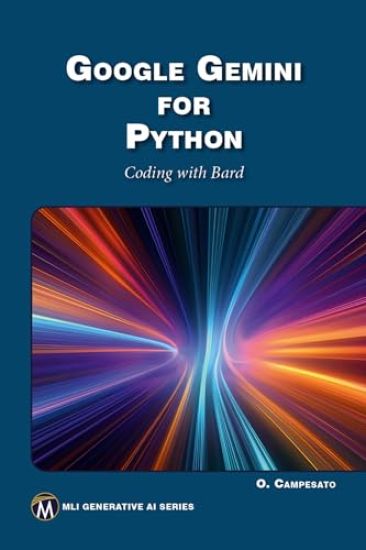
Google Gemini for Python

Google Gemini for Python

Oswald Campesato

De Gruyter
2024
isokokoinen pokkari
This book provides a bridge between the worlds of Python 3 programming and Generative AI, aiming to equip readers with the skills to navigate both domains with confidence. It begins with an introduction to fundamental aspects of Python programming, which include various data types, number formatting, Unicode and UTF-8 handling, and text manipulation techniques. In addition, you will learn about loops, functions, data structures, NumPy, Pandas, conditional logic, and reserved words in Python. Further chapters show how to handle user input, manage exceptions, and work with command-line arguments. The text then transitions to the realm of Generative AI, discussing its distinction from Conversational AI. Popular platforms and models, including Bard (now called “Gemini”) and its competitors, are presented to give readers an understanding of the current AI landscape. The book discusses the capabilities of Bard, its strengths, weaknesses, and potential applications. Finally, you will learn how to generate a variety of Python 3 code samples via Bard.
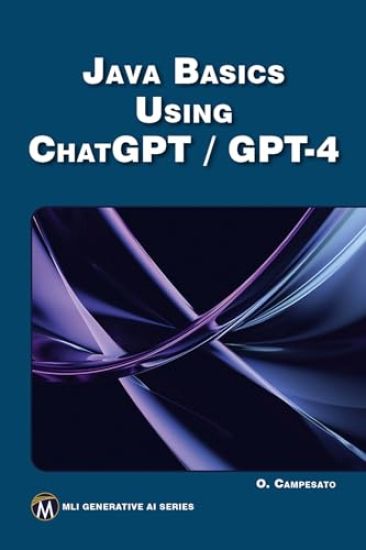
JAVA Basics Using ChatGPT/GPT-4

JAVA Basics Using ChatGPT/GPT-4

Oswald Campesato

De Gruyter
2024
isokokoinen pokkari
Encourages readers to compare and contrast hand-written code with ChatGPT-generated code. This approach fosters discussions on code efficiency, readability, and maintainability, enhancing understanding of programming paradigms and techniques. This book is designed for those new to Java and interested in understanding how ChatGPT/GPT-4 can enhance programming. It offers a unique approach to learning Java, combining traditional hand-written code with cutting-edge ChatGPT-generated examples. The book covers the basics of Java programming and development environments, including understanding recursion, strings, arrays, fundamental data structures, algorithm analysis, queues and stacks, and follows with the role of ChatGPT in generating, explaining, and debugging code. Companion files with source code and figures available for downloading. It’s an essential resource for those starting Java programming and for anyone curious about the applications of ChatGPT in coding.
GPT-4 for Developers

GPT-4 for Developers

Oswald Campesato

De Gruyter
2024
isokokoinen pokkari
Extensive Python 3.x code samples generated using ChatGPT and GPT-4, covering diverse programming tasks and challenges. Comprehensive exploration of data visualization techniques using popular Python libraries such as Matplotlib and Seaborn. This resource is designed to bridge the gap between theoretical understanding and practical application, making it a useful tool for software developers, data scientists, AI researchers, and tech enthusiasts interested in harnessing the power of GPT-4 in Python environments. The book contains an assortment of Python 3.x code samples that were generated by ChatGPT and GPT-4. Chapter 1 provides an overview of ChatGPT and GPT-4, followed by a chapter which contains Python 3.x code samples for solving various programming tasks in Python. Chapter 3 contains code samples for data visualization, and Chapter 4 contains code samples for linear regression. The final chapter covers visualization with Gen AI (Generative AI) and DALL-E. Companion files with source code and figures are available for downloading.
Python 3 using ChatGPT/GPT-4

Python 3 using ChatGPT/GPT-4

Oswald Campesato

De Gruyter
2024
isokokoinen pokkari
This book is intended primarily for people who want to learn both Python 3 and how to use ChatGPT with Python. Chapter One begins with an introduction to fundamental aspects of Python programming, including various data types, number formatting, Unicode and UTF-8 handling, and text manipulation techniques. Later, the book covers loops, conditional logic, and reserved words in Python. You will also see how to handle user input, manage exceptions, and work with command-line arguments. Next, the text transitions to the realm of Generative AI, discussing its distinction from Conversational AI. Popular platforms and models, including ChatGPT, GPT-4, and their competitors, are presented to give readers an understanding of the current AI landscape. The book also sheds light on the capabilities of ChatGPT, its strengths, weaknesses, and potential applications. In addition, you will learn how to generate a variety of Python 3 code samples via ChatGPT using the “Code Interpreter” plugin. Code samples and figures from the book are available for downloading. In essence, the book provides a modest bridge between the worlds of Python programming and AI, aiming to equip readers with the knowledge and skills to navigate both domains confidently.
Transformer, BERT, and GPT

Transformer, BERT, and GPT

Oswald Campesato

Mercury Learning Information
2023
isokokoinen pokkari
This book provides a comprehensive group of topics covering the details of the Transformer architecture, BERT models, and the GPT series, including GPT-3 and GPT-4. Spanning across ten chapters, it begins with foundational concepts such as the attention mechanism, then tokenization techniques, explores the nuances of Transformer and BERT architectures, and culminates in advanced topics related to the latest in the GPT series, including ChatGPT. Key chapters provide insights into the evolution and significance of attention in deep learning, the intricacies of the Transformer architecture, a two-part exploration of the BERT family, and hands-on guidance on working with GPT-3. The concluding chapters present an overview of ChatGPT, GPT-4, and visualization using generative AI. In addition to the primary topics, the book also covers influential AI organizations such as DeepMind, OpenAI, Cohere, Hugging Face, and more. Readers will gain a comprehensive understanding of the current landscape of NLP models, their underlying architectures, and practical applications. Features companion files with numerous code samples and figures from the book.
Python 3 and Data Visualization Using ChatGPT /GPT-4

Python 3 and Data Visualization Using ChatGPT /GPT-4

Oswald Campesato

De Gruyter
2023
isokokoinen pokkari
This book is designed to show readers the concepts of Python 3 programming and the art of data visualization. It also explores cutting-edge techniques using ChatGPT/GPT-4 in harmony with Python for generating visuals that tell more compelling data stories. Chapter 1 introduces the essentials of Python, covering a vast array of topics from basic data types, loops, and functions to more advanced constructs like dictionaries, sets, and matrices. In Chapter 2, the focus shifts to NumPy and its powerful array operations, leading into data visualization using prominent libraries such as Matplotlib. Chapter 6 includes Seaborn's rich visualization tools, offering insights into datasets like Iris and Titanic. Further, the book covers other visualization tools and techniques, including SVG graphics, D3 for dynamic visualizations, and more. Chapter 7 covers information about the main features of ChatGPT and GPT-4, as well as some of their competitors. Chapter 8 contains examples of using ChatGPT in order to perform data visualization, such as charts and graphs that are based on datasets (e.g., the Titanic dataset). Companion files with code, datasets, and figures are available for downloading. From foundational Python concepts to the intricacies of data visualization, this book is ideal for Python practitioners, data scientists, and anyone in the field of data analytics looking to enhance their storytelling with data through visuals. It's also perfect for educators seeking material for teaching advanced data visualization techniques.
Statistics Using Python

Statistics Using Python

Oswald Campesato

Mercury Learning Information
2023
isokokoinen pokkari
This book is designed to offer a fast-paced yet thorough introduction to essential statistical concepts using Python code samples, and aims to assist data scientists in their daily endeavors. The ability to extract meaningful insights from data requires a deep understanding of statistics. The book ensures that each topic is introduced with clarity, followed by executable Python code samples that can be modified and applied according to individual needs. Topics include working with data and exploratory analysis, the basics of probability, descriptive and inferential statistics and their applications, metrics for data analysis, probability distributions, hypothesis testing, and more. Appendices on Python and Pandas have been included. From foundational Python concepts to the intricacies of statistics, this book serves as a comprehensive resource for both beginners and seasoned professionals.