Kirjojen hintavertailu. Mukana 12 312 990 kirjaa ja 12 kauppaa.

Kirjailija

Owen Davies

Kirjat ja teokset yhdessä paikassa: 28 kirjaa, julkaisuja vuosilta 1999-2026, suosituimpien joukossa Folklore. Vertaile teosten hintoja ja tarkista saatavuus suomalaisista kirjakaupoista.

28 kirjaa

Kirjojen julkaisuhaarukka 1999-2026.

Folklore

Folklore

Owen Davies; Ceri Houlbrook

MANCHESTER UNIVERSITY PRESS
2026
nidottu
A gripping guide to the weird yet everyday world of British folklore. In this unique, deeply researched book, two leading experts provide the definitive guide to British folklore past and present. Owen Davies and Ceri Houlbrook explore folklore in all its remarkable variations, from village rituals and fairy tales to UFO legends and internet fanfiction. Travelling through a landscape of witches, wizards and wicker men, they reveal how folklore has been researched and written about in the past and show how it continues to be lived in the present. At the same time, they provide the reader with a valuable toolkit for understanding how to interpret the diverse examples given. The book’s key message is that folklore is much more than the fossilised remains of a distant, rural past. Folklore is and always has been ubiquitous, dynamic and political. It is a living tradition that draws from many sources, including migrant communities, and is forever being renewed and updated.
Witchcraft, Magic and Culture 1736–1951

Witchcraft, Magic and Culture 1736–1951

Owen Davies

MANCHESTER UNIVERSITY PRESS
2025
nidottu
This classic study remains the definitive account of witchcraft and magic in the centuries following the witch trials.The Witchcraft Act of 1736 brought an end to witch trials in Britain. But just because the law had changed didn’t mean people had stopped believing. Fear of witches and faith in magic persisted, and people suspected of witchcraft continued to appear in court until the early twentieth century, though by then it was their persecutors who were being put on trial.In this book, Owen Davies traces the history of witches and magic in Britain from 1736 to 1951, when the Fraudulent Mediums Act finally erased the concept of witchcraft from the statute books. He reveals the grip that the supernatural continued to exert on the people of England and Wales in a period when the forces of progress were thought to have vanquished such beliefs.Exploring how the population coped with the threat of witches once there was no longer any legal redress, and how accusations of witchcraft took shape during the eighteenth and nineteenth centuries, Davies provides a fascinating glimpse into a lingering world of supernatural belief.
Folklore

Folklore

Owen Davies; Ceri Houlbrook

MANCHESTER UNIVERSITY PRESS
2025
sidottu
A gripping guide to the weird yet everyday world of British folklore.In this ground-breaking book, two leading experts provide the definitive guide to British folklore past and present.Owen Davies and Ceri Houlbrook explore folklore in all its remarkable variations, from village rituals and fairy tales to UFO legends and internet fanfiction. Travelling through a landscape of witches, wizards and wicker men, they reveal how folklore has been researched and written about in the past and show how it continues to be lived in the present. At the same time, they provide the reader with a valuable toolkit for understanding how to interpret the diverse examples given.The book’s key message is that folklore is much more than the fossilised remains of a distant, rural past. Folklore is and always has been ubiquitous, dynamic and political. It is a living tradition that draws from many sources, including migrant communities, and is forever being renewed and updated.
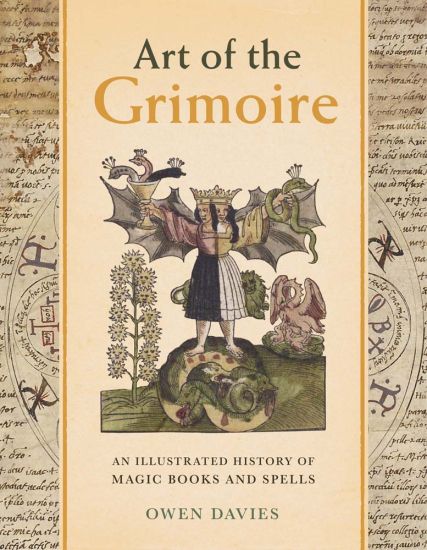
Art of the Grimoire

Art of the Grimoire

Owen Davies

YALE UNIVERSITY PRESS
2023
sidottu
A copiously illustrated global history of magic books, from ancient papyri to pulp paperbacks “A beautiful production: a typographic and calligraphic treat as treasurable as a rare magical text itself. Almost every page is filled with wonder.”—Suzi Feay, The Spectator Grimoires, textbooks of magic and occult knowledge, have existed through the ages alongside other magic and religious texts in part because of the need to create a physical record of magical phenomena, but also to enact magic through spells and rituals. To understand the history of these texts is to understand the influence of the major religions, the development of early science, the cultural influence of print, the growth of literacy, the social impact of colonialism, and the expansion of esoteric cultures across the oceans. In more than two hundred color illustrations from ancient times to the present, renowned scholar Owen Davies examines little-studied artistic qualities of grimoires, revealing a unique world of design and imagination. The book takes a global approach, considering Egyptian and Greek papyri, ancient Chinese bamboo scripts, South American pulp prints, and Japanese demon encyclopedias, among other examples. This book will enchant readers interested in the history of magic and science, as well as in book and manuscript history.
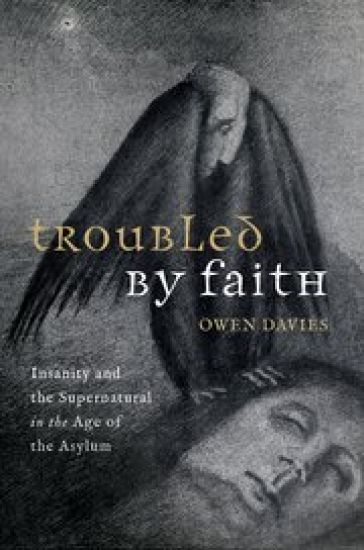
Troubled by Faith

Troubled by Faith

Owen Davies

Oxford University Press
2023
sidottu
The nineteenth century was a time of extraordinary scientific innovation, but with the rise of psychiatry, faiths and popular beliefs were often seen as signs of a diseased mind. By exploring the beliefs of asylum patients, we see the nineteenth century in a new light, with science, faith, and the supernatural deeply entangled in a fast-changing world. The birth of psychiatry in the early nineteenth-century fundamentally changed how madness was categorised and understood. A century on, their conceptions of mental illness continue to influence our views today. Beliefs and behaviour were divided up into the pathological and the healthy. The influence of religion and the supernatural became significant measures of insanity in individuals, countries, and cultures. Psychiatrists not only thought they could transform society in the industrial age but also explain the many strange beliefs expressed in the distant past. Troubled by Faith explores these ideas about the supernatural across society through the prism of medical history. It is a story of how people continued to make sense of the world in supernatural terms, and how belief came to be a medical issue. This cannot be done without exploring the lives of those who found themselves in asylums because of their belief in ghosts, witches, angels, devils, and fairies, or because they though themselves in divine communication, or were haunted by modern technology. The beliefs expressed by asylum patients were not just an expression of their individual mental health, but also provide a unique reflection of society at the time - a world still steeped in the ideas and imagery of folklore and faith in a fast-changing world.
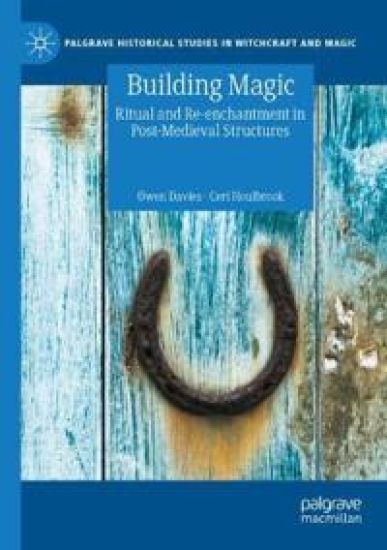
Building Magic

Building Magic

Owen Davies; Ceri Houlbrook

Springer Nature Switzerland AG
2022
nidottu
This book redresses popular interpretations of concealed objects, enigmatically discovered within the fabric of post-medieval buildings. A wide variety of objects have been found up chimneybreasts, bricked up in walls, and concealed within recesses: old shoes, mummified cats, horse skulls, pierced hearts, to name only some. The most common approach to these finds is to apply a one-size-fits-all analysis and label them survivals and apotropaic (evil-averting) devices. This book reconsiders such interpretations, exploring the invention and reinvention of traditions regarding building magic. The title Building Magic therefore refers to more than practices that alter the fabric of buildings, but also to processes of building magic into our interpretations of the enigmatic material evidence and into our engagements with the buildings we inhabit and frequent.
Building Magic

Building Magic

Owen Davies; Ceri Houlbrook

Springer Nature Switzerland AG
2021
sidottu
This book redresses popular interpretations of concealed objects, enigmatically discovered within the fabric of post-medieval buildings. A wide variety of objects have been found up chimneybreasts, bricked up in walls, and concealed within recesses: old shoes, mummified cats, horse skulls, pierced hearts, to name only some. The most common approach to these finds is to apply a one-size-fits-all analysis and label them survivals and apotropaic (evil-averting) devices. This book reconsiders such interpretations, exploring the invention and reinvention of traditions regarding building magic. The title Building Magic therefore refers to more than practices that alter the fabric of buildings, but also to processes of building magic into our interpretations of the enigmatic material evidence and into our engagements with the buildings we inhabit and frequent.
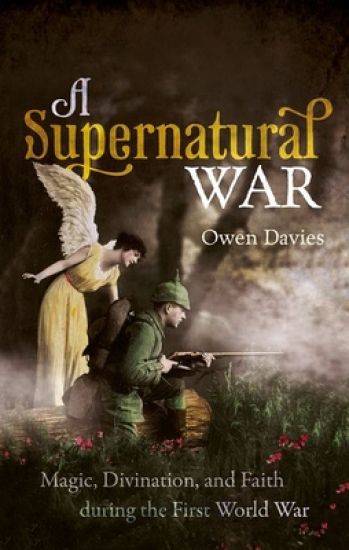
A Supernatural War

A Supernatural War

Owen Davies

Oxford University Press
2021
nidottu
A Supernatural War reveals the surprising stories of extraordinary people in a world caught up with the promise of occult powers. It was a commonly expressed view during the First World War that the conflict had seen a major revival of 'superstitious' beliefs and practices. Churches expressed concerns about the wearing of talismans and amulets, the international press paid considerable interest to the pronouncements of astrologers and prophets, and the authorities in several countries periodically clamped down on fortune tellers and mediums due to concerns over their effect on public morale. Out on the battlefields, soldiers of all nations sought to protect themselves through magical and religious rituals, and, on the home front, people sought out psychics and occult practitioners for news of the fate of their distant loved ones or communication with their spirits. Even away from concerns about the war, suspected witches continued to be abused and people continued to resort to magic and magical practitioners for personal protection, love, and success. Uncovering and examining beliefs, practices, and contemporary opinions regarding the role of the supernatural in the war years, Owen Davies explores the broader issues regarding early twentieth-century society in the West, the psychology of the supernatural during wartime, and the extent to which the war cast a spotlight on the widespread continuation of popular belief in magic.
A Supernatural War

A Supernatural War

Owen Davies

Oxford University Press
2018
sidottu
It was a commonly expressed view during the First World War that the conflict had seen a major revival of 'superstitious' beliefs and practices. Churches expressed concerns about the wearing of talismans and amulets, the international press paid considerable interest to the pronouncements of astrologers and prophets, and the authorities in several countries periodically clamped down on fortune tellers and mediums due to concerns over their effect on public morale. Out on the battlefields, soldiers of all nations sought to protect themselves through magical and religious rituals, and, on the home front, people sought out psychics and occult practitioners for news of the fate of their distant loved ones or communication with their spirits. Even away from concerns about the war, suspected witches continued to be abused and people continued to resort to magic and magical practitioners for personal protection, love, and success. Uncovering and examining beliefs, practices, and contemporary opinions regarding the role of the supernatural in the war years, Owen Davies explores the broader issues regarding early twentieth-century society in the West, the psychology of the supernatural during wartime, and the extent to which the war cast a spotlight on the widespread continuation of popular belief in magic. A Supernatural War reveals the surprising stories of extraordinary people in a world caught up with the promise of occult powers.
Executing Magic in the Modern Era

Executing Magic in the Modern Era

Owen Davies; Francesca Matteoni

Springer International Publishing AG
2018
nidottu
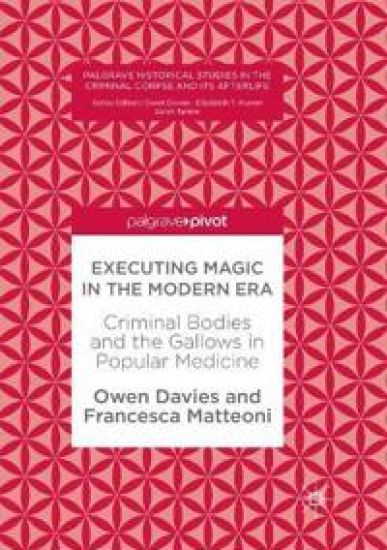
This book is open access under a CC BY 4.0 license This book explores the magical and medical history of executions from the eighteenth to the early twentieth century by looking at the afterlife potency of criminal corpses, the healing activities of the executioner, and the magic of the gallows site. The use of corpses in medicine and magic has been recorded back into antiquity. The lacerated bodies of Roman gladiators were used as a source of curative blood, for instance. In early modern Europe, a great trade opened up in ancient Egyptian mummies and the fat of executed criminals, plundered as medicinal cure-alls. However, this is the first book to consider the demand for the blood of the executed, the desire for human fat, the resort to the hanged man’s hand, and the trade in hanging rope in the modern era. It ends by look at the spiritual afterlife of dead criminals.
Executing Magic in the Modern Era

Executing Magic in the Modern Era

Owen Davies; Francesca Matteoni

Springer International Publishing AG
2017
sidottu
This book is open access under a CC BY 4.0 licenseThis book explores the magical and medical history of executions from the eighteenth to the early twentieth century by looking at the afterlife potency of criminal corpses, the healing activities of the executioner, and the magic of the gallows site. The use of corpses in medicine and magic has been recorded back into antiquity. The lacerated bodies of Roman gladiators were used as a source of curative blood, for instance. In early modern Europe, a great trade opened up in ancient Egyptian mummies and the fat of executed criminals, plundered as medicinal cure-alls. However, this is the first book to consider the demand for the blood of the executed, the desire for human fat, the resort to the hanged man’s hand, and the trade in hanging rope in the modern era. It ends by look at the spiritual afterlife of dead criminals.
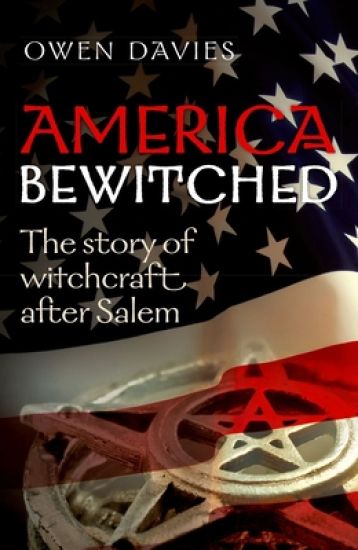
America Bewitched

America Bewitched

Owen Davies

Oxford University Press
2016
nidottu
America Bewitched is the first major history of witchcraft in America - from the Salem witch trials of 1692 to the present day. The infamous Salem trials are etched into the consciousness of modern America, the human toll a reminder of the dangers of intolerance and persecution. The refrain 'Remember Salem!' was invoked frequently over the ensuing centuries. As time passed, the trials became a milepost measuring the distance America had progressed from its colonial past, its victims now the righteous and their persecutors the shamed. Yet the story of witchcraft did not end as the American Enlightenment dawned - a new, long, and chilling chapter was about to begin. Witchcraft after Salem was not just a story of fire-side tales, legends, and superstitions: it continued to be a matter of life and death, souring the American dream for many. We know of more people killed as witches between 1692 and the 1950s than were executed before it. Witches were part of the story of the decimation of the Native Americans, the experience of slavery and emancipation, and the immigrant experience; they were embedded in the religious and social history of the country. Yet the history of American witchcraft between the eighteenth and the twentieth century also tells a less traumatic story, one that shows how different cultures interacted and shaped each other's languages and beliefs. This is therefore much more than the tale of one persecuted community: it opens a fascinating window on the fears, prejudices, hopes, and dreams of the American people as their country rose from colony to superpower.
Magic

Magic

Owen Davies

Oxford University Press
2012
nidottu
Defining 'magic' is a maddening task. Over the last century numerous philosophers, anthropologists, historians, and theologians have attempted to pin down its essential meaning, sometimes analysing it in such complex and abstruse depth that it all but loses its sense altogether. For this reason, many people often shy away from providing a detailed definition, assuming it is generally understood as the human control of supernatural forces. 'Magic' continues to pervade the popular imagination and idiom. People feel comfortable with its contemporary multiple meanings, unaware of the controversy, conflict, and debate its definition has caused over two and a half millennia. In common usage today 'magic' is uttered in reference to the supernatural, superstition, illusion, trickery, religious miracles, fantasies, and as a simple superlative. The literary confection known as 'magical realism' has considerable appeal and many modern scientists have ironically incorporated the word into their vocabulary, with their 'magic acid', 'magic bullets' and 'magic angles'. Since the so-called European Enlightenment magic has often been seen as a marker of primitivism, of a benighted earlier stage of human development. Yet across the modern globalized world hundreds of millions continue to resort to magic - and also to fear it. Magic provides explanations and remedies for those living in extreme poverty and without access to alternatives. In the industrial West, with its state welfare systems, religious fundamentalists decry the continued moral threat posed by magic. Under the guise of neo-Paganism, its practice has become a religion in itself. Magic continues to be a truly global issue. This Very Short Introduction does not attempt to provide a concluding definition of magic: it is beyond simple definition. Instead it explores the many ways in which magic, as an idea and a practice, has been understood and employed over the millennia. ABOUT THE SERIES: The Very Short Introductions series from Oxford University Press contains hundreds of titles in almost every subject area. These pocket-sized books are the perfect way to get ahead in a new subject quickly. Our expert authors combine facts, analysis, perspective, new ideas, and enthusiasm to make interesting and challenging topics highly readable.
Paganism

Paganism

Owen Davies

Oxford University Press
2011
nidottu
'Paganism' is an evocative word that, even today, conjures up deep-seated emotions and prejudices. Until recently, it was primarily a derogatory term used by Christians to describe the non-Christian cultures confronted and vanquished by their Churches. For some it evokes images of sacrifice and barbaric behaviour, while for others it symbolises a peace-loving, nature-worshipping spiritual relationship with the earth. This Very Short Introduction explores the meaning of paganism - through a chronological overview of the attitudes towards its practices and beliefs - from the ancient world through to the present day. Owen Davies largely looks at paganism through the eyes of the Christian world, and how, over the centuries, notions and representations of its nature were shaped by religious conflict, power struggles, colonialism, and scholarship. Despite the expansion of Christianity and Islam, Pagan cultures continue to exist around the world, whilst in the West new formations of paganism constitute one of the fastest-growing religions. Focussing on paganism in Europe, but exploring the nature of paganism globally, Davies looks at how Europeans discovered new cultures through colonial expansion, missionary work, and anthropological study. Contemporary social paganism can be a liberating and social force, and the idea of a global Pagan theology is now on the religious map. ABOUT THE SERIES: The Very Short Introductions series from Oxford University Press contains hundreds of titles in almost every subject area. These pocket-sized books are the perfect way to get ahead in a new subject quickly. Our expert authors combine facts, analysis, perspective, new ideas, and enthusiasm to make interesting and challenging topics highly readable.
Ghosts: A Social History

Ghosts: A Social History

Owen Davies

Pickering Chatto (Publishers) Ltd
2010
muu
Reveals changing perceptions of ghosts at different social levels from the Reformation through to the twentieth century in Britain and America. This five-volume set focuses on the key published debates that emerged in each century, and illustrates the range of literary formats that reported or discussed ghosts.
Ghosts: A Social History, vol 5

Ghosts: A Social History, vol 5

Owen Davies

Routledge
2010
sidottu
Reveals changing perceptions of ghosts at different social levels from the Reformation through to the twentieth century in Britain and America. This five-volume set focuses on the key published debates that emerged in each century, and illustrates the range of literary formats that reported or discussed ghosts.
Ghosts: A Social History, vol 2

Ghosts: A Social History, vol 2

Owen Davies

Routledge
2010
sidottu
Reveals changing perceptions of ghosts at different social levels from the Reformation through to the twentieth century in Britain and America. This five-volume set focuses on the key published debates that emerged in each century, and illustrates the range of literary formats that reported or discussed ghosts.
Ghosts: A Social History, vol 4

Ghosts: A Social History, vol 4

Owen Davies

Routledge
2010
sidottu
Reveals changing perceptions of ghosts at different social levels from the Reformation through to the twentieth century in Britain and America. This five-volume set focuses on the key published debates that emerged in each century, and illustrates the range of literary formats that reported or discussed ghosts.