Kirjojen hintavertailu. Mukana 12 595 353 kirjaa ja 12 kauppaa.

Kirjailija

Owen Edwards

Kirjat ja teokset yhdessä paikassa: 10 kirjaa, julkaisuja vuosilta 2012-2026, suosituimpien joukossa Julius Shulman. Modernism Rediscovered. Vertaile teosten hintoja ja tarkista saatavuus suomalaisista kirjakaupoista.

10 kirjaa

Kirjojen julkaisuhaarukka 2012-2026.

Julius Shulman. Modernism Rediscovered

Julius Shulman. Modernism Rediscovered

Hunter Drohojowska-Philp; Owen Edwards; Peter Loughrey; Philip J. Ethington

Taschen GmbH
2016
sidottu
The photography of Julius Shulman (1910–2009) transported a West Coast dream around the world. His images of midcentury Southern Californian architecture captured not only the distinctive structural, functional, and design elements of a building but also the context of its surroundings and inhabitants in a holistic, evocative sense of lifestyle. Over time, Shulman’s talents would take him around the world, steadily crafting one of the most compelling chronologies of modern architecture. Offering an immense cultural cache for an even lower price, this fresh edition of TASCHEN’s Modernism Rediscovered features over 400 architectural treasures from the Shulman archives. Each project and photograph was personally selected from over 260,000 photographs by publisher Benedikt Taschen, who enjoyed a close relationship with Shulman and his work since first publishing Julius Shulman: Architecture and Its Photography (1998). Documenting the reach of modernist aesthetics, the projects span not only the West Coast but also the rest of the United States, as well as Mexico, Israel, and Hong Kong, all captured with Shulman’s characteristic understanding of space and situation, as well as his brilliant and intuitive sense of composition. The pictures are contextualized with an introduction by photography critic Owen Edwards, an extensive biography by University of Southern California historian Philip J. Ethington, captions on decorative elements by Los Angeles Modern Auctions founder Peter Loughrey, and biographies of key architects. In addition, the book includes personal reflections from Shulman himself, with an oral history and portrait of the period crafted via months of interviews with arts writer Hunter Drohojowska-Philp.
The Austronesian languages of eastern Indonesia and Timor-Leste: Unravelling their prehistory and classification
For 150 years there has been a question over how the Austronesian languages of eastern Indonesia and Timor-Leste fit into the Austronesian world. The area is severely under-documented. There has been no consensus on the classification of these languages, and scholars admit to being perplexed. This is the first systematic attempt at subgrouping the whole region based on historical phonology, supplemented by morphosyntax and the lexicon. Insights from archaeology, DNA studies, and awareness of long-term contact with Papuan languages inform this study. Nine Wallacean subgroups are identified, along with their internal structures. Light is shed on languages whose classification has been unclear. Discontinuities in the historical phonology suggest different groups speaking different Austronesian languages got off different boats at different places, probably at different times. No evidence is found supporting a monolithic Austronesian advance through the region, nor a common Austronesian parent language below PMP that links all Wallacean subgroups. Speakers of SVO Austronesian languages with prepositions, preverbal negation, numbers before nouns, and post-posed possessors came into contact with speakers of languages of unrelated Papuan families, with postpositions, clause-final negation, numbers following nouns, preposed possessors, and other features of SOV languages. Austronesian languages adopted these features but not uniformly, such that features attributed to contact are uneven across the region. Some are not found in some subgroups or branches within subgroups. Distribution maps of phonological, grammatical, and lexical features show many features are not found in all subgroups, do not align with each other, and some are found outside the region. Austronesian languages in the region are a kind of uneven hybrid that make them typologically different from Austronesian languages to the west and north. The study evaluates earlier proposals along with new possibilities
Expanding Universe. The Hubble Space Telescope

Expanding Universe. The Hubble Space Telescope

Jr. Bolden; John Mace Grunsfeld; Owen Edwards; Zoltan Levay

Taschen GmbH
2020
sidottu
With investigations into everything from black holes to exoplanets, the Hubble Telescope has changed not only the face of astronomy but also our very sense of being in the universe. On the 30th anniversary of its launch into low-earth orbit, this updated edition of Expanding Universe presents 30 brand new images, unveiling more hidden gems from the Hubble’s archives. Ultra-high resolution and taken with almost no background light, these pictures have answered some of the most compelling questions of time and space while also revealing new mysteries, like the strange “dark energy” that sees the universe expanding at an ever-accelerating rate. The collection is accompanied by an essay from photography critic Owen Edwards and an interview with Zoltan Levay, who explains how the pictures are composed. Veteran Hubble astronauts Charles F. Bolden, Jr. and John Mace Grunsfeld also offer their insights on Hubble’s legacy and future space exploration.
Peter Beard

Peter Beard

Owen Edwards; Steven M. L. Aronson

Taschen GmbH
2020
sidottu
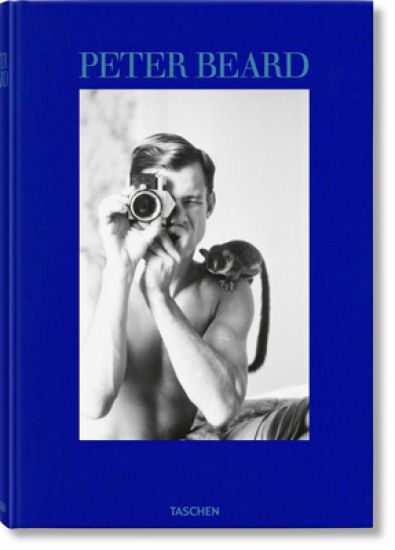
Artist, diarist, collector, and writer Peter Beard (1938-2020) fashioned his life into a work of art; the illustrated diaries he kept from a young age evolved into a serious career as an artist and earned him a central position in the international art world. He collaborated with Francis Bacon and Salvador Dalí, he made diaries with Andy Warhol, worked on books with scientists like Dr. Norman Borlaug, Dr. Richard Laws, and Alistair Graham, and toured with Truman Capote, Terry Southern, and the Rolling Stones—all of whom are brought to life, literally and figuratively, in his work. He delved into the world of fashion for its beautiful women, taking Vogue stars like Veruschka to Africa and bringing new ones back to the U.S. with him. After spending time in Kenya and striking up a friendship with the author Isak Dinesen (Karen Blixen) in the early 1960s, Beard bought 50 acres next to her farm with the stipulation that he would film and write about the land and its flora and fauna. He witnessed the dawn of Kenya’s population explosion, which challenged finite resources and stressed animal populations—including the starving elephants of Tsavo dying by the tens of thousands in a wasteland of eaten trees. So he documented what he saw—with diaries, photographs, and collages. He went against the wind in publishing unique and sometimes shocking books of these works, including The End of the Game. The corpses were laid bare; the facts carefully recorded, sometimes in type and often by hand. Beard used his photographs as a canvas onto which he superimposed multi-layered contact sheets, ephemera, found objects, newspaper clippings that are elaborately embellished with meticulous handwriting, old-master inspired drawings, and often swaths of animal blood used as paint.
Metathesis and unmetathesis in Amarasi

Metathesis and unmetathesis in Amarasi

Owen Edwards

Language Science Press
2020
sidottu
This book provides a complete analysis of synchronic CV -> VC metathesis in Amarasi, a language of western Timor. Metathesis and unmetathesis realise a paradigm of parallel forms, pairs of which occur to complement each other throughout the language.Metathesis in Amarasi is superficially associated with a bewildering array of disparate phonological processes including: vowel deletion, consonant deletion, consonant insertion and multiple kinds of vowel assimilation, any of which can (and do) vary by lect in their realisation. By proposing that Amarasi has an obligatory CVCVC foot in which C-slots can be empty, all these phonological processes can be straightforwardly derived from a single rule of metathesis and two associated phonological rules. Three kinds of metathesis can be identified in Amarasi: (i) Before vowel initial enclitics, roots must undergo metathesis, responding to the need to create a phonological boundary between a clitic host and enclitic. Such metathesis is phonologically conditioned. (ii) Metathesis occurs within the syntax to signal attributive modification. Such a metathesised form cannot occur at the end of a phrase and thus requires the presence of an unmetathesised form to complete it syntactically. (iii) In the discourse an unmetathesised form marks an unresolved event or situation. Such an unmetathesised form cannot occur in isolation and requires a metathesised form to achieve resolution.Metathesis in Amarasi is the central linguistic process around which linguistic structures are organised. Amarasi metatheses also reflect fundamental Timorese notions of societal and cosmic organisation. Alongside weaving and other performed activities, metathesis is an important linguistic marker of identity in a region obsessed with similarities and differences between different groups. The complementarity of Amarasi metathesis and unmetathesis within the syntax and within discourse reflects the Timorese division of the world into a series of mutually d
A Short History of Wales

A Short History of Wales

Owen Edwards

Lulu.com
2016
sidottu
In A Short History of Wales Owen Edwards takes the reader on a concise tour of this fascinating nation's past, from the time Neanderthals lived in what was known as Cymru, at least 230,000 years ago, to the events and forces that shaped the modern state of Wales.