Kirjojen hintavertailu. Mukana 12 595 353 kirjaa ja 12 kauppaa.

Kirjailija

P.F. Strawson

Kirjat ja teokset yhdessä paikassa: 24 kirjaa, julkaisuja vuosilta 1964-2024, suosituimpien joukossa Scepticism and Naturalism: Some Varieties. Vertaile teosten hintoja ja tarkista saatavuus suomalaisista kirjakaupoista.

Mukana myös kirjoitusasut: P. F. Strawson

24 kirjaa

Kirjojen julkaisuhaarukka 1964-2024.

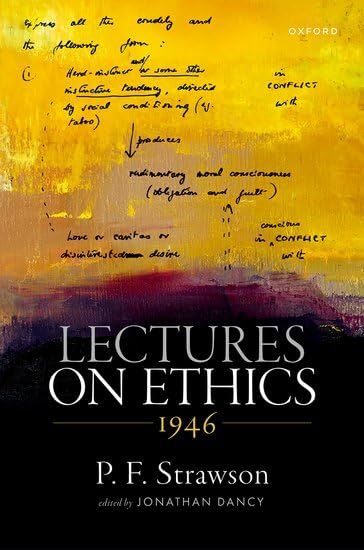
Lectures on Ethics, 1946

Lectures on Ethics, 1946

P. F. Strawson

Oxford University Press
2024
sidottu
This volume presents a series of lectures given by P. F. Strawson to final-year undergraduates at the University of Wales, Bangor, in the autumn term of 1946. Strawson was appointed to a lectureship at Bangor immediately after his military service in World War Two; he held this post for only one year before returning to Oxford, to a teaching position at University College. He eventually became one of the leading figures in twentieth-century philosophy. The lectures survive in manuscript form in the Bodleian Library in Oxford, and have been prepared for publication by Jonathan Dancy. Lectures on Ethics, 1946 contains the germ of Strawson's developed thought on freedom, moral attitudes, and ethical ideals, with an unusual level of attention being paid to contemporary psychological research. Other topics covered include the contrast between consequentialist and other moral theories, the analysis of moral judgements, and the nature of moral obligation.

Logico-Linguistic Papers

Logico-Linguistic Papers

P.F. Strawson

TAYLOR FRANCIS LTD
2022
nidottu
P.F. Strawson has been a major and influential spokesman for ordinary language philosophy throughout the late twentieth century, studying the relationship between common language and the language of formal logic. This reissue of his collection of early essays, Logico-Linguistic Papers, is published with a brand new introduction by Professor Strawson but, apart from minor corrections to the text, these classic essays remain original and intact. Logico-Linguistic Papers contains Strawson's major essay, 'On Referring', in which he disputed Bertrand Russell's theory of definite descriptions, distinguishing between referring to an entity and asserting its existence. The book contains twelve essays in all, grouped by subject matter. The first five are concerned with the topic of singular reference and predication and the last three are all responses to J.L. Austin's treatment of the topic of truth. Strawson disputes the correspondence theory of truth, maintaining that facts are what statements (when true) state. The remaining papers deal with meaning, speech acts, logical truth and Chomsky's views on syntax.
Logico-Linguistic Papers

Logico-Linguistic Papers

P.F. Strawson

CRC Press Inc
2017
sidottu
P.F. Strawson has been a major and influential spokesman for ordinary language philosophy throughout the late twentieth century, studying the relationship between common language and the language of formal logic. This reissue of his collection of early essays, Logico-Linguistic Papers, is published with a brand new introduction by Professor Strawson but, apart from minor corrections to the text, these classic essays remain original and intact. Logico-Linguistic Papers contains Strawson's major essay, 'On Referring', in which he disputed Bertrand Russell's theory of definite descriptions, distinguishing between referring to an entity and asserting its existence. The book contains twelve essays in all, grouped by subject matter. The first five are concerned with the topic of singular reference and predication and the last three are all responses to J.L. Austin's treatment of the topic of truth. Strawson disputes the correspondence theory of truth, maintaining that facts are what statements (when true) state. The remaining papers deal with meaning, speech acts, logical truth and Chomsky's views on syntax.
Scepticism and Naturalism: Some Varieties
By the time of his death in 2006, Sir Peter Strawson was regarded as one of the world's most distinguished philosophers. Unavailable for many years, Scepticism and Naturalism is a profound reflection on two classic philosophical problems by a philosopher at the pinnacle of his career. Based on his acclaimed Woodbridge lectures delivered at Columbia University in 1983, Strawson begins with a discussion of scepticism, which he defines as questioning the adequacy of our grounds for holding various beliefs. He then draws deftly on Hume and Wittgenstein to argue that we must distinguish between 'hard', scientific naturalism; or 'soft', humanistic naturalism. In the remaining chapters the author takes up several issues in which sceptical doubts play an important role, in particular the nature of transcendental arguments and including the objectivity of moral philosophy, the mental and the physical, and the existence of abstract entities. Scepticism and Naturalism is essential reading for those seeking an introduction to the work of one of the twentieth century‘s most important and original philosophers. This reissue includes a substantial new foreword by Quassim Cassam and a fascinating intellectual autobiography by Strawson, which together form an excellent introduction to his life and work.
Logico-Linguistic Papers

Logico-Linguistic Papers

P.F. Strawson

Routledge
2017
sidottu
P.F. Strawson has been a major and influential spokesman for ordinary language philosophy throughout the late twentieth century, studying the relationship between common language and the language of formal logic. This reissue of his collection of early essays, Logico-Linguistic Papers, is published with a brand new introduction by Professor Strawson but, apart from minor corrections to the text, these classic essays remain original and intact. Logico-Linguistic Papers contains Strawson's major essay, 'On Referring', in which he disputed Bertrand Russell's theory of definite descriptions, distinguishing between referring to an entity and asserting its existence. The book contains twelve essays in all, grouped by subject matter. The first five are concerned with the topic of singular reference and predication and the last three are all responses to J.L. Austin's treatment of the topic of truth. Strawson disputes the correspondence theory of truth, maintaining that facts are what statements (when true) state. The remaining papers deal with meaning, speech acts, logical truth and Chomsky's views on syntax.
Scepticism and Naturalism

Scepticism and Naturalism

P.F. Strawson

Routledge
2017
sidottu
First published in 1987. By the time of his death in 2006, Sir Peter Strawson was regarded as one of the world's most distinguished philosophers. Unavailable for many years, Scepticism and Naturalism is a profound reflection on two classic philosophical problems by a philosopher at the pinnacle of his career. Based on his acclaimed Woodbridge lectures delivered at Columbia University in 1983, Strawson begins with a discussion of scepticism, which he defines as questioning the adequacy of our grounds for holding various beliefs. He then draws deftly on Hume and Wittgenstein to argue that we must distinguish between 'hard', scientific naturalism; or 'soft', humanistic naturalism. In the remaining chapters the author takes up several issues in which sceptical doubts play an important role, in particular the nature of transcendental arguments and including the objectivity of moral philosophy, the mental and the physical, and the existence of abstract entities. Scepticism and Naturalism is essential reading for those seeking an introduction to the work of one of the twentieth century's most important and original philosophers.
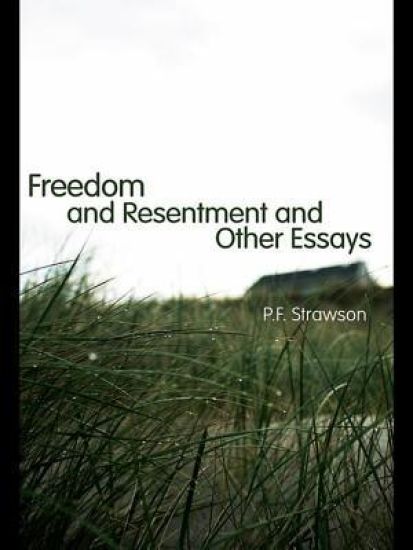
Freedom and Resentment and Other Essays
By the time of his death in 2006, Sir Peter Strawson was regarded as one of the world's most distinguished philosophers. First published thirty years ago but long since unavailable, Freedom and Resentment collects some of Strawson's most important work and is an ideal introduction to his thinking on such topics as the philosophy of language, metaphysics, epistemology and aesthetics. Beginning with the title essay Freedom and Resentment, this invaluable collection is testament to the astonishing range of Strawson's thought as he discusses free will, ethics and morality, logic, the mind-body problem and aesthetics. The book is perhaps best-known for its three interrelated chapters on perception and the imagination, subjects now at the very forefront of philosophical research.This reissue includes a substantial new foreword by Paul Snowdon and a fascinating intellectual autobiography by Strawson.
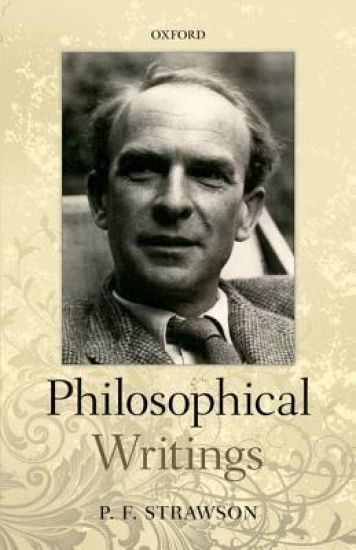
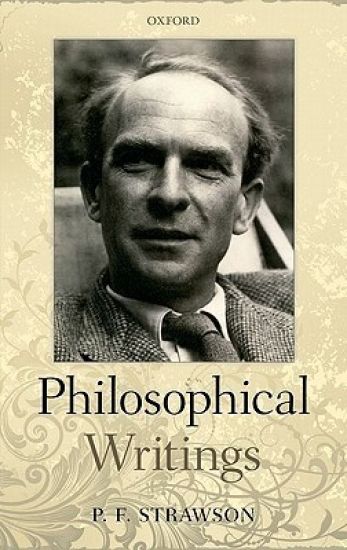
Philosophical Writings

Philosophical Writings

P. F. Strawson

Oxford University Press
2014
nidottu
This volume presents twenty-two uncollected philosophical essays by Sir Peter Strawson, one of the leading philosophers of the second half of the twentieth century. The essays (two of them previously unpublished) are drawn from seven decades of work, from 1949 to 2003. They span the broad range of Strawson's work: metaphysics, epistemology, philosophical logic, philosophy of language, ethical theory, and history of philosophy, along with metaphilosophical reflections and intellectual autobiography.
Introduction to Logical Theory

Introduction to Logical Theory

P. F. Strawson

Routledge
2012
nidottu
First published in 1952, professor’s Strawson’s highly influential Introduction to Logical Theory provides a detailed examination of the relationship between the behaviour of words in common language and the behaviour of symbols in a logical system. He seeks to explain both the exact nature of the discipline known as Formal Logic, and also to reveal something of the intricate logical structure of ordinary unformalised discourse.
Philosophical Writings

Philosophical Writings

P. F. Strawson

Oxford University Press
2011
sidottu
This volume presents twenty-two uncollected philosophical essays by Sir Peter Strawson, one of the leading philosophers of the second half of the twentieth century. The essays (two of them previously unpublished) are drawn from seven decades of work, from 1949 to 2003. They span the broad range of Strawson's work: metaphysics, epistemology, philosophical logic, philosophy of language, ethical theory, and history of philosophy, along with metaphilosophical reflections and intellectual autobiography.
Introduction to Logical Theory

Introduction to Logical Theory

P. F. Strawson

Routledge
2011
sidottu
First published in 1952, professor Strawson’s highly influential Introduction to Logical Theory provides a detailed examination of the relationship between the behaviour of words in common language and the behaviour of symbols in a logical system. He seeks to explain both the exact nature of the discipline known as Formal Logic, and also to reveal something of the intricate logical structure of ordinary unformalised discourse.
Scepticism and Naturalism: Some Varieties
By the time of his death in 2006, Sir Peter Strawson was regarded as one of the world's most distinguished philosophers. Unavailable for many years, Scepticism and Naturalism is a profound reflection on two classic philosophical problems by a philosopher at the pinnacle of his career. Based on his acclaimed Woodbridge lectures delivered at Columbia University in 1983, Strawson begins with a discussion of scepticism, which he defines as questioning the adequacy of our grounds for holding various beliefs. He then draws deftly on Hume and Wittgenstein to argue that we must distinguish between 'hard', scientific naturalism; or 'soft', humanistic naturalism. In the remaining chapters the author takes up several issues in which sceptical doubts play an important role, in particular the nature of transcendental arguments and including the objectivity of moral philosophy, the mental and the physical, and the existence of abstract entities. Scepticism and Naturalism is essential reading for those seeking an introduction to the work of one of the twentieth century’s most important and original philosophers.This reissue includes a substantial new foreword by Quassim Cassam and a fascinating intellectual autobiography by Strawson, which together form an excellent introduction to his life and work.
Freedom and Resentment and Other Essays
By the time of his death in 2006, Sir Peter Strawson was regarded as one of the world's most distinguished philosophers. First published thirty years ago but long since unavailable, Freedom and Resentment collects some of Strawson's most important work and is an ideal introduction to his thinking on such topics as the philosophy of language, metaphysics, epistemology and aesthetics. Beginning with the title essay Freedom and Resentment, this invaluable collection is testament to the astonishing range of Strawson's thought as he discusses free will, ethics and morality, logic, the mind-body problem and aesthetics. The book is perhaps best-known for its three interrelated chapters on perception and the imagination, subjects now at the very forefront of philosophical research.This reissue includes a substantial new foreword by Paul Snowdon and a fascinating intellectual autobiography by Strawson.
Universals, Concepts and Qualities

Universals, Concepts and Qualities

P.F. Strawson

Ashgate Publishing Limited
2006
sidottu
Are there universal properties grounding our sense of resemblance or qualitative identity among a number of distinct things or events which appear to form a class, a type or a kind of some other sort? Do universals such as humanness, triangularity, or being an oak exist? Is being a laptop computer a universal which has only recently come into existence? Do predicate expressions, adjectives or abstract nouns refer to objective properties or cognitive contents called concepts? The problem of universals has been at the centre of ancient, medieval, Western and Indian metaphysics. After the logico-linguistic turn in philosophy, this problem re-surfaced in the discourse on the meaning of predicate expressions on the one hand and in the theories of concepts on the other. By introducing newly commissioned essays written by the leading metaphysicians, epistemologists, philosophers of language and philosophers of mathematics, this anthology evinces current analytic philosophy's healthy re-engagement with this perennial problem. Issues raised include: Do properties and other abstract entities exist independently of human language and thought? Can we be in direct perceptual touch with properties or particular qualities? Is a higher order quantification over predicated properties intelligible or indispensable? Insights from current Western thought are compared with recent work in analytic Indian philosophy on such issues. No serious researcher or teacher of contemporary and comparative analytical metaphysics can afford to ignore the essays of this collection.
Logico-Linguistic Papers

Logico-Linguistic Papers

P.F. Strawson

Ashgate Publishing Limited
2004
nidottu
P.F. Strawson has been a major and influential spokesman for ordinary language philosophy throughout the late twentieth century, studying the relationship between common language and the language of formal logic. This reissue of his collection of early essays, Logico-Linguistic Papers, is published with a brand new introduction by Professor Strawson but, apart from minor corrections to the text, these classic essays remain original and intact. Logico-Linguistic Papers contains Strawson's major essay, 'On Referring', in which he disputed Bertrand Russell's theory of definite descriptions, distinguishing between referring to an entity and asserting its existence. The book contains twelve essays in all, grouped by subject matter. The first five are concerned with the topic of singular reference and predication and the last three are all responses to J.L. Austin's treatment of the topic of truth. Strawson disputes the correspondence theory of truth, maintaining that facts are what statements (when true) state. The remaining papers deal with meaning, speech acts, logical truth and Chomsky's views on syntax.
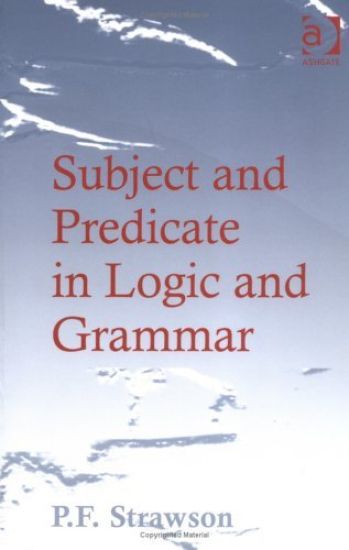
Subject and Predicate in Logic and Grammar

Subject and Predicate in Logic and Grammar

P.F. Strawson

Ashgate Publishing Limited
2004
nidottu
P.F. Strawson has supplied a new introduction for this reissue of his modern classic originally published in 1974. Subject and Predicate in Logic and Grammar explores two conceptions of subject and predicate, one of which lies at the core of standard logic and the other more closely relates to surface forms of natural language. Strawson renders these two conceptions, and their divergences, intelligible by relating them both to the 'basic case' in which the subject-term designates a substantial spatio-temporal individual. Through his treatment of these conceptions, Strawson added to our understanding of both logic and general grammar, helping us trace formal characteristics of logic and its grammar to their roots in general features of thought and experience, and observing how the grammatical structure of a large group of non-formalized languages naturally develops in various ways, along other lines. This book, based originally on seminar material used at Oxford and Princeton and a series of lectures delivered at Irvine and University College London, has become an enduring landmark in the literature of logic and the philosophy of language.
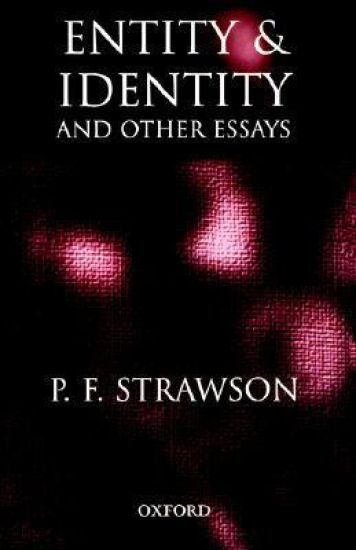
Entity and Identity

Entity and Identity

P. F. Strawson

Clarendon Press
2000
nidottu
Gathered in this volume are selected essays by P. F. Strawson from the 1970s to the 1990s, in two areas of philosophy to which he has most notably contributed. The first twelve pieces concern the philosophy of language, a broad heading under which many controversial philosophical issues can be fruitfully approached. Questions such as the following are discussed: Do general properties exist as well as the particular things that have them? What is involved in reference to particular things? What exactly is formal logic as we now understand it? What do we mean when we say that something may happen or might have happened? What do we mean when we speak of the meaning of what we say? The volume is completed by four studies in Kantian metaphysics: these develop and strengthen Strawson's influential view of Kant's Critique of Pure Reason and bring out the implications of this view for current metaphysical debates. One of these essays is published here for the first time, and one for the first time in English; several others have been difficult of access till now. A new introduction offers an overview of the essays, their topics, and their interrelations. This book represents some of the most fascinating work of one of the foremost philosophers of the late twentieth century.
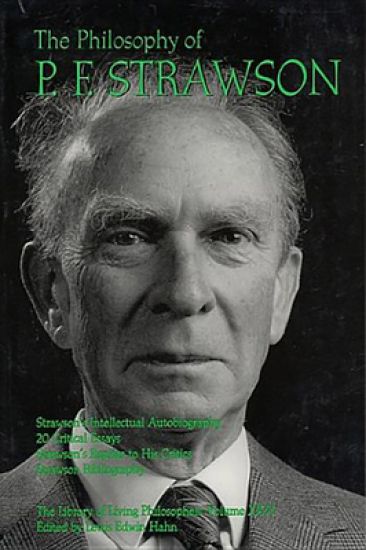
The Philosophy of P. F. Strawson

The Philosophy of P. F. Strawson

P.F. Strawson; Lewis Edwin Hahn

Open Court Publishing Co ,U.S.
1999
sidottu
Born in 1919, Strawson was a leading proponent of ordinary language philosophy. He is the author of the early and extremely influential paper "On Referring" in which he criticized Russell's theory of definite descriptions. His most influential book, Individuals, helped to raise the status of metaphysics as a philosophical enterprise. Themes first addressed in this book continued to be of concern to him in his later work, including the possibility of objective knowledge, the subject-predicate distinction, the ontological status of persons, and the problem of individuation.Contributors to the book include: Ruth Garrett Millikan, Susan Haack, E. M. Adams, Panayot Butchvarov, Richard Behling, John McDowell, Simon Blackburn, Tadeusz Szubka, David Frederick Haight, Joseph S. Wu, Andrew G. Black, David Pears, Robert Boyd, Hilary Putnam, Paul F. Snowdon, Arindam Chakrabarti, Wenceslao J. Gonzalez, Ernest Sosa, Chung-M. Tse, John R. Searle, P. F. Strawson.
The Philosophy of P. F. Strawson

The Philosophy of P. F. Strawson

P.F. Strawson; Lewis Edwin Hahn

Open Court Publishing Co ,U.S.
1999
pokkari
The twenty-sixth volume in the highly acclaimed Library of Living Philosophers series is devoted to the work of British philosopher of logic and metaphysician, P. F. Strawson. Following the Library of Living Philosophers series format, the volume contains an intellectual autobiography, twenty critical and descriptive essays by leading philosophers from around the world, Strawson's replies to the essays, and a bibliography of Strawson's works.Born in 1919, Strawson was a leading proponent of ordinary language philosophy. He is the author of the early and extremely influential paper "On Referring" in which he criticized Russell's theory of definite descriptions. His most influential book, Individuals, helped to raise the status of metaphysics as a philosophical enterprise. Themes first addressed in this book continued to be of concern to him in his later work, including the possibility of objective knowledge, the subject-predicate distinction, the ontological status of persons, and the problem of individuation.Contributors to the book include: Ruth Garrett Millikan, Susan Haack, E. M. Adams, Panayot Butchvarov, Richard Behling, John McDowell, Simon Blackburn, Tadeusz Szubka, David Frederick Haight, Joseph S. Wu, Andrew G. Black, David Pears, Robert Boyd, Hilary Putnam, Paul F. Snowdon, Arindam Chakrabarti, Wenceslao J. Gonzalez, Ernest Sosa, Chung-M. Tse, John R. Searle, P. F. Strawson.