Kirjojen hintavertailu. Mukana 12 301 783 kirjaa ja 12 kauppaa.

Kirjailija

P. G. Maxwell-Stuart

Kirjat ja teokset yhdessä paikassa: 27 kirjaa, julkaisuja vuosilta 1981-2023, suosituimpien joukossa Satan. Vertaile teosten hintoja ja tarkista saatavuus suomalaisista kirjakaupoista.

Mukana myös kirjoitusasut: P G Maxwell-Stuart, P.G. Maxwell-Stuart

27 kirjaa

Kirjojen julkaisuhaarukka 1981-2023.

Investigations Into Magic, an Edition and Translation of Martín del Río's Disquisitionum Magicarum Libri Sex: Volume 2
The sixteenth century saw the world as being mortally threatened by Satan who was encouraged by the widespread popularity of magic and other occult practices. Church and society struck back to defend people from this tidal wave of wickedness. Del R o's panoramic and detailed treatise provided a powerful weapon in that battle. Far from dry scholarship, however, 'Investigations' is an engaging, fascinating, earnest conversation between Del R o and his readers and a major contribution to understanding key aspects of everyday sixteenth century behaviour and the problem of evil.
Investigations Into Magic, an Edition and Translation of Martín del Río's Disquisitionum Magicarum Libri Sex: Volume 6
The sixteenth century saw the world as being mortally threatened by Satan who was encouraged by the widespread popularity of magic and other occult practices. Church and society struck back to defend people from this tidal wave of wickedness. Del R o's panoramic and detailed treatise provided a powerful weapon in that battle. Far from dry scholarship, however, 'Investigations' is an engaging, fascinating, earnest conversation between Del R o and his readers and a major contribution to understanding key aspects of everyday sixteenth century behaviour and the problem of evil.
Investigations Into Magic, an Edition and Translation of Martín del Río's Disquisitionum Magicarum Libri Sex: Volume 1
Mart n Del R o (1551-1608) was a remarkably learned Jesuit scholar. His prolific output includes six volumes of Investigations into Magic which sought to be the last word on magic, witchcraft, and allied subjects such as divination and superstition, and a detailed manual of advice for judges and confessors engaged in combatting what was seen at the time as a dangerous threat to the spiritual life of humanity in this world and the next. First published in 1599-1600, Investigations was heralded as a major contribution to the armoury of the Counter-Reformation, and went through several editions, the last appearing in 1747.
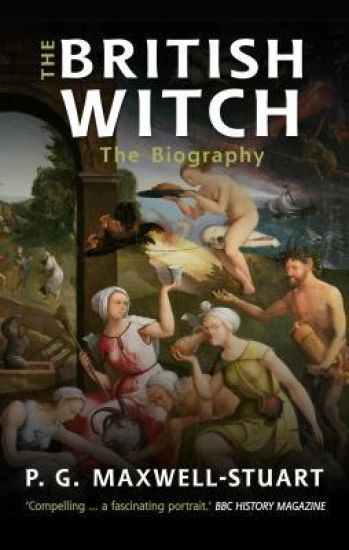
The British Witch

The British Witch

P. G. Maxwell-Stuart

Amberley Publishing
2016
pokkari
For over 500 years witches, male and female, practised magic for both harm and good in their communities. Most witches worked locally, used by their neighbours to cure illness, create love, or gratify personal spite against another. Margaret Lindsay from Northumberland was prosecuted for making men impotent, John Stokes in London for curing fevers, Collas de la Rue on Guernsey for killing people by witchcraft, and Isobel Gowdie in Auldearn for a variety of offences including consorting with Satan and fairies. In the fifteenth century witches attacked a succession of English monarchs using enchanted images, and in the sixteenth they also sought ways to kill James VI of Scotland. In response a series of Acts of Parliament were passed which made much magic criminal and punished offenders severely, until a final Act in 1735 repealed them. This impressive history shines a new light on witches, their magic, and the attempts to eradicate them throughout the British Isles, altering our picture of who witches were and why people employed them but also tried to suppress them.
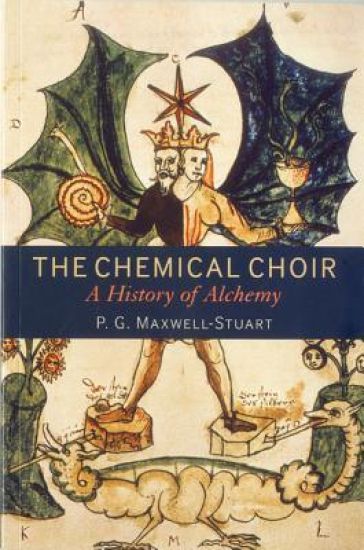
The Chemical Choir

The Chemical Choir

P. G. Maxwell-Stuart

Continuum Publishing Corporation
2012
nidottu
In this title, the history of alchemy traced from its earliest roots through to its influence in modern-day science. Beginning in China in the search for the secret of immortality, and appearing independently in Egypt as an attempt to produce gold through the arts of smelting and alloying metals, alchemy received a great boost in Europe from studies by Islamic and Jewish alchemists. Translated into Latin and then combined with what was known of Greek natural science these accounts provoked an outburst of attempts to manipulate matter and to change it into transformative substances known as the Philosopher's Stone or the Elixir of Life. Alchemy's heyday in Europe was the sixteenth and seventeenth centuries. Demonstrations of the art were performed in royal courts and specimens of the gold so transmuted can be seen in various museums today. During the nineteenth century, attempts were made to amalgamate alchemy with the religious and occult philosophies then growing in popularity; and in the twentieth century psychologists - principally Carl Jung - perceived in alchemy a powerful vehicle for aspects of their theories about human nature.
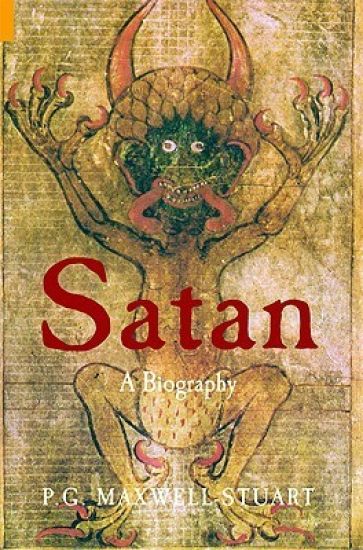
Satan

Satan

P. G. Maxwell-Stuart

Amberley Publishing
2011
pokkari
The story of Devil from antiquity to the present. The Devil, like the poor, is always with us. Evil has been personified in every religion and culture, and Christianity in particular developed a highly graphic view of him from its earliest period. Sometimes grotesque, sometimes beautiful, sometimes threatening, sometimes seductively helpful, sometimes comical, Satan has played a variety of roles in human existence. Feared and frightening adversary of humankind during the Middle Ages, supposed master and friend of witches during the sixteenth century, and seducer of the devout during the seventeenth, he was gradually explained away as the nineteenth century started to lose its faith at home and export him in all his traditional aspects to the Empire. He made a startling and vicious come-back during the twentieth century as a focus of renewed admiration and even worship. This book follows the Devil through his various, sometimes surprising incarnations from the ancient world to the present, and shows that his reign is by no means over, even in the West.
Poltergeists

Poltergeists

P. G. Maxwell-Stuart

Amberley Publishing
2011
sidottu
The story of violent ghost phenomena through the ages. The poltergeist of 'noisy ghost' phenomenon is commonly thought to be the result of a dead person's angry spirit expressing that anger by violence in the physical world, or the projected energies of an emotionally volatile human being, often a teenager. In fact, poltergeists are more interesting than either of those suggested explanations, because they are actually something of a mystery. Are they spirits of some kind, natural or anomalous forms of energy, or the products of trickery or self-delusion, or something else altogether? This account sets out to seek answers to those and other questions by providing examples of poltergeist activity from late antiquity to the present day, and discussing who recorded them, why, and for what kind of audience. It also clarifies the mystery and presents the reader with explanations of increasingly common, well-documented and intriguing manifestations of apparently paranormal phenomena.
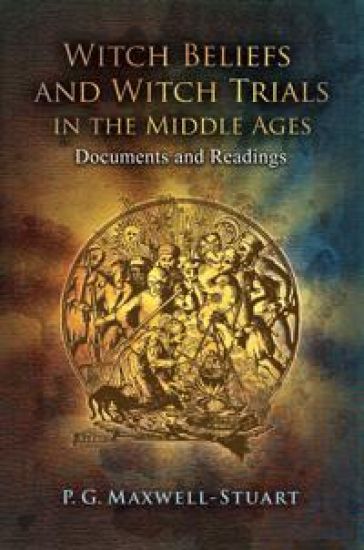
Witch Beliefs and Witch Trials in the Middle Ages

Witch Beliefs and Witch Trials in the Middle Ages

P. G. Maxwell-Stuart

Continuum Publishing Corporation
2011
nidottu
This title features new translations of primary documents of a crucial period in the development of attitudes to witchcraft. In 1901, a rich collection of extracts from documents relating to witch beliefs and witch trials in the Middle Ages - "Hexenwahns und der Hexenverfolgung in Mittelalter" - was published. Most of the original documents are in Latin, with some in medieval German and French, and it has been left largely untranslated, making the material inaccessible, and neglected. This new translation of the key documents will enable students and scholars to look afresh at this crucial period in the development of attitudes towards witchcraft. Through the translated extracts we can see the beliefs and activities which had been formally condemned by ecclesiastical and secular authorities, but which had not yet become subject to widespread eradicating pogroms, start to be allied with heresy and with changing conceptions of demonic activity. The extensive introductory essay gives the reader the historical, theological, intellectual and social background and contexts of the translated documents. The translations themselves will all have introductory notes. This volume will contribute significantly to our understanding of the witchcraft phenomenon in the Middle Ages.
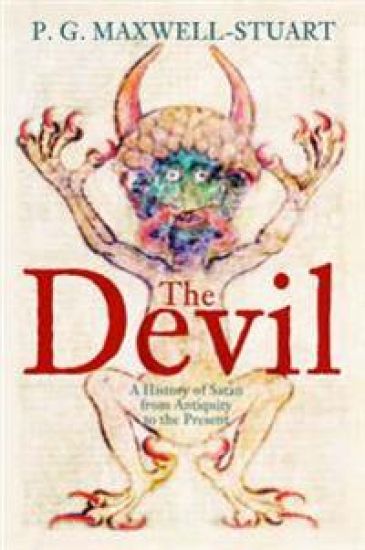
The Devil

The Devil

P. G. Maxwell-Stuart

Tempus Publishing Ltd
2008
nidottu
Evil has been personified in every religion and culture, and Christianity in particular developed a highly graphic view of him from its earliest period. Sometimes grotesque, sometimes beautiful, sometimes threatening, sometimes seductively helpful, sometimes comical, Satan has played a variety of roles in human existence. Feared and frightening adversary of humankind during the Middle Ages, supposed master and friend of witches during the 16th century, and seducer of the devout during the 17nth, he was gradually explained away as the 19th century started to lose its faith at home and export him in all his traditional aspects to the Empire. Satan made a startling and vicious comeback during the 20th century as a focus of renewed admiration and even worship. This book follows the Devil through his various and sometimes surprising incarnations from the ancient world to the present, and shows that his significance is by no means over, even in the West.
Satan

Satan

P. G. Maxwell-Stuart

Amberley Publishing
2008
nidottu
The Devil, like the poor, is always with us. Evil has been personified in every religion and culture, and Christianity in particular developed a highly graphic view of him from its earliest period. Sometimes grotesque, sometimes beautiful, sometimes threatening, sometimes seductively helpful, sometimes comical, Satan has played a variety of roles in human existence. Feared and frightening adversary of humankind during the Middle Ages, supposed master and friend of witches during the sixteenth century, and seducer of the devout during the seventeenth, he was gradually explained away as the nineteenth century started to lose its faith at home and export him in all his traditional aspects to the Empire. He made a startling and vicious come-back during the twentieth century as a focus of renewed admiration and even worship. This book follows the Devil through his various, sometimes surprising incarnations from the ancient world to the present, and shows that his reign is by no means over, even in the West.
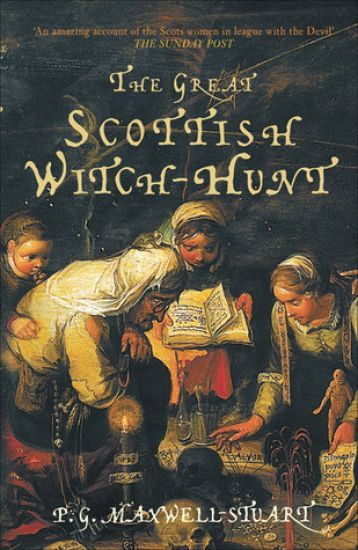
The Great Scottish Witch-Hunt

The Great Scottish Witch-Hunt

P G Maxwell-Stuart

The History Press Ltd
2008
nidottu
Scotland, in common with the rest of Europe, was troubled from time to time by outbreaks of witchcraft which the authorities sought to contain and then to suppress, and the outbreak of 1658-1662 is generally agreed to represent the high water mark of Scottish persecution. These were peculiar years for Scotland. This work deals with this subject.
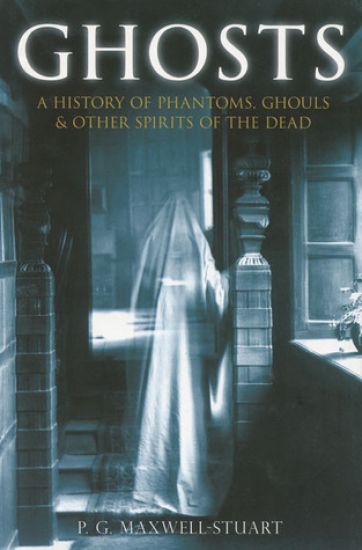
Ghosts

Ghosts

P G Maxwell-Stuart

The History Press Ltd
2007
nidottu
Traces the history of ghost phenomena through the ages and the ways in which people have tried to deal with the hope, the fear, the curiosity, and the disbelief which ghosts have aroused.
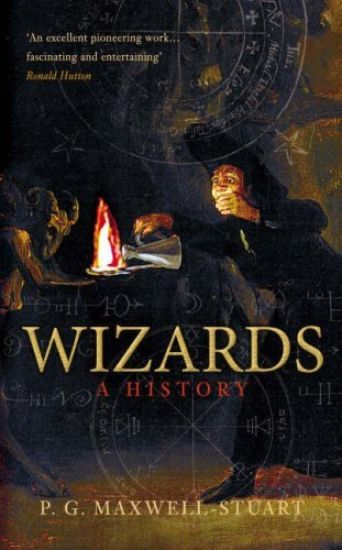
Wizards

Wizards

P G Maxwell-Stuart

The History Press Ltd
2007
nidottu
Features the history of the wizard from ancient times. This work shows how extraordinary a character the wizard has proved to be - not merely a conjuring trickster or malicious egotist in league with Satan, but also a deeply religious person intent on using magic the better to understand the mind of God.
Ghosts

Ghosts

P G Maxwell-Stuart

The History Press Ltd
2006
sidottu
Traces the history of ghost phenomena from the ancient world and the ways in which people have tried to deal with the hope, the fear, the curiosity, and the disbelief which ghosts have aroused.
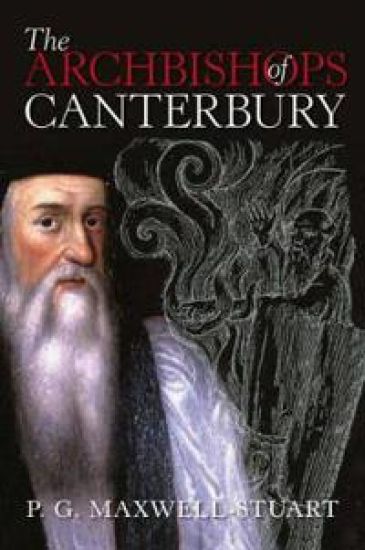
Archbishops of Canterbury

Archbishops of Canterbury

P. G. Maxwell-Stuart

The History Press Ltd
2006
sidottu
Controversy has rarely been far away. Had the original party of monks accompanying St Augustine in the Summer of 596 had their way, they would have turned back in France and never set foot in England. But once established, the Archbishops soon began what was to be a fatal partnership with the Crown. Dunstan and King Edgar, Lanfranc and William the Conqueror set the pattern, and things soon went wrong. William Warham lost the battle to keep the English Church out of Henry VIII's greedy, destructive fingers, Thomas Cranmer was burned at the stake, and William Laud beheaded. The office was far from a sinecure. But after the excitements of the sixteenth and seventeenth centuries, the eighteenth and nineteenth lapsed into navel-gazing, while the twentieth took to travel. Cosmo Lang hated trains and expected the world to come to him, but Geoffrey Fisher, whose personal brand of sarcasm did not go down well with the press, traveled extensively. "The Archbishops of Canturbury" is not so much a history of the Church of England as a personal survey of the men who have led it for fourteen hundred years - the decisive, the weak, the admirable, and the odd.
Witch Hunters

Witch Hunters

P G Maxwell-Stuart

The History Press Ltd
2005
nidottu
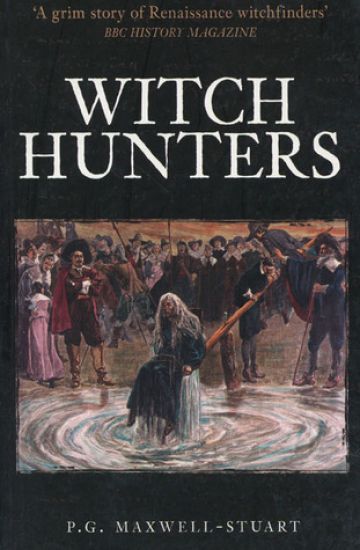
The history of a unique reign of terror. A thoroughly readable book on the lives and careers of possibly the most sadistic group of people of the sixteenth and seventeenth centuries, the 'great age' of witch-hunting in Europe and North America. From the doyen of witch-hunters, the Jesuit del Rio, to the British Matthew Hopkins, not to mention Pierre de Lancre, a judge who was responsible for burning 600 women, Maxwell-Stuart charts the progress of these fierce and dangerous zealots, while providing an insight into the world they perceived as evil and which they sought to destroy.
An Abundance of Witches

An Abundance of Witches

P G Maxwell-Stuart

The History Press Ltd
2005
nidottu
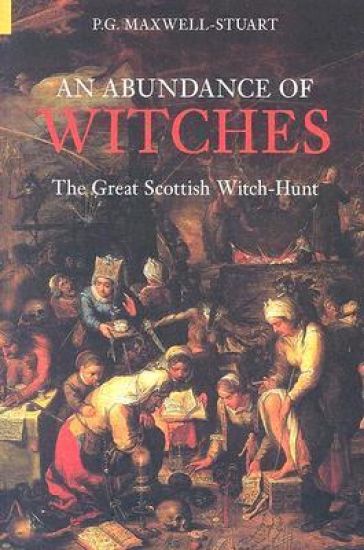
The first history of the most intense period of witch-hunting in Scotland between 1658-62. Scotland, in common with the rest of Europe, was troubled from time to time by outbreaks of witchcraft which the authorities sought to contain and then to suppress, and the outbreak of 1658-1662 is generally agreed to represent the high water mark of Scottish persecution. These were peculiar years for Scotland. For nine years Scotland was effectively an English province with largely English officials in charge.In 1660 this suddenly changed. So the threat to Church and state from a plague of witches was particularly disturbing. The tension between imported official English attitudes to witchcraft and the revived fervour of Calvinist religion combined to produce a peculiar atmosphere in which the activities of witches drew hostile attention to an unprecedented degree.
The Occult in Medieval Europe 500-1500

The Occult in Medieval Europe 500-1500

P G Maxwell-Stuart

Red Globe Press
2005
nidottu
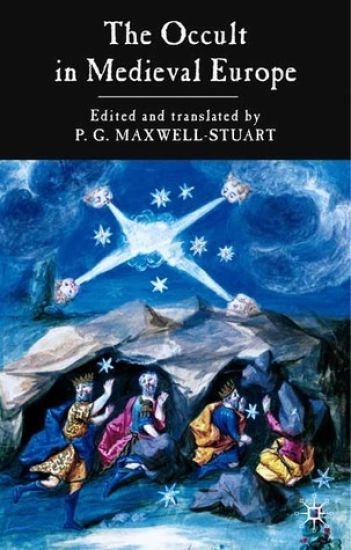
Of all the epithets popularly attached to the Middle Ages, 'superstitious' is perhaps the most common and most misleading. The eighteenth-century view that the era was represented by the Catholic Church and therefore backward and 'dark', in contrast to their own times which were forward-looking, rational and 'scientific', has created a myth which successive centuries have perpetuated.This fascinating study challenges the assumption that the medieval period was an age of superstition, offering students a varied collection of documents surveying what people throughout Europe actually thought and believed about the occult sciences at the time. Using translated extracts - many of which appear in English for the first time - from religious, legal, medical and scientific documents, P. G. Maxwell-Stuart presents and explores the various branches of magic, divination, astrology and alchemy which helped people to make sense of their world.
Wizards

Wizards

P G Maxwell-Stuart

The History Press Ltd
2004
nidottu
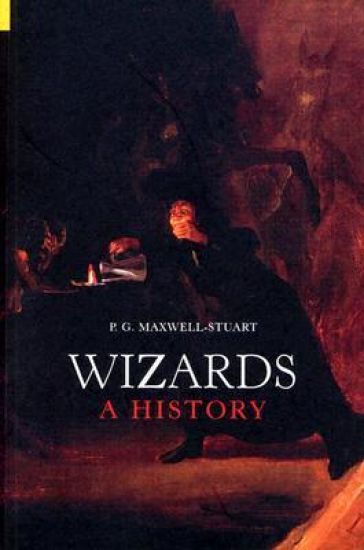
Throughout the ages the wizard, magician, sorcerer, has claimed to defy scientific explanation. The rich diversity of Wizards offers new insights into our continuing fascination with magic.
Witchcraft: A History

Witchcraft: A History

P G Maxwell-Stuart

The History Press Ltd
2004
nidottu
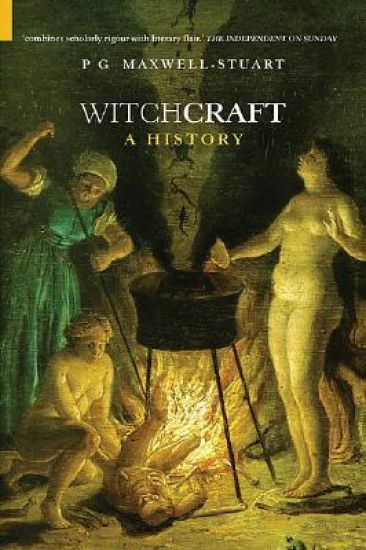
Witches, like the poor, are always with us. From ancient times to the present the aged, ugly crone has worked her evil magic and been burned at the stake by an outraged authority, or cured her neighbours and their animals with the help of gentle herbs and beneficent spells. Such, at any rate, is the popular picture. But not much of that picture is true. At the very least, it is misleading. Many witches were young; many witches were men; many witches came to court and were acquitted. There is no clear distinction between so-called white magic and black.Witches were not universally persecuted or tortured; it is not true that millions died; and the time they were most at risk covered less than a hundred years. So much more interesting than the cartoon stereotype, the real witch was a complex figure whose genuine story is only now starting to be unraveled, and this book offers the reader a fresh prospect of that intriguing narrative.