

Kirjailija
P.J. Capelotti
Kirjat ja teokset yhdessä paikassa: 7 kirjaa, julkaisuja vuosilta 1999-2026, suosituimpien joukossa Lost Greenland. Vertaile teosten hintoja ja tarkista saatavuus suomalaisista kirjakaupoista.
Mukana myös kirjoitusasut: P. J. Capelotti, P J Capelotti
7 kirjaa
Kirjojen julkaisuhaarukka 1999-2026.
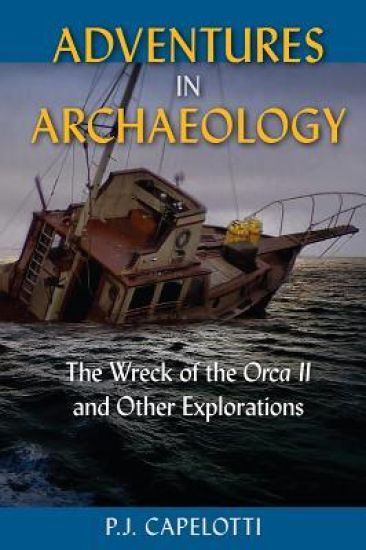
Discover a little-known world of archaeology Wrecked aircraft and abandoned airfields, old highway billboards and derelict boats, movie props, deserted mining operations. In this book, archaeologist P.J. Capelotti explores places and things that people don’t typically think of as archaeological sites and artifacts, introducing readers to the most extreme fieldwork taking place today.Capelotti shows that even seemingly ordinary objects from the recent past hold secrets about the cultural history of humans. He investigates the site where a stunt copy of the Orca, the fishing boat used in the movie Jaws, was stripped to pieces by fans—a revelation of the ways humans relate to popular culture. He takes readers to abandoned base camps near the North Pole that are now used as destinations for Arctic tourism. Retelling the story of Thor Heyerdahl’s research expedition across the Pacific Ocean on a balsa log raft, Capelotti shows how this episode of experimental archaeology revealed cultural connections between continents. And he doesn’t stop at the limits of the planet. He discusses debris floating through outer space and equipment left behind on the surface of the moon, highlighting current efforts to preserve artifacts that exist beyond the Earth’s atmosphere. These discarded materials, says Capelotti, help archaeologists piece together the sweeping story of human cultural expansion and exploitation. He explains how the unusual sites of shorelines, sea, air, and space represent the farthest reaches of human civilization. His enthusiasm will inspire readers to set out on their own to investigate the secret meanings of treasures hiding in plain sight.
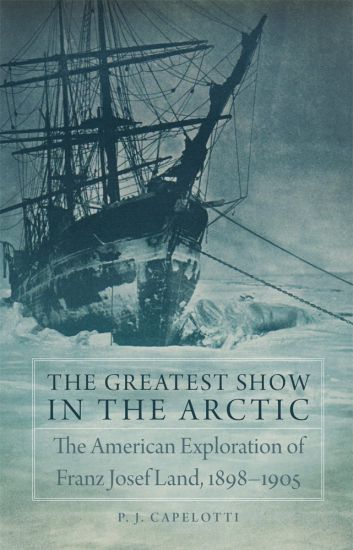
In Gilded Age America, Arctic explorers were fabulous celebrities - assured of riches and near-immortality so long as they reached the North Pole first. Of the many attempts to meet that goal, three American expeditions, launched from the Russian archipelago of Franz Josef Land, ended in abject failure, their exploits consigned to near-oblivion. Even so, these ventures - the Wellman expedition (1898-99), the Baldwin-Ziegler (1901-2), and the Fiala-Ziegler (1903-5) - have much to tell us about the personalities, politics, and economics of exploration in their day. In The Greatest Show in the Arctic, the first book to chronicle all three expeditions, P. J. Capelotti explores what went right and what, in the end, went tragically wrong. The cast of colorful characters from the Franz Josef Land forays included Walter Wellman, a Chicago journalist and bon vivant running from debts, his mistress, and an illegitimate daughter; Evelyn Briggs Baldwin, a deranged meteorologist with a fetish for balloons and a passion for Swedish conserves; and Anthony Fiala, a pious photographer in search of God in the Arctic. Featuring an international cast of supporting characters worthy of a three-ring circus, The Greatest Show in the Arctic follows each of the three expeditions in turn, from spectacular feats of financing to their bitter ends. Along the way, the explorers accumulated considerable geographic knowledge and left a legacy of place-names. Through close study of the expeditions' journals, Capelotti reveals that the Franz Josef Land endeavors foundered chiefly because of poor leadership and internal friction, not for lack of funding, as historians have previously suspected. Presenting tales of noble intentions, novel inventions, and epic miscalculations, The Greatest Show in the Arctic brings fresh life to a unique and underappreciated story of American exploration.

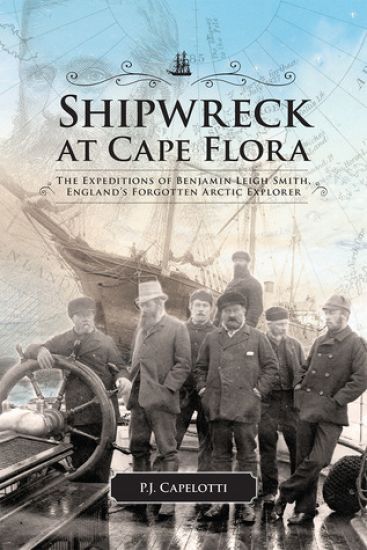
Benjamin Leigh Smith discovered and named dozens of islands in the Arctic but published no account of his pioneering explorations. He refused public accolades and sent stand-ins to deliver the results of his work to scientific societies. Yet, the Royal Geographic Society's Sir Clements R. Markham referred to him as a polar explorer of the first rank.Travelling to the Arctic islands that Leigh Smith explored and crisscrossing England to uncover unpublished journals, diaries, and photographs, archaeologist and writer P.J. Capelotti details Leigh Smith's five major Arctic expeditions and places them within the context of the great polar explorations in the nineteenth century.
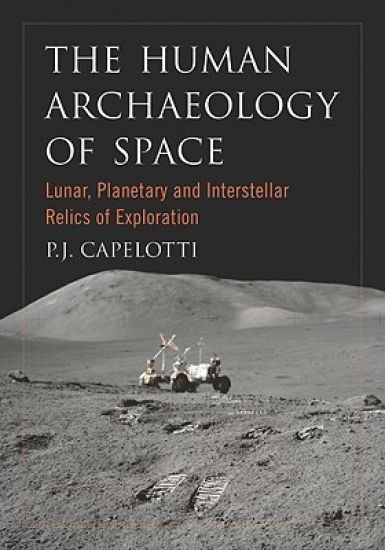
A catalog of archaeological artifacts that have been left behind in space as a result of human exploration, this work describes the remnants of lost satellites, discarded lunar rovers, depleted rockets, and various abandoned spacecraft. The book is divided into three parts covering distinct but interconnected issues of lunar, planetary, and interstellar archaeology. In Parts I and II, individual chapters cover each space mission and provide technical notes, and, in some cases, images of the artifacts. Part III explores the archaeology of mobile artifacts in the solar system and the wider galaxy, looking particularly at the problems encountered in attempting a traditional archaeological field survey of artifacts that may remain in motion indefinitely.
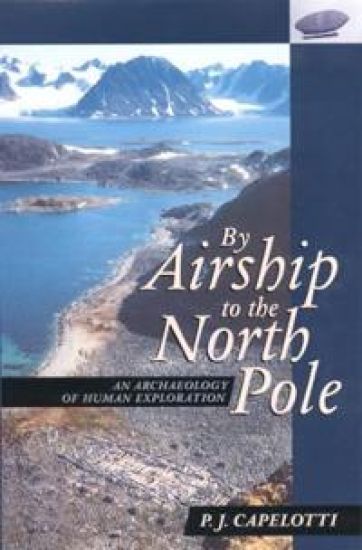
By Airship to the North Pole chronicles the adventures of Swedish engineer Salomon August Andree, who made the first failed attempt to reach the North Pole in a hydrogen balloon in 1897, and of American journalist Walter Wellman who organized and led three unsuccessful air expeditions from 1907 to 1909. The book investigates the stories behind the quests to reach this remote and inhospitable outpost by air and examines how those stories were created and reported by the press. What he uncovers allows readers to reflect on the distortions of the written historical record, particularly unkind to Wellman, and what that may tell us about our own age of exploration as we look to the last frontiers in space.