Kirjojen hintavertailu. Mukana 12 595 353 kirjaa ja 12 kauppaa.

Kirjailija

P J Marshall

Kirjat ja teokset yhdessä paikassa: 7 kirjaa, julkaisuja vuosilta 2003-2026, suosituimpien joukossa Slave Owner and Paternalist. Vertaile teosten hintoja ja tarkista saatavuus suomalaisista kirjakaupoista.

Mukana myös kirjoitusasut: P. J. Marshall, P.J. Marshall

7 kirjaa

Kirjojen julkaisuhaarukka 2003-2026.

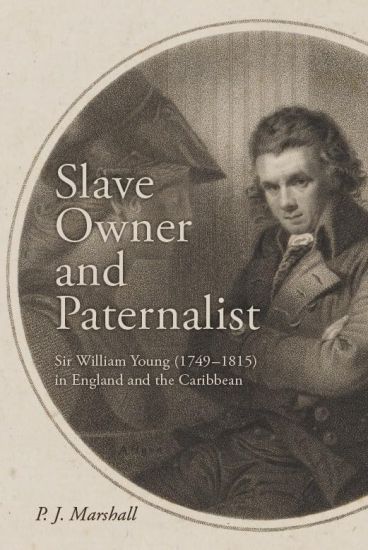
Slave Owner and Paternalist

Slave Owner and Paternalist

P.J. Marshall

BOYDELL BREWER LTD
2026
sidottu
An account of the life and ideas of Sir William Young, a leading opponent of the abolition of slavery, who used the rhetoric of paternalism to argue that slavery could be ameliorated to become a benign system. This book charts the life and ideas of Sir William Young, owner of enslaved people on Antigua, St Vincent and Tobago and a leading opponent of the abolition of slavery. It outlines how he used the rhetoric of paternalism to argue that slavery could be ameliorated to become a benign system, akin to the paternalism which he worked towards in rural England, and contrasts his aims width his failure to implement them. It considers his place in the British elite - country gentleman, active back-bench MP and a man of learning - and examines his activity in attempting to improve conditions for the rural English poor. It explores his eventual financial failure, which included the loss of both his West Indian and his English estates, and his last years as Governor of Tobago. William Young was a considerable figure in both the world of the Caribbean, source of his wealth, and the world of London and the English countryside, where he spent that wealth. Young's doctrines of paternalism, unreal and self-serving as they may have been, were widely accepted by the British upper classes.
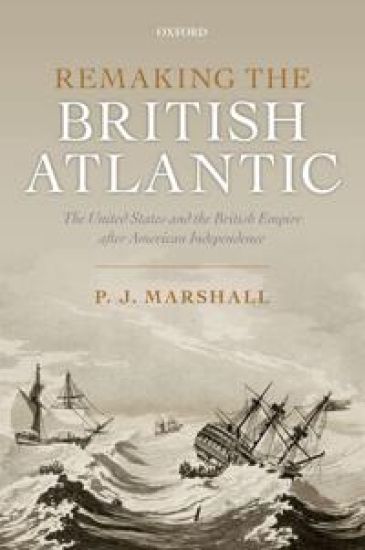
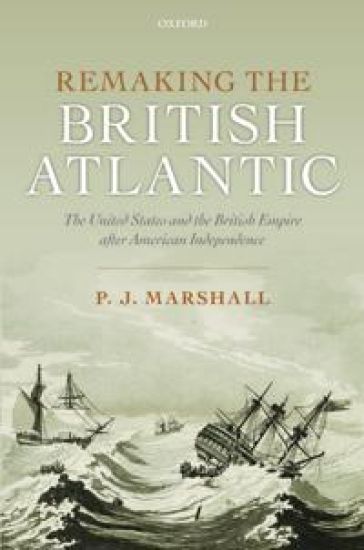
Remaking the British Atlantic

Remaking the British Atlantic

P. J. Marshall

Oxford University Press
2015
nidottu
Remaking the British Atlantic focuses on a crucial phase in the history of British-American relations: the first ten years of American Independence. These set the pattern for some years to come. On the one hand, there was to be no effective political rapprochement after rebellion and war. Mainstream British opinion was little influenced by the failure to subdue the revolt or by the emergence of a new America, for which they mostly felt disdain. What were taken to be the virtues of the British constitution were confidently reasserted and there was little inclination either to disengage from empire or to manage it in different ways. For their part, many Americans defined the new order that they were seeking to establish by their rejection of what they took to be the abuses of contemporary Britain. On the other hand, neither the trauma of war nor the failure to create harmonious political relations could prevent the re-establishment of the very close links that had spanned the pre-war Atlantic, locking people on both sides of it into close connections with one another. Many British migrants still went to America. Britain remained America's dominant trading partner. American tastes and the intellectual life of the new republic continued to be largely reflections of British tastes and ideas. America and Britain were too important for too many people in too many ways for political alienation to keep them apart.
Remaking the British Atlantic

Remaking the British Atlantic

P. J. Marshall

Oxford University Press
2012
sidottu
Remaking the British Atlantic focuses on a crucial phase in the history of British-American relations: the first ten years of American Independence. These set the pattern for some years to come. On the one hand, there was to be no effective political rapprochement after rebellion and war. Mainstream British opinion was little influenced by the failure to subdue the revolt or by the emergence of a new America, for which they mostly felt distain. What were taken to be the virtues of the British constitution were confidently reasserted and there was little inclination either to disengage from empire or to manage it in different ways, as is shown in chapters dealing with Britain's continuing imperial commitments around the Atlantic. For their part, many Americans defined the new order that they were seeking to establish by their rejection of what they took to be the abuses of contemporary Britain. On the other hand, neither the trauma of war nor the failure to create harmonious political relations could prevent the re-establishment of the very close links that had spanned the pre-war Atlantic, locking people on both sides of it into close connections with one another. Many British migrants still went to America. Britain remained America's dominant trading partner. American tastes and the intellectual life of the new republic continued to be largely reflections of British tastes and ideas. America and Britain were too important for too many people in too many ways for political alienation to keep them apart.
Biographical Memoirs of Fellows, VI

Biographical Memoirs of Fellows, VI

P J Marshall

Oxford University Press
2008
sidottu
Sixteen obituaries of recently deceased Fellows of the British Academy: Peter Birks; Lord Dacre of Glanton; William Frend; John Gallagher; Philip Grierson; Stuart Hampsire; William McKane; Sir Malcolm Pasley; Ben Pimlott; Robert Pring-Mill; John Stevens, Peter Strawson; Sir William Wade; Alan Williams; Sir Bernard Williams and John Wymer.
2006 Lectures

2006 Lectures

P J Marshall

Oxford University Press
2007
sidottu
Volume 151 of the Proceedings of the British Academy contains 15 Lectures delivered at the British Academy in 2006. From consideration of Einstein, to discussions of coercion and consent in Nazi Germany, and judicial independence.
'A Free though Conquering People'
The present collection brings together a series of studies by Peter Marshall on British imperial expansion in the later 18th century. Some essays focus on the thirteen North American colonies, the West Indies, and British contact with China; those dealing specifically with India have appeared in the author's 'Trade and Conquest: Studies on the rise of British domination in India'. The majority, culminating in the four addresses on 'Britain and the World in the Eighteenth Century' delivered as President of the Royal Historical Society, deal with the processes and dynamics of empire-building and aim to bring together the history of Asia and the Atlantic. The themes investigated include the pressures that induced Britain to pursue new imperial strategies from the mid-18th century, Britain's contrasting fortunes in India and North America, and the way in which the British adjusted their conceptions of empire from one based on freedom and the domination of the seas, to one which involved the exercise of autocratic rule over millions of people and great expanses of territory.