Kirjojen hintavertailu. Mukana 12 595 353 kirjaa ja 12 kauppaa.

Kirjailija

P. M. S. Hacker

Kirjat ja teokset yhdessä paikassa: 31 kirjaa, julkaisuja vuosilta 1993-2026, suosituimpien joukossa Wittgenstein: Rules, Grammar and Necessity. Vertaile teosten hintoja ja tarkista saatavuus suomalaisista kirjakaupoista.

Mukana myös kirjoitusasut: P. M. S Hacker

31 kirjaa

Kirjojen julkaisuhaarukka 1993-2026.

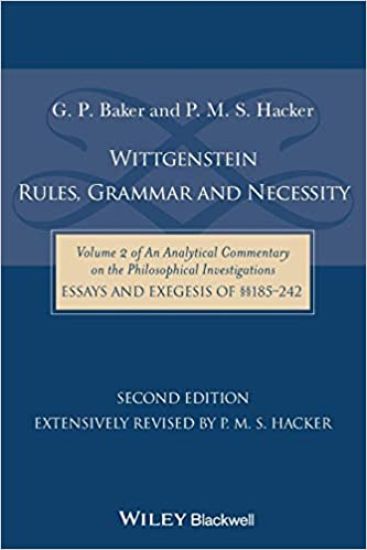
Wittgenstein: Rules, Grammar and Necessity

Wittgenstein: Rules, Grammar and Necessity

Gordon P. Baker; P. M. S. Hacker

John Wiley Sons Inc
2014
nidottu
The Second Edition of Wittgenstein: Rules, Grammar and Necessity (the second volume of the landmark analytical commentary on Wittgenstein’s Philosophical Investigations) now includes extensively revised and supplemented coverage of the Wittgenstein's complex and controversial remarks on following rules. Includes thoroughly rewritten essays and the addition of one new essay on communitarian and individualist conceptions of rule-followingIncludes a greatly expanded essay on Wittgenstein’s conception of logical, mathematical and metaphysical necessityFeatures updates to the textual exegesis as the result of taking advantage of the search engine for the Bergen edition of the NachlassReflects the results of scholarly debates on rule-following that have raged over the past 20 years
The Hamas Massacre and the Transmutation of Antisemitism
The massacre of Israelis by Hamas terrorists on October 7, 2023, was the most dreadful slaughter inflicted upon the Jews since the Nazi Holocaust. In the immediate aftermath, Israel found itself fighting an existential war on seven fronts. The Western world might have been expected to rally behind Israel – the only liberal representative democracy in the Middle East. However, progressive public opinion in the West, in academia and among student bodies, the left of centre press, radio, and TV, all turned upon Israel in a tidal wave of anti-Zionism. Israel was itself accused of genocide and crimes against humanity. This was a modern form of medieval antisemitic blood libels. What was distinctive about this novel transmutation of antisemitism was that it was left-wing, post-modernist, neo-Marxist. It was the denial of the very legitimacy of the State of Israel. Hacker offers illuminating explanations of this puzzling phenomenon. The International Court of Justice and the International Criminal Court both condemned Israel for violations of international law – decisions that were demonstrably biassed and illicit. Hacker’s meticulously researched discussion unravels the history of the Israel/Palestinian conflict, describes the successive Israeli offers of a Palestinian state on the West Bank that were rejected by corrupt Palestinian leaders who betrayed their own people, tells the sorry history of the Gaza Strip and the death-cult ideology of its elected Hamas rulers, analyses the commonly misunderstood requirements of international law, scrutinizes the pivotal role of the Iranian theocratic state in the war, and probes beneath the glib demand for recognition of a Palestinian state. This book will appeal to those interested in the Hamas massacre, the Gaza war, the Israel/Hezbollah war, and Iran/Israel war, antisemitism and its history, anti-Zionism and left-wing intellectuals in the West.
The Hamas Massacre and the Transmutation of Antisemitism
The massacre of Israelis by Hamas terrorists on October 7, 2023, was the most dreadful slaughter inflicted upon the Jews since the Nazi Holocaust. In the immediate aftermath, Israel found itself fighting an existential war on seven fronts. The Western world might have been expected to rally behind Israel – the only liberal representative democracy in the Middle East. However, progressive public opinion in the West, in academia and among student bodies, the left of centre press, radio, and TV, all turned upon Israel in a tidal wave of anti-Zionism. Israel was itself accused of genocide and crimes against humanity. This was a modern form of medieval antisemitic blood libels. What was distinctive about this novel transmutation of antisemitism was that it was left-wing, post-modernist, neo-Marxist. It was the denial of the very legitimacy of the State of Israel. Hacker offers illuminating explanations of this puzzling phenomenon. The International Court of Justice and the International Criminal Court both condemned Israel for violations of international law – decisions that were demonstrably biassed and illicit. Hacker’s meticulously researched discussion unravels the history of the Israel/Palestinian conflict, describes the successive Israeli offers of a Palestinian state on the West Bank that were rejected by corrupt Palestinian leaders who betrayed their own people, tells the sorry history of the Gaza Strip and the death-cult ideology of its elected Hamas rulers, analyses the commonly misunderstood requirements of international law, scrutinizes the pivotal role of the Iranian theocratic state in the war, and probes beneath the glib demand for recognition of a Palestinian state. This book will appeal to those interested in the Hamas massacre, the Gaza war, the Israel/Hezbollah war, and Iran/Israel war, antisemitism and its history, anti-Zionism and left-wing intellectuals in the West.
Solving, Resolving, and Dissolving Philosophical Problems
Equips readers with the intellectual tools required to tackle perennial philosophical problems Solving, Resolving, and Dissolving Philosophical Problems is addressed to all who are interested in philosophical questions. It presupposes little philosophical knowledge, only curiosity and an open mind. It demands a willingness to learn not doctrine but method, and the courage to suspend judgement and to challenge received ideas. Advocating the method of the 3 C-s: Connective, Contrastive, and Contextual Analysis, the book demonstrates the method by putting it to work — examining fifteen salient philosophical questions that concern all thinking people. It is organized thematically into four parts. Part I introduces questions in philosophy of psychology (the nature of the mind; the mind/body problem; the nature of consciousness and its demystification; knowledge of other minds). Part II deals with epistemological questions (knowledge, belief; memory; imagination, thinking; dreaming). Part III deals with value (the roots of morality; the nature of good and evil; the need for a secular conception of the soul; happiness). The application of the method in the essays produces striking, original and unanticipated results that will give readers pause. The final part of the book articulates in detail the methodology of the 3 C-s exemplified by the fifteen essays and defends it against objections. Solving, Resolving, and Dissolving Philosophical Problems: On the Methodology of Connective, Contrastive, and Contextual Analysis is an excellent textbook for undergraduate students in introductory philosophy courses alongside more advanced scholars, as well as an invaluable resource for educated general readers with an interest in philosophical methodology.
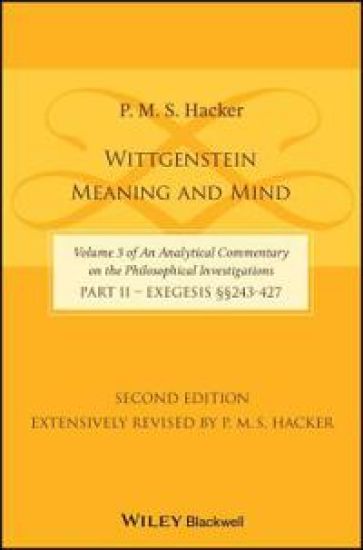
Wittgenstein: Meaning and Mind (Volume 3 of an Analytical Commentary on the Philosophical Investigations), Part 2: Exegesis, Section
Wittgenstein: Meaning and Mind, Part 2 - Exegesis 243-427 explores and clarifies the patterns, developments, and conclusions of Wittgenstein's arguments in 243-427 of Philosophical Investigations. Each numbered remark in Wittgenstein's text is systematically analysed. Problematic expressions, phrases and sentences are clarified, source remarks in Wittgenstein's Nachlass that shed light on the text are elaborated. The bearing of the remarks on deep philosophical problems is made clear. This volume of exegesis of 243-427 has been extensively revised, incorporating numerous references to original and secondary texts of Wittgenstein that were not known to exist in 1990. New comprehensive tables of correlation between the remarks of the Investigations and the source of the remarks in the Nachlass have been added. A variety of controversies of the last quarter of a century concerning the private language arguments, the nature of thought and imagination, consciousness and the self are addressed and settled explicitly or implicitly in the new exegesis. All references to Wittgenstein's text have been adjusted to the fourth edition, although page references to the first and second editions have been retained in parenthesis. These revisions bring the book up to the high standard of the extensively revised editions of Wittgenstein: Understanding and Meaning (2005) and Wittgenstein: Rules, Grammar and Necessity (2009). They ensure that this survey of Investigations 243-427 will remain the essential reference work on Wittgenstein's masterpiece for the foreseeable future.
Philosophical Foundations of Neuroscience

Philosophical Foundations of Neuroscience

M. R. Bennett; P. M. S. Hacker

Wiley-Blackwell
2021
nidottu
The second edition of the seminal work in the field—revised, updated, and extended In Philosophical Foundations of Neuroscience, M.R. Bennett and P.M.S. Hacker outline and address the conceptual confusions encountered in various neuroscientific and psychological theories. The result of a collaboration between an esteemed philosopher and a distinguished neuroscientist, this remarkable volume presents an interdisciplinary critique of many of the neuroscientific and psychological foundations of modern cognitive neuroscience. The authors point out conceptual entanglements in a broad range of major neuroscientific and psychological theories—including those of such neuroscientists as Blakemore, Crick, Damasio, Dehaene, Edelman, Gazzaniga, Kandel, Kosslyn, LeDoux, Libet, Penrose, Posner, Raichle and Tononi, as well as psychologists such as Baar, Frith, Glynn, Gregory, William James, Weiskrantz, and biologists such as Dawkins, Humphreys, and Young. Confusions arising from the work of philosophers such as Dennett, Chalmers, Churchland, Nagel and Searle are subjected to detailed criticism. These criticisms are complemented by constructive analyses of the major cognitive, cogitative, emotional and volitional attributes that lie at the heart of cognitive neuroscientific research. Now in its second edition, this groundbreaking work has been exhaustively revised and updated to address current issues and critiques. New discussions offer insight into functional magnetic resonance imaging (fMRI), the notions of information and representation, conflict monitoring and the executive, minimal states of consciousness, integrated information theory and global workspace theory. The authors also reply to criticisms of the fundamental arguments posed in the first edition, defending their conclusions regarding mereological fallacy, the necessity of distinguishing between empirical and conceptual questions, the mind-body problem, and more. Essential as both a comprehensive reference work and as an up-to-date critical review of cognitive neuroscience, this landmark volume: Provides a scientifically and philosophically informed survey of the conceptual problems in a wide variety of neuroscientific theories Offers a clear and accessible presentation of the subject, minimizing the use of complex philosophical and scientific jargon Discusses how the ways the brain relates to the mind affect the intelligibility of neuroscientific research Includes fresh insights on mind-body and mind-brain relations, and on the relation between the notion of person and human being Features more than 100 new pages and a wealth of additional diagrams, charts, and tables Continuing to challenge and educate readers like no other book on the subject, the second edition of Philosophical Foundations of Neuroscience is required reading not only for neuroscientists, psychologists, and philosophers, but also for academics, researchers, and students involved in the study of the mind and consciousness.
The Moral Powers

The Moral Powers

P. M. S. Hacker

Wiley-Blackwell
2021
nidottu
A milestone in the study of value in human life and thought, written by one of the world’s preeminent living philosophers The Moral Powers: A Study of Human Nature is a philosophical investigation of the moral potentialities and sensibilities of human beings, of the meaning of human life, and of the place of death in life. It is an essay in philosophical anthropology: the study of the conceptual framework in terms of which we think about, speak about, and investigate homo sapiens as a social and cultural animal. This volume examines the diversity of values in human life and the place of moral value within the varieties of values. Its subject is the nature of good and evil and our propensity to virtue and vice. Acting as the culmination of five decades of reflection on the philosophy of mind, epistemology, ethics, and human nature, this volume: Concludes Hacker’s acclaimed Human Nature tetralogy: Human Nature: The Categorial Framework, The Intellectual Powers: A Study of Human Nature, and The Passions: A Study of Human NatureDiscusses traditional ideas about ethical value and addresses misconceptions held by philosophers, psychologists, and cognitive neuroscientists The Moral Powers: A Study of Human Nature is required reading philosophers of mind, ethicists, psychologists, cognitive neuroscientists, and any general reader wanting to understand the nature of value and the place of ethics in human lives.
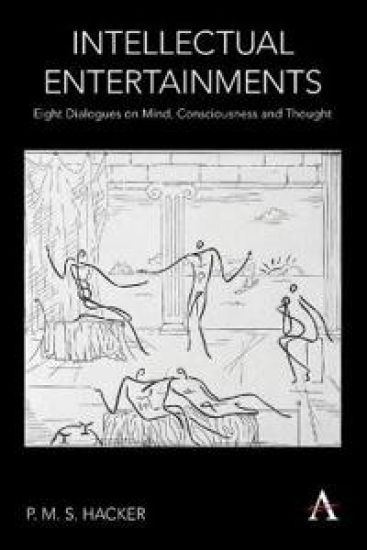
Intellectual Entertainments

Intellectual Entertainments

P. M. S. Hacker

Anthem Press
2020
nidottu
'Intellectual Entertainments' consists of eight philosophical dialogues, each with five participants, some living, some imaginary and some dead. The dialogues take place either in Elysium or in an imaginary Oxford Common Room. Each historical figure speaks in his own idiom with a distinctive turn of phrase. The imaginary figures speak in the accent and idiom of their respective countries (English, Scottish, American, Australian). The themes are the nature of the mind and the relation between mind and body; the nature of consciousness and its demystification; the nature of thought and its relation to speech; and the objectivity or subjectivity of perceptual qualities such as colour, sound, smell, taste and warmth. Each participant presents a different point of view and defends his position against the arguments of the others. No philosophical knowledge is presupposed.
Intellectual Entertainments

Intellectual Entertainments

P. M. S. Hacker

Anthem Press
2019
sidottu
'Intellectual Entertainments' consists of eight philosophical dialogues, each with five participants, some living, some imaginary and some dead. The dialogues take place either in Elysium or in an imaginary Oxford Common Room. Each historical figure speaks in his own idiom with a distinctive turn of phrase. The imaginary figures speak in the accent and idiom of their respective countries (English, Scottish, American, Australian). The themes are the nature of the mind and the relation between mind and body; the nature of consciousness and its demystification; the nature of thought and its relation to speech; and the objectivity or subjectivity of perceptual qualities such as colour, sound, smell, taste and warmth. Each participant presents a different point of view and defends his position against the arguments of the others. No philosophical knowledge is presupposed.
Wittgenstein

Wittgenstein

P. M. S. Hacker

John Wiley Sons Inc
2019
sidottu
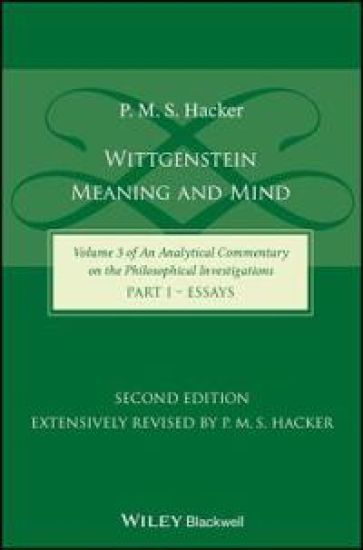
Wittgenstein: Meaning and Mind is the third volume of a four-volume analytical commentary on Wittgenstein's Philosophical Investigations, consisting of two parts. Part 1 is a sequence of fifteen essays that examine in detail all the major topics discussed in Philosophical Investigations §§243-427. These include the private language arguments, privacy, private ostensive definition, the nature of the mind, the inner and the outer, behaviour and behaviourism, thought, imagination, the self, consciousness, and criteria. Published in 1990 to widespread acclaim as a scholarly tour de force, the first edition of this volume of essays provides a comprehensive survey of these themes, the history of their treatment in early modern and modern philosophy, the development of Wittgenstein's ideas on these subjects from 1929 onwards, and an elaborate analysis of his definitive arguments in the Investigations. The new second edition has been thoroughly revised by the author and features four new essays. These include a survey of the evolution of the private language arguments in Wittgenstein's oeuvre and their role within the developing argument of the Investigations, a comprehensive essay on private ownership of experience and its pitfalls, a detailed examination and defence of Wittgenstein's repudiation of subjective knowledge of one's experience, and an overview of the achievement and importance of the private language arguments. Revised essays examine new objections to Wittgenstein's arguments – which are found wanting– and incorporate new materials from the Nachlass that were not known to exist in 1990. All references have been adjusted to the revised fourth edition of the Investigations, but previous pagination in the first and second editions has been retained in parentheses. These revisions bring the book up to the high standard of the extensively revised editions of Wittgenstein: Understanding and Meaning (Blackwell, 2005) and Wittgenstein: Rules, Grammar and Necessity (Wiley Blackwell, 2009). They ensure that this survey of Wittgenstein's private language arguments and of his accounts of thought, imagination, consciousness, the self, and criteria will remain the essential reference work on the Investigations for the foreseeable future.
Wittgenstein

Wittgenstein

P. M. S. Hacker

John Wiley Sons Inc
2019
sidottu
WITTGENSTEIN MEANING AND MIND Wittgenstein: Meaning and Mind, Part II – Exegesis §§243-427 explores and clarifies the patterns, developments, and conclusions of Wittgenstein’s arguments in §§243-427 of Philosophical Investigations. Each numbered remark in Wittgenstein’s text is systematically analysed. Hacker’s thoughtful, rigorous commentary clarifies problematic expressions, phrases, and sentences, and elaborates source remarks in Wittgenstein’s Nachlass that shed light on the text, illustrating their bearing on deep philosophical problems. This volume of exegesis of §§243-427 has been extensively revised, incorporating numerous references to original and secondary texts of Wittgenstein that were not known to exist in 1990.The second edition features new comprehensive tables of correlation between the remarks of the Investigations and the source of the remarks in the Nachlass, and addresses a variety of controversies from the last quarter of a century concerning the private language arguments, the nature of thought and imagination, consciousness, and the self, settling them explicitly or implicitly in the new exegesis. All references to Wittgenstein’s text have been adjusted to the revised fourth edition, although page references to the first and second editions have been retained in parentheses. These revisions bring the book up to the high standard of the extensively revised editions of Wittgenstein: Understanding and Meaning (Blackwell 2005) and Wittgenstein: Rules, Grammar and Necessity (Wiley Blackwell, 2009). They ensure that this survey of Investigations §§243-427 will remain the essential reference work on Wittgenstein’s masterpiece for the foreseeable future.
Wittgenstein: Comparisons and Context

Wittgenstein: Comparisons and Context

P. M. S. Hacker

Oxford University Press
2018
nidottu
Wittgenstein: Comparisons and Context is a collection of P. M. S. Hacker's papers on Wittgenstein and Wittgensteinian themes written over the last decade. It presents Hacker's own (Wittgensteinian) conception of philosophy, and defends it against criticisms. Two essays compare Wittgenstein with Kant on transcendental arguments, and offer a Wittgensteinian critique of Kant's transcendental deduction. Two further essays trace the development of Wittgenstein's philosophy of psychology, and examine his anthropological and ethnological approach to philosophical problems. This leads naturally to a synoptic comparison of Wittgenstein's later philosophy of language with formal, truth-conditional conceptions of language. A further two clarificatory essays follow these comparative ones: the first concerns Wittgenstein's conception of grammar, and his exclusion of theses, doctrines, dogmas, and opinions in philosophy; the second concerns his treatment of intentionality. The penultimate essay examines Quine's epistemological naturalism, which is often presented as a more scientific approach to philosophical problems than Wittgenstein's. The final essay offers a synoptic view of analytic philosophy and its history, in which Wittgenstein played so notable a part. The volume complements Hacker's previous collection, Wittgenstein: Connections and Controversies (OUP, 2001), but stands as an independent contribution to work in the field.
The Passions

The Passions

P. M. S. Hacker

John Wiley Sons Inc
2017
sidottu
A survey of astonishing breadth and penetration. No cognitive neuroscientist should ever conduct an experiment in the domain of the emotions without reading this book, twice. Parashkev Nachev, Institute of Neurology, UCL There is not a slack moment in the whole of this impressive work. With his remarkable facility for making fine distinctions, and his commitment to lucidity, Peter Hacker has subtly characterized those emotions such as pride, shame, envy, jealousy, love or sympathy which make up our all too human nature. This is an important book for philosophers but since most of its illustrative material comes from an astonishing range of British and European literature, it is required reading also for literary scholars, or indeed for anyone with an interest in understanding who and what we are. David Ellis, University of Kent Human beings are all subject to boundless flights of joy and delight, to flashes of anger and fear, to pangs of sadness and grief. We express our emotions in what we do, how we act, and what we say, and we can share our emotions with others and respond sympathetically to their feelings. Emotions are an intrinsic part of the human condition, and any study of human nature must investigate them. In this third volume of a major study in philosophical anthropology which has spanned nearly a decade, one of the most preeminent living philosophers examines and reflects upon the nature of the emotions, advancing the view that novelists, playwrights, and poets – rather than psychologists and cognitive neuroscientists – elaborate the most refined descriptions of their role in human life. In the book’s early chapters, the author analyses the emotions by situating them in relation to other human passions such as affections, appetites, attitudes, and agitations. While presenting a detailed connective analysis of the emotions, Hacker challenges traditional ideas about them and criticizes misconceptions held by philosophers, psychologists, and cognitive neuroscientists. With the help of abundant examples and illustrative quotations from the Western literary canon, later sections investigate, describe, and disentangle the individual emotions – pride, arrogance, and humility; shame, embarrassment, and guilt; envy and jealousy; and anger. The book concludes with an analysis of love, sympathy, and empathy as sources of absolute value and the roots of morality. A masterful contribution, this study of the passions is essential reading for philosophers of mind, psychologists, cognitive neuroscientists, students of Western literature, and general readers interested in understanding the nature of the emotions and their place in our lives.
The Passions

The Passions

P. M. S. Hacker

Wiley-Blackwell
2017
nidottu
A survey of astonishing breadth and penetration. No cognitive neuroscientist should ever conduct an experiment in the domain of the emotions without reading this book, twice. Parashkev Nachev, Institute of Neurology, UCL There is not a slack moment in the whole of this impressive work. With his remarkable facility for making fine distinctions, and his commitment to lucidity, Peter Hacker has subtly characterized those emotions such as pride, shame, envy, jealousy, love or sympathy which make up our all too human nature. This is an important book for philosophers but since most of its illustrative material comes from an astonishing range of British and European literature, it is required reading also for literary scholars, or indeed for anyone with an interest in understanding who and what we are. David Ellis, University of Kent Human beings are all subject to boundless flights of joy and delight, to flashes of anger and fear, to pangs of sadness and grief. We express our emotions in what we do, how we act, and what we say, and we can share our emotions with others and respond sympathetically to their feelings. Emotions are an intrinsic part of the human condition, and any study of human nature must investigate them. In this third volume of a major study in philosophical anthropology which has spanned nearly a decade, one of the most preeminent living philosophers examines and reflects upon the nature of the emotions, advancing the view that novelists, playwrights, and poets – rather than psychologists and cognitive neuroscientists – elaborate the most refined descriptions of their role in human life. In the book’s early chapters, the author analyses the emotions by situating them in relation to other human passions such as affections, appetites, attitudes, and agitations. While presenting a detailed connective analysis of the emotions, Hacker challenges traditional ideas about them and criticizes misconceptions held by philosophers, psychologists, and cognitive neuroscientists. With the help of abundant examples and illustrative quotations from the Western literary canon, later sections investigate, describe, and disentangle the individual emotions – pride, arrogance, and humility; shame, embarrassment, and guilt; envy and jealousy; and anger. The book concludes with an analysis of love, sympathy, and empathy as sources of absolute value and the roots of morality. A masterful contribution, this study of the passions is essential reading for philosophers of mind, psychologists, cognitive neuroscientists, students of Western literature, and general readers interested in understanding the nature of the emotions and their place in our lives.
Wittgenstein: Comparisons and Context

Wittgenstein: Comparisons and Context

P. M. S. Hacker

Oxford University Press
2013
sidottu
Wittgenstein: Comparisons and Context is a collection of P. M. S. Hacker's papers on Wittgenstein and Wittgensteinian themes written over the last decade. It presents Hacker's own (Wittgensteinian) conception of philosophy, and defends it against criticisms. Two essays compare Wittgenstein with Kant on transcendental arguments, and offer a Wittgensteinian critique of Kant's transcendental deduction. Two further essays trace the development of Wittgenstein's philosophy of psychology, and examine his anthropological and ethnological approach to philosophical problems. This leads naturally to a synoptic comparison of Wittgenstein's later philosophy of language with formal, truth-conditional conceptions of language. A further two clarificatory essays follow these comparative ones: the first concerns Wittgenstein's conception of grammar, and his exclusion of theses, doctrines, dogmas, and opinions in philosophy; the second concerns his treatment of intentionality. The penultimate essay examines Quine's epistemological naturalism, which is often presented as a more scientific approach to philosophical problems than Wittgenstein's. The final essay offers a synoptic view of analytic philosophy and its history, in which Wittgenstein played so notable a part. The volume complements Hacker's previous collection, Wittgenstein: Connections and Controversies (OUP, 2001), but stands as an independent contribution to work in the field.
History of Cognitive Neuroscience

History of Cognitive Neuroscience

M. R. Bennett; P. M. S. Hacker

John Wiley Sons Inc
2012
nidottu
History of Cognitive Neuroscience documents the major neuroscientific experiments and theories over the last century and a half in the domain of cognitive neuroscience, and evaluates the cogency of the conclusions that have been drawn from them. Provides a companion work to the highly acclaimed Philosophical Foundations of Neuroscience - combining scientific detail with philosophical insightsViews the evolution of brain science through the lens of its principal figures and experimentsAddresses philosophical criticism of Bennett and Hacker's previous bookAccompanied by more than 100 illustrations
Human Nature

Human Nature

P. M. S. Hacker

Wiley-Blackwell (an imprint of John Wiley Sons Ltd)
2010
nidottu
This major study examines the most fundamental categories in terms of which we conceive of ourselves, critically surveying the concepts of substance, causation, agency, teleology, rationality, mind, body and person, and elaborating the conceptual fields in which they are embedded. The culmination of 40 years of thought on the philosophy of mind and the nature of the mankindWritten by one of the world’s leading philosophers, the co-author of the monumental 4 volume Analytical Commentary on the Philosophical Investigations (Blackwell Publishing, 1980-2004)Uses broad categories, such as substance, causation, agency and power to examine how we think about ourselves and our naturePlatonic and Aristotelian conceptions of human nature are sketched and contrastedIndividual chapters clarify and provide an historical overview of a specific concept, then link the concept to ideas contained in other chapters
Wittgenstein: Understanding And Meaning

Wittgenstein: Understanding And Meaning

Gordon P. Baker; P. M. S. Hacker

Wiley-Blackwell (an imprint of John Wiley Sons Ltd)
2009
nidottu
This is a much revised and extended new edition of Part II of the first volume of the monumental four-volume Analytical Commentary on the Philosophical Investigations. Takes into account much new material that was unavailable when the first edition was writtenFollowing Baker’s death in 2002, P.M.S. Hacker has rewritten many sections of exegesis completelyPart II: Exegesis §§1-184 has been thoroughly revised in the light of the electronic publication of Wittgenstein’s Nachlass, and includes many new interpretations of the remarks, a history of the composition of the Philosophical Investigations and an overview of its structureThe accompanying Part I: Essays now includes two completely new essays: 'Meaning and Use' and 'The Recantation of a Metaphysician'; the essays: ‘The Augustinian Conception of Language’, ‘The Language-Game Method’, ‘Contextual Dicta and Contextual Principles’, ‘Philosophy’, ‘Surveyability and Surveyable Representations’, and ‘Truth and the General Propositional Form’ are redrafted and expanded, incorporating new source materials and new arguments, as well as taking into account debates of the last quarter of a centuryThe revisions will ensure that this remains the definitive reference work on Wittgenstein’s masterpiece for the foreseeable future