Kirjojen hintavertailu. Mukana 12 390 323 kirjaa ja 12 kauppaa.

Kirjailija

P. S. Barnwell

Kirjat ja teokset yhdessä paikassa: 3 kirjaa, julkaisuja vuosilta 1997-2004, suosituimpien joukossa Political Assemblies in the Earlier Middle Ages. Vertaile teosten hintoja ja tarkista saatavuus suomalaisista kirjakaupoista.

Mukana myös kirjoitusasut: P.S. Barnwell

3 kirjaa

Kirjojen julkaisuhaarukka 1997-2004.

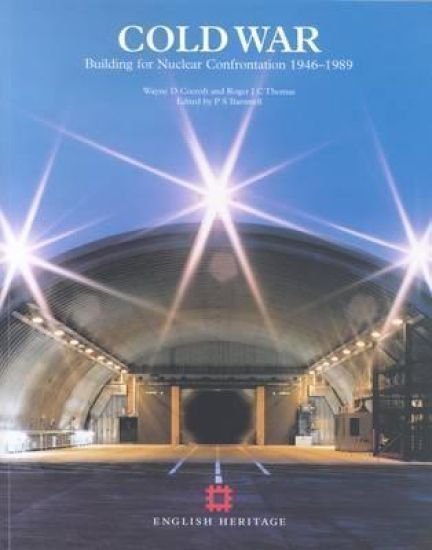
Cold War

Cold War

Wayne D. Cocroft; Roger C. Thomas; P.S. Barnwell

Royal Commission on Historical Monuments
2004
nidottu
The historical and cultural aspects of the Cold War have been much studied, yet its physical manifestations in England – its buildings and structures – have remained largely unknown. To the great landscape historian WG Hoskins writing in the 1950’s they were profoundly alien: “England of the … electric fence, of the high barbed wire around some unmentionable devilment…. Barbaric England of the scientists, the military men, and the politicians”. Now these survivors of the Cold War are, in their turn, disappearing fast, like medieval monasteries and bastioned forts before them – only with more limited scope for regeneration and reuse. This book is the first to look at these monuments to the Cold War. It is heavily illustrated with photographs of the sites as they survive today, archive photographs (many previously unpublished), modern and historic air photographs, site and building plans, and specially commissioned interpretative drawings. It also endeavours look at the installations within the military and political context of what was one of the defining phenomena of the late 20th century.
Political Assemblies in the Earlier Middle Ages

Political Assemblies in the Earlier Middle Ages

P. S. Barnwell; Marco Mostert

Brepols N.V.
2004
sidottu
Assembly is a central feature of the European political process between the demise of the Roman Empire and the rise of the bureaucratic state in the twelfth and thirteenth centuries. Historians have often neglected the crucial rule of political assemblies in their own right, concentrating instead on exceptional or extraordinary attention-catching events which occurred at assemblies. Earlier generations of scholars tried to discern in such assemblies the forerunners of later medieval parliaments and other forms of representative government. By contrast, the contributors to this volume present medieval assemblies in their own terms. Were political assemblies in the earlier Middle Ages convened to confirm decisions already taken elsewhere or were they genuinely deliberative? How, if at all, did political assemblies create consensus? At what level(s) of the political and administrative hierarchy were assemblies held, who attended such gatherings, how were they conducted, and where were they held? The main focus is on assemblies of emperors, kings, and princes, and on those of townsfolk, those some more local assemblies are also discussed. The over-arching thematic structure relates to the purposes of assemblies and how they worked, their practical and ritual or symbolic aspects, and the degree to which they were stage-managed, and by whom. The contributors bring archaeological, as well as historical, evidence to bear and present a range of geographical, political and historiographical approaches and traditions. The papers offer a coherent thread of analysis running from the immediate successor states of the Roman Empire to the High Middle Ages and range in geographic coverage from Scandinavia to Catalonia, and from Ireland to Russia.
Kings, Courtiers and Imperium

Kings, Courtiers and Imperium

P. S. Barnwell

Bristol Classical Press
1997
sidottu
This work constitutes an appraisal of the development of kingship and royal administration in the kingdoms which, by the seventh century AD, had been established in the former Western Roman Empire. By viewing the seventh century in its own terms, and providing a detailed critique of the primary sources, the author sets out to show that kings were stronger than has often been thought, and their administration more sophisticated. A feature of his analysis is its setting of the evidence for early Anglo-Saxon England alongside that relating to the continental kingdoms. The evolution of governmental structures in a period increasingly remote from the imperial past is traced, as is the relationship of the "barbarian" kingdoms to the Byzantine Empire, and it is argued that, despite emergent differences between the kingdoms, many of their administrative institutions continued to be influenced by a common inheritence of Roman traditions.