Kirjojen hintavertailu. Mukana 12 390 323 kirjaa ja 12 kauppaa.

Kirjailija

P. Whitney Lackenbauer

Kirjat ja teokset yhdessä paikassa: 13 kirjaa, julkaisuja vuosilta 2006-2022, suosituimpien joukossa Canada and the Changing Arctic. Vertaile teosten hintoja ja tarkista saatavuus suomalaisista kirjakaupoista.

13 kirjaa

Kirjojen julkaisuhaarukka 2006-2022.

Canada and the Changing Arctic

Canada and the Changing Arctic

Franklyn Griffiths; Rob Huebert; P. Whitney Lackenbauer

Wilfrid Laurier University Press
2011
nidottu
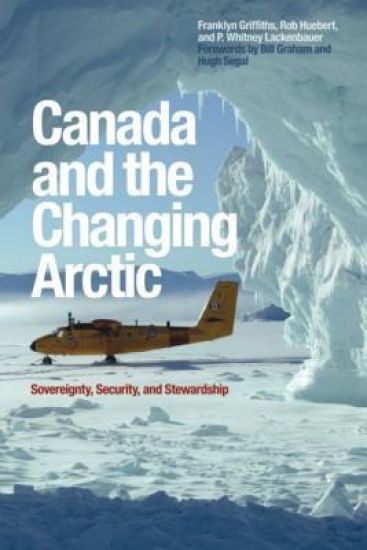
Global warming has had a dramatic impact on the Arctic environment, including the ice melt that has opened previously ice-covered waterways. State and non-state actors who look to the region and its resources with varied agendas have started to pay attention. Do new geopolitical dynamics point to a competitive and inherently conflictual ââ¬Årace for resourcesââ¬? Or will the Arctic become a region governed by mutual benefit, international law, and the achievement of a widening array of cooperative arrangements among interested states and Indigenous peoples? As an Arctic nation Canada is not immune to the consequences of these transformations. In Canada and the Changing Arctic: Sovereignty, Security, and Stewardship , the authors, all leading commentators on Arctic affairs, grapple with fundamental questions about how Canada should craft a responsible and effective Northern strategy. They outline diverse paths to achieving sovereignty, security, and stewardship in Canadaââ¬â¢s Arctic and in the broader circumpolar world. The changing Arctic region presents Canadians with daunting challenges and tremendous opportunities. This book will inspire continued debate on what Canada must do to protect its interests, project its values, and play a leadership role in the twenty-first-century Arctic. Forewords by Senator Hugh Segal and former Minister of Foreign Affairs and of National Defence Bill Graham.
The Joint Arctic Weather Stations

The Joint Arctic Weather Stations

Daniel Heidt; P. Whitney Lackenbauer

UNIVERSITY OF CALGARY PRESS
2022
sidottu
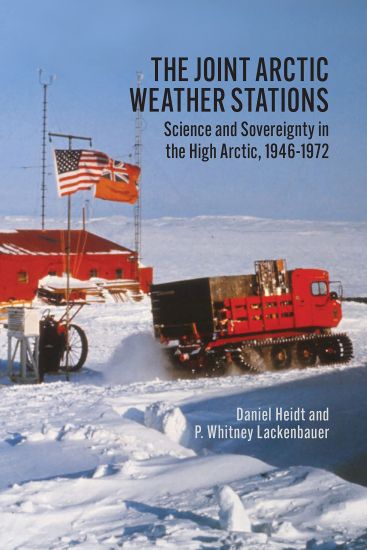
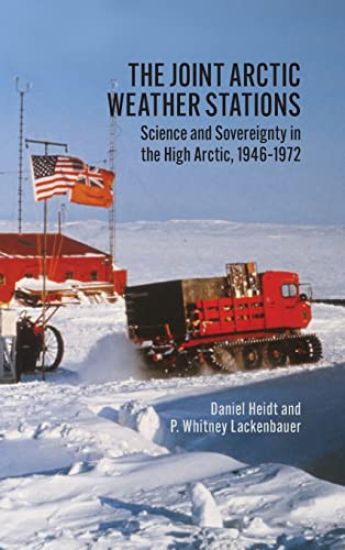
The Joint Arctic Weather Stations were five meteorological and scientific monitoring stations constructed at Resolute, Eureka, Mould Bay, Isachsen, and Alert with the cooperation of the Canadian Department of Transport's meteorological branch and the United States Weather Bureau. From 1947 to the early 1970s as few as four Canadians and four Americans worked and lived at each of the four satellite stations, observing and collecting scientific data.This is the first systematic account of the Joint Arctic Weather Stations, a project that profoundly shaped state activates and scientific inquiry in the Arctic Archipelago. Drawing on extensive archival evidence, unpublished personal memoirs, and interviews with former employees, The Joint Arctic Weather Stations analyzes the diplomatic, scientific, social, military, and environmental dimensions of the program alongside each station as a nexus of state planning and personal agency.Contrary to previous scholarship, The Joint Arctic Weather Stations reveals that Canadian officials sought—and achieved—a firm policy that afforded effective control of Canada's Arctic while enjoying the advantages of American contribution to the joint meteorological program. It explores the changing ways science was conducted over time and how the details of everyday life at remote stations, from the climate to leisure activities to debates over alcohol, hunting, and leadership, shaped the program's effectiveness. An exploration of the full duration of the Joint Arctic Weather Stations from high-level planning and diplomacy to personal interactions in the stations makes this book an essential exploration of collaborative polar science in the North American Arctic.
The Joint Arctic Weather Stations

The Joint Arctic Weather Stations

Daniel Heidt; P. Whitney Lackenbauer

UNIVERSITY OF CALGARY PRESS
2022
pokkari
The Joint Arctic Weather Stations were five meteorological and scientific monitoring stations constructed at Resolute, Eureka, Mould Bay, Isachsen, and Alert with the cooperation of the Canadian Department of Transport's meteorological branch and the United States Weather Bureau. From 1947 to the early 1970s as few as four Canadians and four Americans worked and lived at each of the four satellite stations, observing and collecting scientific data.This is the first systematic account of the Joint Arctic Weather Stations, a project that profoundly shaped state activates and scientific inquiry in the Arctic Archipelago. Drawing on extensive archival evidence, unpublished personal memoirs, and interviews with former employees, The Joint Arctic Weather Stations analyzes the diplomatic, scientific, social, military, and environmental dimensions of the program alongside each station as a nexus of state planning and personal agency.Contrary to previous scholarship, The Joint Arctic Weather Stations reveals that Canadian officials sought—and achieved—a firm policy that afforded effective control of Canada's Arctic while enjoying the advantages of American contribution to the joint meteorological program. It explores the changing ways science was conducted over time and how the details of everyday life at remote stations, from the climate to leisure activities to debates over alcohol, hunting, and leadership, shaped the program's effectiveness. An exploration of the full duration of the Joint Arctic Weather Stations from high-level planning and diplomacy to personal interactions in the stations makes this book an essential exploration of collaborative polar science in the North American Arctic.
Governing Complexity in the Arctic Region

Governing Complexity in the Arctic Region

Mathieu Landriault; Andrew Chater; Elana Wilson Rowe; P. Whitney Lackenbauer

TAYLOR FRANCIS LTD
2021
nidottu
This book examines emerging forms of governance in the Arctic region, exploring how different types of state and non-state actors promote and support rules and standards.The authors argue that confining our understandings of Arctic governance to Arctic states and a focus on the Arctic Council as the primary site of circumpolar governance provides an incomplete picture. Instead, they embrace the complexity of governance in the Arctic by systematically analyzing and comparing the position, interventions, and influence of different actor groups seeking to shape Arctic political and economic outcomes in multiple sites of Arctic politics, both formal and informal. This book assesses the potential that sub-national governments, corporations, civil society organizations, Indigenous peoples, and non-Arctic states possess to develop norms and standards to ensure a stable, rule-based Arctic region. It will be of interest to all scholars and students working in the fields of Arctic Sovereignty, Security Studies, Global Governance, and International Political Economy.
Governing Complexity in the Arctic Region

Governing Complexity in the Arctic Region

Mathieu Landriault; Andrew Chater; Elana Wilson Rowe; P. Whitney Lackenbauer

Routledge
2019
sidottu
This book examines emerging forms of governance in the Arctic region, exploring how different types of state and non-state actors promote and support rules and standards.The authors argue that confining our understandings of Arctic governance to Arctic states and a focus on the Arctic Council as the primary site of circumpolar governance provides an incomplete picture. Instead, they embrace the complexity of governance in the Arctic by systematically analyzing and comparing the position, interventions, and influence of different actor groups seeking to shape Arctic political and economic outcomes in multiple sites of Arctic politics, both formal and informal. This book assesses the potential that sub-national governments, corporations, civil society organizations, Indigenous peoples, and non-Arctic states possess to develop norms and standards to ensure a stable, rule-based Arctic region. It will be of interest to all scholars and students working in the fields of Arctic Sovereignty, Security Studies, Global Governance, and International Political Economy.
Roots of Entanglement

Roots of Entanglement

Myra Rutherdale; Kerry Abel; P. Whitney Lackenbauer

University of Toronto Press
2018
pokkari
Roots of Entanglement offers an historical exploration of the relationships between Indigenous peoples and European newcomers in the territory that would become Canada. Various engagements between Indigenous peoples and the state are emphasized and questions are raised about the ways in which the past has been perceived and how those perceptions have shaped identity and, in turn, interaction both past and present. Specific topics such as land, resources, treaties, laws, policies, and cultural politics are explored through a range of perspectives that reflect state-of-the-art research in the field of Indigenous history. Editors Myra Rutherdale, Whitney Lackenbauer, and Kerry Abel have assembled an array of top scholars including luminaries such as Keith Carlson, Bill Waiser, Skip Ray, and Ken Coates. Roots of Entanglement is a direct response to the Truth and Reconciliation Commission’s call for a better appreciation of the complexities of history in the relationship between Indigenous and non-Indigenous peoples in Canada.
Roots of Entanglement

Roots of Entanglement

Myra Rutherdale; Kerry Abel; P. Whitney Lackenbauer

University of Toronto Press
2018
sidottu
Roots of Entanglement offers an historical exploration of the relationships between Indigenous peoples and European newcomers in the territory that would become Canada. Various engagements between Indigenous peoples and the state are emphasized and questions are raised about the ways in which the past has been perceived and how those perceptions have shaped identity and, in turn, interaction both past and present. Specific topics such as land, resources, treaties, laws, policies, and cultural politics are explored through a range of perspectives that reflect state-of-the-art research in the field of Indigenous history. Editors Myra Rutherdale, Whitney Lackenbauer, and Kerry Abel have assembled an array of top scholars including luminaries such as Keith Carlson, Bill Waiser, Skip Ray, and Ken Coates. Roots of Entanglement is a direct response to the Truth and Reconciliation Commission’s call for a better appreciation of the complexities of history in the relationship between Indigenous and non-Indigenous peoples in Canada.
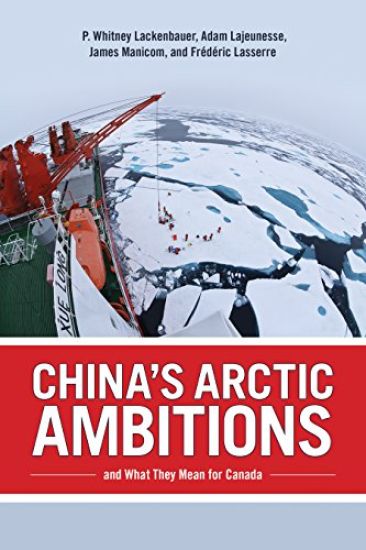
China's Arctic Ambitions and What They Mean for Canada

China's Arctic Ambitions and What They Mean for Canada

P. Whitney Lackenbauer; Adam Lajeunesse; Frederic Lasserre; James Manicom

UNIVERSITY OF CALGARY PRESS
2018
sidottu
China's Arctic Ambitions and What They Mean for Canada is an in-depth studies of China's increasing interest in the Arctic. It offers a holistic approach to understanding Chinese motivations and the potential impacts of greater Chinese presence in the circumpolar region, exploring resource development, shipping, scientific research, governance, and security.Drawing on extensive research in Chinese government documentation, business and media reports, and current academic literature, this timely volume eschews the traditional assumption that Chinese actions are unified and monolithic in their approach to Arctic affairs. Instead, it offers a careful analysis of the different, and often competing, interests and priorities of Chinese government and industry. Analyzing Chinese interests and activities from a Canadian perspective, the book provides an unparalleled point of reference to discuss the implications for the Canadian and broader circumpolar North.
China's Arctic Ambitions and What They Mean for Canada

China's Arctic Ambitions and What They Mean for Canada

P. Whitney Lackenbauer; Adam Lajeunesse; Frederic Lasserre; James Manicom

University of Calgary Press
2018
nidottu
China's Arctic Ambitions and What They Mean for Canada is an in-depth studies of China's increasing interest in the Arctic. It offers a holistic approach to understanding Chinese motivations and the potential impacts of greater Chinese presence in the circumpolar region, exploring resource development, shipping, scientific research, governance, and security. Drawing on extensive research in Chinese government documentation, business and media reports, and current academic literature, this timely volume eschews the traditional assumption that Chinese actions are unified and monolithic in their approach to Arctic affairs. Instead, it offers a careful analysis of the different, and often competing, interests and priorities of Chinese government and industry. Analyzing Chinese interests and activities from a Canadian perspective, the book provides an unparalleled point of reference to discuss the implications for the Canadian and broader circumpolar North.
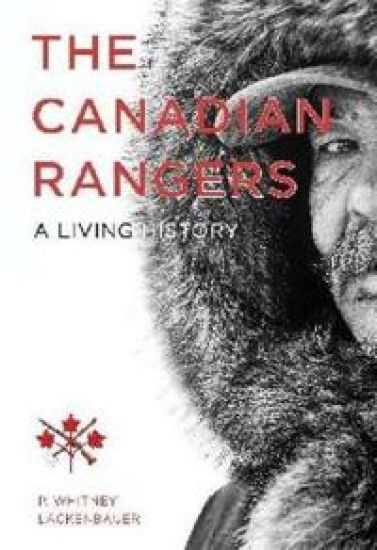
The Canadian Rangers

The Canadian Rangers

P. Whitney Lackenbauer

University of British Columbia Press
2013
pokkari
The Canadian Rangers stand sentinel in the farthest reaches of our country. For more than six decades, this dedicated group of citizen-soldiers has quietly served as Canada's eyes, ears, and voice in isolated coastal and northern communities from coast to coast to coast.How does this minimally trained and lightly equipped force make a meaningful contribution to national defence and to building sustainable communities? One of Canada's leading experts on northern issues answers this question using official records, extensive interviews, and on-the-ground participation in Ranger exercises. In this meticulously researched history, Lackenbauer reveals why the Rangers have evolved into a flexible, inexpensive, and culturally inclusive way to promote sovereignty, security, safety, and stewardship. This unique organization reflects a successful partnership between the modern state and residents of remote communities, a partnership rooted in local knowledge and crosscultural understanding.
The Canadian Rangers

The Canadian Rangers

P. Whitney Lackenbauer

University of British Columbia Press
2013
sidottu
The Canadian Rangers stand sentinel in the farthest reaches of our country. For more than six decades, this dedicated group of citizen-soldiers has quietly served as Canada's eyes, ears, and voice in isolated coastal and northern communities from coast to coast to coast.How does this minimally trained and lightly equipped force make a meaningful contribution to national defence and to building sustainable communities? One of Canada's leading experts on northern issues answers this question using official records, extensive interviews, and on-the-ground participation in Ranger exercises. In this meticulously researched history, Lackenbauer reveals why the Rangers have evolved into a flexible, inexpensive, and culturally inclusive way to promote sovereignty, security, safety, and stewardship. This unique organization reflects a successful partnership between the modern state and residents of remote communities, a partnership rooted in local knowledge and crosscultural understanding.
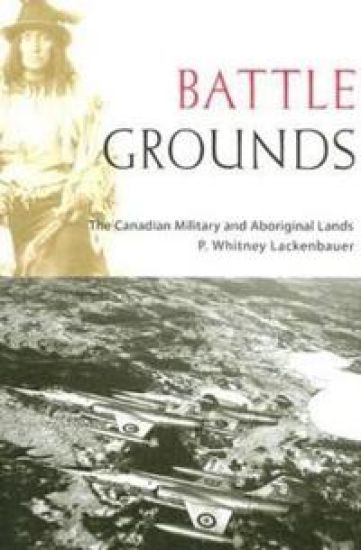
Battle Grounds

Battle Grounds

P. Whitney Lackenbauer

University of British Columbia Press
2007
pokkari
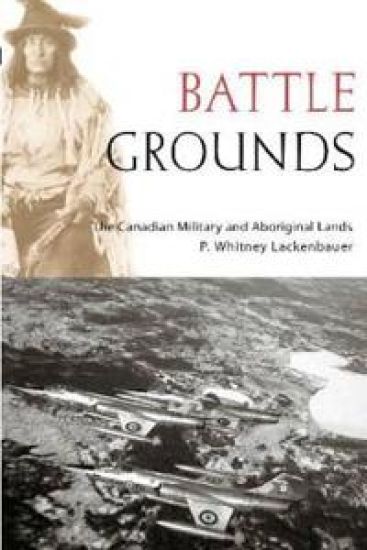
Base closures, use of airspace for weapons testing and low-level flying, environmental awareness, and Aboriginal land claims have focused attention in recent years on the use of Native lands for military training. But is the military's interest in Aboriginal lands new? Battle Grounds analyzes a century of government–Aboriginal interaction and negotiation to explore how the Canadian military came to use Aboriginal lands for training. It examines what the process reveals about the larger and evolving relationship between governments and Native communities, and how increasing Aboriginal assertiveness and activism have affected the issue.
Battle Grounds

Battle Grounds

P. Whitney Lackenbauer

University of British Columbia Press
2006
sidottu
Base closures, use of airspace for weapons testing and low-level flying, environmental awareness, and Aboriginal land claims have focused attention in recent years on the use of Native lands for military training. But is the military's interest in Aboriginal lands new? Battle Grounds analyzes a century of government–Aboriginal interaction and negotiation to explore how the Canadian military came to use Aboriginal lands for training. It examines what the process reveals about the larger and evolving relationship between governments and Native communities, and how increasing Aboriginal assertiveness and activism have affected the issue.