Kirjailija
Pablo Neruda
Kirjat ja teokset yhdessä paikassa: 112 kirjaa, julkaisuja vuosilta 1963-2026, suosituimpien joukossa Réussir son Bac de français 2025 : Analyse du recueil La Centaine d'amour de Pablo Neruda. Vertaile teosten hintoja ja tarkista saatavuus suomalaisista kirjakaupoista.
112 kirjaa
Kirjojen julkaisuhaarukka 1963-2026.
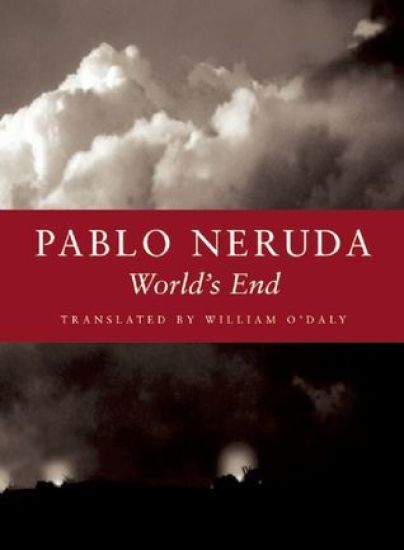
"World's End, like much Neruda, contains bewildering multitudes. Some poems incite, others console, as the poet--maestro of his own response and impresario of ours--Looks inward and out.--Los Angeles Times"We are faced with the unavoidable task of critical communication within a world which is empty and is not less full of injustices, punishments and sufferings because it is empty."--from Pablo Neruda's Nobel Prize addressThis is the first complete English language translation of the late work by Neruda, the greatest of Latin American poets, translated by O'Daly, a specialist in Neruda's late and posthumous work....Highly recommended for poetry and Latin American collections. --Library JournalWilliam O. Daly's translation of Pablo Neruda's book-length poem, Fin de mundo, is a veritable poet's companion and guide to the twentieth century. This is Pablo Neruda at his best and most honest....Neruda's poems are a quiet but potent celebration of the resilience of the human spirit.--Sacramento Book ReviewIn this book-length poem, completely translated for the first time into English and presented in a bilingual format, Nobel Laureate Pablo Neruda composes a "valediction to the Sixties" and confronts a grim disillusionment growing inside him. Terrifying, beautiful, vast, and energized, Neruda's work speaks of oppression and warfare, his own guilt, and the ubiquitous fear that came to haunt the century that promised to end all wars.World's End also marks the final book in Copper Canyon's dynamic nine-book series of Neruda's late and posthumous work. These best-selling books have become perennial favorites of poetry readers, librarians, and teachers. Through this series, translator William O'Daly has been recognized as one of the world's most insightful caretakers of Neruda's poetry, and Publishers Weekly praised his efforts as "awe-inspiring."My truest vocationwas to become a mill: singing in the water, I studiedthe motives of transparencyand learned from the abundant wheatthe identity that repeats itself.Pablo Neruda is one of the world's beloved poets. He served as a Chilean diplomat and won the Nobel Prize in 1971.William O'Daly has dedicated thirty years to translating the late and posthumous work of Pablo Neruda. He lives in California.
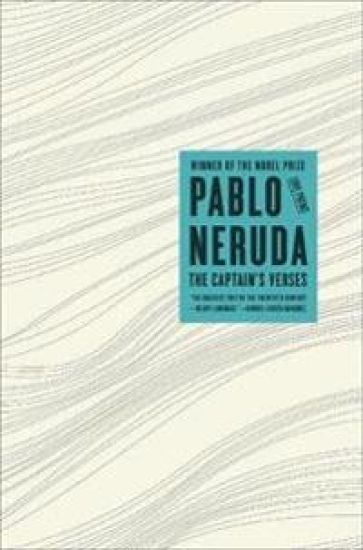
Pablo Neruda, winner of the Nobel Prize for Literature, finished writing The Captain's Verses in 1952 while in exile on the island of Capri the paradisal setting for the blockbuster film Il Postino (The Postman). Surrounded by sea, sun, and Capri's natural splendors, Neruda addressed these poems to his lover Matilde Urrutia before they were married, but didn't publish them publicly until 1963. This complete, bilingual collection has become a classic for love-struck readers around the world passionately sensuous, and exploding with all the erotic energy of a new love."
Pablo Neruda is one of the world's great poets, and Copper Canyon Press has long been dedicated to publishing translations of his work in bilingual editions.The Hands of Day--at long last translated into English in its entirety--pronounces Neruda's desire to take part in the great human making of the day. Moved by the guilt of never having worked with his hands, Neruda opens with the despairing confession, "Why did I not make a broom? / Why was I given hands at all?" The themes of hands and work grow in significance as Neruda celebrates the carpenters, longshoremen, blacksmiths, and bakers--those laborers he admires most--and shares his exuberant adoration for the earth and the people upon it.Yes, I am guiltyof what I did not do, of what I did not sow, did not cut, did not measure, of never having rallied myself to populate lands, of having sustained myself in the desertsand of my voice speaking with the sand.Pablo Neruda (1904-1973) was a Chilean poet and diplomat who received the Nobel Prize in Literature in 1971. Recognized during his life as "a people's poet," he is considered one of the greatest artists of the twentieth century.William O'Daly is the best-selling translator of six of Pablo Neruda's books, including The Book of Questions and The Sea and the Bells. His work as a translator has been featured on The Today Show.
Charged with sensuality and passion, Pablo Neruda's love poems caused a scandal when published anonymously in 1952. In later editions, these verses became the most celebrated of the Noble Prize winner's oeuvre, captivating readers with earthbound images that reveal in gentle lingering lines an erotic re-imagining of the world through the prism of a lover's body: "today our bodies became vast, they grew to the edge of the world / and rolled melting / into a single drop / of wax or meteor...." Written on the paradisal island of Capri, where Neruda "took refuge" in the arms of his lover Matilde Urrutia, Love Poems embraces the seascapes around them, saturating the images of endless shores and waves with a new, yearning eroticism. This wonderful book collects Neruda's most passionate verses.
Spain in Our Hearts/ Espana En El Corazon
Pablo Neruda; Donald Devenish (TRN) Walsh; Donald Devenish Walsh
New Directions Publishing Corporation
2005
pokkari
"This is pure Neruda at his prime, which is to say incomparable."--Choice"The Separate Rose represents Pablo Neruda at the peak of his art, and William O'Daly has done an important service by bringing it before American readers with such care."--The Bloomsbury ReviewThe coast of Easter Island--the most isolated inhabited island in the world--is adorned with gigantic and miraculous stone statues. Neruda made a single pilgrimage to Easter Island during a poignant time in his life--he was dying of cancer and taking his life's inventory. Out of this journey grew a sequence of poems that alternate between "Men" and "The Island," through which Neruda observes the latest remnants of the ancient world in direct opposition to modernity. With an introduction by William O'Daly.
"Neruda's lyricism wakes us up, even in the face of death, to the connections we have with our land, inner and outer."--Los Angeles Times Book ReviewThe first authorized English translation of A n, considered among Neruda's finest long poems.More aware than ever of his imminent death, these 28 cantos--written during two intensely lyrical days--launch the poet on a personal expedition in search of his deepest roots. It is a soaring tribute to the Chilean people, their history and survival that invokes the Araucanian Indians, the conquistadors who tried to enslave them, folklore, the people and places of his childhood and the sights and smells of the marketplace. As in the best poetry, Neruda's particulars become profoundly universal. With an introduction by William O'Daly.
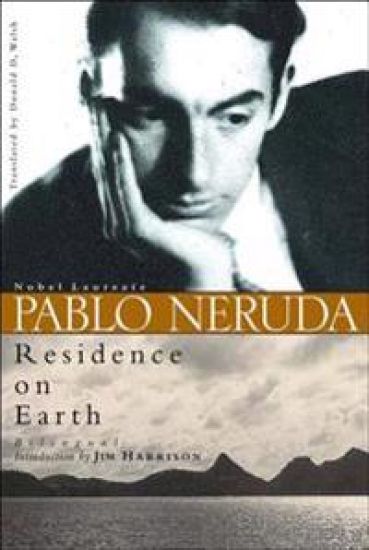
Residence on Earth/Residencia en la Tierra
Pablo Neruda; Jim (INT) Harrison; Donald Devenish (TRN) Walsh
New Directions Publishing Corporation
2004
pokkari
In celebration of the 100th New Directions celebrates the Pablo anniversary of Pablo Neruda's birth, New Neruda Centennial. Directions is pleased to announce the reissue of a classic work in a timeless translation by Donald D. Walsh and fully bilingual. Residence on Earth is perhaps Neruda's greatest work. Upon its publication in 1973, this bilingual publication instantly became "a revolution... a classic by which masterpieces are judged" (Review). "In Residence on Earth," wrote Amado Alonso, "the tornado of fury will no longer pass without lingering, because it will be identified with Neruda's] heart."
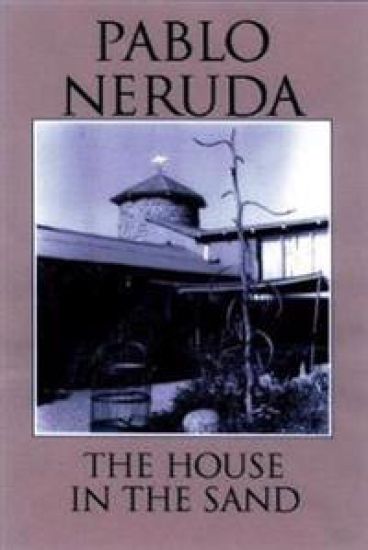
Few writers are as integrally bound to place as Pablo Neruda was to the landscape of Isla Negra on the Chilean coast. From his arrival there in the late 1930s to his death in 1973, Isla Negra became a text that unraveled in a series of images fundamental to an understanding of his work. Renowned documentary photographer Rogovin's photographs were taken in Isla Negra at the suggestion of Neruda himself. The poems and photographs reveal the landscape of Isla Negra as well as the home into which Neruda put so much of himself. This volume is issued to celebrate the centennial of the Nobel Prize winning poet's birth.
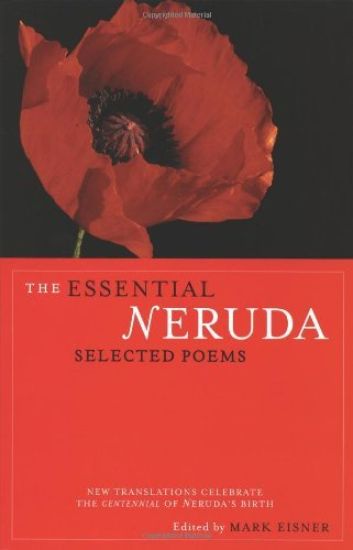
This bilingual collection of Neruda's most essential poems is indispensable.Selected by a team of poets and prominent Neruda scholars in both Chile and the U.S., this is a definitive selection that draws from the entire breadth and width of Neruda's various styles and themes.An impressive group of translators that includes Alistair Reid, Stephen Mitchell, Robert Hass, Stephen Kessler and Jack Hirschman, have come together to revisit or completely retranslate the poems; and a handful of previously untranslated works are included as well.This selection sets the standard for a general, high-quality introduction to Neruda's complete oeuvre."...The Essential Neruda will prove to be, for most readers, the best introduction to Neruda available in English. In fact, I can think of few other books that have given me so much delight so easily. "--The Austin Chronicle"This book is a must-have for any reader interested in a definitive sampling of the most essential poems by one whom many consider one of the best poets of the 20th century."--Mike Nobles,Tulsa World"A splendid way to begin a love affair with our Pablo or, having already succumbed to his infinite charms, revisit him passionately again and again and yet again."--Ariel Dorfman, author of Death and the Maiden"The editors and translators know how to extract gold from a lifetime of prolific writing. If you want a handy Neruda companion and don't know where to begin, this is it."--The Bloomsbury Review
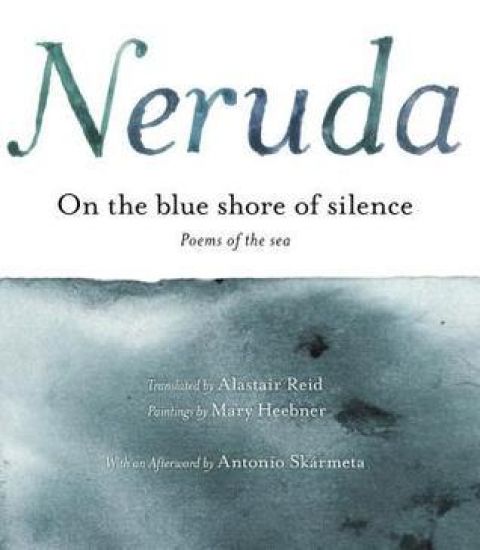
On the Blue Shore of Silence \ a la Orilla Azul del Silencio (Spanish Edition): Poemas Frente Al Mar (Bilingual)
Pablo Neruda
Rayo
2004
sidottu
Aunque existe un sinn mero de antolog as de la poes a de Neruda, A la Orilla Azul del Silencio es la primera en reunir algunos de sus m s bellos poemas sobre el mar. Algunas veces apasionados, otras veces serenos, los poemas de este libro -- presentado en formato biling e -- ofrecen al lector la posibilidad de imaginarse lo que habr a sido sentarse con Neruda en Isla Negra frente al mar infinito, oyendo el eterno ir y venir de las olas. Con traducciones al ingl s hechas por Alastair Reid, su traductor predilecto, y las extraordinarias pinturas de laartista Mary Heebner, A la Orilla Azul del Silencio es un nuevo pilar de la obra de Neruda, que combina con habilidad las sensibilidades del poeta, la artista y el lector.
Die Verse der Kapitäns", "Zwanzig Liebesgedichte" und "Der rasende Schleuderer" sind die drei wichtigsten Liebesgedichtzyklen im Werk des Nobelpreisträgers Pablo Neruda. Sie werden hier in einer vollständigen zweisprachigen Werkausgabe vorgelegt. "Die Gedichte haben an Kraft und Poesie kein bisschen verloren. Da gibt's kein schales Rosa, da gibt's nur Scharlachrot! Wundervoll!" Berliner Zeitung
In the introduction to this bilingual volume, the translator reminds us: Neruda spent the last forty years of his life making himself dangerous with his poetry... He came to see poetry as a moral act, with personal and communal responsibilities. But here, Neruda is at his playful and irreverent best. Whether writing a celebration, allegory, lament or self-parody, the poet declares the strong sense of an improvisational spirit. Highlighted as Essential by Library Journal.
Facing death from cancer, Neruda wrote no book more direct and passionate in its language, and this translation--the first time these poems appeared in English--was cited by Bloomsbury Review as a Book of the Year and called one of the most valuable Neruda books we have today. In this lyrical suite, the poet meditates on his imminent death, embraces solitude, and returns to nature as a source of regeneration. Bilingual with introduction.
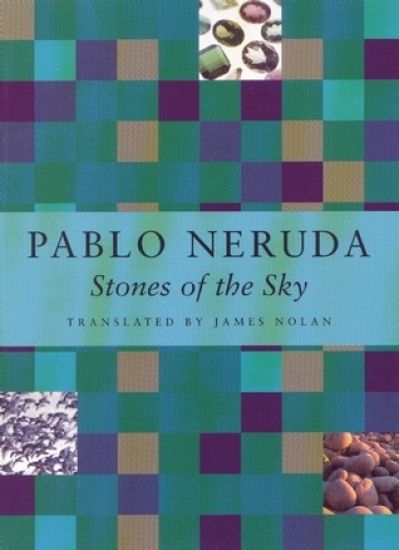
This suite of thirty poems is Neruda's last love song to the Earth. When he wrote these poems he was dying of cancer, and as the title suggests he addresses not ordinary stones, but cosmic ones: stones that reconcile immobile permanence and the clarity of spiritual flight. When the poet meets his crystallized self, the encounter takes on an eerie brilliance--The Village Voice. Bilingual with introduction.An excellent bilingual editon.--Choice
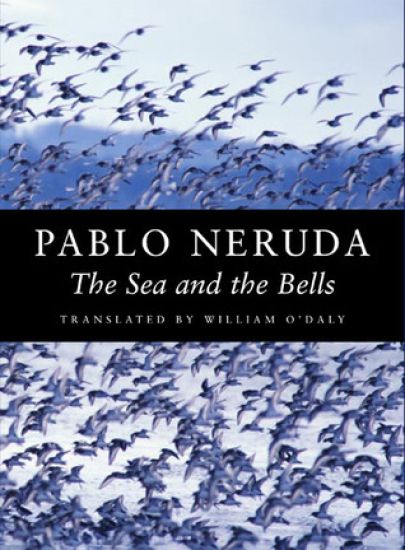
The sound of ships' bells, sea waves, and migratory birds fuel Neruda's longing to retreat from life's noisy busyness. Stripped to essentials, these poems are some of the last Neruda ever wrote, as he pulled one dream out of another. Includes the final lovesong to his wife, written in the past tense: It was beautiful to live / When you lived Bilingual with introduction.Deeply personal, expansive, and universal... majestic and understated beauty.--Publishers Weekly
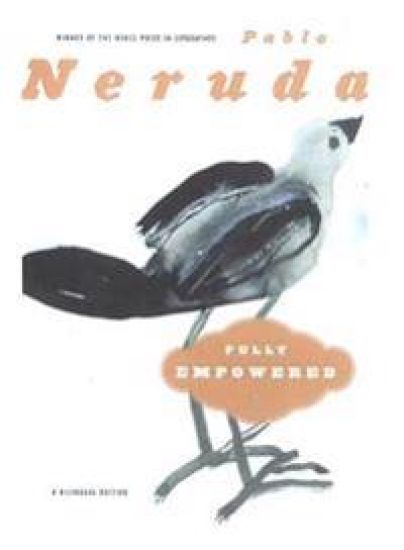
An engaging and accessible collection that includes some of the Nobel Prize winner's own favorite poems, with the English translations and original Spanish presented on facing pages. "The Sea"A single entity, but no blood.A single caress, death or a rose.The sea comes in and puts our lives togetherand attacks alone and spreads itself and singsin nights and days and men and living creatures.Its essence-fire and cold; movement, movement. Pablo Neruda himself regarded Fully Empowered -- which first appeared in Spanish in 1962 under the title Plenos Poderes -- as a particular favorite, in part because it came out of a most fruitful period in his life. These thirty-six poems vary from short, intense lyrics to characteristic Neruda odes to magnificent meditations on the office of poet, including poems that would undoubtedly claim a place in any selection of Neruda's greatest work. "The People" ("El Pueblo"), about the state of the working man in Chile's past and present, and the most celebrated of Neruda's later poems, completes this reflective, graceful collection.
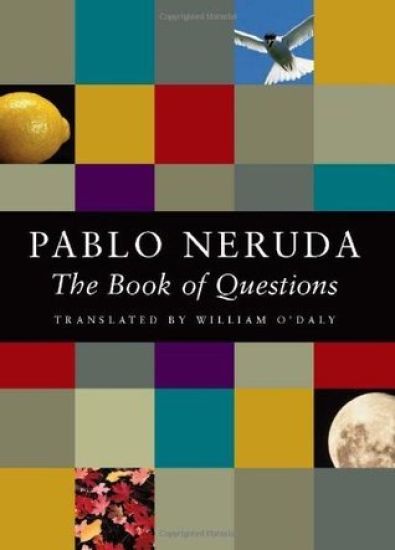
A best-selling volume of Pablo Neruda's poetry in an English-Spanish edition.Pablo Neruda is one of the world's most popular poets, and in The Book of Questions, Neruda refuses to be corralled by the rational mind. Composed of 316 unanswerable questions, these poems integrate the wonder of a child with the experiences of an adult. By turns Orphic, comic, surreal, and poignant, Neruda's questions lead the reader beyond reason into realms of intuition and pure imagination. This complete translation of Pablo Neruda's El libro de las preguntas (The Book of Questions) features Neruda's original Spanish-language poems alongside William O'Daly's English translations. In his introduction O'Daly, who has translated eight volumes of Pablo Neruda's poetry, writes, These poems, more so than any of Neruda's other work, remind us that living in a state of visionary surrender to the elemental questions, free of the quiet desperation of clinging too tightly to answers, may be our greatest act of faith. When Neruda died in 1973, The Book of Questions was one of eight unpublished poetry manuscripts that lay on his desk. In it, Neruda achieves a deeper vulnerability and vision than in his earlier work-and this unique book is a testament to everything that made Neruda an artist.Neruda's questions evoke pictures that make sense on a visual level before the reader can grasp them on a literal one. The effect is mildly dazzling and] O'Daly's translations achieve a tone that is both meditative and spontaneous. --Publishers WeeklyPablo Neruda, born in southern Chile, led a life charged with poetic and political activity. He was the recipient of the Nobel Prize in Literature, the International Peace Prize, and served as Chile's ambassador to several countries, including Burma, France, and Argentina. He died in 1973.II.Tell me, is the rose naked or is that her only dress?Why do trees conceal the splendor of their roots?Who hears the regrets of the thieving automobile?Is there anything in the world sadder than a train standing in the rain?XIV.And what did the rubies say standing before the juice of pomegranates?Why doesn't Thursday talk itself into coming after Friday?Who shouted with gleewhen the color blue was born?Why does the earth grievewhen the violets appear?
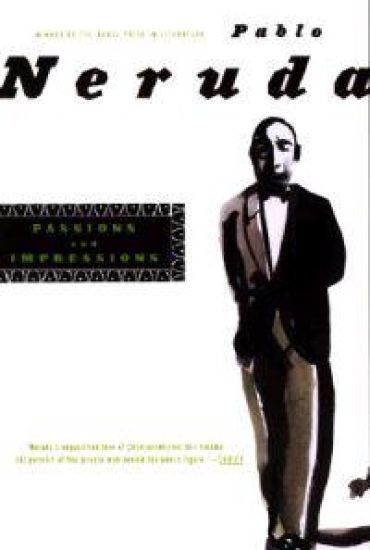
Pablo Neruda is known first as a poet, but the prose pieces in this collection reflect the enormous hunger he demonstrated throughout his career for new modes of expression, new adventures, new challenges. Passions and Impressions is both a sequel to and an enlargement of Neruda's Memoirs, recording a lifetime of travel, of friendships and enmities, of exile and homecoming, of loss and discovery, and of history both public and personal. Above all, it is a testament to Neruda's love for Chile-for its citizens, its flora and fauna, its national identity. His abiding devotion pervades these notes on a life fully lived.