Kirjojen hintavertailu. Mukana 12 595 353 kirjaa ja 12 kauppaa.

Kirjailija

Pamela Ballinger

Kirjat ja teokset yhdessä paikassa: 5 kirjaa, julkaisuja vuosilta 2002-2026, suosituimpien joukossa Her Name That Day. Vertaile teosten hintoja ja tarkista saatavuus suomalaisista kirjakaupoista.

5 kirjaa

Kirjojen julkaisuhaarukka 2002-2026.

Her Name That Day

Her Name That Day

Pietro Spirito; Pamela Ballinger

RUTGERS UNIVERSITY PRESS
2026
sidottu
Giuliana Striano is forty years old and lives in Cape Town, South Africa. She is the daughter of Italian emigrants with a daughter of her own, Renata, now five years old. Upon the death of her mother, Giuliana learns that she had been adopted and given a new identity with a different name and a different date and place of birth. So Giuliana determines to find out who she really is, what is hidden in her past, and who her birth parents were. Her Name That Day the story of "another" Italy set in a region that only recently became Italian and whose characters are Croatian, Slovenian, Australian, and South African, as well as Italians, precariously perched in a border community filled with secrets and scores to settle with History. Against this backdrop, the narrator endeavors to save a woman encountered by chance on the internet from becoming still another name without a history, another deracinated and disenchanted individual. In prose that is precise and engaging, as though shot through by a sense of pain both silent and inescapable, Pietro Spirito gives shape to an existential thriller in which there are neither guilty parties nor heroes, only victims and survivors.
Her Name That Day

Her Name That Day

Pietro Spirito; Pamela Ballinger

RUTGERS UNIVERSITY PRESS
2026
nidottu
Giuliana Striano is forty years old and lives in Cape Town, South Africa. She is the daughter of Italian emigrants with a daughter of her own, Renata, now five years old. Upon the death of her mother, Giuliana learns that she had been adopted and given a new identity with a different name and a different date and place of birth. So Giuliana determines to find out who she really is, what is hidden in her past, and who her birth parents were. Her Name That Day the story of "another" Italy set in a region that only recently became Italian and whose characters are Croatian, Slovenian, Australian, and South African, as well as Italians, precariously perched in a border community filled with secrets and scores to settle with History. Against this backdrop, the narrator endeavors to save a woman encountered by chance on the internet from becoming still another name without a history, another deracinated and disenchanted individual. In prose that is precise and engaging, as though shot through by a sense of pain both silent and inescapable, Pietro Spirito gives shape to an existential thriller in which there are neither guilty parties nor heroes, only victims and survivors.
The World Refugees Made

The World Refugees Made

Pamela Ballinger

CORNELL UNIVERSITY PRESS
2023
pokkari
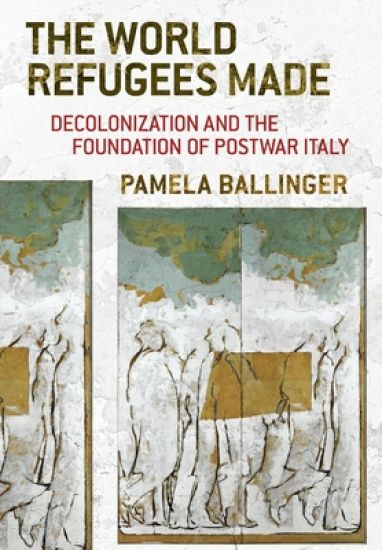
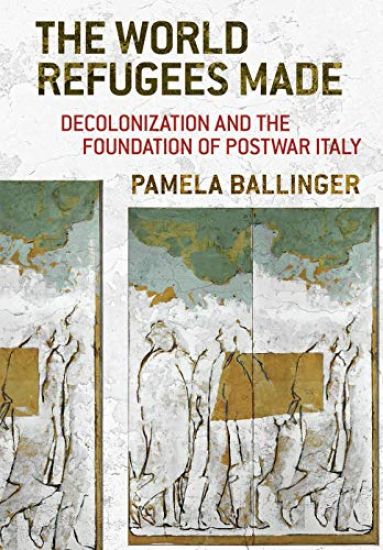
In The World Refugees Made, Pamela Ballinger explores Italy's remaking in light of the loss of a wide range of territorial possessions—colonies, protectorates, and provinces—in Africa and the Balkans, the repatriation of Italian nationals from those territories, and the integration of these "national refugees" into a country devastated by war and overwhelmed by foreign displaced persons from Eastern Europe. Post-World War II Italy served as an important laboratory, in which categories differentiating foreign refugees (who had crossed national boundaries) from national refugees (those who presumably did not) were debated, refined, and consolidated. Such distinctions resonated far beyond that particular historical moment, informing legal frameworks that remain in place today. Offering an alternative genealogy of the postwar international refugee regime, Ballinger focuses on the consequences of one of its key omissions: the ineligibility from international refugee status of those migrants who became classified as national refugees. The presence of displaced persons also posed the complex question of who belonged, culturally and legally, in an Italy that was territorially and politically reconfigured by decolonization. The process of demarcating types of refugees thus represented a critical moment for Italy, one that endorsed an ethnic conception of identity that citizenship laws made explicit. Such an understanding of identity remains salient, as Italians still invoke language and race as bases of belonging in the face of mass immigration and ongoing refugee emergencies. Ballinger's analysis of the postwar international refugee regime and Italian decolonization illuminates the study of human rights history, humanitarianism, postwar reconstruction, fascism and its aftermaths, and modern Italian history. Open Access edition funded by the National Endowment for the Humanities
The World Refugees Made

The World Refugees Made

Pamela Ballinger

Cornell University Press
2020
sidottu
In The World Refugees Made, Pamela Ballinger explores Italy's remaking in light of the loss of a wide range of territorial possessions—colonies, protectorates, and provinces—in Africa and the Balkans, the repatriation of Italian nationals from those territories, and the integration of these "national refugees" into a country devastated by war and overwhelmed by foreign displaced persons from Eastern Europe. Post-World War II Italy served as an important laboratory, in which categories differentiating foreign refugees (who had crossed national boundaries) from national refugees (those who presumably did not) were debated, refined, and consolidated. Such distinctions resonated far beyond that particular historical moment, informing legal frameworks that remain in place today. Offering an alternative genealogy of the postwar international refugee regime, Ballinger focuses on the consequences of one of its key omissions: the ineligibility from international refugee status of those migrants who became classified as national refugees. The presence of displaced persons also posed the complex question of who belonged, culturally and legally, in an Italy that was territorially and politically reconfigured by decolonization. The process of demarcating types of refugees thus represented a critical moment for Italy, one that endorsed an ethnic conception of identity that citizenship laws made explicit. Such an understanding of identity remains salient, as Italians still invoke language and race as bases of belonging in the face of mass immigration and ongoing refugee emergencies. Ballinger's analysis of the postwar international refugee regime and Italian decolonization illuminates the study of human rights history, humanitarianism, postwar reconstruction, fascism and its aftermaths, and modern Italian history. Open Access edition funded by the National Endowment for the Humanities
History in Exile

History in Exile

Pamela Ballinger

Princeton University Press
2002
pokkari
In the decade after World War II, up to 350,000 ethnic Italians were displaced from the border zone between Italy and Yugoslavia known as the Julian March. History in Exile reveals the subtle yet fascinating contemporary repercussions of this often overlooked yet contentious episode of European history. Pamela Ballinger asks: What happens to historical memory and cultural identity when state borders undergo radical transformation? She explores displacement from both the viewpoints of the exiles and those who stayed behind. Yugoslavia's breakup and Italy's political transformation in the early 1990s, she writes, allowed these people to bring their histories to the public eye after nearly half a century. Examining the political and cultural contexts in which this understanding of historical consciousness has been formed, Ballinger undertakes the most extensive fieldwork ever done on this subject--not only around Trieste, where most of the exiles settled, but on the Istrian Peninsula (Croatia and Slovenia), where those who stayed behind still live. Complementing this with meticulous archival research, she examines two sharply contrasting models of historical identity yielded by the "Istrian exodus": those who left typically envision Istria as a "pure" Italian land stolen by the Slavs, whereas those who remained view it as ethnically and linguistically "hybrid." We learn, for example, how members of the same family, living a short distance apart and speaking the same language, came to develop a radically different understanding of their group identities. Setting her analysis in engaging, jargon-free prose, Ballinger concludes that these ostensibly very different identities in fact share a startling degree of conceptual logic.