Kirjojen hintavertailu. Mukana 12 595 353 kirjaa ja 12 kauppaa.

Kirjailija

Pamela M. Lee

Kirjat ja teokset yhdessä paikassa: 9 kirjaa, julkaisuja vuosilta 2006-2020, suosituimpien joukossa Pol Bury. Vertaile teosten hintoja ja tarkista saatavuus suomalaisista kirjakaupoista.

9 kirjaa

Kirjojen julkaisuhaarukka 2006-2020.

Pol Bury

Pol Bury

Kurt de Boodt; Paul Dujardin; Pamela M. Lee; Gilles Marquenie; André Morain; Johan Pas

Yale University Press
2017
sidottu
Pol Bury (1922-2005) was a painter, sculptor, jewelry designer, writer, and graphic artist, but is perhaps best known to the general public for his fountains and sculpture in public spaces throughout the world. Acclaimed as one of the first proponents of “moving” works, driven by a motor, he became one of the protagonists of kinetic art and was without doubt one of Belgium’s most important postwar artists. Accompanying a major exhibition in Belgium, this publication presents an opportunity to rediscover Bury’s multifaceted oeuvre. Distributed for MercatorfondsExhibition Schedule:BOZAR Centre for Fine Arts, Brussels (02/23/17–06/04/17)
Centennial – A History of the Renaissance Society

Centennial – A History of the Renaissance Society

Susan M. Bielstein; Bruce Jenkins; Pamela M. Lee; Nina Möntmann; Liesl M. Olson; R.h. Quatman; Aoibheann Sweeney; Hamza Walker

Renaissance Society at the University of Chicago
2015
sidottu
This major publication considers the Renaissance Society’s first hundred years. The volume features contributions from Davarian L. Baldwin, Susan Bielstein, Bruce Jenkins, Pamela M. Lee, Nina Möntmann, Liesl Olson, R.H. Quaytman, Anne Rorimer, and Aoibheann Sweeney. It also includes an interview between Susanne Ghez, Solveig Øvstebø, and Hamza Walker, and a comprehensive timeline of the institution’s programming over 100 years.
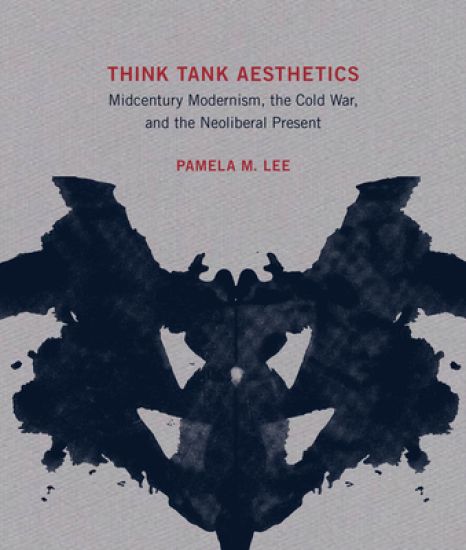
Think Tank Aesthetics

Think Tank Aesthetics

Pamela M. Lee

MIT Press
2020
sidottu
How the approaches and methods of think tanks—including systems theory, operational research, and cybernetics—paved the way for a peculiar genre of midcentury modernism.In Think Tank Aesthetics, Pamela Lee traces the complex encounters between Cold War think tanks and the art of that era. Lee shows how the approaches and methods of think tanks—including systems theory, operations research, and cybernetics—paved the way for a peculiar genre of midcentury modernism and set the terms for contemporary neoliberalism. Lee casts these shadowy institutions as sites of radical creativity and interdisciplinary practice in the service of defense strategy. Describing the distinctive aesthetics that emerged from such institutions as the RAND Corporation, she maps the multiple and overlapping networks that connected nuclear strategists, mathematicians, economists, anthropologists, artists, designers, and art historians.Lee recounts, among other things, the decades-long colloquy between Albert Wohlstetter, a RAND analyst, and his former professor, the famous art historian Meyer Schapiro; the anthropologist Margaret Mead's deployment of innovative visual aids that recall midcentury abstract art; and the combination of cybernetics and modernist design in an “Opsroom” for the short-lived socialist government of Salvador Allende in 1970s Chile (and its restaging many years later as a work of art). Lee suggests that we think of these connections less as disciplinary border crossings than as colonization of the specific interests of arts by the approaches and methods of the sciences. Hearing the echoes of think tank aesthetics in today's pursuit of the interdisciplinary and in academia's science-infused justification of the humanities, Lee wonders what territory has been ceded in a laboratory approach to the arts.
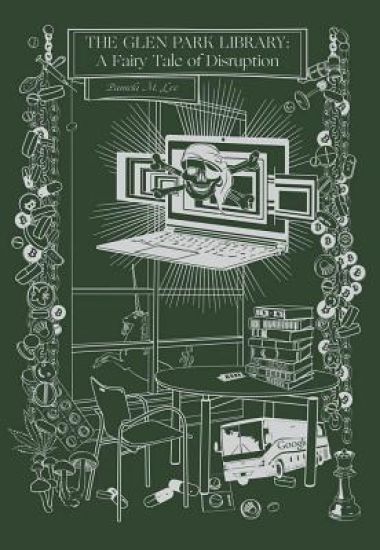
The Glen Park Library

The Glen Park Library

Pamela M. Lee; Michelle Kuo

No Place Press
2019
sidottu
How Silicon Valley, the dark net, and digital culture have affected our relationship to knowledge, history, language, aesthetics, reading, and truth.In October 2013, twenty-nine-year-old Ross William Ulbricht was arrested at the Glen Park Public Branch Library in San Francisco, accused of being the "Dread Pirate Roberts" and mastermind of a dark net drug marketplace known as Silk Road. Ulbricht was an ardent libertarian who believed Silk Road-described by the New York Times as "the largest, most sophisticated criminal enterprise the internet has ever seen"-was battling the forces of big government. He was convicted two years later of money laundering, computer hacking, and conspiracy to traffic narcotics and sentenced to life in prison.Art historian Pamela Lee reads this event as a fairy tale of disruption rather than an isolated episode in the history of the dark net, Silicon Valley, and the relationship between public libraries and digital culture. Lee argues that the notion of "disruptive" technology in contemporary culture has radically affected our relationship to knowledge, history, language, aesthetics, reading, and truth. Against the backdrop of her account of Ulbricht and his exploits, Lee provides original readings of five women artists-Gretchen Bender, Cecile B. Evans, Josephine Pryde, Carissa Rodriguez, and Martine Syms-who weigh in, either explicitly or inadvertently, on the nature of contemporary media and technology. Written as a work of experimental art criticism, The Glen Park Library is both a homage to the Bay Area and an excoriation of the ethos of Silicon Valley. As with all fairy tales, the book's ultimate subjects are much greater, however, and Lee casts a critical eye on collisions between privacy and publicity, knowledge and information, and the past and future that are enabled by the technocratic worldview.
Forgetting the Art World

Forgetting the Art World

Pamela M. Lee

MIT Press
2017
pokkari
The work of art's mattering and materialization in a globalized world, with close readings of works by Takahashi Murakami, Andreas Gursky, Thomas Hirschhorn, and others.It may be time to forget the art world-or at least to recognize that a certain historical notion of the art world is in eclipse. Today, the art world spins on its axis so quickly that its maps can no longer be read; its borders blur. In Forgetting the Art World, Pamela Lee connects the current state of this world to globalization and its attendant controversies. Contemporary art has responded to globalization with images of movement and migration, borders and multitudes, but Lee looks beyond iconography to view globalization as a world process. Rather than think about the "global art world" as a socioeconomic phenomenon, or in terms of the imagery it stages and sponsors, Lee considers "the work of art's world" as a medium through which globalization takes place. She argues that the work of art is itself both object and agent of globalization.Lee explores the ways that art actualizes, iterates, or enables the processes of globalization, offering close readings of works by artists who have come to prominence in the last two decades. She examines the "just in time" managerial ethos of Takahashi Murakami; the production of ethereal spaces in Andreas Gursky's images of contemporary markets and manufacture; the logic of immanent cause dramatized in Thomas Hirschhorn's mixed-media displays; and the "pseudo-collectivism" in the contemporary practice of the Atlas Group, the Raqs Media Collective, and others.To speak of "the work of art's world," Lee says, is to point to both the work of art's mattering and its materialization, to understand the activity performed by the object as utterly continuous with the world it at once inhabits and creates.
New Games

New Games

Pamela M. Lee

Routledge
2012
nidottu
Pamela M. Lee’s New Games revisits postmodernism in light of art history's more recent embrace of "the contemporary." What can the theories and practices associated with postmodernism tell us about the obsession with the contemporary in both the academy and the art world? In looking at work by Dara Birnbaum, Öyvind Fahlström and Richard Serra, among others, Lee returns to Jean-Francois Lyotard's canonical text The Postmodern Condition as a means to understand more recent art-critical interests in interactivity, collectivism and neo-liberalism. She reads Lyotard's well-known treatment of language games relative to the game theory associated with the Cold War and the rise of the information society. New Games asks readers to think critically about our recent past and the embattled state of our contemporary preoccupations.With a critical introduction by Johanna Burton, New Games is the fourth and penultimate volume in Routledge’s series of short books on the theories of modernism by leading art historians on twentieth-century art and art criticism.
New Games

New Games

Pamela M. Lee

Routledge
2012
sidottu
Pamela M. Lee’s New Games revisits postmodernism in light of art history's more recent embrace of "the contemporary." What can the theories and practices associated with postmodernism tell us about the obsession with the contemporary in both the academy and the art world? In looking at work by Dara Birnbaum, Öyvind Fahlström and Richard Serra, among others, Lee returns to Jean-Francois Lyotard's canonical text The Postmodern Condition as a means to understand more recent art-critical interests in interactivity, collectivism and neo-liberalism. She reads Lyotard's well-known treatment of language games relative to the game theory associated with the Cold War and the rise of the information society. New Games asks readers to think critically about our recent past and the embattled state of our contemporary preoccupations.With a critical introduction by Johanna Burton, New Games is the fourth and penultimate volume in Routledge’s series of short books on the theories of modernism by leading art historians on twentieth-century art and art criticism.
Chronophobia

Chronophobia

Pamela M. Lee

MIT Press
2006
pokkari
An examination of the pervasive anxiety about and fixation with time seen in 1960s art.In the 1960s art fell out of time; both artists and critics lost their temporal bearings in response to what E. M. Cioran called "not being entitled to time." This anxiety and uneasiness about time, which Pamela Lee calls "chronophobia," cut across movements, media, and genres, and was figured in works ranging from kinetic sculptures to Andy Warhol films. Despite its pervasiveness, the subject of time and 1960s art has gone largely unexamined in historical accounts of the period. Chronophobia is the first critical attempt to define this obsession and analyze it in relation to art and technology.Lee discusses the chronophobia of art relative to the emergence of the Information Age in postwar culture. The accompanying rapid technological transformations, including the advent of computers and automation processes, produced for many an acute sense of historical unknowing; the seemingly accelerated pace of life began to outstrip any attempts to make sense of the present. Lee sees the attitude of 1960s art to time as a historical prelude to our current fixation on time and speed within digital culture. Reflecting upon the 1960s cultural anxiety about temporality, she argues, helps us historicize our current relation to technology and time.After an introductory framing of terms, Lee discusses such topics as "presentness" with repect to the interest in systems theory in 1960s art; kinetic sculpture and new forms of global media; the temporality of the body and the spatialization of the visual image in the paintings of Bridget Riley and the performance art of Carolee Schneemann; Robert Smithson's interest in seriality and futurity, considered in light of his reading of George Kubler's important work The Shape of Time: Remarks on the History of Things and Norbert Wiener's discussion of cybernetics; and the endless belaboring of the present in sixties art, as seen in Warhol's Empire and the work of On Kawara.