Kirjojen hintavertailu. Mukana 12 315 465 kirjaa ja 12 kauppaa.

Kirjailija

Pamela Wilcox

Kirjat ja teokset yhdessä paikassa: 7 kirjaa, julkaisuja vuosilta 2002-2022, suosituimpien joukossa Communities and Crime. Vertaile teosten hintoja ja tarkista saatavuus suomalaisista kirjakaupoista.

7 kirjaa

Kirjojen julkaisuhaarukka 2002-2022.

School Zone

School Zone

Pamela Wilcox; Graham C. Ousey; Marie Skubak Tillyer

TEMPLE UNIVERSITY PRESS,U.S.
2022
sidottu
Schools should be safe-but they are not always safe for everybody. Authors Pamela Wilcox, Graham Ousey, and Marie Skubak Tillyer studied crime among students located across diverse middle- and high-school settings to investigate why some students engage in delinquency-but others do not-and why some students are more prone to victimization. School Zone focuses on the three key interactional elements-context, victims, and offenders-to understand and explain the impact of common crimes such as theft, weapon carrying, drug possession and the verbal, physical, and sexual harassment of classmates. The authors also consider how individual students and schools respond to crime and threats. They analyze the variables that schools can control in planning and practice that explain why some schools have higher crime rates. School Zone uses empirical studies to provide a comprehensive understanding of the patterns and causes of variation in individual- and aggregate-level school-based offending and victimization experiences while also addressing the adequacy of wide-ranging criminological explanations and crime prevention policies. In their conclusion, the authors assess the extent to which currently popular strategies of school crime prevention align with what they have discovered through their problem-analysis framework and scientific understandings of student offending and victimization.
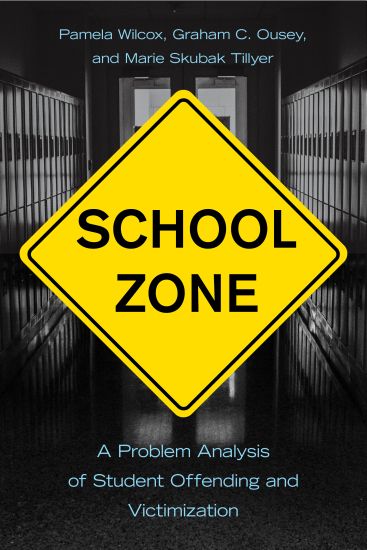
School Zone

School Zone

Pamela Wilcox; Graham C. Ousey; Marie Skubak Tillyer

TEMPLE UNIVERSITY PRESS,U.S.
2022
nidottu
Schools should be safe-but they are not always safe for everybody. Authors Pamela Wilcox, Graham Ousey, and Marie Skubak Tillyer studied crime among students located across diverse middle- and high-school settings to investigate why some students engage in delinquency-but others do not-and why some students are more prone to victimization. School Zone focuses on the three key interactional elements-context, victims, and offenders-to understand and explain the impact of common crimes such as theft, weapon carrying, drug possession and the verbal, physical, and sexual harassment of classmates. The authors also consider how individual students and schools respond to crime and threats. They analyze the variables that schools can control in planning and practice that explain why some schools have higher crime rates. School Zone uses empirical studies to provide a comprehensive understanding of the patterns and causes of variation in individual- and aggregate-level school-based offending and victimization experiences while also addressing the adequacy of wide-ranging criminological explanations and crime prevention policies. In their conclusion, the authors assess the extent to which currently popular strategies of school crime prevention align with what they have discovered through their problem-analysis framework and scientific understandings of student offending and victimization.

Criminological Theory: Past to Present

Criminological Theory: Past to Present

Francis T. Cullen; Robert Agnew; Pamela Wilcox

Oxford University Press
2021
nidottu
Criminological Theory: Past to Present by Francis T. Cullen, Roben Agnew, and Pamela Wilcox is a comprehensive and authoritative reader for upper-level undergraduate and graduate courses in criminological theory. An Introduction precedes each Part, as well as each individual reading, situating the book's selections within the historical development of criminological theory as a discipline.
Communities and Crime

Communities and Crime

Pamela Wilcox; Francis T. Cullen; Ben Feldmeyer

Temple University Press,U.S.
2017
pokkari
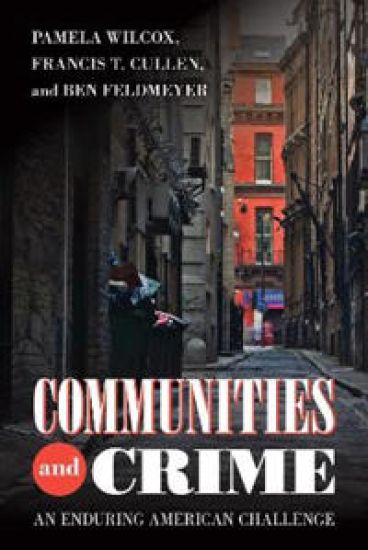
Social scientists have long argued over the links between crime and place. The authors of Communities and Crime provide an intellectual history that traces how varying images of community have evolved over time and influenced criminological thinking and criminal justice policy.The authors outline the major ideas that have shaped the development of theory, research, and policy in the area of communities and crime. Each chapter examines the problem of the community through a defining critical or theoretical lens: the community as social disorganization; as a system of associations; as a symptom of larger structural forces; as a result of criminal subcultures; as a broken window; as crime opportunity; and as a site of resilience. Focusing on these changing images of community, the empirical adequacy of these images, and how they have resulted in concrete programs to reduce crime, Communities and Crime theorizes about and reflects upon why some neighborhoods produce so much crime. The result is a tour of the dominant theories of place in social science today.
Communities and Crime

Communities and Crime

Pamela Wilcox; Francis T. Cullen; Ben Feldmeyer

Temple University Press,U.S.
2017
sidottu
Social scientists have long argued over the links between crime and place. The authors of Communities and Crime provide an intellectual history that traces how varying images of community have evolved over time and influenced criminological thinking and criminal justice policy.The authors outline the major ideas that have shaped the development of theory, research, and policy in the area of communities and crime. Each chapter examines the problem of the community through a defining critical or theoretical lens: the community as social disorganization; as a system of associations; as a symptom of larger structural forces; as a result of criminal subcultures; as a broken window; as crime opportunity; and as a site of resilience. Focusing on these changing images of community, the empirical adequacy of these images, and how they have resulted in concrete programs to reduce crime, Communities and Crime theorizes about and reflects upon why some neighborhoods produce so much crime. The result is a tour of the dominant theories of place in social science today.
Criminal Circumstance

Criminal Circumstance

Pamela Wilcox; Kenneth Land; Scott A. Hunt

AldineTransaction
2002
nidottu
The main objective of this book is to propose an alternative criminal opportunity theory. The authors build upon social control and routine activities to develop a dynamic, multi-contextual criminal opportunity theory. Emphasizing the importance of contextual explanations of criminal acts, they propose two levels of analysis: individual and environmental. At each level, the theory pivots on three broad organizing constructs--offenders motivated to commit criminal acts, targets such as persons or property suitable as objects of criminal acts, and the presence or absence of individuals or other defensive mechanisms capable of serving as guardians against criminal acts. Crime is profoundly real, possessing qualities that make its occurrence and prevention pressing and persistent matters for individuals and societies. Theory, in contrast, is seen as highly abstract and removed from the seriousness of "real life." Theory almost seems to be a peculiar sport of an academic class. The practically minded, even some academic criminologists, are often perplexed by the seeming obsession some scholars have with theory, which, after all, is nothing more than an explanation of facts. The practically minded, seeing a compelling need to identify the crucial factors that could be used to predict and prevent crime, wonder why anyone would invest precious time and energy into speculating about the abstract, underlying details of why crime occurs when and where it does.The authors contend that every intervention, prevention, and policy is based on some theoretical explanation of the causes of human behavior. The improvement of interventions, preventions, and policies is thus directly related to the improvement of theoretical understandings of the abstract, underlying details of the causes of crime. The development of explanations of events, when properly done, is a crucial component to understanding and possibly improving the "real world." This work does just that.
Criminal Circumstance

Criminal Circumstance

Pamela Wilcox; Kenneth Land; Scott A. Hunt

AldineTransaction
2002
sidottu
The main objective of this book is to propose an alternative criminal opportunity theory. The authors build upon social control and routine activities to develop a dynamic, multi-contextual criminal opportunity theory. Emphasizing the importance of contextual explanations of criminal acts, they propose two levels of analysis: individual and environmental. At each level, the theory pivots on three broad organizing constructs--offenders motivated to commit criminal acts, targets such as persons or property suitable as objects of criminal acts, and the presence or absence of individuals or other defensive mechanisms capable of serving as guardians against criminal acts. Crime is profoundly real, possessing qualities that make its occurrence and prevention pressing and persistent matters for individuals and societies. Theory, in contrast, is seen as highly abstract and removed from the seriousness of "real life." Theory almost seems to be a peculiar sport of an academic class. The practically minded, even some academic criminologists, are often perplexed by the seeming obsession some scholars have with theory, which, after all, is nothing more than an explanation of facts. The practically minded, seeing a compelling need to identify the crucial factors that could be used to predict and prevent crime, wonder why anyone would invest precious time and energy into speculating about the abstract, underlying details of why crime occurs when and where it does.The authors contend that every intervention, prevention, and policy is based on some theoretical explanation of the causes of human behavior. The improvement of interventions, preventions, and policies is thus directly related to the improvement of theoretical understandings of the abstract, underlying details of the causes of crime. The development of explanations of events, when properly done, is a crucial component to understanding and possibly improving the "real world." This work does just that.