Kirjojen hintavertailu. Mukana 12 299 589 kirjaa ja 12 kauppaa.
Kirjailija
Pankaj Datta
Kirjat ja teokset yhdessä paikassa: 51 kirjaa, julkaisuja vuosilta 2020-2022, suosituimpien joukossa Poszukiwanie Nanotechnologii w Stomatologii. Vertaile teosten hintoja ja tarkista saatavuus suomalaisista kirjakaupoista.
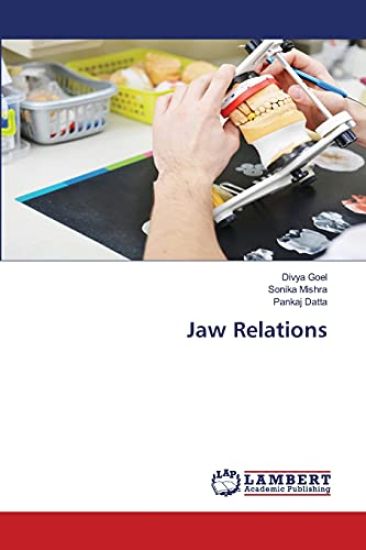
The gnathologic concept is useful in restoring teeth as well as eliminating occlusal problems. The mandibular movements can occur in either of the three planes; frontal, horizontal and sagittal. The movements in either of the planes are guided by the proprioceptive impulses. In dentulous patients, the impulses are obtained from the periodontal ligament whereas in edentulous patients, the impulses are generated from the temporomandibular joint. While mandibular movements cannot be reproduced with complete accuracy on an articulator, we should reproduce them with as much accuracy as possible to minimize damage to supporting structures from occlusal disharmony.This book aims at describing the importance of the maxilla-mandibular relations in maintaining the harmony of the stomatognathic system.
The term Temporomandibular disorder's (TMD) covers constellation of conditions. There have been many attempts to categories these conditions but all have shortfalls. Some classify by anatomy, some classify by etiology and some by frequency of presentation. We should be aware, however, that there is considerable overlap in any classification system because these are often not clinically appropriate. No one system, therefore, satisfies all criteria. Temporomandibular disorders effect the articulatory system, consisting of temporomandibular joints, mandibular muscles and the occlusion. Any factor that has an effect on one part of the system is likely to influence the other parts of the system, so it is important to avoid tunnel vison when considering possible signs and symptoms of the Temporomandibular Disorder. In modern dental schools there is a shift from traditional teaching to more interactive methods. In classical didactic textbooks, readers are frequently seen as passive recipients, without any engagement in the learning process. Problem based learning increases the effectiveness of delivering information and makes learning a more memorable experience for the reader.
The dimension of nanoscale has been both fascinating and intriguing since time immemorial. The flexibility of the scientist to fine tune the properties of the material at the nanoscale level has enabled one to simulate the biological behavior. Nanotechnology enables one to dramatically improve the chemical, optical and mechanical properties of a material; a property which is being harnessed by the dental profession to its fullest. The use of nanoparticles has become very popular in the designing and development of dental materials. By far, the largest application has been in dental composites, although several unique adhesive systems containing nanoparticles have also been commercialized. Nanotechnology has also enabled one to improve the surface properties of the dental implants to ensure predictable osseointegration after functional loading of the implants. The myriad of clinical applications of nanoparticles in dental ceramics, acrylic, dental cements has been a boon for the dental profession. Properties of nanoparticles when combined with biotechnology, laser and digital guided surgery will thus provide excellent dental care.
Planning and executing the restorative rehabilitation of a decimated occlusion is probably the most intellectual and demanding tasks faced by a restorative dentist. Numerous writings and recommendations have been made over the subject of occlusion and it is still very unclear to majority of practicing dentists. During all the phases of the treatment, decisions must be made by the dentist, concerning whole of the complex area of occlusion including the TMJs and the muscles surrounding the oro-facial complex. The dentists must be aware of the requirements of an ideal occlusion, so that, the restoration that is aimed for is not only better in esthetics, it is better even in its functional form and is also in harmony with entire somatognathic system. We must remember that all patients can not be successfully treated with a single preconceived treatment philosophy. Satisfactorily restoring a patient to a state of physiologic health is a challenge that requires a clinician to have the skill to accurately diagnose, plan and ultimately execute an affective treatment.
Loss of teeth causes difficulty in mastication and speaking which requires replacement to provide lost function and esthetics as well as psychological benefit.A prosthodontist must combine his skills in the field of Prosthodontics, Periodontics and Restorative dentistry to restore a dentition effectively. He must be capable of making an accurate diagnosis, which includes condition of remaining teeth, their supporting structures, occlusal relationship of teeth and articulation of jaws. All these factors play a very important role in replacement of missing teeth by prosthesis that include precision attachments. Unfortunately, most often precision attachments are chosen from descriptions in commercial catalogues. A dentist must base his techniques on both sound biological principles and mechanical considerations. Then precision attachment becomes what it should be, a beautiful example of bio-engineering that will be compatible with the continuing health of masticatory apparatus. I hope that this book will help the reader anticipate problems, overcome obstacles and master the basic technique of attachment retained denture construction - the rest will follow.