Kirjojen hintavertailu. Mukana 12 390 323 kirjaa ja 12 kauppaa.

Kirjailija

Panos M. Pardalos

Kirjat ja teokset yhdessä paikassa: 46 kirjaa, julkaisuja vuosilta 1987-2026, suosituimpien joukossa Electrical Power Unit Commitment. Vertaile teosten hintoja ja tarkista saatavuus suomalaisista kirjakaupoista.

46 kirjaa

Kirjojen julkaisuhaarukka 1987-2026.

Electrical Power Unit Commitment

Electrical Power Unit Commitment

Yuping Huang; Panos M. Pardalos; Qipeng P. Zheng

Springer-Verlag New York Inc.
2017
nidottu
This volume in the SpringerBriefs in Energy series offers a systematic review of unit commitment (UC) problems in electrical power generation. It updates texts written in the late 1990s and early 2000s by including the fundamentals of both UC and state-of-the-art modeling as well as solution algorithms and highlighting stochastic models and mixed-integer programming techniques. The UC problems are mostly formulated as mixed-integer linear programs, although there are many variants. A number of algorithms have been developed for, or applied to, UC problems, including dynamic programming, Lagrangian relaxation, general mixed-integer programming algorithms, and Benders decomposition. In addition the book discusses the recent trends in solving UC problems, especially stochastic programming models, and advanced techniques to handle large numbers of integer- decision variables due to scenario propagation
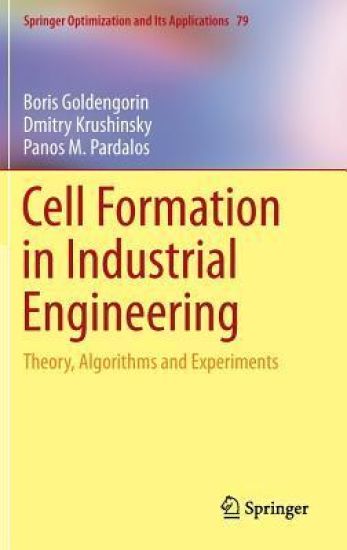
Cell Formation in Industrial Engineering

Cell Formation in Industrial Engineering

Boris Goldengorin; Dmitry Krushinsky; Panos M. Pardalos

Springer-Verlag New York Inc.
2013
sidottu
This book focuses on a development of optimal, flexible, and efficient models and algorithms for cell formation in group technology. Its main aim is to provide a reliable tool that can be used by managers and engineers to design manufacturing cells based on their own preferences and constraints imposed by a particular manufacturing system. This tool could potentially lower production costs by minimizing other costs in a number of areas, thereby increasing profit in a manufacturing system. In the volume, the cell formation problem is considered in a systematic and formalized way, and several models are proposed, both heuristic and exact. The models are based on general clustering problems, and are flexible enough to allow for various objectives and constraints. The authors also provide results of numerical experiments involving both artificial data from academic papers in the field and real manufacturing data to certify the appropriateness of the models proposed. The book was intended to suit the broadest possible audience, and thus all algorithmic details are given in a detailed description with multiple numerical examples and informal explanations are provided for the theoretical results. In addition to managers and industrial engineers, this book is intended for academic researchers and students. It will also be attractive to many theoreticians, since it addresses many open problems in computer science and bioinformatics.
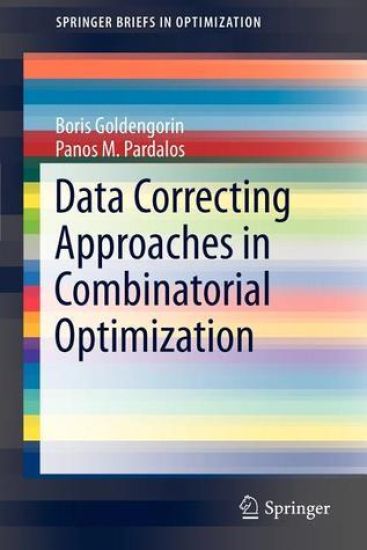
Data Correcting Approaches in Combinatorial Optimization

Data Correcting Approaches in Combinatorial Optimization

Boris I. Goldengorin; Panos M. Pardalos

Springer-Verlag New York Inc.
2012
nidottu
?????????????????Data Correcting Approaches in Combinatorial Optimization focuses on algorithmic applications of the well known polynomially solvable special cases of computationally intractable problems. The purpose of this text is to design practically efficient algorithms for solving wide classes of combinatorial optimization problems. Researches, students and engineers will benefit from new bounds and branching rules in development efficient branch-and-bound type computational algorithms. This book examines applications for solving the Traveling Salesman Problem and its variations, Maximum Weight Independent Set Problem, Different Classes of Allocation and Cluster Analysis as well as some classes of Scheduling Problems. Data Correcting Algorithms in Combinatorial Optimization introduces the data correcting approach to algorithms which provide an answer to the following questions: how to construct a bound to the original intractable problem and find which element of the corrected instance one should branch such that the total size of search tree will be minimized. The PC time needed for solving intractable problems will be adjusted with the requirements for solving real world problems.?
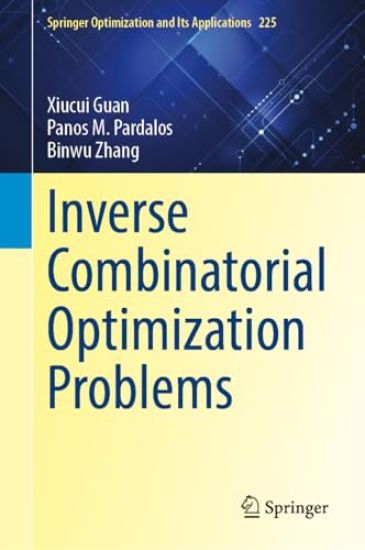
Inverse Combinatorial Optimization Problems

Inverse Combinatorial Optimization Problems

Xiucui Guan; Panos M. Pardalos; Binwu Zhang

Springer International Publishing AG
2025
sidottu
This book offers as exploration into the emerging field of Inverse Combinatorial Optimization Problems (ICOPs), a transformative area within operations research. As traditional optimization focuses on maximizing or minimizing objectives under constraints, ICOPs reverse this process, allowing for the inference of hidden parameters from observed outcomes. This monograph provides a comprehensive framework for understanding and applying ICOPs across various domains. Key concepts such as inverse shortest path, spanning tree, and center location problems are meticulously examined, offering theoretical insights and algorithmic solutions. The authors present a structured approach to these complex problems, making this work an essential resource for both academic and practical applications. By addressing critical questions and providing algorithmic tools, this book is a must-read for those seeking to enhance network design, logistics, and strategic planning. Researchers, academics, and practitioners in operations research and management science will find this monograph invaluable. It not only contributes to academic discourse but also equips professionals with the knowledge to tackle real-world challenges. This book is a vital addition to any library supporting advanced studies in optimization and decision-making processes.
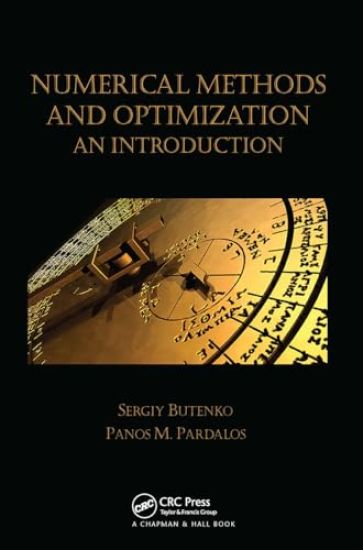
Numerical Methods and Optimization

Numerical Methods and Optimization

Sergiy Butenko; Panos M. Pardalos

TAYLOR FRANCIS LTD
2024
nidottu
For students in industrial and systems engineering (ISE) and operations research (OR) to understand optimization at an advanced level, they must first grasp the analysis of algorithms, computational complexity, and other concepts and modern developments in numerical methods. Satisfying this prerequisite, Numerical Methods and Optimization: An Introduction combines the materials from introductory numerical methods and introductory optimization courses into a single text. This classroom-tested approach enriches a standard numerical methods syllabus with optional chapters on numerical optimization and provides a valuable numerical methods background for students taking an introductory OR or optimization course.The first part of the text introduces the necessary mathematical background, the digital representation of numbers, and different types of errors associated with numerical methods. The second part explains how to solve typical problems using numerical methods. Focusing on optimization methods, the final part presents basic theory and algorithms for linear and nonlinear optimization.The book assumes minimal prior knowledge of the topics. Taking a rigorous yet accessible approach to the material, it includes some mathematical proofs as samples of rigorous analysis but in most cases, uses only examples to illustrate the concepts. While the authors provide a MATLAB® guide and code available for download, the book can be used with other software packages.
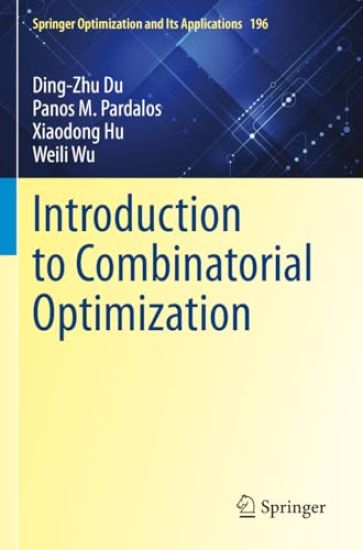
Introduction to Combinatorial Optimization

Introduction to Combinatorial Optimization

Ding-Zhu Du; Panos M. Pardalos; Xiaodong Hu; Weili Wu

Springer International Publishing AG
2023
nidottu
Introductory courses in combinatorial optimization are popular at the upper undergraduate/graduate levels in computer science, industrial engineering, and business management/OR, owed to its wide applications in these fields. There are several published textbooks that treat this course and the authors have used many of them in their own teaching experiences. This present text fills a gap and is organized with a stress on methodology and relevant content, providing a step-by-step approach for the student to become proficient in solving combinatorial optimization problems. Applications and problems are considered via recent technology developments including wireless communication, cloud computing, social networks, and machine learning, to name several, and the reader is led to the frontiers of combinatorial optimization. Each chapter presents common problems, such as minimum spanning tree, shortest path, maximum matching, network flow, set-cover, as well as key algorithms, suchas greedy algorithm, dynamic programming, augmenting path, and divide-and-conquer. Historical notes, ample exercises in every chapter, strategically placed graphics, and an extensive bibliography are amongst the gems of this textbook.
Introduction to Combinatorial Optimization

Introduction to Combinatorial Optimization

Ding-Zhu Du; Panos M. Pardalos; Xiaodong Hu; Weili Wu

Springer International Publishing AG
2022
sidottu
Introductory courses in combinatorial optimization are popular at the upper undergraduate/graduate levels in computer science, industrial engineering, and business management/OR, owed to its wide applications in these fields. There are several published textbooks that treat this course and the authors have used many of them in their own teaching experiences. This present text fills a gap and is organized with a stress on methodology and relevant content, providing a step-by-step approach for the student to become proficient in solving combinatorial optimization problems. Applications and problems are considered via recent technology developments including wireless communication, cloud computing, social networks, and machine learning, to name several, and the reader is led to the frontiers of combinatorial optimization. Each chapter presents common problems, such as minimum spanning tree, shortest path, maximum matching, network flow, set-cover, as well as key algorithms, suchas greedy algorithm, dynamic programming, augmenting path, and divide-and-conquer. Historical notes, ample exercises in every chapter, strategically placed graphics, and an extensive bibliography are amongst the gems of this textbook.
Foundations of Blockchain

Foundations of Blockchain

Ahmed Imteaj; M. Hadi Amini; Panos M. Pardalos

Springer Nature Switzerland AG
2021
nidottu
This book provides a comprehensive analysis of fundamental topics related to blockchain. Throughout, the authors explore different vital issues and specific areas of blockchain. For convenience, the authors present the elementary description, visualize the working procedure of blockchain paradigm, and highlight the areas it can be applied in real life. They explain the blockchain process from a diverse perspective i.e. distributed Internet of Things (IoT), interdependent networks, intelligent mining, etc. They also analyze the interconnection of a blockchain network and such novel research areas to show a pathway towards a new research direction. This book also holds the core challenges and open research issues of blockchain technology, considering existing applications. Chapters include consensus mechanisms of blockchain, blockchain applicability in centralized and decentralized internet of things, blockchain interoperability from the perspective of interdependent networks, and blockchain for resource-constrained devices.Specifies the importance of theoretical methods in dealing with problems in the context of blockchain for interdependent decision making;Provides a comprehensive investigation of blockchain algorithms and the recently developed methods based on this algorithm;Provides basics and mathematical foundations needed to learn and deploy blockchain.
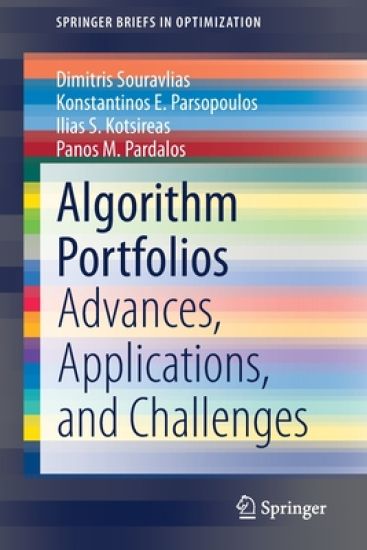
Algorithm Portfolios

Algorithm Portfolios

Dimitris Souravlias; Konstantinos E. Parsopoulos; Ilias S. Kotsireas; Panos M. Pardalos

Springer Nature Switzerland AG
2021
nidottu
This book covers algorithm portfolios, multi-method schemes that harness optimization algorithms into a joint framework to solve optimization problems. It is expected to be a primary reference point for researchers and doctoral students in relevant domains that seek a quick exposure to the field. The presentation focuses primarily on the applicability of the methods and the non-expert reader will find this book useful for starting designing and implementing algorithm portfolios. The book familiarizes the reader with algorithm portfolios through current advances, applications, and open problems. Fundamental issues in building effective and efficient algorithm portfolios such as selection of constituent algorithms, allocation of computational resources, interaction between algorithms and parallelism vs. sequential implementations are discussed. Several new applications are analyzed and insights on the underlying algorithmic designs are provided. Future directions, new challenges, andopen problems in the design of algorithm portfolios and applications are explored to further motivate research in this field.
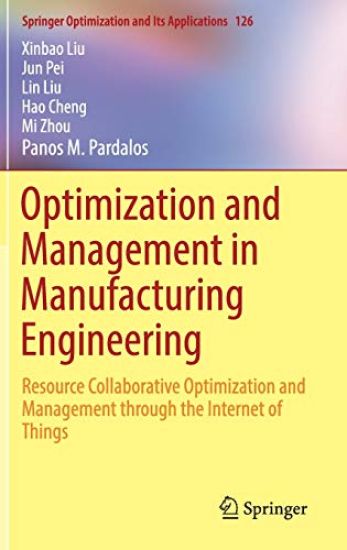
Optimization and Management in Manufacturing Engineering

Optimization and Management in Manufacturing Engineering

Xinbao Liu; Jun Pei; Lin Liu; Hao Cheng; Mi Zhou; Panos M. Pardalos

Springer International Publishing AG
2018
nidottu
Problems facing manufacturing clusters that intersect information technology, process management, and optimization within the Internet of Things (IoT) are examined in this book. Recent advances in information technology have transformed the use of resources and data exchange, often leading to management and optimization problems attributatble to technology limitations and strong market competition. This book discusses several problems and concepts which makes significant connections in the areas of information sharing, organization management, resource operations, and performance assessment.Geared toward practitioners and researchers, this treatment deepens the understanding between resource collaborative management and advanced information technology. Those in manufacturing will utilize the numerous mathematical models and methods offered to solve practical problems related to cutting stock, supply chain scheduling, and inventory management. Academics and students with a basic knowledge of manufacturing, combinatorics, and linear programming will find that this discussion widens the research area of resource collaborative management and unites the fields of information technology, manufacturing management, and optimization.
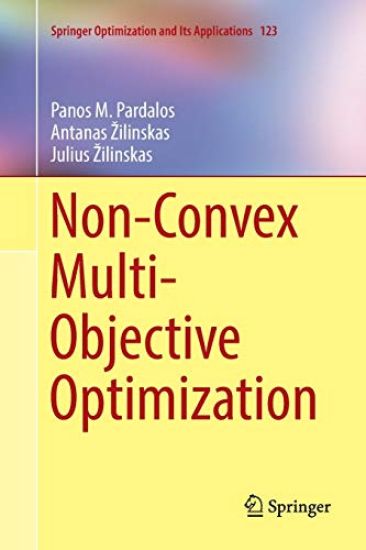
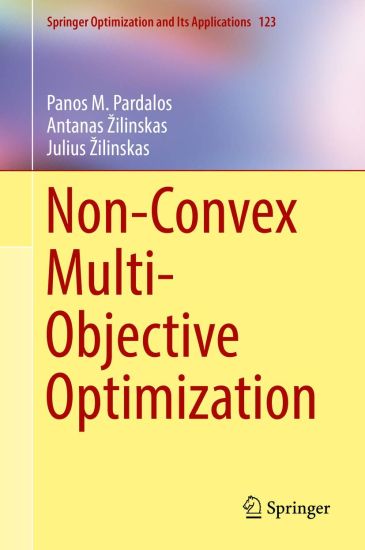
Non-Convex Multi-Objective Optimization

Non-Convex Multi-Objective Optimization

Panos M. Pardalos; Antanas Žilinskas; Julius Žilinskas

Springer International Publishing AG
2018
nidottu
Recent results on non-convex multi-objective optimization problems and methods are presented in this book, with particular attention to expensive black-box objective functions. Multi-objective optimization methods facilitate designers, engineers, and researchers to make decisions on appropriate trade-offs between various conflicting goals. A variety of deterministic and stochastic multi-objective optimization methods are developed in this book. Beginning with basic concepts and a review of non-convex single-objective optimization problems; this book moves on to cover multi-objective branch and bound algorithms, worst-case optimal algorithms (for Lipschitz functions and bi-objective problems), statistical models based algorithms, and probabilistic branch and bound approach. Detailed descriptions of new algorithms for non-convex multi-objective optimization, their theoretical substantiation, and examples for practical applications to the cell formation problem in manufacturing engineering, the process design in chemical engineering, and business process management are included to aide researchers and graduate students in mathematics, computer science, engineering, economics, and business management.
Optimization and Management in Manufacturing Engineering

Optimization and Management in Manufacturing Engineering

Xinbao Liu; Jun Pei; Liu Liu; Hao Cheng; Mi Zhou; Panos M. Pardalos

Springer International Publishing AG
2017
sidottu
Problems facing manufacturing clusters that intersect information technology, process management, and optimization within the Internet of Things (IoT) are examined in this book. Recent advances in information technology have transformed the use of resources and data exchange, often leading to management and optimization problems attributatble to technology limitations and strong market competition. This book discusses several problems and concepts which makes significant connections in the areas of information sharing, organization management, resource operations, and performance assessment.Geared toward practitioners and researchers, this treatment deepens the understanding between resource collaborative management and advanced information technology. Those in manufacturing will utilize the numerous mathematical models and methods offered to solve practical problems related to cutting stock, supply chain scheduling, and inventory management. Academics and students with a basic knowledge of manufacturing, combinatorics, and linear programming will find that this discussion widens the research area of resource collaborative management and unites the fields of information technology, manufacturing management, and optimization.
Non-Convex Multi-Objective Optimization

Non-Convex Multi-Objective Optimization

Panos M. Pardalos; Antanas Zilinskas; Julius Zilinskas

Springer International Publishing AG
2017
sidottu
Recent results on non-convex multi-objective optimization problems and methods are presented in this book, with particular attention to expensive black-box objective functions. Multi-objective optimization methods facilitate designers, engineers, and researchers to make decisions on appropriate trade-offs between various conflicting goals. A variety of deterministic and stochastic multi-objective optimization methods are developed in this book. Beginning with basic concepts and a review of non-convex single-objective optimization problems; this book moves on to cover multi-objective branch and bound algorithms, worst-case optimal algorithms (for Lipschitz functions and bi-objective problems), statistical models based algorithms, and probabilistic branch and bound approach. Detailed descriptions of new algorithms for non-convex multi-objective optimization, their theoretical substantiation, and examples for practical applications to the cell formation problem in manufacturing engineering, the process design in chemical engineering, and business process management are included to aide researchers and graduate students in mathematics, computer science, engineering, economics, and business management.
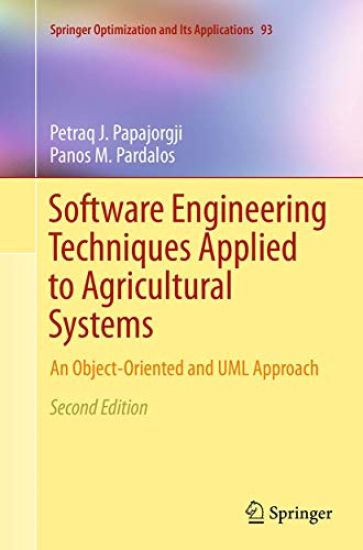
Software Engineering Techniques Applied to Agricultural Systems

Software Engineering Techniques Applied to Agricultural Systems

Petraq J. Papajorgji; Panos M. Pardalos

Springer-Verlag New York Inc.
2016
nidottu
Software Engineering Techniques Applied to Agricultural Systems presents cutting-edge software engineering techniques for designing and implementing better agricultural software systems based on the object-oriented paradigm and the Unified Modeling Language (UML). The focus is on the presentation of rigorous step-by-step approaches for modeling flexible agricultural and environmental systems, starting with a conceptual diagram representing elements of the system and their relationships. Furthermore, diagrams such as sequential and collaboration diagrams are used to explain the dynamic and static aspects of the software system.This second edition includes: a new chapter on Object Constraint Language (OCL), a new section dedicated to the Model-VIEW-Controller (MVC) design pattern, new chapters presenting details of two MDA-based tools – the Virtual Enterprise and Olivia Nova and a new chapter with exercises on conceptual modeling. It may be highly useful to undergraduate and graduate students as the first edition has proven to be a useful supplementary textbook for courses in mathematical programming in agriculture, ecology, information technology, agricultural operations research methods, agronomy and soil science and applied mathematical modeling. The book has broad appeal for anyone involved in software development projects in agriculture and to researchers in general who are interested in modeling complex systems.From the reviews of the first edition:"The book will be useful for those interested in gaining a quick understanding of current software development techniques and how they are applied in practice... this is a good introductory text on the application of OOAD, UML and design patters to the creation of agricultural systems. It is technically sound and well written."—Computing Reviews, September 2006
Recent Advances in Global Optimization

Recent Advances in Global Optimization

Christodoulos A. Floudas; Panos M. Pardalos

Princeton University Press
2016
sidottu
This book will present the papers delivered at the first U.S. conference devoted exclusively to global optimization and will thus provide valuable insights into the significant research on the topic that has been emerging during recent years. Held at Princeton University in May 1991, the conference brought together an interdisciplinary group of the most active developers of algorithms for global optimization in order to focus the attention of the mathematical programming community on the unsolved problems and diverse applications of this field. The main subjects addressed at the conference were advances in deterministic and stochastic methods for global optimization, parallel algorithms for global optimization problems, and applications of global optimization. Although global optimization is primarily a mathematical problem, it is relevant to several other disciplines, including computer science, applied mathematics, physical chemistry, molecular biology, statistics, physics, engineering, operations research, communication theory, and economics. Global optimization problems originate from a wide variety of mathematical models of real-world systems. Some of its applications are allocation and location problems and VLSI and data-base design problems. Originally published in 1991. The Princeton Legacy Library uses the latest print-on-demand technology to again make available previously out-of-print books from the distinguished backlist of Princeton University Press. These editions preserve the original texts of these important books while presenting them in durable paperback and hardcover editions. The goal of the Princeton Legacy Library is to vastly increase access to the rich scholarly heritage found in the thousands of books published by Princeton University Press since its founding in 1905.
Cell Formation in Industrial Engineering

Cell Formation in Industrial Engineering

Boris Goldengorin; Dmitry Krushinsky; Panos M. Pardalos

Springer-Verlag New York Inc.
2015
nidottu
This book focuses on a development of optimal, flexible, and efficient models and algorithms for cell formation in group technology. Its main aim is to provide a reliable tool that can be used by managers and engineers to design manufacturing cells based on their own preferences and constraints imposed by a particular manufacturing system. This tool could potentially lower production costs by minimizing other costs in a number of areas, thereby increasing profit in a manufacturing system. In the volume, the cell formation problem is considered in a systematic and formalized way, and several models are proposed, both heuristic and exact. The models are based on general clustering problems, and are flexible enough to allow for various objectives and constraints. The authors also provide results of numerical experiments involving both artificial data from academic papers in the field and real manufacturing data to certify the appropriateness of the models proposed. The book was intended to suit the broadest possible audience, and thus all algorithmic details are given in a detailed description with multiple numerical examples and informal explanations are provided for the theoretical results. In addition to managers and industrial engineers, this book is intended for academic researchers and students. It will also be attractive to many theoreticians, since it addresses many open problems in computer science and bioinformatics.
Recent Advances in Global Optimization

Recent Advances in Global Optimization

Christodoulos A. Floudas; Panos M. Pardalos

Princeton University Press
2014
pokkari
This book will present the papers delivered at the first U.S. conference devoted exclusively to global optimization and will thus provide valuable insights into the significant research on the topic that has been emerging during recent years. Held at Princeton University in May 1991, the conference brought together an interdisciplinary group of the most active developers of algorithms for global optimization in order to focus the attention of the mathematical programming community on the unsolved problems and diverse applications of this field. The main subjects addressed at the conference were advances in deterministic and stochastic methods for global optimization, parallel algorithms for global optimization problems, and applications of global optimization. Although global optimization is primarily a mathematical problem, it is relevant to several other disciplines, including computer science, applied mathematics, physical chemistry, molecular biology, statistics, physics, engineering, operations research, communication theory, and economics. Global optimization problems originate from a wide variety of mathematical models of real-world systems. Some of its applications are allocation and location problems and VLSI and data-base design problems. Originally published in 1991. The Princeton Legacy Library uses the latest print-on-demand technology to again make available previously out-of-print books from the distinguished backlist of Princeton University Press. These editions preserve the original texts of these important books while presenting them in durable paperback and hardcover editions. The goal of the Princeton Legacy Library is to vastly increase access to the rich scholarly heritage found in the thousands of books published by Princeton University Press since its founding in 1905.
Software Engineering Techniques Applied to Agricultural Systems

Software Engineering Techniques Applied to Agricultural Systems

Petraq J. Papajorgji; Panos M. Pardalos

Springer-Verlag New York Inc.
2014
sidottu
Software Engineering Techniques Applied to Agricultural Systems presents cutting-edge software engineering techniques for designing and implementing better agricultural software systems based on the object-oriented paradigm and the Unified Modeling Language (UML). The focus is on the presentation of rigorous step-by-step approaches for modeling flexible agricultural and environmental systems, starting with a conceptual diagram representing elements of the system and their relationships. Furthermore, diagrams such as sequential and collaboration diagrams are used to explain the dynamic and static aspects of the software system.This second edition includes: a new chapter on Object Constraint Language (OCL), a new section dedicated to the Model-VIEW-Controller (MVC) design pattern, new chapters presenting details of two MDA-based tools – the Virtual Enterprise and Olivia Nova and a new chapter with exercises on conceptual modeling. It may be highly useful to undergraduate and graduate students as the first edition has proven to be a useful supplementary textbook for courses in mathematical programming in agriculture, ecology, information technology, agricultural operations research methods, agronomy and soil science and applied mathematical modeling. The book has broad appeal for anyone involved in software development projects in agriculture and to researchers in general who are interested in modeling complex systems.From the reviews of the first edition:"The book will be useful for those interested in gaining a quick understanding of current software development techniques and how they are applied in practice... this is a good introductory text on the application of OOAD, UML and design patters to the creation of agricultural systems. It is technically sound and well written."—Computing Reviews, September 2006