Kirjojen hintavertailu. Mukana 12 595 353 kirjaa ja 12 kauppaa.
Kirjailija
Paola Antonelli
Kirjat ja teokset yhdessä paikassa: 6 kirjaa, julkaisuja vuosilta 2011-2022, suosituimpien joukossa Neri Oxman: Mediated Matter. Vertaile teosten hintoja ja tarkista saatavuus suomalaisista kirjakaupoista.
Alice Rawsthorn and Paola Antonelli, two of the world’s most influential design figures, meet the visionary designers whose innovations and ingenuity give us hope for the future by redesigning and reconstructing our lives, enabling us to thrive Design Emergency tells the stories of the remarkable designers, architects, engineers, artists, scientists, and activists, who are at the forefront of positive change worldwide. Focusing on four themes - Technology, Society, Communication, and Ecology - Alice Rawsthorn and Paola Antonelli present a unique portrait of how our great creative minds are developing new design solutions to the major challenges of our time, while helping us to benefit from advances in science and technology.
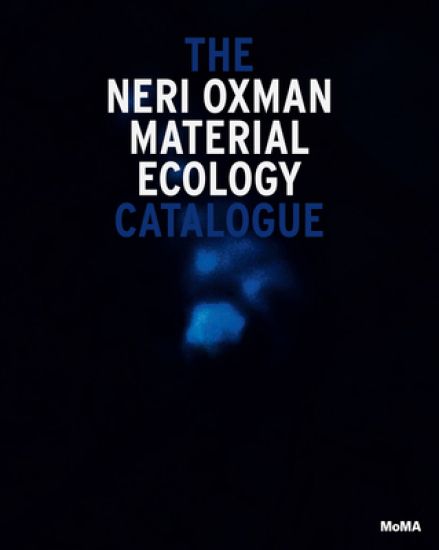
The first survey on the interdisciplinary biodesign genius of Neri Oxman, pioneer of "material ecologyThroughout her 20-year career, Neri Oxman has invented not only new ideas for materials, buildings and construction processes, but also new frameworks for interdisciplinary--and interspecies--collaborations. She coined the term "material ecology" to describe her process of producing techniques and objects informed by the structural, systemic and aesthetic wisdom of nature, from the shells of crustaceans to the flow of human breathing. Groundbreaking for its solid technological and scientific basis, its rigorous and daring experimentation, its visionary philosophy and its unquestionable attention to formal elegance, Oxman's work operates at the intersection of biology, engineering, architecture and artistic design, material science and computer science. This book--designed by Irma Boom and published to accompany a midcareer retrospective of Oxman's work--highlights the interdisciplinary nature of the designer's practice. It demonstrates how Oxman's contributions allow us to question and redefine the idea of modernism--a concept in constant evolution--and of organic design. Some of the projects featured in the book and exhibition include the Silk Pavilion, which harnesses silkworms' ability to generate a 3-D cocoon out of a single thread silk in order to create architectural constructions; Aguahoja, a water-based fabrication platform that prints structures made out of different biopolymers; and Glass, an additive manufacturing technology for 3-D printing optically transparent glass structures at architectural dimensions. Israeli American architect, designer and inventor Neri Oxman (born 1976) is professor of media arts and sciences at the Massachusetts Institute of Technology's Media Lab. Her work is in the permanent collections of the Museum of Modern Art, New York, the Cooper Hewitt Design Museum, the San Francisco Museum of Modern Art and Boston's Museum of Fine Arts, among others.
A counterhistory and new historiography of design.In Design by Accident, Alexandra Midal declares the autonomy of design, in and on its own terms. This meticulously researched work proposes not only a counterhistory but a new historiography of design, shedding light on overlooked historical landmarks and figures while reevaluating the legacies of design's established luminaries from the nineteenth century to the present. Midal rejects both linear narratives of progress and the long-held perception of design as a footnote to the histories of fine art and architecture. By weaving critical analysis of the canon of design history and theory together, with special attention to the writings of designers themselves, she draws out the nuances and radical potentials of the discipline--from William Morris's ambivalence toward industry, to Catharine Beecher's proto-feminist household appliances, to the Bauhaus's Expressionist origins, and the influence of Herbert Marcuse on Joe Colombo.
Items: Is Fashion Modern? presents 111 items of clothing and accessories that have had a profound impact on the world in the 20th and 21st centuries.Arranged A-Z encyclopedia-style, it includes designs as iconic as Levi's 501 jeans, the pearl necklace and Yves Saint Laurent's Le Smoking, and as ancient and rich as the sari, the Breton shirt, the kippah and the keffiyeh.The catalog accompanies the first fashion exhibition to be mounted at MoMA since 1944. An essay by curator Paola Antonelli opens the volume, highlighting the Museum's unique perspective on fashion and exploring the latter's role in the changing international landscape of design. The 111 texts that follow trace the history of each item in relation to cultural forces past and present, touching on labor, marketing, technology, religion, politics, aesthetics and popular culture, among many others. These concise essays are richly illustrated with a lively mix of archival images, fashion photography, film stills and documentary shots.Punctuating the book are newly commissioned portfolios by five international contemporary photographers--Omar Victor Diop, Bobby Doherty, Catherine Losing, Monika Mogi and Kristin-Lee Moolman. Each photographer was assigned to represent the objects in one alphabetically ordered section of the book, and their diverse responses bring a vibrant creative energy to the project.Design objects are complex indicators of larger social, cultural, political and economic contexts, and fashion is no exception. Kaleidoscopic yet exacting, Items takes readers through the history and significance of clothing that has changed the world, from the bucket hat's multifaceted sartorial journey to the ubiquity and perennial popularity of the white t-shirt and the ever-changing silhouette of the little black dress. It locates new centers of gravity for the field of fashion and asserts its role as an incisive and confident contributor to the broad pantheon of design and the visual arts.
Design has a history of violence. It can be an act of creative destruction and a double-edged sword, and yet professional discourse around design has been dominated by voices that only trumpet its commercial and aesthetic successes. Violence, defined here as the power to alter circumstances against the will of others and to their detriment, is ubiquitous in history and in contemporary society. In recent years, moreover, technology has introduced new threats and added dramatically to the many manifestations of violence. Design and Violence is an exploration of the relationship between the two that sheds light on the complex impact of design on the built environment and on everyday life, as well as on the manifestations of violence in contemporary society. Published to accompany an online experiment launched by The Museum of Modern Art in Autumn 2013, it brings together controversial, provocative, and compelling design projects with leading voices from a variety of fields. Each invited author responds to one object chosen by the curators – ranging from an AK-47 to a Euthanasia Rollercoaster, from plastic handcuffs to the Stuxnet digital virus – and invites dialogue, comments, reflection, and active, occasionally fierce, debate. Examples of questions posed include: Can we design a violent act to be more humane? How far can the state go to ‘protect’ its borders from immigration before it becomes an act of violence? Is violence ‘male’? These experimental and wide-ranging conversations bring together voices from the fields of art and design, science, law, criminal justice, ethics, finance, journalism, and social justice, making Design and Violence an invaluable resource for lively discussions and classroom curricula.
Published in conjunction with an exhibition at The Museum of Modern Art, this title thrives on an important late 20th-century cultural development in design: a shift from the centrality of function to that of meaning.