Kirjojen hintavertailu. Mukana 12 572 582 kirjaa ja 12 kauppaa.

Kirjailija

Paolo Mancosu

Kirjat ja teokset yhdessä paikassa: 12 kirjaa, julkaisuja vuosilta 1996-2026, suosituimpien joukossa The Wilderness of the Infinite. Vertaile teosten hintoja ja tarkista saatavuus suomalaisista kirjakaupoista.

12 kirjaa

Kirjojen julkaisuhaarukka 1996-2026.

The Wilderness of the Infinite

The Wilderness of the Infinite

Paolo Mancosu

Oxford University Press
2026
sidottu
The Wilderness of the Infinite explores the emergence in the Latinate thirteenth century of original approaches to mathematical infinity and to unequal infinities. Within the span of twenty years (1220-1240), Robert Grosseteste and William of Auvergne countenanced the actual infinite and presented very original views on the possibility of comparing infinities. Robert Grosseteste postulated the existence of infinite numbers that measure the number of points in finite line segments. Until his proposal, no one in Western culture had operated with infinite numbers. Grosseteste's proposal led to debates on what criteria one should use when assigning 'sizes' to infinite collections with one-to-one correspondence being proposed as a challenge to the part-whole intuition defended by Grosseteste. But the book is not only about Robert Grosseteste, William of Auvergne, and their impact on medieval philosophy in the period up to 1275. Rather, the historical investigation is instrumental in showing that some of the daring ideas proposed by Grosseteste and William of Auvergne although criticized as naïve, or even incoherent, by twentieth century investigators can be given a perfectly coherent development using some recent mathematical theories, namely non-standard analysis and the theory of numerosities. The book thus offers a methodological proposal on how to engage with the history and the philosophy of mathematical infinity.
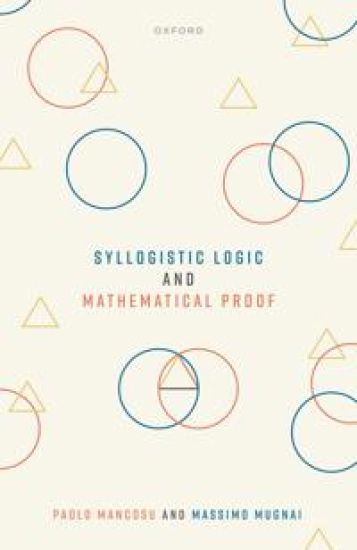
Syllogistic Logic and Mathematical Proof

Syllogistic Logic and Mathematical Proof

Paolo Mancosu; Massimo Mugnai

Oxford University Press
2023
sidottu
Does syllogistic logic have the resources to capture mathematical proof? This volume provides the first unified account of the history of attempts to answer this question, the reasoning behind the different positions taken, and their far-reaching implications. Aristotle had claimed that scientific knowledge, which includes mathematics, is provided by syllogisms of a special sort: 'scientific' ('demonstrative') syllogisms. In ancient Greece and in the Middle Ages, the claim that Euclid's theorems could be recast syllogistically was accepted without further scrutiny. Nevertheless, as early as Galen, the importance of relational reasoning for mathematics had already been recognized. Further critical voices emerged in the Renaissance and the question of whether mathematical proofs could be recast syllogistically attracted more sustained attention over the following three centuries. Supported by more detailed analyses of Euclidean theorems, this led to attempts to extend logical theory to include relational reasoning, and to arguments purporting to reduce relational reasoning to a syllogistic form. Philosophical proposals to the effect that mathematical reasoning is heterogenous with respect to logical proofs were famously defended by Kant, and the implications of the debate about the adequacy of syllogistic logic for mathematics are at the very core of Kant's account of synthetic a priori judgments. While it is now widely accepted that syllogistic logic is not sufficient to account for the logic of mathematical proof, the history and the analysis of this debate, running from Aristotle to de Morgan and beyond, is a fascinating and crucial insight into the relationship between philosophy and mathematics.
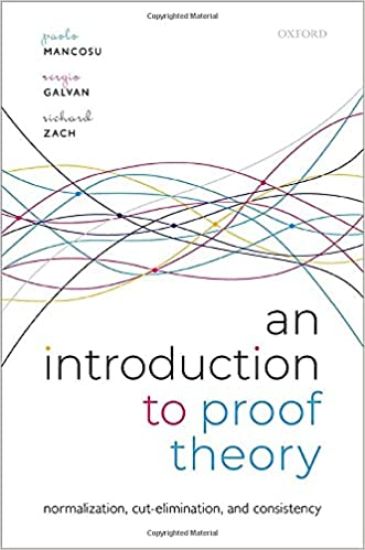
An Introduction to Proof Theory

An Introduction to Proof Theory

Paolo Mancosu; Sergio Galvan; Richard Zach

Oxford University Press
2021
nidottu
An Introduction to Proof Theory provides an accessible introduction to the theory of proofs, with details of proofs worked out and examples and exercises to aid the reader's understanding. It also serves as a companion to reading the original pathbreaking articles by Gerhard Gentzen. The first half covers topics in structural proof theory, including the Gödel-Gentzen translation of classical into intuitionistic logic (and arithmetic), natural deduction and the normalization theorems (for both NJ and NK), the sequent calculus, including cut-elimination and mid-sequent theorems, and various applications of these results. The second half examines ordinal proof theory, specifically Gentzen's consistency proof for first-order Peano Arithmetic. The theory of ordinal notations and other elements of ordinal theory are developed from scratch, and no knowledge of set theory is presumed. The proof methods needed to establish proof-theoretic results, especially proof by induction, are introduced in stages throughout the text. Mancosu, Galvan, and Zach's introduction will provide a solid foundation for those looking to understand this central area of mathematical logic and the philosophy of mathematics.
An Introduction to Proof Theory

An Introduction to Proof Theory

Paolo Mancosu; Sergio Galvan; Richard Zach

Oxford University Press
2021
sidottu
An Introduction to Proof Theory provides an accessible introduction to the theory of proofs, with details of proofs worked out and examples and exercises to aid the reader's understanding. It also serves as a companion to reading the original pathbreaking articles by Gerhard Gentzen. The first half covers topics in structural proof theory, including the Gödel-Gentzen translation of classical into intuitionistic logic (and arithmetic), natural deduction and the normalization theorems (for both NJ and NK), the sequent calculus, including cut-elimination and mid-sequent theorems, and various applications of these results. The second half examines ordinal proof theory, specifically Gentzen's consistency proof for first-order Peano Arithmetic. The theory of ordinal notations and other elements of ordinal theory are developed from scratch, and no knowledge of set theory is presumed. The proof methods needed to establish proof-theoretic results, especially proof by induction, are introduced in stages throughout the text. Mancosu, Galvan, and Zach's introduction will provide a solid foundation for those looking to understand this central area of mathematical logic and the philosophy of mathematics.
Infinito, lógica, geometría

Infinito, lógica, geometría

Paolo Mancosu

College Publications
2020
pokkari
Los trabajos reunidos en este libro tratan de nociones que en todos los tiempos han ocupado un lugar central en las reflexiones de fil sofos, l gicos y matem ticos: el infinito, el n mero cardinal, la verdad, la consecuencia l gica, la explicaci n, la pureza de los m todos, el nominalismo, el platonismo. La primera parte presenta, por un lado, novedosas perspectivas filos ficas sobre teor as no cantorianas para el c lculo del infinito y, por otro lado, pone en cuesti n el pretendido estatus anal tico del principio de Hume, del que se pueden derivar los axiomas de la aritm tica de segundo orden. En la segunda parte, el autor aprovecha los recursos de archivos in ditos para mostrar la riqueza de los debates filos ficos que Tarski mantuvo con Carnap, Neurath y Quine, durante la elaboraci n de sus conceptos l gicos. La tercera parte est dedicada a la "filosof a de la pr ctica matem tica". Estudios de casos provenientes de la geometr a proyectiva y de la geometr a algebraica real brindan la oportunidad para llevar a cabo un estudio anal tico sobre las nociones de "explicaci n matem tica" y "pureza de los m todos". Estas contribuciones a la historia de la filosof a de la l gica y de la matem tica ilustran la manera tan original en la que Paolo Mancosu combina las perspectivas hist rica, l gico-matem tica y anal tica de la filosof a. Paolo Mancosu es profesor de filosof a en la Universidad de California, en Berkeley. Es autor de numerosos art culos y libros sobre l gica y filosof a de la matem tica.
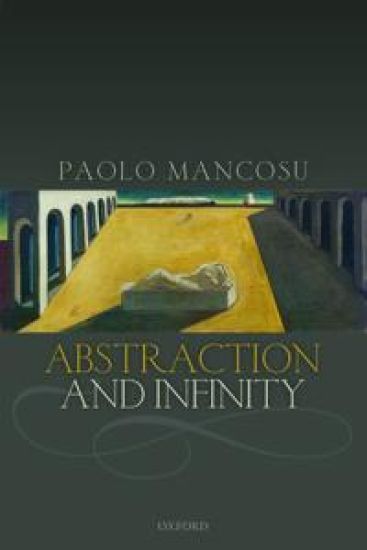
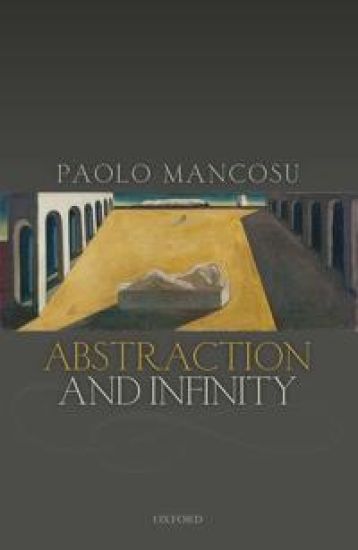
Abstraction and Infinity

Abstraction and Infinity

Paolo Mancosu

Oxford University Press
2019
nidottu
Paolo Mancosu provides an original investigation of historical and systematic aspects of the notions of abstraction and infinity and their interaction. A familiar way of introducing concepts in mathematics rests on so-called definitions by abstraction. An example of this is Hume's Principle, which introduces the concept of number by stating that two concepts have the same number if and only if the objects falling under each one of them can be put in one-one correspondence. This principle is at the core of neo-logicism. In the first two chapters of the book, Mancosu provides a historical analysis of the mathematical uses and foundational discussion of definitions by abstraction up to Frege, Peano, and Russell. Chapter one shows that abstraction principles were quite widespread in the mathematical practice that preceded Frege's discussion of them and the second chapter provides the first contextual analysis of Frege's discussion of abstraction principles in section 64 of the Grundlagen. In the second part of the book, Mancosu discusses a novel approach to measuring the size of infinite sets known as the theory of numerosities and shows how this new development leads to deep mathematical, historical, and philosophical problems. The final chapter of the book explore how this theory of numerosities can be exploited to provide surprisingly novel perspectives on neo-logicism.
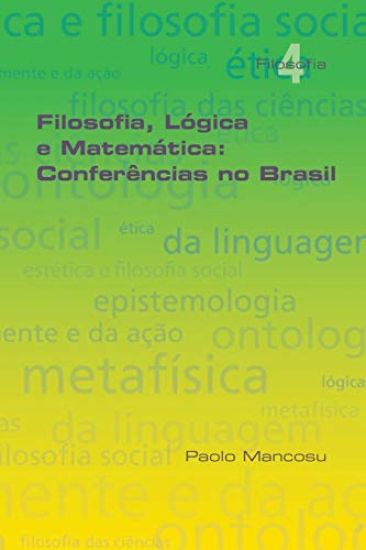
Filosofia Lógica e Matemática

Filosofia Lógica e Matemática

Paolo Mancosu

College Publications
2017
pokkari
Este livro apresenta seis ensaios de Paolo Mancosu, originalmente apresentados no Brasil como conferEncias, e a traduCAo para o portuguEs de uma conferEncia nAo publicada de Tarski. Os ensaios se dividem em duas Areas principais: histOria e filosofia da lOgica nas primeiras quatro dEcadas do sEculo XX, com especial Enfase em Tarski, e filosofia da prAtica matemAtica. No primeiro grupo sAo analisados o nominalismo de Tarski e Quine, o debate entre Tarski, Carnap, Neurath e Kokoszynska sobre a verdade e tambEm o trabalho de Tarski sobre consequEncia lOgica e categoricidade de sistemas dedutivos. O terceiro ensaio E acompanhado, como um apEndice, do ensaio de Tarski acerca de consequEncia lOgica e categoricidade. No segundo grupo, o autor discute aspectos da prAtica matemAtica, incluindo visualizaCAo, raciocInio diagramAtico, explicaCAo matemAtica e estilos de raciocInio matemAtico. Paolo Mancosu E Willis and Marion Slusser Professor of Philosophy na Universidade de CalifOrnia em Berkeley. Ele E autor de vArios artigos e livros em lOgica e filosofia da matemAtica. Ele tambEm E o autor de Inside the Zhivago Storm. The editorial adventures of Pasternak's masterpiece (Feltrinelli, MilAo, 2013) e Zhivago's Secret Journey: from typescript to book (Hoover Press, Stanford, 2016). Durante sua carreira, Mancosu ensinou em Stanford, Oxford e Yale. Ele foi fellow da Humboldt Stiftung, da Wissenschaftskolleg zu Berlin, do Institute for Advanced Study, em Princeton, e do Institut d'Etudes AvancEes, em Paris. AlEm disto, recebeu bolsas da Guggenheim Foundation, do NSF e do CNRS.
Abstraction and Infinity

Abstraction and Infinity

Paolo Mancosu

Oxford University Press
2016
sidottu
Paolo Mancosu provides an original investigation of historical and systematic aspects of the notions of abstraction and infinity and their interaction. A familiar way of introducing concepts in mathematics rests on so-called definitions by abstraction. An example of this is Hume's Principle, which introduces the concept of number by stating that two concepts have the same number if and only if the objects falling under each one of them can be put in one-one correspondence. This principle is at the core of neo-logicism. In the first two chapters of the book, Mancosu provides a historical analysis of the mathematical uses and foundational discussion of definitions by abstraction up to Frege, Peano, and Russell. Chapter one shows that abstraction principles were quite widespread in the mathematical practice that preceded Frege's discussion of them and the second chapter provides the first contextual analysis of Frege's discussion of abstraction principles in section 64 of the Grundlagen. In the second part of the book, Mancosu discusses a novel approach to measuring the size of infinite sets known as the theory of numerosities and shows how this new development leads to deep mathematical, historical, and philosophical problems. The final chapter of the book explore how this theory of numerosities can be exploited to provide surprisingly novel perspectives on neo-logicism.
The Adventure of Reason

The Adventure of Reason

Paolo Mancosu

Oxford University Press
2014
nidottu
Paolo Mancosu presents a series of innovative studies in the history and the philosophy of logic and mathematics in the first half of the twentieth century. The Adventure of Reason is divided into five main sections: history of logic (from Russell to Tarski); foundational issues (Hilbert's program, constructivity, Wittgenstein, Gödel); mathematics and phenomenology (Weyl, Becker, Mahnke); nominalism (Quine, Tarski); semantics (Tarski, Carnap, Neurath). Mancosu exploits extensive untapped archival sources to make available a wealth of new material that deepens in significant ways our understanding of these fascinating areas of modern intellectual history. At the same time, the book is a contribution to recent philosophical debates, in particular on the prospects for a successful nominalist reconstruction of mathematics, the nature of finitist intuition, the viability of alternative definitions of logical consequence, and the extent to which phenomenology can hope to account for the exact sciences.
The Adventure of Reason

The Adventure of Reason

Paolo Mancosu

Oxford University Press
2010
sidottu
Paolo Mancosu presents a series of innovative studies in the history and the philosophy of logic and mathematics in the first half of the twentieth century. The Adventure of Reason is divided into five main sections: history of logic (from Russell to Tarski); foundational issues (Hilbert's program, constructivity, Wittgenstein, Gödel); mathematics and phenomenology (Weyl, Becker, Mahnke); nominalism (Quine, Tarski); semantics (Tarski, Carnap, Neurath). Mancosu exploits extensive untapped archival sources to make available a wealth of new material that deepens in significant ways our understanding of these fascinating areas of modern intellectual history. At the same time, the book is a contribution to recent philosophical debates, in particular on the prospects for a successful nominalist reconstruction of mathematics, the nature of finitist intuition, the viability of alternative definitions of logical consequence, and the extent to which phenomenology can hope to account for the exact sciences.
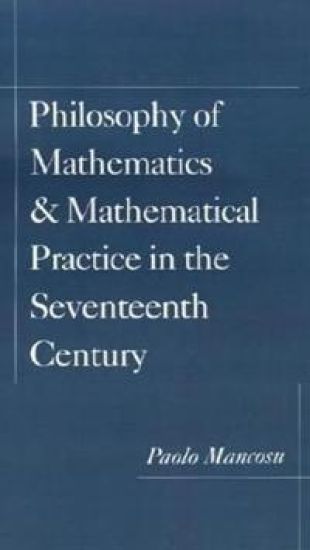
Philosophy of Mathematics and Mathematical Practice in the Seventeenth Century
The seventeenth century saw dramatic advances in mathematical theory and practice. With the recovery of many of the classical Greek mathematical texts, new techniques were introduced, and within 100 years, the rules of analytic geometry, geometry of indivisibles, arithmetic of infinites, and calculus were developed. Although many technical studies have been devoted to these innovations, Mancosu provides the first comprehensive account of the relationship between mathematical advances of the seventeenth century and the philosophy of mathematics of the period. Starting with the Renaissance debates on the certainty of mathematics, Mancosu leads the reader through the foundational issues raised by the emergence of these new mathematical techniques, including the influence of the Aristotelian conception of science in Cavalieri and Guldin, the foundational relevance of Descartes' Geometrie, the relation between geometrical and epistemological theories of the infinite, and the Leibnizian calculus and the opposition to infinitesimalist procedures. In the process Mancosu draws a sophisticated picture of the subtle dependencies between technical development and philosophical reflection in seventeenth century mathematics.
Philosophy of Mathematics and Mathematical Practice in the Seventeenth Century
This book provides the first comprehensive account of the relationship between philosophy of mathematics and the mathematical practice of the seventeenth century - the most eventful period of mathematical development in history. Starting with the Renaissance debates on the certainty of mathematics, the author leads the readers through the foundational issues raised by the emergence of new mathematical techniques including the influence of the Aristotelian conception of science in Cavalieri and Guldin. In the process Mancosu draws a sophisticated picture of the subtle dependencies between technical developments and philosophical reflection in seventeenth century mathematics.