Kirjojen hintavertailu. Mukana 12 438 935 kirjaa ja 12 kauppaa.

Kirjailija

Paolo Palmieri

Kirjat ja teokset yhdessä paikassa: 2 kirjaa, julkaisuja vuosilta 2016-2018, suosituimpien joukossa Hermes and the Telescope. Vertaile teosten hintoja ja tarkista saatavuus suomalaisista kirjakaupoista.

2 kirjaa

Kirjojen julkaisuhaarukka 2016-2018.

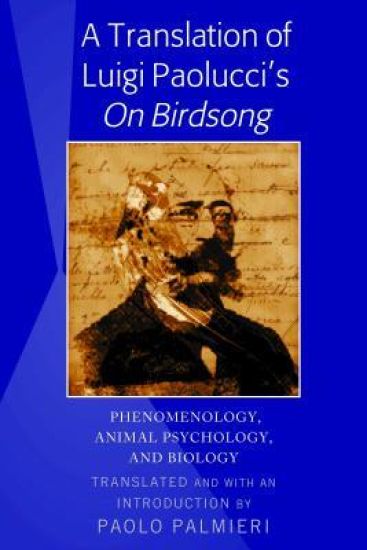
A Translation of Luigi Paolucci's «On Birdsong»

A Translation of Luigi Paolucci's «On Birdsong»

Paolo Palmieri

Peter Lang Publishing Inc
2018
sidottu
A Translation of Luigi Paolucci’s On Birdsong is the first English translation of a groundbreaking memoir on birdsong by the Italian naturalist Luigi Paolucci. It is accompanied by extensive annotations and an introductory essay by the translator, Paolo Palmieri, that examines the scientific and philosophical questions raised by birdsong in relation to the history and philosophy of science, phenomenology, and the theoretical problems of the demarcation of the human and non-human animal. Paolucci’s memoir focuses on firsthand ecological research and offers a fundamental theory of birdsong as language and music. Paolucci studies songbird species and behavior by bringing to bear linguistics, music and sound theory, and the debate on evolutionary theory and animal cognition. In the introductory essay, Paolo Palmieri adopts a phenomenological approach in order to investigate the problem of animal suffering and ethics, animal reasoning and will, the neurophysiology of hearing in humans and birds, and the relation between birdsong and laughter. This book will appeal to a large audience of philosophers, post-humanists, historians of science, animal cognition theorists, birdsong scientists and naturalists, and students. This book will also be valuable to the general public who is interested in the ethical debates on the presence of non-human animals in our society.
Hermes and the Telescope

Hermes and the Telescope

Paolo Palmieri

Peter Lang Publishing Inc
2016
sidottu
This book explores the life of Galileo Galilei through a philosophical and scientific lens, utilizing an innovative hermeneutic perspective that places his work in the wider context of early modern hermeticism, religious heresy, and libertinism. As the first comprehensive study of Galileo’s life and work from a phenomenological and existentialist viewpoint, Paolo Palmieri calls into question the positivist myth of Galileo, the founder of modern science, and interrogates the positivist historiography that has shaped the myth since the historic publication of the monumental edition of Galileo’s works at the turn of the twentieth century. The book highlights the entanglement of Galileo’s natural philosophy with his private unorthodox convictions about Christian theology, Biblical hermeneutic, sexuality, and the hidden traditions of Italian heretics and libertines. The text demonstrates the philosophical, pedagogical, and political implications of this new reading of one of the founding fathers of modernity for both the sciences and the humanities. Addressing hotly debated questions of ethnicity, racism, subjectivity, the self, and pedagogy, this study will be of particular interest to scholars who teach both undergraduate and graduate courses in history of science, philosophy of science, phenomenology and existential philosophy, cultural studies, Italian studies, humanism, and the European Renaissance.