

Kirjailija
Pasi Sahlberg
Kirjat ja teokset yhdessä paikassa: 17 kirjaa, julkaisuja vuosilta 2003-2023, suosituimpien joukossa Fremtidsparat?. Vertaile teosten hintoja ja tarkista saatavuus suomalaisista kirjakaupoista.
17 kirjaa
Kirjojen julkaisuhaarukka 2003-2023.
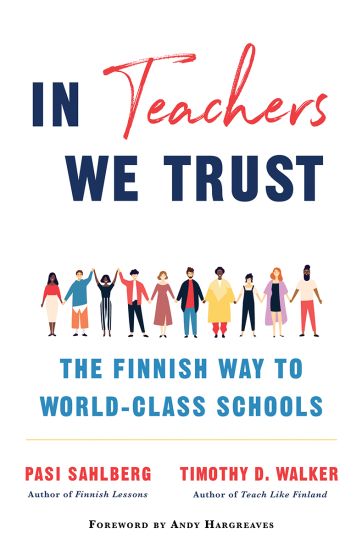
In Teachers We Trust presents a compelling vision, offering practical ideas for educators and school leaders wishing to develop teacher-powered education systems. It reveals why teachers in Finland hold high status and shows what the country’s trust-based school system looks like in action. Pasi Sahlberg and Timothy D. Walker suggest seven key principles for building a culture of trust in schools, from offering clinical training for future teachers to encouraging student agency to fostering a collaborative professionalism among educators. In Teachers We Trust is essential reading for all teachers, administrators and parents who entrust their children to the school system.
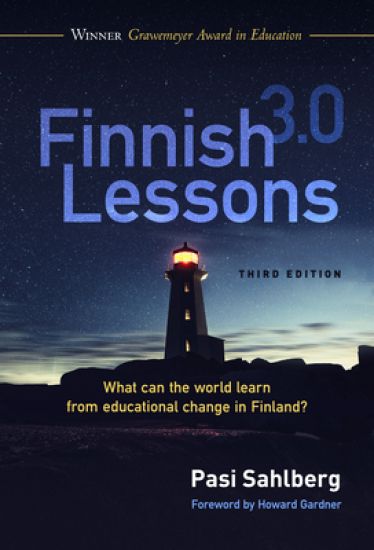
The first two editions of Finnish Lessons described how a small Nordic nation built a school system that provided access to a world-class education for all of its young people. Now available in 30 languages, this Grawemeyer Award–winning book continues to influence education policies and school practices around the globe. In this Third Edition, Pasi Sahlberg updates the story of how Finland sustains its exemplary educational performance, including how it responds to turbulent changes at home and throughout the world. Finnish Lessons 3.0 includes important new material about: teachers and teacher education teaching children with special needs the role of play in high-quality education Finland's responses to growing inequality, slipping international test scores, and the global pandemicIn the midst of national education reforms and global changes driven by public health crises and economic turbulence, Finnish Lessons 3.0 encourages teachers, students, and policymakers to think big and bold when they look for new solutions to improving their schools and entire education systems. This edition provides an even deeper dive into the present world of education in Finland in light of the most recent education statistics and international data, including PISA 2018, TIMSS 2016, and TALIS 2018.
The first two editions of Finnish Lessons described how a small Nordic nation built a school system that provided access to a world-class education for all of its young people. Now available in 30 languages, this Grawemeyer Award–winning book continues to influence education policies and school practices around the globe. In this Third Edition, Pasi Sahlberg updates the story of how Finland sustains its exemplary educational performance, including how it responds to turbulent changes at home and throughout the world. Finnish Lessons 3.0 includes important new material about: teachers and teacher education teaching children with special needs the role of play in high-quality education Finland's responses to growing inequality, slipping international test scores, and the global pandemicIn the midst of national education reforms and global changes driven by public health crises and economic turbulence, Finnish Lessons 3.0 encourages teachers, students, and policymakers to think big and bold when they look for new solutions to improving their schools and entire education systems. This edition provides an even deeper dive into the present world of education in Finland in light of the most recent education statistics and international data, including PISA 2018, TIMSS 2016, and TALIS 2018.
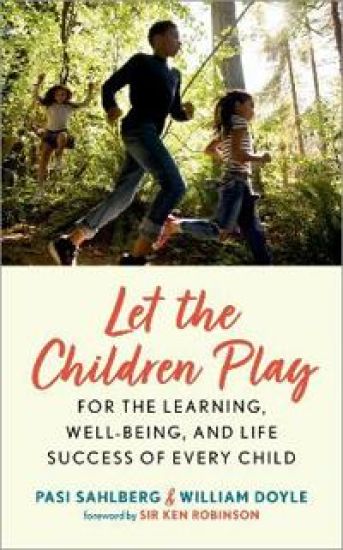
According to a professional association of 67,000 pediatricians, “the lifelong success of children is based on their ability to be creative and to apply the lessons learned from playing.” But play-including physical activity, the arts, and even free play-is being eliminated in our society and schools and despite huge financial investment these education policies have not improved learning. In Let the Children Play, the authors, both fathers of school-age children, tell how switching countries -- Pasi Sahlberg brought his Finnish family to the United States, while William Doyle brought his American family to Finland -- shocked them into writing this book. With research breakthroughs and case histories from Finland, China, Singapore, Scotland, New York, Texas, and around the world, the authors reveal how intellectual and physical play is the ultimate engine of transforming education -- the key to giving our children the well-being, happiness, and skills they need to thrive in the 21st century, including curiosity, creativity, teamwork, problem-solving, communication, and empathy. Written for parents, educators, and policymakers, this book reveals a striking vision of an inspiring future of our children's education-and how to make it happen.
Let the Children Play: How More Play Will Save Our Schools and Help Children Thrive
Pasi Sahlberg; William Doyle
Oxford University Press
2019
sidottu
Play is how children explore, discover, fail, succeed, socialize, and flourish. It is a fundamental element of the human condition. It's the key to giving schoolchildren skills they need to succeed--skills like creativity, innovation, teamwork, focus, resilience, expressiveness, empathy, concentration, and executive function. Expert organizations such as the American Academy of Pediatrics, the National Academy of Sciences, and the Centers for Disease Control agree that play and physical activity are critical foundations of childhood, academics, and future skills--yet politicians are destroying play in childhood education and replacing it with standardization, stress, and forcible physical restraint, which are damaging to learning and corrosive to society. But this is not the case for hundreds of thousands of lucky children who are enjoying the power of play in schools in China, Texas, Oklahoma, Long Island, Scotland, and in the entire nation of Finland. In Let the Children Play, Pasi Sahlberg, Finnish educator and scholar, and Fulbright Scholar William Doyle make the case for helping schools and children thrive by unleashing the power of play and giving more physical and intellectual play to all schoolchildren. In the course of writing this book, Sahlberg and Doyle traveled worldwide, reviewed over 700 research studies, and conducted interviews with over 50 of the world's leading authorities on education. Most intriguingly, Let the Children Play provides a glimpse into the play-based experiments ongoing now all over the world, from rural China, Singapore, and Scotland to North Texas and Oklahoma, as well as the promising results of these bold new approaches. Readers will find the book to be both a call for change and a guide for making that change happen in their own communities.

Fremtidsparat?
Anders Petersen; Dion Sommer; Klaus Nielsen; Jacob Klitmøller; Ingrid Pramling Samuelsson; Michael Uljens; Pasi Sahlberg; Svein Sjøberg; Svein Østerud; Peter Allerup; Andreas Gruschka; Tina Øllgaard Bentzen; Rolf Sundqvist; Ann-Sofie Smeds-Nylund
Gyldendal
2018
nidottu
Fremtidsparat? giver et forskningsbaseret bud på en fremtidig uddannelsespolitik i en globaliseret fremtid med automatisering og intelligente sociale robotter. I de sidste 17 år har de internationale PISA-undersøgelser haft en markant indflydelse på uddannelsesområdet og har demonstreret, at diskussionen om skole og uddannelse er blevet internationaliseret og universel. En sagligt funderet kritik af PISA-komplekset er derfor nødvendig. Hensigten med Fremtidsparat? er trefoldig. I Del I præsenterer bogen en række kritiske analyser af PISA-undersøgelserne og den samfunds- og menneskeforståelse, de udspringer af. I Del II formulerer de bidragende forfattere deres alternativer til det nuværende uddannelsessystem og deres visioner om, hvad der skal til for at opnå en fremtidsparat skole og daginstitution. I Del III perspektiveres bogen med opsamling og formulering af nogle centrale fremtidstemaer for uddannelsesområdet. Bogens forfattere er anerkendte forskere fra hele Norden (samt en enkelt tysk bidragyder), og de er alle blevet opfordret til at formulere ikke bare deres kritikpunkter, men også deres visioner for fremtidens skole og daginstitution. Fremtidsparat? henvender sig til pædagog- og læreruddannelsen samt til efter- og videreuddannelserne for de to professioner. Den er desuden relevant for universitetsstuderende i bl.a. pædagogik og psykologi. Endelig er den oplagt læsning for meningsdannere og beslutningstagere på uddannelsesområdet. Dion Sommer er professor i udviklingspsykologi ved Psykologisk Institut, Aarhus Universitet. Jacob Klitmøller er ph.d. og lektor i pædagogisk psykologi ved Psykologisk Institut, Aarhus Universitet. Sammen har de også redigeret Læring, dannelse og udvikling.
Hvordan skape de beste forutsetninger for læring? En skole og et utdanningssystem som har elevens behov i sentrum, har betydelig større mulighet for å lykkes. I finsk skole legges det vekt på å undervise i kunnskap og ferdigheter som vil gjøre elevene til gode samfunnsborgere. Dette er ikke alltid målbare størrelser, men for eksempel evne til samarbeid, problemløsning, lek og kreativitet. I boken Rett blikket mot Finland utdypes denne tematikken, og forfatteren presenterer praktiske tips og idéer til videreutvikling av undervisningen. Målsettingen er ikke at andre utdanningssystemer skal kopiere den finske skolen, men heller å inspirere til å fokusere på elevens behov i eget utdanningssystem. Innen ethvert utdanningssystem vil det være relevant å stille spørsmålet: Hvordan skapes de beste forutsetningene for læring? Målgruppen for boken er ledere i oppvekst- og utdanningssektoren, lærere, leder- og lærerutdannere samt alle andre med interesse for utdanningsfeltet.
Hard Questions on Global Educational Change
Pasi Sahlberg; Jonathan Hasak; Vanessa Rodriguez
Teachers' College Press
2016
nidottu
This new book, from internationally renowned education scholar Pasi Sahlberg and his colleagues, focuses on some of the most controversial issues in contemporary education reform around the world. The authors devote a chapter to each of these “hard questions”:Does parental choice improve education systems?Is there a future for teacher unions?What is the right answer to the standardized testing question?Can schools prepare children for the 21st-century workplace?Will technology save schools?Can anyone be a teacher?Should higher education be for the public good?What knowledge and skills should an educator have?Each educational change question sheds much-needed light on today’s large-scale education policies and related reforms around the world. The authors focus on what makes each question globally significant, what we know from international research, and what can be inferred from benchmark evidence. The final chapter offers a model for policymakers with implications for teaching, learning, and schooling overall.Book Features:An in-depth look at the most contentious areas of contemporary education reform.Concrete examples from across the globe.Commentary from key experts, authorities, and organizations.A consistent, accessible organization that will appeal to faculty and students.Lessons learned that illuminate a good way forward to improve the educational experience of all students.
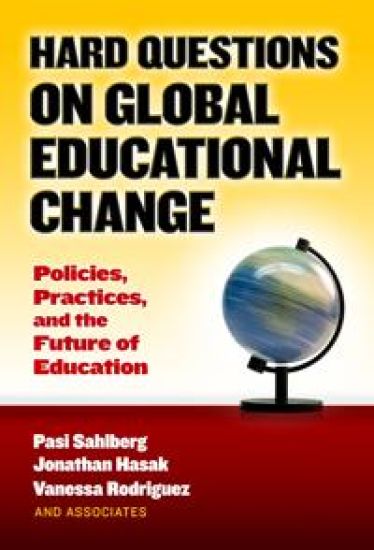
Hard Questions on Global Educational Change
Pasi Sahlberg; Jonathan Hasak; Vanessa Rodriguez
Teachers' College Press
2016
sidottu
This new book, from internationally renowned education scholar Pasi Sahlberg and his colleagues, focuses on some of the most controversial issues in contemporary education reform around the world. The authors devote a chapter to each of these “hard questions”:Does parental choice improve education systems?Is there a future for teacher unions?What is the right answer to the standardized testing question?Can schools prepare children for the 21st-century workplace?Will technology save schools?Can anyone be a teacher?Should higher education be for the public good?What knowledge and skills should an educator have?Each educational change question sheds much-needed light on today’s large-scale education policies and related reforms around the world. The authors focus on what makes each question globally significant, what we know from international research, and what can be inferred from benchmark evidence. The final chapter offers a model for policymakers with implications for teaching, learning, and schooling overall.Book Features:An in-depth look at the most contentious areas of contemporary education reform.Concrete examples from across the globe.Commentary from key experts, authorities, and organizations.A consistent, accessible organization that will appeal to faculty and students.Lessons learned that illuminate a good way forward to improve the educational experience of all students.
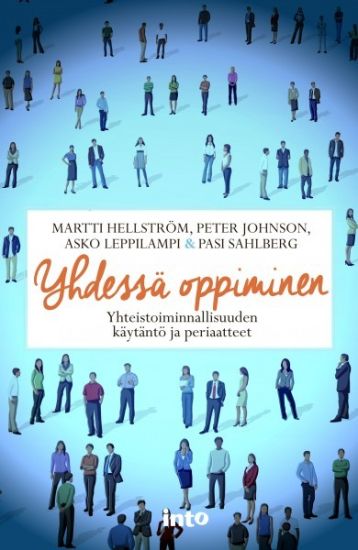
Yhdessä oppiminen
Martti Hellström; Peter Johnson; Asko Leppilampi; Pasi Sahlberg
Into Kustannus
2015
nidottu
Yhteistoiminnallisessa oppimisessa työskennellään pienryhmissä. Opettaja innostaa ja ohjaa, ja oppiessa syntyy sosiaalisia taitoja, oppimisen iloa ja positiivista yhteisöllisyyden tunnetta.Yhdessä oppiminen on ajankohtainen, 2020-luvulle päivitetty teos yhteistoiminnallisuudesta, sen perusteista ja menetelmistä. Vuoden 2016 opetussuunnitelman myötä peruskouluille ja lukioille tarjoutuu mahdollisuus uudistua.Kirjan voi lukea itsenäisesti tai sitä voi käyttää yhteistoiminnallisen oppimisen tapaan. Kirja soveltuu opettajille ja opetuksesta päättäville kaikilla hallinnon ja politiikan tasoilla.
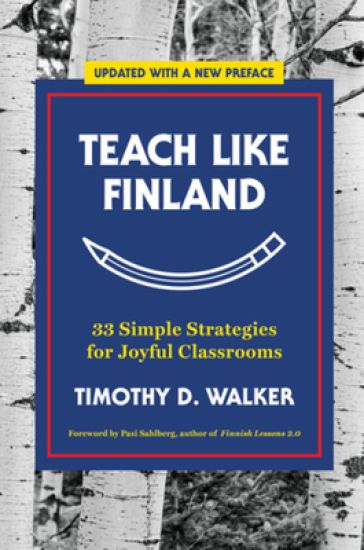
Finland shocked the world when its fifteen-year-olds scored highest on the first Programme for International Student Assessment (PISA), a set of tests touted for evaluating critical-thinking skills in maths, science and reading. That was in 2001; but even today, this tiny Nordic nation continues to amaze. How does Finnish education—with short school days, light homework loads and little standardised testing—produce students who match the PISA scores of high-powered, stressed-out kids in Asia? When Timothy D. Walker started teaching fifth graders at a Helsinki public school, he began a search for the secrets behind the success of Finland’s schools. Walker has already written about several of those discoveries and his Atlantic article on this topic received more than 500,000 shares. Here, he gathers all he has learned and reveals how teachers can implement these simple practices, which integrate seamlessly with educational standards.
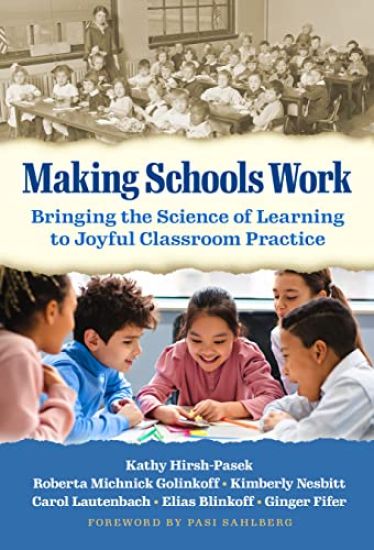
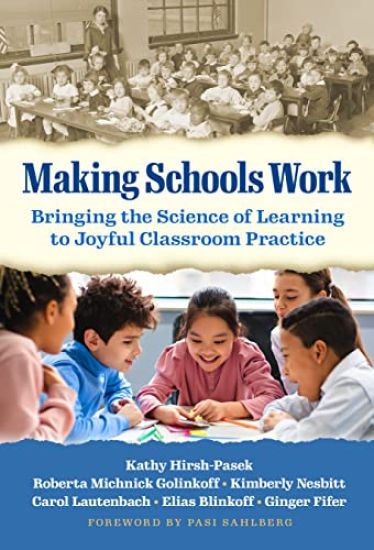
Making Schools Work
Kathy Hirsh-Pasek; Roberta Michnick Golinkoff; Kimberly Nesbitt; Carol Lautenbach; Elias Blinkoff; Ginger Fifer; Pasi Sahlberg
TEACHERS' COLLEGE PRESS
2022
sidottu
If we teach in the way that human brains learn, both students and their teachers will thrive! This book aligns evidence from the learning sciences on how and what students need to learn with classroom practice (pre-K–12). It demonstrates, with hands-on examples, how a change in educational mindset (rather than in curriculum) can improve student outcomes on both standardized tests and a breadth of 21st-century skills skills. Written collectively by classroom teachers, administrators, parents, and learning scientists, this book shows readers how to co-construct and reimagine an optimal educational system. Making Schools Work offers three case studies of schools, including a statewide system, that are all realizing a 6 Cs approach to learning focused on collaboration, communication, content, critical thinking, creative innovation, and confidence. The text documents the ever-evolving implementation process, as well as outcomes and the ongoing work of stakeholders. Readers can use this resource to create an education for all children that is culturally responsive, inclusive, effective, and fun.Book Features:Helps educators teach in the way that human minds learn.Jointly written in accessible language by teachers, administrators, parents, and learning scientists.Offers hands-on ways to reimagine classrooms without investing in new curricula.Puts teachers in the driver's seat, reminding them of why they teach.Provides culturally responsive, inclusive, effective, and fun strategies.Offers children the possibility of learning the skills they will need for 21st-century skills success.
Making Schools Work
Kathy Hirsh-Pasek; Roberta Michnick Golinkoff; Kimberly Nesbitt; Carol Lautenbach; Elias Blinkoff; Ginger Fifer; Pasi Sahlberg
TEACHERS' COLLEGE PRESS
2022
nidottu
If we teach in the way that human brains learn, both students and their teachers will thrive! This book aligns evidence from the learning sciences on how and what students need to learn with classroom practice (pre-K–12). It demonstrates, with hands-on examples, how a change in educational mindset (rather than in curriculum) can improve student outcomes on both standardized tests and a breadth of 21st-century skills skills. Written collectively by classroom teachers, administrators, parents, and learning scientists, this book shows readers how to co-construct and reimagine an optimal educational system. Making Schools Work offers three case studies of schools, including a statewide system, that are all realizing a 6 Cs approach to learning focused on collaboration, communication, content, critical thinking, creative innovation, and confidence. The text documents the ever-evolving implementation process, as well as outcomes and the ongoing work of stakeholders. Readers can use this resource to create an education for all children that is culturally responsive, inclusive, effective, and fun.Book Features:Helps educators teach in the way that human minds learn.Jointly written in accessible language by teachers, administrators, parents, and learning scientists.Offers hands-on ways to reimagine classrooms without investing in new curricula.Puts teachers in the driver's seat, reminding them of why they teach.Provides culturally responsive, inclusive, effective, and fun strategies.Offers children the possibility of learning the skills they will need for 21st-century skills success.
Empowered Educators in Finland
Karen Hammerness; Raisa Ahtiainen; Pasi Sahlberg
Jossey-Bass Inc.,U.S.
2017
nidottu
BEST PRACTICES FROM FINLAND'S HIGH-PERFORMING SCHOOL SYSTEM Empowered Educators in Finland is one volume in a series that explores how high- performing educational systems from around the world achieve strong results. The anchor book, Empowered Educators: How High-Performing Systems Shape Teaching Quality Around the World, is written by Linda Darling-Hammond and colleagues, with contributions from the authors of this volume. Empowered Educators in Finland explores Finland's unique approach to teacher training that, combined with a national focus on equity and children, has led to strong student results on the OECD PISA and other international tests. Since the 1930s, every child born in Finland has been provided with a box of clothes, sheets, toys, diapers, and even a small mattress; the box itself can—and often does—serve as a simple crib. Intended to ensure that all Finnish children begin with the essentials, this box also serves as a clear symbol of the nation's emphasis on equality and opportunity. This book describes how what is commonly thought to be "just a part of Finnish culture" is actually the result of strong support for educators at all levels of government. From the Ministry of Education and Culture, to the Finnish National Board of Education, to regional and local policy makers, Finland has made deliberate choices to create and support a strong educational system. While there are unique political, cultural, and societal features of Finland—as with all countries—there are many lessons to be learned and practical ideas to be implemented across the world.
Small group learning in mathematics
Pasi Sahlberg; John Berry
Suomen kasvatustieteellinen seura
2003
nidottu