Kirjojen hintavertailu. Mukana 12 211 463 kirjaa ja 12 kauppaa.

Kirjailija

Pat Brunton

Kirjat ja teokset yhdessä paikassa: 12 kirjaa, julkaisuja vuosilta 2005-2014, suosituimpien joukossa Science in the Early Years. Vertaile teosten hintoja ja tarkista saatavuus suomalaisista kirjakaupoista.

12 kirjaa

Kirjojen julkaisuhaarukka 2005-2014.

Science in the Early Years

Science in the Early Years

Pat Brunton; Linda C Thornton

SAGE Publications Ltd
2009
sidottu
Giving early years practitioners and students the confidence to effectively support scientific exploration and investigation with young children, this book explains the science behind young children's knowledge and understanding of the world. Linking theory to good early years practice, the emphasis throughout the book is on recognizing young children as competent, creative thinkers and building on their ideas. The reader is encouraged to think carefully about the role of the adult in supporting child-initiated learning and discovery by providing open ended resources, asking productive questions and observing carefully. The authors provide essential background information for all the key areas of scientific knowledge supported by practical ideas suitable for babies, toddlers and children aged 3 to 5 years. For each of these ideas, practice and theory are linked by highlighting the skills, attitudes and dispositions to observe and the questions to ask to challenge young children's thinking and plan for the next stages in their learning. Chapters cover: - the place of science in early years curricula in the UK - the processes of science and the role of the adult in supporting young children's scientific learning - using open ended resources to create a science-rich environment - essential background knowledge, covering all areas of early years science - ideas to use as starting points for exploration and investigation, indoors and outdoors - pointers for observational assessment and planning - suppliers of resources and equipment By making clear links to practice, and providing ideas to use with babies and toddlers as well as with 3-5 year old children, this book enables the reader to fully exploit the potential for exploration and investigation in any early years setting. Pat Brunton and Linda Thornton are both Education Consultants based in Cheltenham. They run their own training and consultancy company alc associates, and edit Early Years Update.
Science in the Early Years

Science in the Early Years

Pat Brunton; Linda C Thornton

SAGE Publications Ltd
2009
nidottu
Giving early years practitioners and students the confidence to effectively support scientific exploration and investigation with young children, this book explains the science behind young children's knowledge and understanding of the world. Linking theory to good early years practice, the emphasis throughout the book is on recognizing young children as competent, creative thinkers and building on their ideas. The reader is encouraged to think carefully about the role of the adult in supporting child-initiated learning and discovery by providing open ended resources, asking productive questions and observing carefully. The authors provide essential background information for all the key areas of scientific knowledge supported by practical ideas suitable for babies, toddlers and children aged 3 to 5 years. For each of these ideas, practice and theory are linked by highlighting the skills, attitudes and dispositions to observe and the questions to ask to challenge young children's thinking and plan for the next stages in their learning. Chapters cover: - the place of science in early years curricula in the UK - the processes of science and the role of the adult in supporting young children's scientific learning - using open ended resources to create a science-rich environment - essential background knowledge, covering all areas of early years science - ideas to use as starting points for exploration and investigation, indoors and outdoors - pointers for observational assessment and planning - suppliers of resources and equipment By making clear links to practice, and providing ideas to use with babies and toddlers as well as with 3-5 year old children, this book enables the reader to fully exploit the potential for exploration and investigation in any early years setting. Pat Brunton and Linda Thornton are both Education Consultants based in Cheltenham. They run their own training and consultancy company alc associates, and edit Early Years Update.
Understanding the Reggio Approach

Understanding the Reggio Approach

Linda Thornton; Pat Brunton

Routledge
2014
sidottu
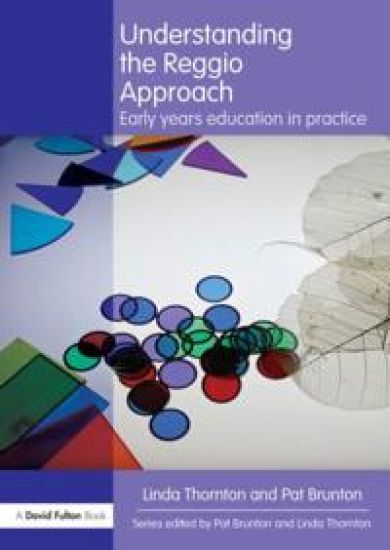
Understanding the Reggio Approach is a much needed source of information for those wishing to extend and consolidate their understanding of the Reggio Approach. It enables analysis of the essential elements of this particular approach to early childhood teaching and the relationship it holds with quality early years practice.It describes the key features of the Reggio Approach to early childhood including the environment, creativity, relationships and documentation. This new edition has been updated with the latest developments in this approach and includes new material on the thinking and work of Loris Malaguzzi and the future for educators in Reggio Emilia and the implications for practice in the UK. Features include: Examples from infant-toddler centres and preschools in Reggio Emilia. Key points to highlight the ideas that practitioners should consider when reviewing and reflecting on their practice Reflections that can be used as the basis for continuing professional development and action research. Written to support the work of all those in the field of early education and childcare, this is a vital text for students, early years and childcare practitioners, teachers, Early Years Professionals, Children’s Centre professionals, lecturers, advisory teachers and setting managers.
Understanding the Reggio Approach

Understanding the Reggio Approach

Linda Thornton; Pat Brunton

Routledge
2014
nidottu
Understanding the Reggio Approach is a much needed source of information for those wishing to extend and consolidate their understanding of the Reggio Approach. It enables analysis of the essential elements of this particular approach to early childhood teaching and the relationship it holds with quality early years practice.It describes the key features of the Reggio Approach to early childhood including the environment, creativity, relationships and documentation. This new edition has been updated with the latest developments in this approach and includes new material on the thinking and work of Loris Malaguzzi and the future for educators in Reggio Emilia and the implications for practice in the UK. Features include: Examples from infant-toddler centres and preschools in Reggio Emilia. Key points to highlight the ideas that practitioners should consider when reviewing and reflecting on their practice Reflections that can be used as the basis for continuing professional development and action research. Written to support the work of all those in the field of early education and childcare, this is a vital text for students, early years and childcare practitioners, teachers, Early Years Professionals, Children’s Centre professionals, lecturers, advisory teachers and setting managers.
Bringing the Reggio Approach to your Early Years Practice
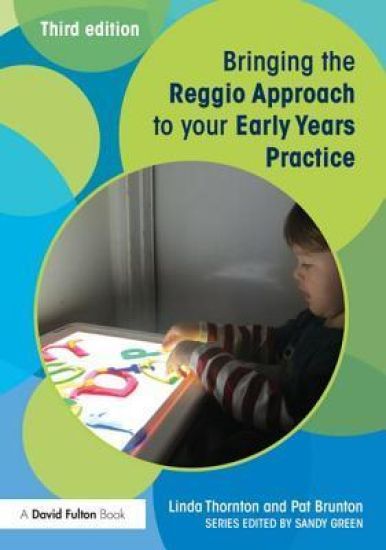
Have you ever wondered what the Reggio Approach is all about, why it works, and how it can be used to benefit the young children in your setting?The book describes how educators in Reggio Emilia work with young children, and looks at the connections between the Reggio Approach and the revised Early Years Foundation Stage framework. It provides practical examples involving children of different ages in a wide variety of settings, helping the reader to see the connection between practice and theory. This new edition has been fully updated to show the increasingly mirroring connections between the Reggio Approach and the principles and commitments of the recently revised Early Years Foundation Stage (EYFS) framework. Each chapter focuses on one important aspect of the Reggio Approach and includes: Practical examples involving children of different ages in a wide variety of settings, helping the reader to see the connection between practice and theory Questions to enable the reader to reflect on and develop his or her own practice in accordance with new statutory requirements References to sources of further reading and information. This convenient guide will help early years practitioners, students and parents to really understand what the Reggio Approach can offer their setting and children.
Bringing the Reggio Approach to your Early Years Practice
Have you ever wondered what the Reggio Approach is all about, why it works, and how it can be used to benefit the young children in your setting?The book describes how educators in Reggio Emilia work with young children, and looks at the connections between the Reggio Approach and the revised Early Years Foundation Stage framework. It provides practical examples involving children of different ages in a wide variety of settings, helping the reader to see the connection between practice and theory. This new edition has been fully updated to show the increasingly mirroring connections between the Reggio Approach and the principles and commitments of the recently revised Early Years Foundation Stage (EYFS) framework. Each chapter focuses on one important aspect of the Reggio Approach and includes: Practical examples involving children of different ages in a wide variety of settings, helping the reader to see the connection between practice and theory Questions to enable the reader to reflect on and develop his or her own practice in accordance with new statutory requirements References to sources of further reading and information. This convenient guide will help early years practitioners, students and parents to really understand what the Reggio Approach can offer their setting and children.
Making the Most of Light and Mirrors

Making the Most of Light and Mirrors

Linda Thornton; Pat Brunton

Featherstone
2013
nidottu
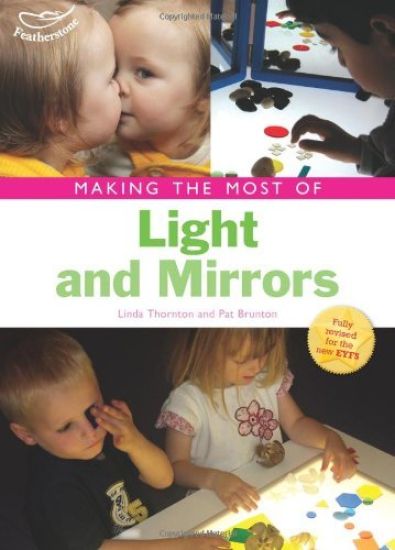
Playing with light is a magical experience for children and adults alike. Making the most of Light and Mirrorshas been specially written to celebrate the wonderful ideas andtheories that babies and young children demonstrate on a daily basis,as they play and explore the world around them.Each of the scenarios in this book, accompanied by stunning fullcolour photographs, shows how the use of reclaimed and naturalmaterials can support play and active learning, exploration andinvestigation and creativity and critical thinking across the six areasof learning of the Early Years Foundation Stage.Through easily understood text and colour photographs, this bookprovides both photographic and written support for early yearsprofessionals wishing to develop their understanding of:- the role of the creative practitioner- a creative learning environment- child-initiated and adult- led experiences- the value of open- ended resources- the use of photographs in observational assessment
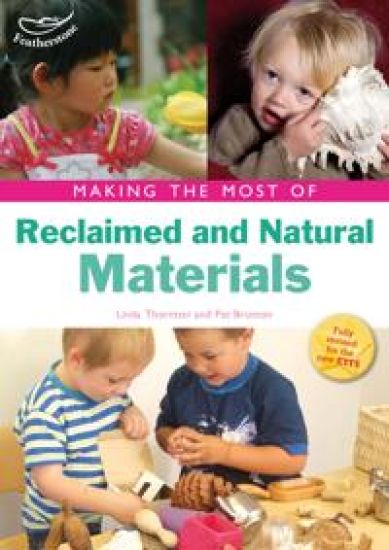
Making the Most of Reclaimed and Natural Materials

Making the Most of Reclaimed and Natural Materials

Linda Thornton; Pat Brunton

Featherstone
2013
nidottu
Reclaimed and natural materials, in all their variety of colours,shapes, sizes, textures and origins, are fascinating and intriguing tochildren of all ages! This book has been specifically written tocelebrate the wonderful ideas and theories that babies and youngchildren demonstrate on a daily basis, as they play and explore theworld around them.Each of the scenarios in this book, accompanied by stunning full colour photographs, shows how the use of reclaimed and natural materials can support play and active learning, exploration and investigation and creativity and critical thinking across the six areas of learning of the Early Years Foudation Stage.Through easily understood text and colour photographs, this book provides both photographic and written support for early years professionals wishing to develop their understanding of:- the role of the creative practitioner- a creative learning environment- child-initiated and adult- led experiences- the value of open- ended resources- the use of photographs in observational assessment
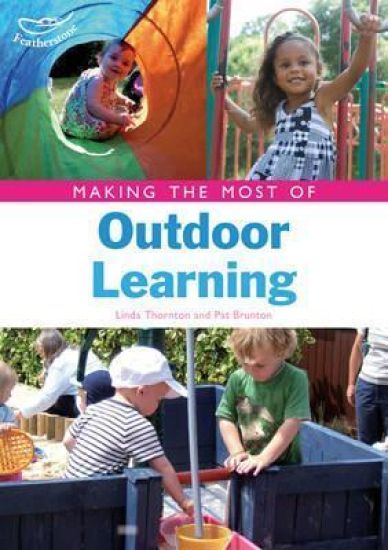
Making the Most of Outdoor Learning

Making the Most of Outdoor Learning

Linda Thornton; Pat Brunton

Featherstone
2011
nidottu
This exciting new book in the 'Making the most of' series shows thevalue of outdoor as well as indoor learning environments, givingchildren access to an enabling environment that will engage them andprovide opportunities to extend their learning. The book demonstrateshow outdoor spaces, both in the setting and further afield, can addrichness to the learning environment setting's provide for very youngchildren.
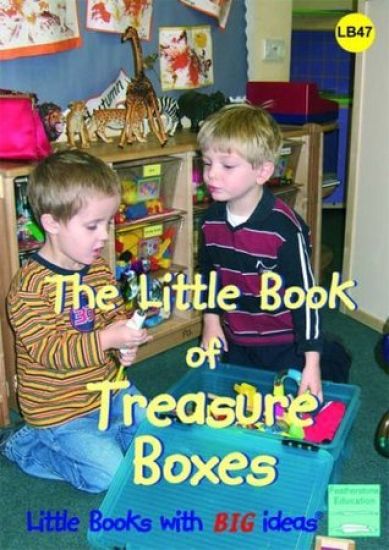
The Little Book of Treasure Boxes

The Little Book of Treasure Boxes

Linda Thornton; Pat Brunton

Featherstone Education Ltd
2006
nidottu
A Treasurebox is a collection of themed resources carefully chosen to engage children's attention, encourage their curiosity, and spark their imagination. Treasureboxes are designed to provide starting points for young children's investigation and exploration of the world around them, building on their own ideas and understanding. The ideas in the Little Book of Treasureboxes can be used with children in the Foundation Stage, but are also useful for trasition into Key Stage 1.
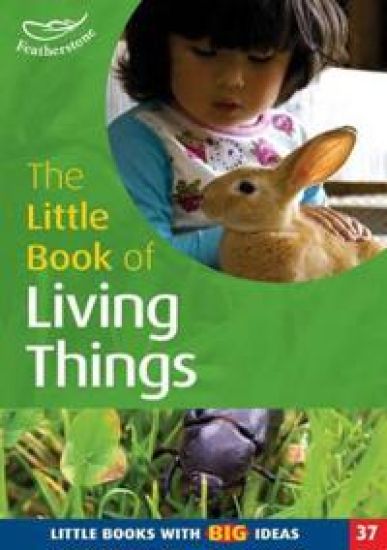
The Little Book of Living Things

The Little Book of Living Things

Linda Thornton; Pat Brunton

Featherstone Education Ltd
2005
nidottu
The Little Book of Living Things provides you with a range of ideas and activities to develop children's awareness of the world around them. The themes covered include plants as well as animals and involve both short and long term investigations. Included throughout the book are some key points and facts to remind you of some of the important concepts which lie behind the organisation and classification of the living world.