Kirjojen hintavertailu. Mukana 12 155 617 kirjaa ja 12 kauppaa.
Kirjailija
Pat Conroy
Kirjat ja teokset yhdessä paikassa: 31 kirjaa, julkaisuja vuosilta 1996-2023, suosituimpien joukossa A Word on Words. Vertaile teosten hintoja ja tarkista saatavuus suomalaisista kirjakaupoista.
Andrew Maraniss; Arna Bontemps; John Egerton; John Lewis; David Halberstam; Jesse Hill Ford; Pat Conroy; Ann Patchett; Dori Sanders; Alice Randall; Nikki Giovanni; Marshall Chapman; Marty Stuart; Rodney Crowell; Waylon Jennings; Kinky Friedman; Charles Fountain; William Marshall; William Price Fox; Jon Meacham; Doris Kearns Goodwin; David Maraniss; John Michael Seigenthaler
For years the legendary John Seigenthaler hosted A Word on Words on Nashville's public television station, WNPT. During the show’s four-decade run (1972 to 2013), he interviewed some of the most interesting and most important writers of our time. These in-depth exchanges revealed much about the writers who appeared on his show and gave a glimpse into their creative processes. Seigenthaler was a deeply engaged reader and a generous interviewer, a true craftsman. Frye Gaillard and Pat Toomay have collected and transcribed some of the iconic interactions from the show. Featuring interviews with: Arna Bontemps • Marshall Chapman • Pat Conroy • Rodney Crowell • John Egerton • Jesse Hill Ford • Charles Fountain • William Price Fox • Kinky Friedman • Frye Gaillard • Nikki Giovanni • Doris Kearns Goodwin • David Halberstam • Waylon Jennings • John Lewis • David Maraniss • William Marshall • Jon Meacham • Ann Patchett • Alice Randall • Dori Sanders • John Seigenthaler Sr. • Marty Stuart • Pat Toomay

"A powerfully moving book . . . You will laugh, you will weep, you will be proud and you will rail." --Charleston News and CourierYamacraw Island was haunting, nearly deserted, and beautiful. Separated from the mainland of South Carolina by a wide tidal river, it was accessible only by boat. But for the handful of families that lived on Yamacraw, America was a world away. For years these families lived proudly from the sea until waste from industry destroyed the oyster beds essential to their very existence. Already poor, they knew they would have to face an uncertain future unless, somehow, they learned a new life. But they needed someone to teach them, and their rundown schoolhouse had no teacher.The Water Is Wide is Pat Conroy's extraordinary memoir based on his experience as one of two teachers in a two-room schoolhouse, working with children the world had pretty much forgotten. It was a year that changed his life, and one that introduced a group of poor Black children to a world they did not know existed."A hell of a good story." --The New York Times" Pat] Conroy cuts through his experiences with a sharp edge of irony. . . . He brings emotion, writing talent and anger to his story." --Baltimore Sun
#1 New York Times bestselling author Pat Conroy's classic semi-autographical novel of a harsh Marine father and his son's struggle to come into his own."Robust and vivid...full of feeling." --NewsdayThis is the story of Bull Meecham, the epitome of the Marine officer. Demanding, authoritarian, as tough a disciplinarian at home as at the base, Bull is a difficult man to please, and even harder to love. This is also the story of Ben Meecham, Bull's oldest son. A gifted athlete whose best never satisfies his father, Ben must balance his own ambition with his father's expectations--and decide what course he will chart for himself and what kind of man he will become. Piercing, bittersweet, and unforgettable, The Great Santini is Pat Conroy's semi-autobiographical lens into fathers and sons, and the powerful legacy one man can leave behind.
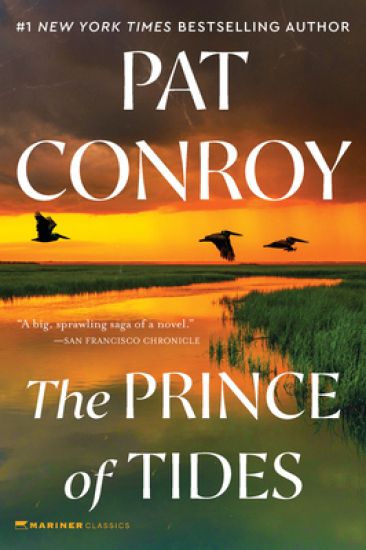
"A big, sprawling saga of a novel" (San Francisco Chronicle), this epic family drama is a masterwork by the #1 New York Times bestselling author of The Great Santini.Set in New York City and the low country of South Carolina, The Prince of Tides opens when Tom, a high school football coach whose marriage and career are crumbling, flies from South Carolina to New York after learning of his twin sister's suicide attempt. Savannah is one of the most gifted poets of her generation, and both the cadenced beauty of her art and the jumbled cries of her illness are clues to the too-long-hidden story of her wounded family. In the paneled offices and luxurious restaurants of New York City, Tom and Susan Lowenstein, Savannah's psychiatrist, unravel a history of violence, abandonment, commitment, and love. And Tom realizes that trying to save his sister is perhaps his last chance to save himself.With passion and a rare gift of language, Pat Conroy moves from present to past, tracing the amazing history of the Wingos from World War II through the final days of the war in Vietnam and into the 1980s, drawing a rich range of characters: the lovable, crazy Mr. Fruit, who for decades has wordlessly directed traffic at the same intersection in the southern town of Colleton; Reese Newbury, the ruthless, patrician land speculator who threatens the Wingos' only secure worldly possession, Melrose Island; Herbert Woodruff, Susan Lowenstein's husband, a world-famous violinist; Tolitha Wingo, Savannah's mentor and eccentric grandmother, the first real feminist in the Wingo family.Pat Conroy reveals the lives of his characters with surpassing depth and power, capturing the vanishing beauty of the South Carolina low country and a lost way of life.
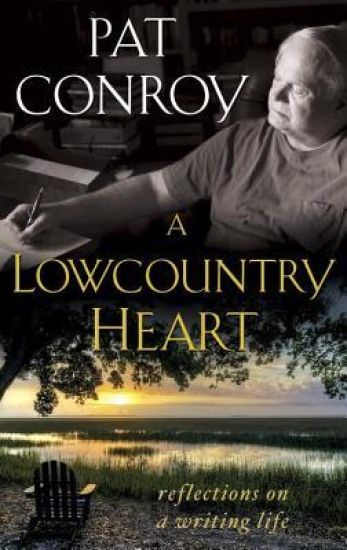
Final words and heartfelt remembrances from bestselling author Pat Conroy take center stage in this winning nonfiction collection, supplemented by touching pieces from Conroy's many friends. This new volume of Pat Conroy's nonfiction brings together some of the most charming interviews, magazine articles, speeches, and letters from his long literary career, many of them addressed directly to his readers with his habitual greeting, "Hey, out there." Ranging across diverse subjects, such as favorite recent reads, the challenge of staying motivated to exercise, and processing the loss of dear friends, Conroy's eminently memorable pieces offer a unique window into the life of a true titan of Southern writing. With a beautiful introduction from his widow, novelist Cassandra King, A Lowcountry Heart also honors Conroy's legacy and the innumerable lives he touched. Finally, the collection turns to remembrances of "The Great Conroy," as he is lovingly titled by friends, and concludes with a eulogy. The inarguable power of Conroy's work resonates throughout A Lowcountry Heart, and his influence promises to endure. This moving tribute is sure to be a cherished keepsake for any true Conroy fan and remain a lasting monument to one of the best-loved masters of contemporary American letters. Praise for A Lowcountry Heart "A fascinating look into the mind of one of the South's greatest authors . . . something to remember him by and cherish for years to come."--The Clarion-Ledger "Fans of Conroy . . . will relish the chance to spend more time with him in this glowing valedictory to his life and writing . . . Eloquent, folksy, and sometimes brutally honest."--Publishers Weekly "A moving and proper tribute to a true Southern icon."--The Florida Times-Union "Elegant essays that] will not disappoint."--The Washington Post "Resplendent . . . As always, his storytelling, word choice and rhythm are gorgeous, almost lyrical."--USA Today
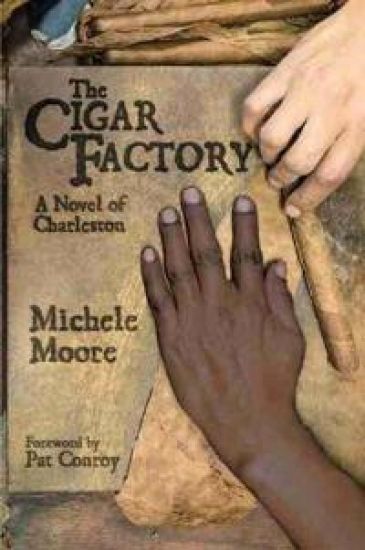
“The sun leaned for down bringing shade to the waterfront,” begins Michele Moore’s entrancing debut novel, harkening back to an era when the legendary fishermen of Charleston’s Mosquito Fleet rowed miles offshore for their daily catch. With evocative dialect and remarkable prose, The Cigar Factory tells the story of two entwined families, both devout Catholics—the white McGonegals and the African American Ravenels—in the storied port city of Charleston, South Carolina, during the World Wars. Moore’s novel follows the parallel lives of family matriarchs working on segregated floors of the massive Charleston cigar factory, where white and black workers remain divided and misinformed about the duties and treatment received by each other. Cassie McGonegal and herniece Brigid work upstairs in the factory rolling cigars by hand. Meliah Amey Ravenel works in the basement, where she stems the tobacco. While both white and black workers suffer in the harsh working conditions of the factory and both endure the sexual harassment of the foremen, segregation keeps them from recognizing their common plight until the Tobacco Workers Strike of 1945. Through the experience of a brutal picket line, the two women come to realize how much they stand to gain by joining forces, creating a powerful moment in labor history that gives rise to the Civil Rights anthem, “We Shall Overcome.” Moore’s extensive historical research included interviews with her own family members who worked at the cigar factory, adding a layer of nuance and authenticity to her empowering story of families and friendships forged through struggle, loss, and redemption. The Cigar Factory includes a foreword by New York Times best-selling author and Story River Books editor at large Pat Conroy.
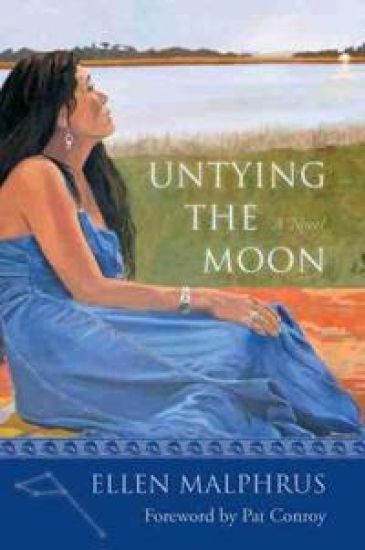
Bailey Martin is in perpetual motion--a child of the South Carolina lowcountry tides, being pulled to and from a reckoning with destiny. A marine biologist by training and an artist by dedication and talent, Bailey is a woman of contradictions, at once a free-spirited adventurer giving deeply of herself to environmental causes and familial loyalties but also consumed by primal, isolating appetites and dangerous attractions. Restless and troubled, Bailey chafes at her existence, becoming uneasy in her success, her life, and her own skin. Untying the Moon, the debut novel from southern storyteller Ellen Malphrus, is a vibrant tale of self-discovery, approaching the realms of myth and lore as readers ride shotgun with Bailey in Blue Ruby, her '67 Skylark convertible, from Manhattan down the eastern seaboard, from coastal Carolina to the Alaskan wilderness and back again, all in search of the embrace of love and--finally--of home.When Bailey trades the freedom of the road for a relationship with Padgett Turner, a Vietnam veteran haunted by his past, she finds the compelling possibility of settling into one place and one relationship. But the weight of Padgett's emotional scars is too much for either to bear, even together. As Padgett's darkness escalates, a moment of horrific violence pulls Bailey homeward to the Jericho River of Kirk's Bluff, South Carolina--a river of dolphins, dreams, and portents. In her lifelong friendship with neighbour Ben Simmons and under the sheltering gaze of her fisherman father, Cecil, and Ben's parents, George and Retta, Bailey uncovers the healing connections she had been seeking elsewhere and earns her chance at the truest prize of all--a balance between her dedication to her inner life and responsibilities to the outer world.Recalling the writings of James Dickey, Jack Kerouac, Jack London, Pat Conroy, Mary Alice Monroe, and Lee Smith, Untying the Moon explores the redemptive powers of home, nature, creation, and storytelling itself. With prose that ebbs and flows from the lyrical and lush to the staccato and sparse, Malphrus's novel is rich with classical allusions and regional folklore, the enrapturing beauty of its settings, a racially and geographically diverse charismatic cast, and all the mystery and magic of fate.New York Times best-selling writer and Story River Books editor at large Pat Conroy provides a foreword to the novel.
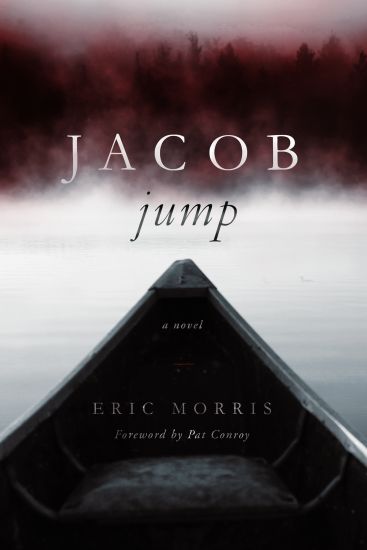
Jacob Jump, the dark and meticulously crafted first novel from Eric Morris, follows a weeklong ill-fated boating trip down the Savannah River from Augusta, Georgia, to the lighthouse at Tybee Island. Chance and danger trump planning and intention at every turn, and the pull of the historic river and of fate itself propels Morris's characters with unrelenting force.Old friends Thomas Verdery and William Rhind, each seeking temporary escape from the failures of their lives, take to the river with Rhind's father. Verdery, a native southerner, has left his job and lover in Nepaug, Connecticut, while Rhind has lost his wife and child to his drinking. Encounters with dangerous weather and unhinged locals imperil the trio, who are held at gunpoint when they try to dock and soon are fighting among themselves. The hazards of the trip and a shocking loss along the way exacerbate William Rhind's drinking and tendencies toward violence. When Verdery and Rhind must become reluctant custodians to young Caron Lee, a lost girl from the backwoods family that had previously accosted them, tensions build toward explosive ends as the serene open waters of the Atlantic Ocean wait just beyond reach on the unknown, unknowable horizon.Guided by a host of influences from William Faulkner and Ernest Hemingway to Cormac McCarthy, James Dickey, and Ron Rash, Morris's prose brings readers deep into the uncertainties of a still-wild southern landscape and of the frailties of the human heart yearning for past and future alike while pulled along by the inescapable current of the present.Best-selling writer and Story River Books editor at large Pat Conroy provides a foreword to the novel.
A Clear View of the Southern Sky reveals women in the twenty-first century doing what women have always done in pursuit of life, liberty, and happiness. In each of the ten tales from southern storyteller Mary Hood, women have come by circumstances and choice to the very edge of their known worlds. Some find courage to winnow and move on; others seek the patience to risk and to stay. Along the way hearts, bonds, speed limits, fingernails, and the Ten Commandments get broken. Dust settles, but these women do not. In the title story, a satellite dish company promises that happiness--or at least access to its programming--requires just a TV and A Clear View of the Southern Sky. The short story itself reveals the journey of a Hispanic woman whose mission is to assassinate a mass murderer, an agenda triggered by post-traumatic stress wrought by seeing the murderer's cynical grin on a news program. We follow her into the shadow of an enormous satellite dish on a roof across the street from the courthouse and ultimately into a women's prison English-as-Second-Language class where she must confront her life. She has slept but never dreamed, and now she wakes. In other stories Hood introduces us to a kindergarten teacher, stunned by a student's blurted-out question, as she discovers her deepest vocation and the mystery of its source. We meet a widow who befriends a young neighbour, only to realize they must keep secrets from each other and hold fast to their hope. A woman trucker discovers the depth of her love as she imagines her cell phone calls and her sweetheart's own messages winging their way, tower to tower, along her interstate route. Two stories deal with one man and two of his wives and how they learn the lessons only love can teach about the reach and limitations of ownership and forever. The collection concludes with the novella ""Seambusters,"" in which a diverse cast of women workers in a rural Georgia mill sew camouflage for U.S. soldiers in Afghanistan. The women are part of a larger purpose, and they know it. When the shadow of death passes over the factory, each woman and the entire community find out what it really means to have American Pride.New York Times best-selling writer and Story River Books editor at large Pat Conroy provides a foreword to the collection.
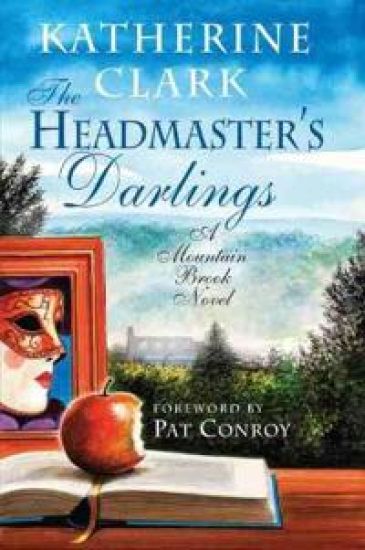
The Headmaster's Darlings is a satirical comedy of manners featuring the morbidly obese Norman Laney, an unorthodox, inspirational English teacher and college counsellor for an elite private school in Mountain Brook, a privileged community outside of Birmingham. A natural wonder from blue-collar Alabama, Laney has barged into the exclusive world of Mountain Brook on the strength of his sensational figure and its several-hundred-pound commitment to art and culture. His mission is to defeat ""the barbarians,"" introduce true civilization in place of its thin veneer, and change his southern world for the better. Although Laney is adored by his students (his ""darlings"") and by the society ladies (also his ""darlings"") who rely on him to be the life of their parties and the leader of their book clubs, there are others who think he is a larger-than-life menace to the comfortable status quo of Mountain Brook society and must be banished.When Laney is summoned to the principal's office one day in November 1983, he expects to be congratulated for a recent public-relations triumph he engineered on behalf of the school. Instead his letter of resignation is demanded with no explanation given. Faced with an ultimatum and his imminent dismissal, Laney must outflank the principal at his own underhanded game, find out who said what about him and why, and launch his current crop of Alabama students into the wider world--or at least into Ivy League colleges.In her debut novel, Clark, Katherine casts a comical eye on southern society and celebrates the power of great teachers and schools to transform the lives of young people and lift up their communities. Surrounded by a colourful cast of his colleagues, his young protégées and Mountain Brook's upper echelon, Laney emerges as a heroically idiosyncratic character with Falstaffian appetites, an inimitable wit and intellect, and a boundless generosity toward his students that reshapes their lives in profound, unexpected ways.
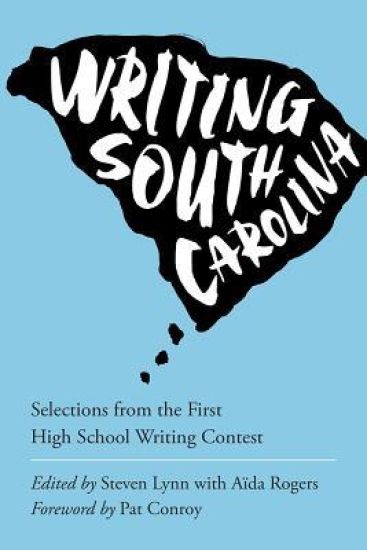
How should we improve the state of South Carolina?" That invitingly open-ended question served as the basis for the first annual South Carolina High School Writing Contest as the call went out in fall 2013 to juniors and seniors across the Palmetto State, encouraging them to take a stance through good, thought-provoking writing. The nearly five hundred responses that resulted were as impressive in quality as they were in quantity. Young writers sounded off on issues of race relations, environmental conservation, economic imbalance, opportunities of infrastructure, substance and physical abuse, and the maladies of education. Most wrote on issues of education rooted in their own burgeoning awareness of its gifts and limitations in their lives. From that pool of contestants, twenty-three finalists rose to the top to have their initial entries and subsequent writing on a favorite book or place judged by best-selling author Pat Conroy. The insightful and often revelatory responses from those finalists - including the first, second, and third place winners by grade - are collected here in Writing South Carolina.In heartfelt essays, poems, short stories, and drama, these diverse writers lay bare their attitudes and impressions of South Carolina as they have experienced it and as they hope to reshape it. The resulting anthology is a compelling portrait of the Palmetto State's potential as advocated by some of its best and brightest young writers. Editor Steven Lynn provides an introduction and contest judge Pat Conroy provides a foreword to the collection.
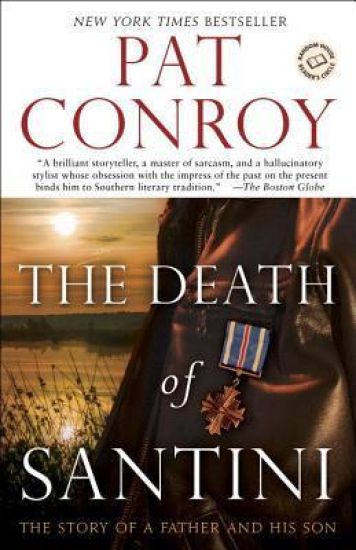
NEW YORK TIMES BESTSELLER - "A brilliant storyteller, a master of sarcasm, and a hallucinatory stylist whose obsession with the impress of the past on the present binds him to Southern literary tradition."--The Boston Globe Pat Conroy's great success as a writer has always been intimately linked with the exploration of his family history. As the oldest of seven children who were dragged from military base to military base across the South, Pat bore witness to the often cruel and violent behavior of his father, Marine Corps fighter pilot Donald Patrick Conroy. While the publication of The Great Santini brought Pat much acclaim, the rift it caused brought even more attention, fracturing an already battered family. But as Pat tenderly chronicles here, even the oldest of wounds can heal. In the final years of Don Conroy's life, the Santini unexpectedly refocused his ire to defend his son's honor. The Death of Santini is a heart-wrenching act of reckoning whose ultimate conclusion is that love can soften even the meanest of men, lending significance to the oft-quoted line from Pat's novel The Prince of Tides "In families there are no crimes beyond forgiveness." Praise for The Death of Santini "A painful, lyrical, addictive read that Pat Conroy's] fans won't want to miss."--People "Conroy's conviction pulls you fleetly through the book, as does the potency of his bond with his family, no matter their sins."--The New York Times Book Review "Vital, large-hearted and often raucously funny."--The Washington Post "Conroy writes athletically and beautifully, slicing through painful memories like a point guard splitting the defense."--Minneapolis Star Tribune
'You set yourself up as judge, jury, and executioner,' Pamela had said, but that was wrong: you set yourself up as angel, and await the word of God." Luther Redding lost his job, and almost lost his wife, Pamela, and teenaged daughters Katie and Lucy, when the real estate bubble burst in Florida. Now he pilots a Reaper drone over the mountains of Afghanistan from a command center in the bowels of Tampa's MacDill Air Force Base, studying a target's pattern of life and awaiting the command to end that life. Meanwhile Bobby Rosen has returned home from his tours in Iraq to a broken marriage and an estranged son, his promising military career cut short in a moment of terrible violence in a Sadr City marketplace. As the tales of Luther and Bobby unfold, Mark Powell masterfully engages with the vexing, bifurcated lives of combatants in the global war on terror, those who are simultaneously here and there and thus never fully freed from the life-and-death chaos of the battlefield.As Bobby sets off on a drug-fueled road trip with his brother Donny, newly released from prison and consumed by his own inescapable impulses, a sudden death in the Redding household sends Luther's daughter Katie spiraling into grief and self-destruction. Soon the lives of the Reddings and the Rosens intersect as the collateral damage from the war on terror sends these families into a rapid descent of violence and moral ambiguity that seems hauntingly familiar to Bobby while placing Katie in a position much like her father's - more removed witness than active participant in the bloody war unfolding in front of her. Overarching questions of faith and redemption clash with the rough-hewn realities of terror and loss, all to explosive ends in Powell's dark vision of modern Americana.Novelist Ron Rash has deemed Powell "the best Appalachian novelist of his generation." In this, his fourth novel, Powell broadens the southern backdrop of his earlier work into a sprawling thriller taking readers from the Middle East to Charleston, southern Georgia, Tampa, Miami, New Orleans, and into the storied American West. In its themes, perspectives, and pacing, The Sheltering recalls the work of Robert Stone, Jim Harrison, and Ben Fountain while further establishing Powell as a unique voice capable of interrogating unfathomable truths with a beauty and cohesion of language that challenges our assumptions of the human spirit.
NEW YORK TIMES BESTSELLER - "A painful, lyrical, addictive read" (People) by the cherished author of The Great Santini that brings his extraordinary career full circle Pat Conroy's great success as a writer has always been intimately linked with the exploration of his family history. As the oldest of seven children who were dragged from military base to military base across the South, Pat bore witness to the often cruel and violent behavior of his father, Marine Corps fighter pilot Donald Patrick Conroy. While the publication of The Great Santini brought Pat much acclaim, the rift it caused brought even more attention, fracturing an already battered family. But as Pat tenderly chronicles here, even the oldest of wounds can heal. In the final years of Don Conroy's life, the Santini unexpectedly refocused his ire to defend his son's honor. The Death of Santini is a heart-wrenching act of reckoning whose ultimate conclusion is that love can soften even the meanest of men, lending significance to the oft-quoted line from Pat's novel The Prince of Tides "In families there are no crimes beyond forgiveness." Praise for The Death of Santini "A painful, lyrical, addictive read that Pat Conroy's] fans won't want to miss."--People "Conroy's conviction pulls you fleetly through the book, as does the potency of his bond with his family, no matter their sins."--The New York Times Book Review "Vital, large-hearted and often raucously funny."--The Washington Post "Conroy writes athletically and beautifully, slicing through painful memories like a point guard splitting the defense."--Minneapolis Star Tribune "A brilliant storyteller, a master of sarcasm, and a hallucinatory stylist whose obsession with the impress of the past on the present binds him to Southern literary tradition."--The Boston Globe
Med sørstatbyen Charleston som bakgrunn samler forfatteren et enestående knippe av syndere og helgener.Leo King er sønn av en kjærlig far og en mor som tidligere var nonne og nå rektor ved den lokale videregående skolen. Etter at storebroren begår selvmord i en alder av ti år, faller Leo helt sammen, og hele familien kjemper mot de dystre skygggene som faller over dem. Leo føler seg forlatt og isolert. Først i ungdommen finner han venner som støtter og forstår ham, men de har alle sitt å slåss med. Vennskapsbåndene er sterke i over to ti år, fra 1960-årenes subkulturer og gjennom starten på aids-epidemien på 1980-tallet.Vi følger dem igjennom turbulente ekteskap, uuttalte lengsler og hemmelig kjærlighet – og Charlestons dårlig skjulte rasisme og klassedeling. Vennskapets endelige prøve bringer vennegjengen til San Fransisco, der de møter en verden ingen av dem er forberedt på.
Bestselling author Pat Conroy acknowledges the books that have shaped him and celebrates the profound effect reading has had on his life. Pat Conroy, the beloved American storyteller, is a voracious reader. Starting as a childhood passion that bloomed into a life-long companion, reading has been Conroy's portal to the world, both to the farthest corners of the globe and to the deepest chambers of the human soul. His interests range widely, from Milton to Tolkien, Philip Roth to Thucydides, encompassing poetry, history, philosophy, and any mesmerizing tale of his native South. He has for years kept notebooks in which he records words and expressions, over time creating a vast reservoir of playful turns of phrase, dazzling flashes of description, and snippets of delightful sound, all just for his love of language. But for Conroy reading is not simply a pleasure to be enjoyed in off-hours or a source of inspiration for his own writing. It would hardly be an exaggeration to claim that reading has saved his life, and if not his life then surely his sanity. In My Reading Life, Conroy revisits a life of reading through an array of wonderful and often surprising anecdotes: sharing the pleasures of the local library's vast cache with his mother when he was a boy, recounting his decades-long relationship with the English teacher who pointed him onto the path of letters, and describing a profoundly influential period he spent in Paris, as well as reflecting on other pivotal people, places, and experiences. His story is a moving and personal one, girded by wisdom and an undeniable honesty. Anyone who not only enjoys the pleasures of reading but also believes in the power of books to shape a life will find here the greatest defense of that credo.
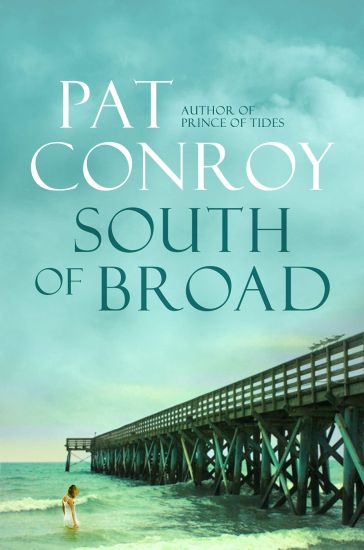
The international bestseller: over a million copies sold in the US alone. An irresistible family saga that will reduce readers to tears.Leopold Bloom King is the son of an amiable, loving father who teaches science at the local high school. His mother, a former nun, is the high school principal and a respected Joyce scholar. He has had an unremarkable, happy family life. But after Leo's ten-year-old brother commits suicide, the family struggles with the shattering effects of his death, and Leo, lonely and isolated, searches for something to sustain him. Eventually, he finds his answer when he becomes part of a tight knit group of older high school students that includes Sheba and Trevor Poe - glamorous twins with an alcoholic mother and a prison-escapee father - hard-scrabble mountain runaways Niles and Starla Whitehead; socialite Molly Huger and her boyfriend, Chadworth Rutledge X - and an ever-widening circle whose liaisons will ripple across two decades, from 1960s counterculture through to the dawn of the AIDS crisis in the 1980s.The ties among them endure for years, surviving marriages happy and troubled, unrequited loves and unspoken longings, hard-won successes and devastating breakdowns, as well as the American South's dark legacy of racism and class divisions. But the final test of friendship that brings them to San Francisco is something no one is prepared for.
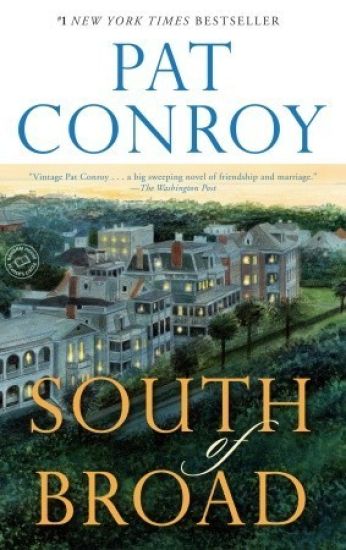
#1 NEW YORK TIMES BESTSELLER - "A big sweeping novel of friendship and marriage" (The Washington Post) by the celebrated author of The Prince of Tides and The Great Santini Leopold Bloom King has been raised in a family shattered--and shadowed--by tragedy. Lonely and adrift, he searches for something to sustain him and finds it among a tightly knit group of outsiders. Surviving marriages happy and troubled, unrequited loves and unspoken longings, hard-won successes and devastating breakdowns, as well as Charleston, South Carolina's dark legacy of racism and class divisions, these friends will endure until a final test forces them to face something none of them are prepared for. Spanning two turbulent decades, South of Broad is Pat Conroy at his finest: a masterpiece from a great American writer whose passion for life and language knows no bounds. Praise for South of Broad "Vintage Pat Conroy . . . a big sweeping novel of friendship and marriage."--The Washington Post "Conroy remains a magician of the page."--The New York Times Book Review "Richly imagined . . . These characters are gallant in the grand old-fashioned sense, devoted to one another and to home. That siren song of place has never sounded so sweet."--New Orleans Times-Picayune "A lavish, no-holds-barred performance."--The Atlanta Journal-Constitution "A lovely, often thrilling story."--The Dallas Morning News "A pleasure to read . . . a must for Conroy's fans."--Associated Press
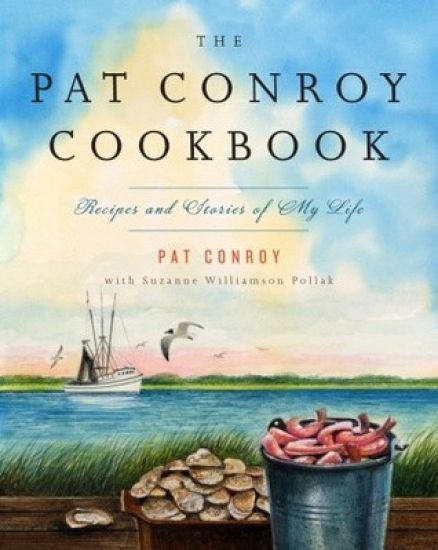
America's favorite storyteller, Pat Conroy, is back with a unique cookbook that only he could conceive. Delighting us with tales of his passion for cooking and good food and the people, places, and great meals he has experienced, Conroy mixes them together with mouthwatering recipes from the Deep South and the world beyond. It all started thirty years ago with a chance purchase of The Escoffier Cookbook, an unlikely and daunting introduction for the beginner. But Conroy was more than up to the task. He set out with unwavering determination to learn the basics of French cooking--stocks and dough--and moved swiftly on to veal demi-glace and p te bris e. With the help of his culinary accomplice, Suzanne Williamson Pollak, Conroy mastered the dishes of his beloved South as well as the cuisine he has savored in places as far away from home as Paris, Rome, and San Francisco. Each chapter opens with a story told with the inimitable brio of the author. We see Conroy in New Orleans celebrating his triumphant novel The Prince of Tides at a new restaurant where there is a contretemps with its hardworking young owner/chef--years later he discovered the earnest young chef was none other than Emeril Lagasse; we accompany Pat and his wife on their honeymoon in Italy and wander with him, wonderstruck, through the markets of Umbria and Rome; we learn how a dinner with his fighter-pilot father was preceded by the Great Santini himself acting out a perilous night flight that would become the last chapters of one of his son's most beloved novels. These tales and more are followed by corresponding recipes--from Breakfast Shrimp and Grits and Sweet Potato Rolls to Pappardelle with Prosciutto and Chestnuts and Beefsteak Florentine to Peppered Peaches and Creme Brulee. A master storyteller and passionate cook, Conroy believes that "A recipe is a story that ends with a good meal." "This book is the story of my life as it relates to the subject of food. It is my autobiography in food and meals and restaurants and countries far and near. Let me take you to a restaurant on the Left Bank of Paris that I found when writing The Lords of Discipline. There are meals I ate in Rome while writing The Prince of Tides that ache in my memory when I resurrect them. There is a shrimp dish I ate in an elegant English restaurant, where Cuban cigars were passed out to all the gentlemen in the room after dinner, that I can taste on my palate as I write this. There is barbecue and its variations in the South, and the subject is a holy one to me. I write of truffles in the Dordogne Valley in France, cilantro in Bangkok, catfish in Alabama, scuppernong in South Carolina, Chinese food from my years in San Francisco, and white asparagus from the first meal my agent took me to in New York City. Let me tell you about the fabulous things I have eaten in my life, the story of the food I have encountered along the way. . . "
This is a collection of Wolfe's earliest publications from his college years.The ""Magical Campus"" collects for the first time Thomas Wolfe's earliest published works - including poems, plays, short fiction, news articles, speeches, and essays - both signed and unsigned, assembled in chronological order. The collegiate career of Wolfe began at UNC Chapel Hill in 1916, at the age of fifteen, with a freshman year marked by obscurity and loneliness. By his junior year, he had emerged as a recognized and popular figure in campus life, a central participant in numerous organizations and fraternities, and the editor of several student publications. Wolfe began in these apprenticeship years his ascendancy to iconic literary status.Included in ""The Magical Campus"" is Wolfe's first published work, the poem ""A Field in Flanders"" from the November 1917 issue of the University of North Carolina Magazine. Here too is the poem ""The Challenge,"" Wolfe's first piece to be subsequently reprinted off campus in his hometown newspaper. ""A Cullenden of Virginia"" marked his inaugural foray into the realm of published fiction and his folk plays, such as ""The Return of Buck Gavin"" and ""Deferred Payment,"" are illustrative of his unrealized ambitions to be a playwright. Though they lack the sophistication and scale of the grand fictions that now define Wolfe's place in literature, his student publications speak to the potential he had tapped into.