Kirjojen hintavertailu. Mukana 12 595 353 kirjaa ja 12 kauppaa.
Kirjailija
Pat Dargan
Kirjat ja teokset yhdessä paikassa: 19 kirjaa, julkaisuja vuosilta 2008-2025, suosituimpien joukossa Limerick in 50 Buildings. Vertaile teosten hintoja ja tarkista saatavuus suomalaisista kirjakaupoista.
The City and County of Dublin possess a rich body of buildings that emerged during the Irish medieval period. These buildings fall into three historical phases: the early medieval or pre-Norman period between the ninth and twelfth centuries, the Norman colonial period of the thirteenth and fourteenth centuries, and the late medieval period of the fifteenth century.This descriptive and highly illustrated work celebrates and explores the history and significance of a selected group of these buildings and their fascinating medieval heritage.
Explores the architectural heritage of Medieval Dublin in an accessible, illustrated volume for general readers.This book provides an insightful exploration of the Dublin's rich architectural heritage, spanning from the early medieval period through the Norman era to the late 15th century. Featuring 45 significant structures--including ancient churches, round towers, castles, and tower houses--this highly illustrated guide offers a fascinating glimpse into Medieval Dublin. With historical context, architectural details, and detailed illustrations, this book serves as an invaluable resource for history enthusiasts and visitors eager to discover the medieval landmarks that continue to shape Dublin's landscape.Drawing on extensive research, this guide highlights the architectural significance and historical narratives behind each site, exploring their cultural and social roles throughout the centuries. Whether exploring Dublin Castle, St. Mary's Abbey, Howth Castle, readers will gain a deeper appreciation for the city's medieval past.
The town of Farnham in Surrey lies south-west of London, on the River Wey. The original settlement dates from the Saxon period, although little survives of it today. Following the Norman invasion the Bishop of Winchester built an earthen motte-and-bailey fort overlooking the Saxon settlement. It was redeveloped as a stone castle in the twelfth century, a substantial part of which still stands. The same period saw the construction of St Andrew’s Church. The town was T-shaped and enclosed by a town ditch, which partially survives. During the seventeenth and eighteenth centuries the town prospered and an extensive range of Georgian streetscapes and buildings were laid within the boundaries, including Castle Street, West Street, the Borough, and Downing Street, with most of the Georgian fabric surviving. Each of these streets has outstanding Georgian housing and public buildings, including the museum in Downing Street and town house developments in West Street and Castle Street. During the nineteenth and twentieth centuries the town experienced considerable expansion and it continues to thrive today, with new buildings integrated into the townscape and many of its old industrial buildings turned to cultural, commercial or community uses. Farnham in 50 Buildings explores the history of this town in Surrey through a selection of its most interesting buildings and structures, showing the changes that have taken place over the years. This book will appeal to all those who live in Farnham or who have an interest in the area.
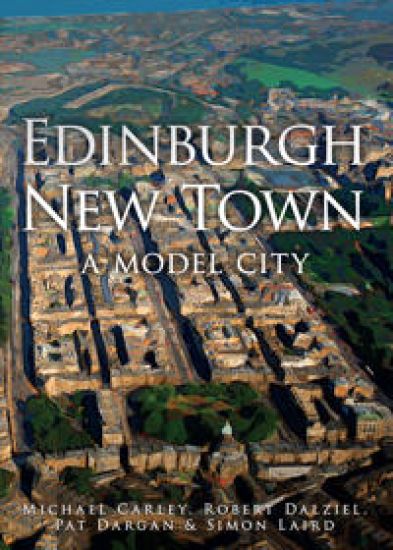
Edinburgh’s New Town, built between 1767 and 1850, is one of Europe’s finest neoclassical neighbourhoods, a triumph of town planning, with UNESCO World Heritage status. But the importance of the New Town goes far beyond the quality of its architecture. Nearly 250 years after it was built, today it is not only a carefully conserved Georgian neighbourhood but a vibrant community in which people from all walks of life thrive in harmonious surroundings. Those include over 7,000 residential properties of enormous variety, and its shops, schools, pubs, restaurants and community facilities, which contribute to its unique quality of life and attract visitors from around the world. This book celebrates the history and achievements of the New Town. Through photos, drawings, historic maps and aerial photography, the authors explore the New Town’s origins in the philiosophy of the Enlightenment and the role of politics, land ownership, finance, design and materials in its development. This is a friendly and accessible introduction to the exteriors and interiors of its buildings, with a walking tour included, drawing on both historic maps and modern satellite images. It links the New Town to current debates on urban architecture, concluding that it is an inspiring model for new communities around the world. This is a book for the passionate, knowledgeable lover of Georgian architecture, but equally for the casual visitor who wants to get to know the New Town better.
Whitehaven was just a fishing village on the Cumbrian coast until the port was developed by the Lowther family in the seventeenth century to export coal from the Cumberland coalfield. In the next century it benefitted from the trade in tobacco, sugar and other products with the West Indies to become the second busiest port in the country. The wealth brought to the area was demonstrated by a new town, the most complete example of a Georgian planned town in Britain. Built on a grid system, the town has over 170 listed buildings. Alongside the Old Fort and Whitehaven Castle, which later became the hospital, are historic houses, shops, churches, civic buildings, hotels, public houses and banks as well as reminders of Whitehaven’s industrial heritage around the harbour, the colliery and the railway. Although the port has declined in recent years and mining ceased in the area, the harbour has been regenerated with a marina and the old colliery buildings preserved and turned into a museum. Whitehaven in 50 Buildings explores the history of this fascinating Cumbrian town through a selection of its most interesting buildings and structures, showing the changes that have taken place in Whitehaven over the years. The book will appeal to all those who live in Whitehaven or who have an interest in the town.
The city of Limerick, in the west of Ireland, has an interesting history. Established by the Vikings on the estuary of the River Shannon as it flows into the Atlantic, the city was taken over by the Normans in the twelfth century and fought over during the civil wars in the seventeenth century. The city expanded greatly in the Georgian and Victorian eras and this legacy has given Limerick a significant historical fabric of buildings from many ages. Limerick’s Gothic St Mary’s Cathedral, the Norman King John’s Castle, medieval defences, imposing Georgian public buildings, extensive Victorian religious and industrial buildings, its museums and its modern architecture all reflect a dynamic local history. Limerick in 50 Buildings explores the history of this fascinating city through a selection of its most interesting buildings and structures, showing the changes that have taken place in city over the years. This book will appeal to all those who live in Limerick or who have an interest in the city.
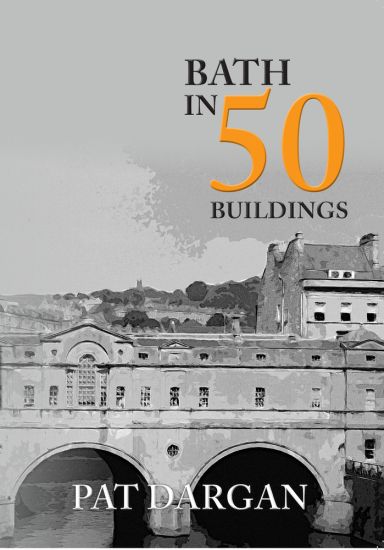
The ancient city of Bath in Somerset grew up around hot springs on the River Avon, where the Romans founded baths at the location they named Aquae Sulis, the magnificent buildings of which still stand today. The health-giving fame of the waters brought wealth and visitors to the town in later centuries and Bath became an important and fashionable spa town during the Georgian period, attracting high society and gentry from London and around the country. Bath was transformed in the Georgian era as leading architects left a remarkable historical legacy, much of it built in the distinctive Bath stone. Despite being targeted in the Baedeker raids during the Second World War, the legacy of Bath’s historical structures has remained intact, and the city has been recognised with its status as a UNESCO World Heritage Site. Bath in 50 Buildings explores the history of this fascinating city through a selection of its most interesting buildings. These buildings represent architectural and historic periods from Roman Britain to the present day including the Roman Baths, the medieval abbey church, the elegant sweep of the Georgian Royal Crescent, the striking Circus, the magnificent Pump Room and Assembly Rooms as well as many streets and squares of the period and Robert Adam’s Pulteney Bridge. Twentieth-century and present-day architecture is also represented in Bath with new commercial and housing developments, its two universities, Thermae Spa and Southgate Shopping Precinct, theatres and other cultural centres. The book will appeal to all those who live in Bath or who have an interest in the city.
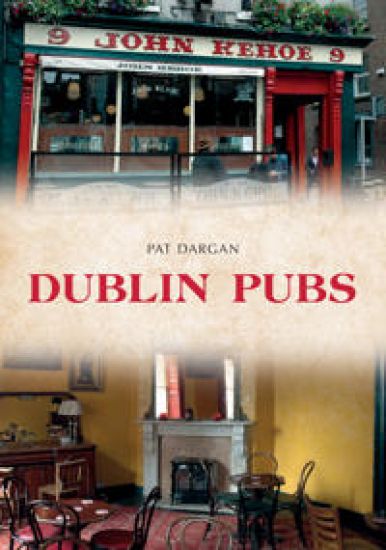
Dublin has had a long association with its pubs. The city grew rapidly in the seventeenth and eighteenth centuries, becoming a major port for trade around the world, and the city boasted a wealth of taverns, inns, alehouses and public houses. An important part of the city’s prosperity was also the Guinness brewery, founded in Dublin in 1759 and becoming a major employer. Many drinking establishments have survived from these days and have stories to tell, often involving historical figures or even fictional characters. In Dublin Pubs, author Pat Dargan takes the reader on a fascinating journey through some of Dublin’s most interesting, oldest or most famous watering holes. Many of the pubs have retained features and traditions of previous ages, and some are regarded as architectural gems. Pat reveals the variety of Dublin’s pubs today and tells of the many characters that have frequented or run the public houses over the years, for which Dublin is justly renowned.
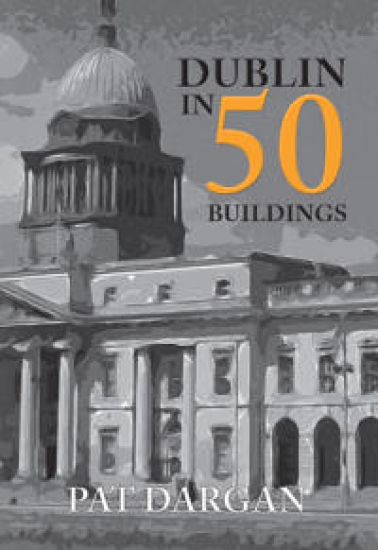
Dublin was established as a Viking settlement in the early Middle Ages and, following the Norman Invasion of Ireland, rapidly grew in size and importance to become a major city. Following the English conquest of Ireland in the sixteenth century, Dublin continued to develop as a centre of trade, and its growing prosperity into the eighteenth century is demonstrated by the city’s rich Georgian architectural legacy, which still forms an important part of Dublin’s character today. Following independence in 1922, Dublin became the capital city of Ireland and although the fabric of the city centre suffered during the 1916 Easter Rising, the Irish War of Independence and the subsequent Civil War, it has been at the forefront of the country’s economic expansion in recent decades. Today, Dublin has many significant modern buildings standing alongside its more historical architectural legacy. Dublin in 50 Buildings explores the history of this fascinating city through a selection of its most interesting buildings, including the Norman Dublin Castle, the Georgian Customs House by the River Liffey, the twentieth-century Guinness Storehouse, along with buildings that may not be as well known but are equally interesting.
Edinburgh’s New Town, built between 1767 and 1850, is one of Europe’s finest neoclassical neighbourhoods, a triumph of town planning, with UNESCO World Heritage status. But the importance of the New Town goes far beyond the quality of its architecture. Nearly 250 years after it was built, today it is not only a carefully conserved Georgian neighbourhood but a vibrant community in which people from all walks of life thrive in harmonious surroundings. Those include over 7,000 residential properties of enormous variety, and its shops, schools, pubs, restaurants and community facilities, which contribute to its unique quality of life and attract visitors from around the world. This book celebrates the history and achievements of the New Town. Through photos, drawings, historic maps and aerial photography, the authors explore the New Town’s origins in the philiosophy of the Enlightenment and the role of politics, land ownership, finance, design and materials in its development. This is a friendly and accessible introduction to the exteriors and interiors of its buildings, with a walking tour included, drawing on both historic maps and modern satellite images. It links the New Town to current debates on urban architecture, concluding that it is an inspiring model for new communities around the world. This is a book for the passionate, knowledgeable lover of Georgian architecture, but equally for the casual visitor who wants to get to know the New Town better.
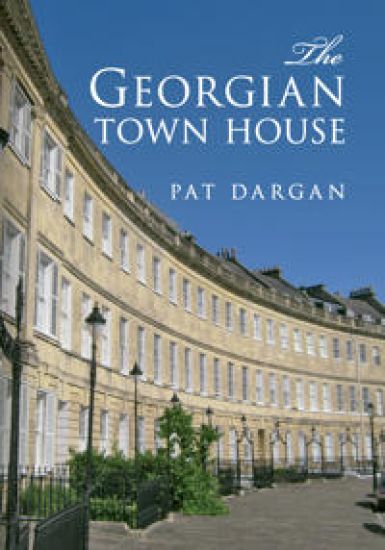
During the eighteenth century cities and towns all across the British Isles experienced a wave of expansion. Tall, elegant Georgian houses made a dramatic appearance. Today, extensive numbers of these Georgian houses survive and play a major role in the urban heritage and environment. In this lavishly illustrated book, architect Pat Dargan explores the characteristic form and features of the traditional Georgian town house, including everything from stonework and doorcases to cornices and fireplaces.
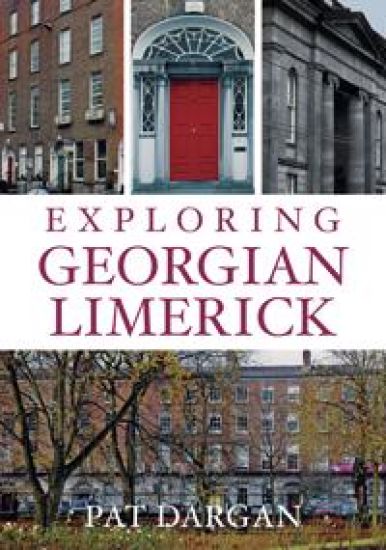
Following on from the success of Pat Dargan’s previous works, Exploring Georgian Dublin and Exploring Irish Castles, this new work offers an insight into a much overlooked aspect of Limerick. This guide provides an overview of Georgian Limerick, its beginnings and emergence, its Baroque planning, its open spaces and classically inspired architecture. The individuals responsible for the developments are introduced, together with the forces that motivated them and the ideas and influences that inspired and guided them. What emerges is a picture of Limerick that may be new to many people, visitors and locals alike.
Following on from the success of Pat Dargan’s previous works, Exploring Ireland’s Historic Towns and Exploring Irish Castles, this new work offers an insight into the Celtic heritage of Ireland. Taking the reader through the ring-forts and crannogs, the hill forts and early churches, the author points out the details and aspects that can be easily missed, and which bring these monuments to life. Complete with maps, sketches and illustrations, this is an accessible guide to a major part of the history of modern Ireland.
Exploring Ireland’s Historic Towns sheds new light on the streets and squares of Ireland, drawing our attention to the historic context in which they developed. Following on from the success of Exploring Georgian Dublin and Exploring Irish Castles, Pat Dargan now traces the history of the construction of Irish towns through each of their historical phases. He highlights the social and political contexts that lay behind each phase, identifies the individuals responsible for the town developments, and explores the ideals and motivations that drove them. Each phase is presented alongside each town’s principal features and characteristics. This comprehensive guide is complete with a wealth of photographs and illustrations.