Kirjojen hintavertailu. Mukana 12 595 353 kirjaa ja 12 kauppaa.

Kirjailija

Pat O'Malley

Kirjat ja teokset yhdessä paikassa: 8 kirjaa, julkaisuja vuosilta 2004-2027, suosituimpien joukossa The Currency of Justice. Vertaile teosten hintoja ja tarkista saatavuus suomalaisista kirjakaupoista.

8 kirjaa

Kirjojen julkaisuhaarukka 2004-2027.

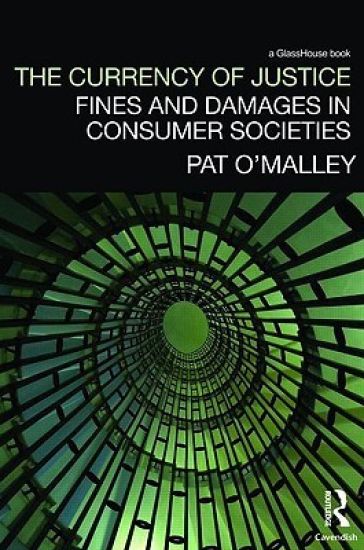
The Currency of Justice

The Currency of Justice

Pat O'Malley

Routledge Cavendish
2009
sidottu
Fines and monetary damages account for the majority of legal sanctions across the whole spectrum of legal governance. Money is, in key respects, the primary tool law has to achieve compliance. Yet money has largely been ignored by social analyses of law, and especially by social theory.The Currency of Justice examines the differing rationalities, aims and assumptions built into money’s deployment in diverse legal fields and sanctions. This raises major questions about the extent to which money appears as an abstract universal or whether it takes on more particular meanings when deployed in various areas of law. Indeed, money may be unique in that it can take on the meanings of punishment, compensation, denunciation or regulation. The Currency of Justice examines the implications of the ‘monetization of justice’ as life is increasingly regulated through this single medium. Money not only links diverse domains of law; it also links legal sanctions to other monetary techniques which govern everyday life. Like these, the concern with monetary sanctions is not who pays, but that money is paid. Money is perhaps the only form of legal sanction where the burden need not be borne by the wrongdoer. In this respect, this book explores the view that contemporary governance is less concerned with disciplining individuals and more concerned with regulating distributions and flows of behaviours and the harms and costs linked with these.

Facial Recognition in Everyday Life

Facial Recognition in Everyday Life

Mark Andrejevic; Neil Selwyn; Gavin Smith; Xin Gu; Pat O'Malley

STANFORD UNIVERSITY PRESS
2027
pokkari
Facial recognition technology is one of the defining surveillance technologies of our time, and as the technology continues to develop it is urgently important to consider the ways in which it amplifies and reconfigures power relations. While much of the critical work on facial recognition technology has focused on bias and accuracy, this book considers the social, cultural, and political implications of a surveillance technology poised to dramatically transform our experience of anonymity in shared and public space. Drawing on a series of case studies to explore how existing logics of digital surveillance are transformed when physical space is equipped with automated recognition, the book develops several defining concepts for understanding what this level of surveillance means for strategies of governance and control. Long the object of physiognomic calculations, the face, as subjected to automated forms of data collection, is now already being used to predict everything from people's future career success to their potential for criminality. Further, as the authors show, as "smart" cameras proliferate, society moves into a post-panoptic realm in which people are actually being watched all the time. This shift from surveillance scarcity to glut allows "pattern-of-life" analysis on a mass scale, aiding in the customization of both physical and informational environments at the level of the individual and enabling the ongoing replacement of human-to-human interactions with automated human-to-machine ones – a process the authors describe as a "social recession."
Facial Recognition in Everyday Life

Facial Recognition in Everyday Life

Mark Andrejevic; Neil Selwyn; Gavin Smith; Xin Gu; Pat O'Malley

STANFORD UNIVERSITY PRESS
2027
sidottu
Facial recognition technology is one of the defining surveillance technologies of our time, and as the technology continues to develop it is urgently important to consider the ways in which it amplifies and reconfigures power relations. While much of the critical work on facial recognition technology has focused on bias and accuracy, this book considers the social, cultural, and political implications of a surveillance technology poised to dramatically transform our experience of anonymity in shared and public space. Drawing on a series of case studies to explore how existing logics of digital surveillance are transformed when physical space is equipped with automated recognition, the book develops several defining concepts for understanding what this level of surveillance means for strategies of governance and control. Long the object of physiognomic calculations, the face, as subjected to automated forms of data collection, is now already being used to predict everything from people's future career success to their potential for criminality. Further, as the authors show, as "smart" cameras proliferate, society moves into a post-panoptic realm in which people are actually being watched all the time. This shift from surveillance scarcity to glut allows "pattern-of-life" analysis on a mass scale, aiding in the customization of both physical and informational environments at the level of the individual and enabling the ongoing replacement of human-to-human interactions with automated human-to-machine ones – a process the authors describe as a "social recession."
Risk, Uncertainty and Government

Risk, Uncertainty and Government

Pat O'Malley

CRC Press
2016
sidottu
Both risk and uncertainty are neo-liberal concepts, which can be viewed as complementary techniques for governing diverse aspects of life, rather than natural states of things. This new book examines the way these constructs govern the production of wealth through 'uncertain' speculation and 'calculable' investment formulae. The way in which risk and uncertainty govern the minimisation of harms through insurance and through the uncertain practices of 'reasonable foresight' is discussed, and O Malley looks at the way these same techniques were historically forged out of moral and social beliefs about how to govern properly. In addition, the book analyzes is how, during this process, ideas such as 'contract' and distinctions between insurance and gambling were invented to order to 'properly' govern the risky and uncertain future.
The Currency of Justice

The Currency of Justice

Pat O'Malley

Routledge Cavendish
2009
nidottu
Fines and monetary damages account for the majority of legal sanctions across the whole spectrum of legal governance. Money is, in key respects, the primary tool law has to achieve compliance. Yet money has largely been ignored by social analyses of law, and especially by social theory.The Currency of Justice examines the differing rationalities, aims and assumptions built into money’s deployment in diverse legal fields and sanctions. This raises major questions about the extent to which money appears as an abstract universal or whether it takes on more particular meanings when deployed in various areas of law. Indeed, money may be unique in that it can take on the meanings of punishment, compensation, denunciation or regulation. The Currency of Justice examines the implications of the ‘monetization of justice’ as life is increasingly regulated through this single medium. Money not only links diverse domains of law; it also links legal sanctions to other monetary techniques which govern everyday life. Like these, the concern with monetary sanctions is not who pays, but that money is paid. Money is perhaps the only form of legal sanction where the burden need not be borne by the wrongdoer. In this respect, this book explores the view that contemporary governance is less concerned with disciplining individuals and more concerned with regulating distributions and flows of behaviours and the harms and costs linked with these.
Risk, Uncertainty and Government

Risk, Uncertainty and Government

Pat O'Malley

Routledge Cavendish
2004
nidottu
Both risk and uncertainty are neo-liberal concepts, which can be viewed as complementary techniques for governing diverse aspects of life, rather than natural states of things. This new book examines the way these constructs govern the production of wealth through 'uncertain' speculation and 'calculable' investment formulae. The way in which risk and uncertainty govern the minimisation of harms through insurance and through the uncertain practices of 'reasonable foresight' is discussed, and O Malley looks at the way these same techniques were historically forged out of moral and social beliefs about how to govern properly. In addition, the book analyzes is how, during this process, ideas such as 'contract' and distinctions between insurance and gambling were invented to order to 'properly' govern the risky and uncertain future.