Kirjojen hintavertailu. Mukana 12 595 353 kirjaa ja 12 kauppaa.

Kirjailija

Pat Shipman

Kirjat ja teokset yhdessä paikassa: 15 kirjaa, julkaisuja vuosilta 1899-2023, suosituimpien joukossa Insulinde: Experiences of a Naturalist's Wife in the Eastern Archipelago. Vertaile teosten hintoja ja tarkista saatavuus suomalaisista kirjakaupoista.

15 kirjaa

Kirjojen julkaisuhaarukka 1899-2023.

Our Oldest Companions

Our Oldest Companions

Pat Shipman

HARVARD UNIVERSITY PRESS
2023
nidottu
“A lively tale of dog domestication and migration.”—Nature“When, where, and how did the partnership between dogs and humans begin? Was it an accident? Was it inevitable?…A tour de force drawing together under one proverbial roof what science can tell us to date.”—Wendy Williams, author of The Horse“Makes a remarkable story out of the long partnership between humans and dogs.”—Foreword ReviewsHow did the dog become man’s best friend? A celebrated anthropologist unearths the mysterious origins of the unique partnership that rewrote the history of both species.Dogs and humans have been inseparable for more than 40,000 years. So what have they taught one another? Determined to untangle the genetic and archaeological evidence of the first dogs, Pat Shipman follows the trail of the wolf-dog, neither prehistoric wolf nor modern dog, whose bones offer tantalizing clues about the earliest stages of domestication. She considers the enigma of the dingo, not quite domesticated yet not entirely wild, and reveals how scientists are shedding new light on the origins of the unique relationship between man and dog, explaining how dogs became our guardians, playmates, shepherds, hunters, and providers. Along the way, dogs have changed physically, behaviorally, and emotionally—but we have been transformed, too. A brilliant work of historical reconstruction, Our Oldest Companions shows that we can’t hope to understand our own species without recognizing the central role dogs have played in making us who we are.
Our Oldest Companions

Our Oldest Companions

Pat Shipman

The Belknap Press
2021
sidottu
How did the dog become man’s best friend? A celebrated anthropologist unearths the mysterious origins of the unique partnership that rewrote the history of both species.Dogs and humans have been inseparable for more than 40,000 years. The relationship has proved to be a pivotal development in our evolutionary history. The same is also true for our canine friends; our connection with them has had much to do with their essential nature and survival. How and why did humans and dogs find their futures together, and how have these close companions (literally) shaped each other? Award-winning anthropologist Pat Shipman finds answers in prehistory and the present day.In Our Oldest Companions, Shipman untangles the genetic and archaeological evidence of the first dogs. She follows the trail of the wolf-dog, neither prehistoric wolf nor modern dog, whose bones offer tantalizing clues about the earliest stages of domestication. She considers the enigma of the dingo, not quite domesticated yet not entirely wild, who has lived intimately with humans for thousands of years while actively resisting control or training. Shipman tells how scientists are shedding new light on the origins of the unique relationship between our two species, revealing how deep bonds formed between humans and canines as our guardians, playmates, shepherds, and hunters.Along the journey together, dogs have changed physically, behaviorally, and emotionally, as humans too have been transformed. Dogs’ labor dramatically expanded the range of human capability, altering our diets and habitats and contributing to our very survival. Shipman proves that we cannot understand our own history as a species without recognizing the central role that dogs have played in it.
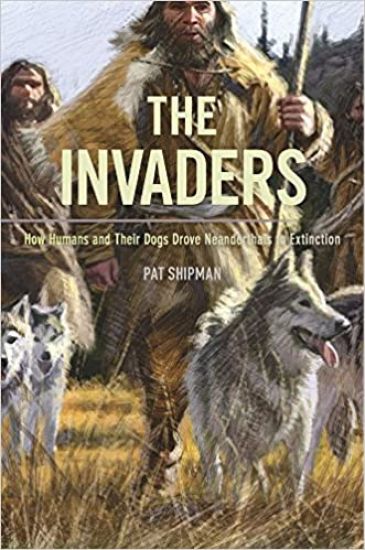
The Invaders

The Invaders

Pat Shipman

The Belknap Press
2017
nidottu
A Times Higher Education Book of the WeekApproximately 200,000 years ago, as modern humans began to radiate out from their evolutionary birthplace in Africa, Neanderthals were already thriving in Europe—descendants of a much earlier migration of the African genus Homo. But when modern humans eventually made their way to Europe 45,000 years ago, Neanderthals suddenly vanished. Ever since the first Neanderthal bones were identified in 1856, scientists have been vexed by the question, why did modern humans survive while their closest known relatives went extinct?“Shipman admits that scientists have yet to find genetic evidence that would prove her theory. Time will tell if she’s right. For now, read this book for an engagingly comprehensive overview of the rapidly evolving understanding of our own origins.”—Toby Lester, Wall Street Journal“Are humans the ultimate invasive species? So contends anthropologist Pat Shipman—and Neanderthals, she opines, were among our first victims. The relationship between Homo sapiens and Homo neanderthalensis is laid out cleanly, along with genetic and other evidence. Shipman posits provocatively that the deciding factor in the triumph of our ancestors was the domestication of wolves.”—Daniel Cressey, Nature
The Animal Connection

The Animal Connection

Pat Shipman

WW Norton Co
2011
sidottu
Why do humans all over the world take in and nurture other animals? This behavior might seem maladaptive—after all, every mouthful given to another species is one that you cannot eat—but in this heartening new study, acclaimed anthropologist Pat Shipman reveals that our propensity to domesticate and care for other animals is in fact among our species' greatest strengths. For the last 2.6 million years, Shipman explains, humans who coexisted with animals enjoyed definite adaptive and cultural advantages. To illustrate this point, Shipman gives us a tour of the milestones in human civilization-from agriculture to art and even language—and describes how we reached each stage through our unique relationship with other animals. The Animal Connection reaffirms our love of animals as something both innate and distinctly human, revealing that the process of domestication not only changed animals but had a resounding impact on us as well.
To The Heart Of The Nile

To The Heart Of The Nile

Pat Shipman

Corgi Books
2011
pokkari
Florence Szász was a child in Eastern Europe when her family was slaughtered during the Hungarian revolution. After the war, she was kidnapped from a refugee camp in the Ottoman Empire and sold to be raised for the harem. In 1859, age fourteen, she stood before a room full of men and waited to be auctioned to the highest bidder. But slavery was not to be her destiny. One of the witnesses was moved by an immediate, overpowering empathy for the helpless young woman. His name was Samuel Baker, an eminent English adventurer who braved extraordinary perils to aid her escape. Ultimately they would wed and venture together into some of the most inaccessible regions on Earth.At this tender age, Florence Baker had already seen and experienced more than most women of the Victorian era. But the greatest adventures were still before her. By the side of the man who had set her free, she forged ahead into literally uncharted territory. Together, they confronted disease, starvation, and hostile tribesman, surviving the cruel ravages of beasts and nature in a glorious attempt to unravel a mysterious and magnificent enigma called Africa. To the Heart of the Nile brings to vivid life the times and great achievements of a singular explorer, a woman of unparalleled courage and spirit who helped redefine her world. It is a breathtaking adventure, brimming with hair-raising rescues, impossible quests, danger, discovery, catastrophe, mutiny, and uncompromising love - all the more remarkable because the story is true.
Femme Fatale: Love, Lies, and the Unknown Life of Mata Hari
In 1917, the notorious Oriental dancer Mata Hari was arrested on the charge of espionage; less than one year later, she was tried and executed, charged with the deaths of at least 50,000 gallant French soldiers. The mistress of many senior Allied officers and government officials, even the French minister of war, she had a sharp intellect and a golden tongue fluent in several languages; she also traveled widely throughout war-torn Europe, with seeming disregard for the political and strategic alliances and borders. But was she actually a spy? In this persuasive new biography, Pat Shipman explores the life and times of the mythic and deeply misunderstood dark-eyed siren to find the truth.
The Ape in the Tree

The Ape in the Tree

Alan Walker; Pat Shipman

The Belknap Press
2005
sidottu
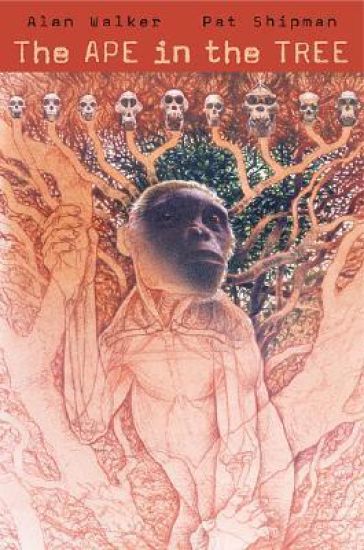
This book offers a unique insider's perspective on the unfolding discovery of a crucial link in our evolution: Proconsul, a fossil ape named whimsically after a performing chimpanzee called Consul. The Ape in the Tree is written in the voice of Alan Walker, whose involvement with Proconsul began when his graduate supervisor analyzed the tree-climbing adaptations in the arm and hand of this extinct creature. Today, Proconsul is the best-known fossil ape in the world. The history of ideas is set against the vivid adventures of Walker's fossil-hunting expeditions in remote regions of Africa, where the team met with violent thunderstorms, dangerous wildlife, and people isolated from the Western world. Analysis of the thousands of new Proconsul specimens they recovered provides revealing glimpses of the life of this last common ancestor between apes and humans. The attributes of Proconsul have profound implications for the very definition of humanness. This book speaks not only of an ape in a tree but also of the ape in our tree.
Taking Wing

Taking Wing

Pat Shipman

Touchstone
1999
pokkari
In 1861, just a few years after the publication of Charles Darwin's "On the Origin of Species, " a scientist named Hermann von Meyer made an amazing discovery. Hidden in the Bavarian region of Germany was a fossil skeleton so exquisitely preserved that its wings and feathers were as obvious as its reptilian jaws and tail. This transitional creature offered tangible proof of Darwin's theory of evolution. Hailed as the First Bird, "Archaeopteryx" has remained the subject of heated debates for the last 140 years. Are birds actually living dinosaurs? Where does the fossil record really lead? Did flight originate from the "ground up" or "trees down"? Pat Shipman traces the age-old human desire to soar above the earth and to understand what has come before us. "Taking Wing" is science as adventure story, told with all the drama by which scientific understanding unfolds.
The Wisdom of the Bones: In Search of Human Origins
"Fascinating. . . . As engaging an explanation of how scientists study fossil bones as any I have ever read." --John R. Alden, Philadelphia Inquirer In 1984 a team of paleoanthropologists on a dig in northern Kenya found something extraordinary: a nearly complete skeleton of Homo erectus, a creature that lived 1.5 million years ago and is widely thought to be the missing link between apes and humans. The remains belonged to a tall, rangy adolescent male. The researchers called him "Nariokotome boy." In this immensely lively book, Alan Walker, one of the lead researchers, and his wife and fellow scientist Pat Shipman tell the story of that epochal find and reveal what it tells us about our earliest ancestors. We learn that Nariokotome boy was a highly social predator who walked upright but lacked the capacity for speech. In leading us to these conclusions, The Wisdom of the Bones also offers an engaging chronicle of the hundred-year-long search for a "missing link," a saga of folly, heroic dedication, and inspired science. "Brilliantly captures an] intellectual odyssey. . . . One of the finest examples of a practicing scientist writing for a popular audience." --Portland Oregonian "A vivid insider's perspective on the global efforts to document our own ancestry."--Richard E. Leakey
Neandertals

Neandertals

Erik Trinkaus; Pat Shipman

VINTAGE
1994
pokkari
In 1856 - just as Darwin was completing ORIGIN OF SPECIES - the fossilized remains of a stocky, powerful human-like creature were discovered in a cave in the Neander Valley in Germany.
The Human Skeleton

The Human Skeleton

Pat Shipman; Alan Walker; David Bichell

Harvard University Press
1985
sidottu
This is the most comprehensive approach ever made to the human skeleton as a biological entity. It provides a holistic view, from the molecular and cellular level up to functional gross anatomy. The book synthesizes the latest research in a wide range of fields, including forensics, anthropology, cell biology, orthopedics, biomechanics, functional anatomy, and paleontology. Throughout the book the skeleton's functional and dynamic aspects are emphasized.The first part of the book focuses on bone as living tissue: its composition, formation, growth and remodeling capabilities, and mechanical properties. The second part examines individual bones in the human body, combining strictly anatomical information with discussion of the major functions of each body section. For example, the chapter describing the axial skeleton is paired with one on the mechanics of breathing. The final part of the book surveys the archaeological and forensic applications of skeletal biology, including the estimation of age, sex, race, and stature; the effects of fracture and pathology on bone; and the modes of reconstructing skeletal remains. Elegant, detailed illustrations of the individual bones from several views and of the regions of the skeleton enhance the text.