
Kirjailija
Patrice Nganang
Kirjat ja teokset yhdessä paikassa: 8 kirjaa, julkaisuja vuosilta 2006-2027, suosituimpien joukossa Scale Boy. Vertaile teosten hintoja ja tarkista saatavuus suomalaisista kirjakaupoista.
8 kirjaa
Kirjojen julkaisuhaarukka 2006-2027.

An extraordinary chronicle of youth that evokes the paradoxes of modern Africa--complex, contradictory, and full of conflict, tragedy, and joy. Patrice Nganang, the acclaimed author of Dog Days, Mount Pleasant, and, most recently, A Trail of Crab Tracks, which was a 2022 New Yorker Book of the Year, writes about his vibrant, animated youth in Cameroon, a period of upheaval and change in the country's history and in his life. Scale Boy is a memoir that brings great brightness and joy to the tumultuous years of discovering oneself and one's community; though there are moments of danger and confusion in his story, Nganang aims to present a new vision of a young Black African man's coming-of-age.

For the first time, Nithap flies across the world to visit his son, Tanou, in the United States. After countless staticky phone calls and transatlantic silences, he has agreed to leave Bangwa: the city in western Cameroon where he has always lived, where he became a doctor and, despite himself, a rebel, where he fell in love, and where his children were born. When illness extends his stay, his son finds an opportunity to unravel the history of the mysterious man who raised him, following the trail of crab tracks to discover the truth of his father and his country. At last, Nithap’s throat clears and his voice rises, and he drifts back in time to tell his son the story that is burned into his memory and into the land he left behind. He speaks about the civil war that tore Cameroon apart, about the great men who lived and died, about his soldiers, his martyrs, and his great loves. As the tale unfolds, Tanou listens to his father tell the history of his family and the prayer of the blood-soaked land. From New Jersey to Bamileke country, voices mingle, the borders of time dissolve, and generations merge. In A Trail of Crab Tracks, the third part of a magisterial trilogy by Patrice Nganang, the award-winning author creates an epic of war, inheritance, and desire, and of the relentless, essential struggle for freedom.
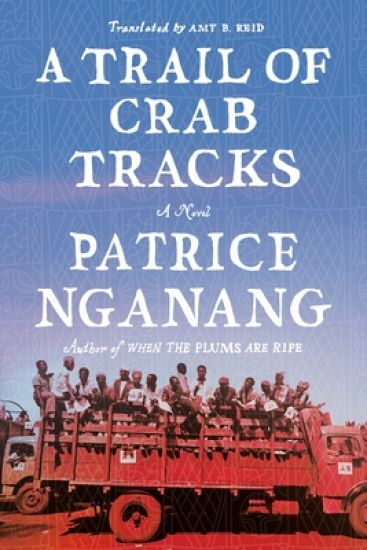
The award-winning author Patrice Nganang chronicles the fight for Cameroonian independence through the story of a father's love for his family and his land and of the long-silenced secrets of his former life. For the first time, Nithap flies across the world to visit his son, Tanou, in the United States. After countless staticky phone calls and transatlantic silences, he has agreed to leave Bangwa: the city in western Cameroon where he has always lived, where he became a doctor and, despite himself, a rebel, where he fell in love, and where his children were born. When illness extends his stay, his son finds an opportunity to unravel the history of the mysterious man who raised him, following the trail of crab tracks to discover the truth of his father and his country. At last, Nithap's throat clears and his voice rises, and he drifts back in time to tell his son the story that is burned into his memory and into the land he left behind. He speaks about the civil war that tore Cameroon apart, about the great men who lived and died, about his soldiers, his martyrs, and his great loves. As the tale unfolds, Tanou listens to his father tell the history of his family and the prayer of the blood-soaked land. From New Jersey to Bamileke country, voices mingle, the borders of time dissolve, and generations merge. In A Trail of Crab Tracks, the third part of a magisterial trilogy by Patrice Nganang, the award-winning author creates an epic of war, inheritance, and desire, and of the relentless, essential struggle for freedom.
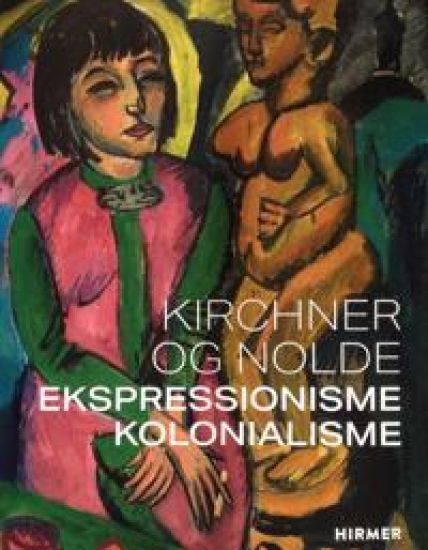
Kirchner og Nolde
Dorthe Aagesen; Beatrice von Bormann; Silvia Dolz; Rebekka Habermas; Mette Houlberg Rung; Nancy Jouwe; Dicky Takndare; Natasha A. Kelly; Laetitia Lei; Patrice Nganang; Temi Odumosu; H. Glenn Penny; Amanda Pinatih; Aya Soika; Hilke Thode-Arora; Anna Vestergaard Jørgensen; Fanny Wonu Veys; Andrew Zimmerman
SMK Forlag
2021
nidottu
Ernst Ludwig Kirchner og Emil Nolde er hovedskikkelser i den tyske ekspressionistiske bevægelse. De vendte sig bort fra det europæiske samfund og de etablerede normer i tidens borgerlige kultur og søgte i stedet inspiration i mennesker, livsformer og genstande fra andre dele af verden, især Afrika og Oceanien. I denne bog undersøges Noldes og Kirchners kunst på baggrund af deres historiske og ideologiske kontekst. Her afdækkes forbindelser mellem værkerne og den racetænkning og undertrykkelse, som også er en del af europæisk historie. Dermed afsløres en række mindre kendte og mere voldelige sider af ekspressionismen. Denne publikation er udgivet i anledning af udstillingerne om Nolde og Kirchners virke i 1910'erne, organiseret af SMK - Statens Museum for Kunst, København og Stedelijk Museum Amsterdam i samarbejde med Brücke-Museum, Berlin
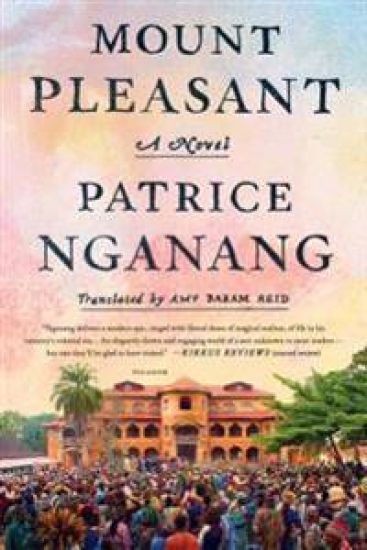
Mount Pleasant
Patrice Nganang; Translated from the French by Amy Baram Reid
Picador USA
2017
nidottu
In Cameroon in 1931, Sara is taken from her family and brought to Mount Pleasant as a gift for Sultan Njoya, the Bamum leader cast into exile by French colonialists, when she is just nine years old. Sara's story takes an unexpected turn when she is recognised by Bertha, the slave in charge of training Njoya's brides, as Nebu, the son she lost tragically years before. In her new life as a boy, she bears witness to the world of Sultan Njoya - a magical yet declining place of artistic and intellectual minds. Seven decades later, a student returns home to Cameroon to research the place it once was, and she finds Sara, silent for decades, ready to tell her story. In her serpentine tale, a lost kingdom lives again in the compromised intersection between flawed memory, tangled fiction, and faintly discernible truth. The award-winning novelist Patrice Nganang's lyrical and majestic Mount Pleasant is a resurrection of the world of early-twentieth-century Cameroon and an elegy for the men and women swept up in the forces of colonisation. For readers of Maaza Mengiste and Taiye Selasi.
I am a dog, the narrator of Patrice Nganang's novel plainly informs us. As such, he has learned not to expect too much from life. He can, however, observe the life around him - in his case the impoverished but dynamic Cameroon of the early 1990s, a time known as les annees de braise (the smoldering years). When he isn't limited by the length of his master's leash, the perceptive, even ironic, Mboudjak wanders the streets of Yaounde, a capital city caught in the throes of social and political change. Only partly understanding the words spoken around him (the other dogs are as unreliable as the humans), Mboudjak relates an experience that not only evokes the wildly diverse language of the streets - a heady brew of French, Pidgin English, the indigenous Medumba, and the urban slang Camfranglais - but also reflects the elusiveness of meaning in politically uncertain times. Mboudjak is not alone in his confusion or in his hardship. The blows he receives from humans and the mocking laughter of other dogs are indicative of a larger pattern of abuse that indicts the ruling regime. Despite its unflinching depiction of a seething, turbulent society, ""Dog Days"" is not a somber story; it is propelled by the humor that is Mboudjak's greatest survival tool, and even by a certain optimism. In the vibrantly chaotic marketplaces, in the bustling energy of Massa Yo's bar, and in the escalating political demonstrations, a brighter future for Cameroon can be glimpsed. This story told by a canine everyman offers something for any reader interested in freedom withheld and the early stirrings that will someday win it back.
I am a dog, the narrator of Patrice Nganang's novel plainly informs us. As such, he has learned not to expect too much from life. He can, however, observe the life around him - in his case the impoverished but dynamic Cameroon of the early 1990s, a time known as les annees de braise (the smoldering years). When he isn't limited by the length of his master's leash, the perceptive, even ironic, Mboudjak wanders the streets of Yaounde, a capital city caught in the throes of social and political change. Only partly understanding the words spoken around him (the other dogs are as unreliable as the humans), Mboudjak relates an experience that not only evokes the wildly diverse language of the streets - a heady brew of French, Pidgin English, the indigenous Medumba, and the urban slang Camfranglais - but also reflects the elusiveness of meaning in politically uncertain times. Mboudjak is not alone in his confusion or in his hardship. The blows he receives from humans and the mocking laughter of other dogs are indicative of a larger pattern of abuse that indicts the ruling regime. Despite its unflinching depiction of a seething, turbulent society, ""Dog Days"" is not a somber story; it is propelled by the humor that is Mboudjak's greatest survival tool, and even by a certain optimism. In the vibrantly chaotic marketplaces, in the bustling energy of Massa Yo's bar, and in the escalating political demonstrations, a brighter future for Cameroon can be glimpsed. This story told by a canine everyman offers something for any reader interested in freedom withheld and the early stirrings that will someday win it back.