
Kirjojen hintavertailu. Mukana 12 537 659 kirjaa ja 12 kauppaa.

Kirjailija

Patricia Adler

Kirjat ja teokset yhdessä paikassa: 2 kirjaa, julkaisuja vuosilta 1998-2015, suosituimpien joukossa Peer Power. Vertaile teosten hintoja ja tarkista saatavuus suomalaisista kirjakaupoista.

2 kirjaa

Kirjojen julkaisuhaarukka 1998-2015.

Constructions of Deviance: Social Power, Context, and Interaction

Constructions of Deviance: Social Power, Context, and Interaction

Patricia Adler; Peter Adler

Cengage Learning
2015
nidottu
Packed with the most recent and relevant articles in the field, CONSTRUCTIONS OF DEVIANCE: SOCIAL POWER, CONTEXT, AND INTERACTION, Eighth Edition, shows readers how to apply the concepts and theories of deviance to the world around them. The book's current, comprehensive coverage includes both theoretical analyses and ethnographic illustrations of how deviance is socially constructed, organized, and managed. Seasoned authors and award-winning professors, Patricia Adler and Peter Adler cover a wide variety of deviant acts-challenging readers to see the diversity and pervasiveness of deviance in society. They present deviance as a component of society, examine the construction of deviance, and explore the processes in society that create deviance. Intriguing selected studies focus on the experiences of deviants, the deviant-making process, and the ways in which people labeled as deviant in society react to that label. The balanced selection of readings is timely and engaging, while in-depth introductions, explanations of theory, and discussion questions guide readers through the fascinating material.
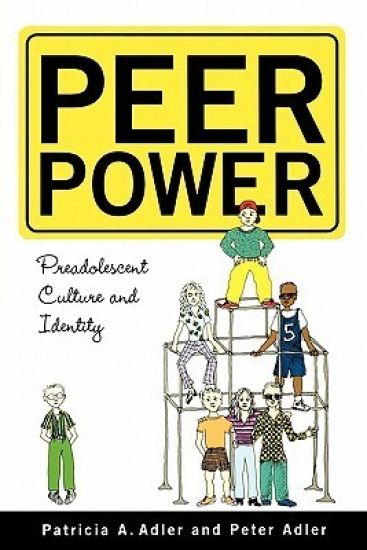
Peer Power

Peer Power

Peter Adler; Patricia Adler

Rutgers University Press
1998
nidottu
Peer Power seeks to explode existing myths about children's friendships, power and popularity, and the gender chasm between elementary school boys and girls. Based on eight years of intensive insider participant observation in their own children's community, Peter and Patti Adler discuss the vital components of the lives of preadolescents, popularity, friendships, cliques, social status, social isolation, loyalty, bullying, boy-girl relationships, and afterschool activities. They describe how friendships shift and change, how people are drawn into groups and excluded from them, how clique leaders maintain their power and popularity, and how individuals' social experiences and feelings about themselves differ from the top of the pecking order to the bottom. In so doing, the Adlers focus their attention on the peer culture of the children themselves and the way this culture extracts and modifies elements from adult culture. Children's peer culture, as it is nourished in those spaces where grown ups cannot penetrate, stands between individual children and the larger adult society. As such, it is a mediator and shaper, influencing the way children collectively interpret their surroundings and deal with the common problems they face. The Adlers explore some of the patterns that develop in this social space, noting both the differences in boys' and girls' gendered cultures and the overlap in many social dynamics, afterschool activities, role behaviour, romantic inclinations and social stratification. For example, children's participation in adult-organized afterschool activities - a now-prominent feature of many American children's social experience - has profound implications for their socialization and development, moving them away from the negotiated, spontaneous character of play into the formal systems of adult norms and values at ever-younger ages. When they retreat from adults, however, they still display distinctive peer group dynamics, forging strong ingroup/outgroup differentiation, loyalty and identification. Peer culture thus contains informal social mechanisms through which children create their social order, determine their place and identity, and develop positive and negative feelings about themselves. Studying children's peer culture is thus valuable as it reveals not only how this subculture parallels the adult world but also how it differs from it.