
Kirjailija
Patricia Clark
Kirjat ja teokset yhdessä paikassa: 11 kirjaa, julkaisuja vuosilta 2009-2025, suosituimpien joukossa Sign Language Archaeology. Vertaile teosten hintoja ja tarkista saatavuus suomalaisista kirjakaupoista.
11 kirjaa
Kirjojen julkaisuhaarukka 2009-2025.

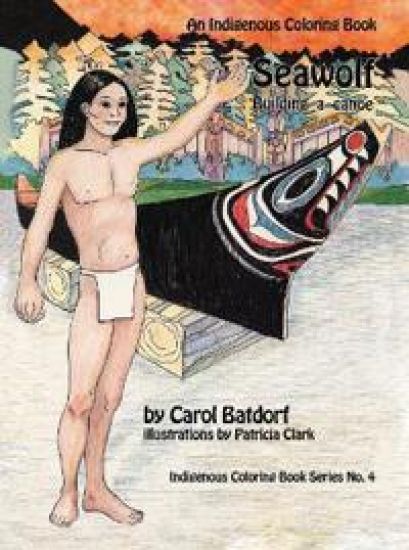
Canoes were important to the Indigenous people who lived long ago on the shores of the northwest coast. Wherever they went, they traveled by dugout canoes. Some of their canoes could carry fifty and more people across open ocean water. others were small and were only used on quiet, sheltered bays. There were canoes made to be poled up rivers and those designed to carry huge loads of freight from place to place.There were light canoes made for women to use, fishing canoes, and even canoes for war.Only a carver who had the special skills, a "gift" the people called it, could carve a canoe from a cedar tree. Those men were honored for their work and were well paid with food, blankets, boxes or tools. It was considered a privilege for an Indigenous boy to be able to learn to make a canoe from such a carver. Koni, in our story, was such a boy.Once a canoe was carved and it proved to be a good craft, it was very valuable., The people respected it as if it were a living thing. They gave names to their canoes and took good care of them.This coloring book is about an Indigenous canoe and how it came to be. As you color the pictures, you will learn what it was like to be a First Peoples boy of long ago and how carvers transformed giant cedar logs into large, sturdy canoes.Since there is a lot of detail in the pictures, you might want to use felt pens or even colored pencils instead of crayons. Whatever you decide to use, most importantly, have fun

"What a brilliant concept: Deadlifts offers witty, lyrical verses, historically accurate and imaginative, in which poet Patricia Clark provides an insider's view of other 'Patricia Clarks'--the dead ones. These poems are even more brilliant than the concept, their endings a surprise and a good shock. Heartening and perfectly tuned, like Arcade Fire or Stephen Colbert's monologues, these poems are what we need now--and will return to--for a long time to come." --Marilyn Kallet "In Patricia Clark's Deadlifts, we cling to the speaker as she dives right into mortality's maw, poring over obituaries of those who share her name. They're strangers, yes, but the connection Clark makes is powerful. Are we anything in death beyond our names? As Clark says, "We are all the same, these lives/ bracketed by dates, / these lists--who/ preceded us, who remains.'" --Glenn Shaheen"These poems are masterful--the way Clark tucks reverberating sounds from one line to the next--pain, thanks, face--like she tucks her namesakes into their graves. So gently and with so much love. Through the breath and ink of this author Patricia Clark, the Patricia Clarks that have gone on come back again." --Nicole Walker
A chapbook by Patricia Clark, Poet-in-Residence and Professor in the Department of Writing at Grand Valley State University; author of four poetry books: Sunday Rising, She Walks Into the Sea, My Father on a Bicycle, and North of Wondering. "This stirring collection offers respite from the strife-filled atmosphere we live in. And it firms Patricia Clark's status. She is one of the best poets that America presents today." -Marilyn Kallet, author of 17 books, including The Love That Moves Me "She brings us a world still fresh as spring and deep in mystery." -Kenneth Pobo, winner of the Blue Light Book Prize and author of When the Light Turns Green. "In the best moments in this remarkable collection, the creatures of the world call the poet back into herself, into reflection, into a new understanding, richer and more nuanced." -Keith Taylor, author of If the World Becomes So Bright. Published by Spruce Alley Press, 2016
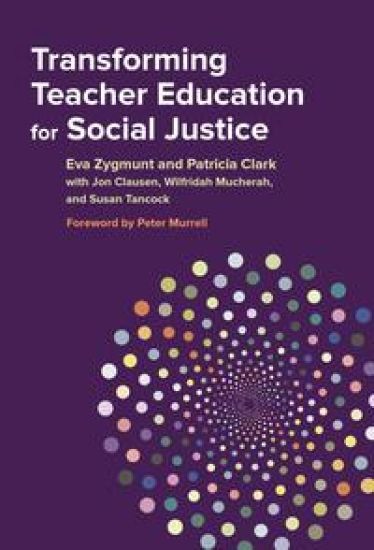
Transforming Teacher Education for Social Justice
Eva Zygmunt; Patricia Clark
Teachers' College Press
2015
sidottu
Transforming Teacher Education for Social Justice offers teacher educators a new way to think about the development of culturally responsive educators. The authors identify the core components needed to restructure and reorient programs of teacher education to adequately prepare new teachers for the racially, culturally, and linguistically diverse communities they will serve upon graduation.They propose a new model of teacher preparation that capitalizes on the strengths of programs evidencing important outcomes. Chapters address the notion of situated learning embedded in communities; the need for extensive clinical experience in authentic teaching situations; strategies for interweaving theory, content, pedagogy, and classroom practice; the importance of student engagement and motivation; and the implementation of critical service learning. Key policy implications of this model are also discussed within the current landscape of teacher education reform.
Transforming Teacher Education for Social Justice
Eva Zygmunt; Patricia Clark
Teachers' College Press
2015
nidottu
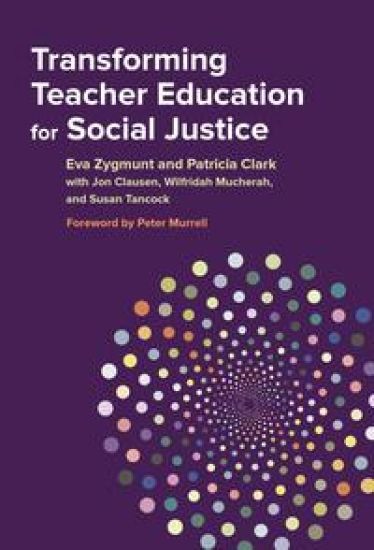
Transforming Teacher Education for Social Justice offers teacher educators a new way to think about the development of culturally responsive educators. The authors identify the core components needed to restructure and reorient programs of teacher education to adequately prepare new teachers for the racially, culturally, and linguistically diverse communities they will serve upon graduation.They propose a new model of teacher preparation that capitalizes on the strengths of programs evidencing important outcomes. Chapters address the notion of situated learning embedded in communities; the need for extensive clinical experience in authentic teaching situations; strategies for interweaving theory, content, pedagogy, and classroom practice; the importance of student engagement and motivation; and the implementation of critical service learning. Key policy implications of this model are also discussed within the current landscape of teacher education reform.

This study investigates the origins of American Sign Language, its evolution from French Sign Language, and evidence about the word formation process of ASL, including data from 19th and early 20th century dictionaries.

Wallace Stevens, in his poem "A Postcard from the Volcano," writes, "left what we felt / at what we saw." Patricia Clark's stunning fourth poetry collection, "Sunday Rising," is full of such moments, carefully wrought and mined for their resonance. Haunting human forms rise from the underworld, seeking to communicate, longing for connection. In language as resounding and evocative as the subjects it describes, "Sunday Rising "questions the past, human relationships, the meaning of loss, and the author's own heritage. With landscapes as familiar as Michigan and as distant as the shores of Western Europe, these poems bring to light the cracks and fissures in our world, amid lyric exhalations rising like clouds above the birds, trees, and coastlines, language capturing the poet's spiritual longing as well as moments of passion and sorrow. From the first poem to the last, an intimate relationship with the physical world emerges. Its teachings, consolations, utterances, and echoes comprise a sense of discovery. The ethereal and often spiritual practice of seeing and taking note is celebrated, whether this process yields gemstones or ore, or words wrought into the music and imagery of poetry.
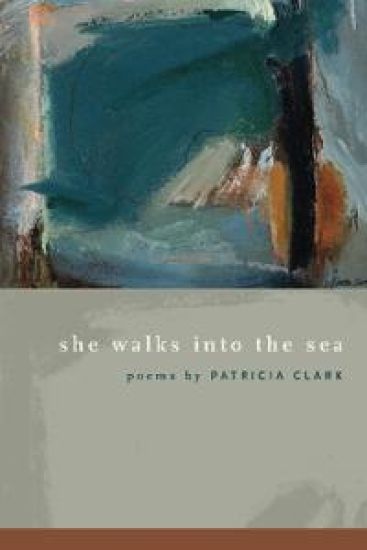
Patricia Clark's poems explore not only refuge but also wonder and appreciation, as well as astonishment. A number of the 56 poems collected here show her grappling with loss, especially the loss of her mother, though she isn't one to indulge in misery. Instead, she goes walking. It is the harp tree in "The Poplar Adrift" that Clark imagines giving voice to sorrow, thus sparing those who stroll by--"all the grief that passes" becoming, in the tree's very fibers, sound on the air, a wind through branches and leaves. Clark also finds opportunities for learning, for meditation, and for contemplation. Octavio Paz has written, "Nature speaks as though it were a lover." In many of the poems collected here, Clark listens to nature speaking and revels in this lover, aiming to capture some of the qualities of Michigan's trees, birds, and landscapes in lyric poems. It is Clark's particular gift to give us "tasted" as she draws her readers into the world, inhabiting the worlds of nature, head, and heart.