Kirjojen hintavertailu. Mukana 12 390 323 kirjaa ja 12 kauppaa.

Kirjailija

Patricia G. Berman

Kirjat ja teokset yhdessä paikassa: 8 kirjaa, julkaisuja vuosilta 2013-2025, suosituimpien joukossa Edvard Munch: The Scream. Vertaile teosten hintoja ja tarkista saatavuus suomalaisista kirjakaupoista.

8 kirjaa

Kirjojen julkaisuhaarukka 2013-2025.

Edvard Munch: The Scream

Edvard Munch: The Scream

Patricia G. Berman; Joanna Iranowska; Øyvind Vågnes

Munch Museum
2024
sidottu
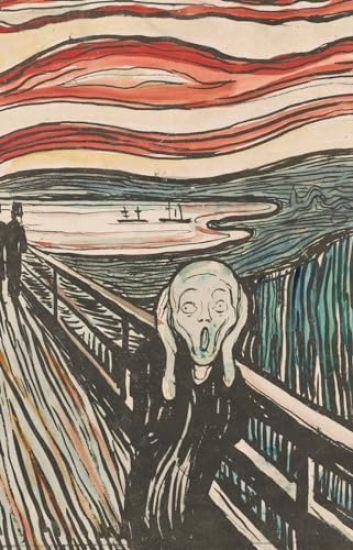
Ever since Munch first came up with the Scream motif at the end of the 19th century, countless artists, including Andy Warhol and Marina Abramovic, have modified it within their own work. In addition, the open-mouthed figure has cropped up in popular cultural productions such as Wes Craven’s Scream film franchise, the poster for the kids’ movie Home Alone, and in scores of satirical cartoons – on everything from Brexit to Donald Trump’s presidency and tax rises – as well as on innumerable political banners and placards, most recently in protests about the climate emergency. In recent years, the Scream image has also taken a prominent place on digital screens in the form of its own emoji and as the basis of countless memes. At the same time, the quantity of souvenirs and other objects decorated with or shaped like Munch’s figure of desperation has increased immeasurably. In short: these days The Scream haunts pretty much every layer of culture. It is without doubt one of the most frequently reproduced images in the history of art, equalled only perhaps by Leonardo da Vinci’s Mona Lisa, and is the originator of a constantly expanding network of analogue and digital mutations. Via these three texts, and a rich selection of illustrations – including all known Scream images ever made by the artist himself, a selection of his Scream texts and countless so-called Scream mutations – this book embraces Munch’s best-known image as a cultural phenomenon.
The Scandinavian Home

The Scandinavian Home

Patricia G. Berman; Dawn R. Brean; Michelle Facos

D GILES LTD
2025
pokkari
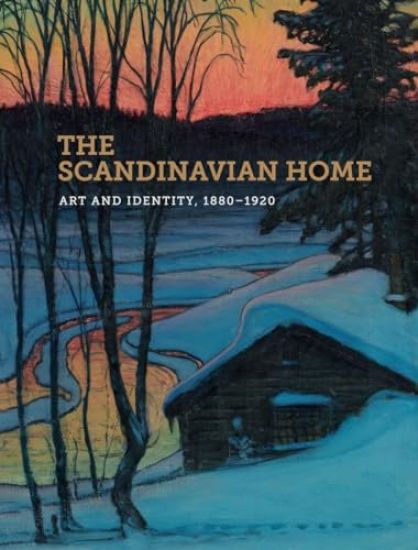
The Scandinavian Home is the first publication to examine the entangled notions of home and homeland that were central to the art and material culture of Denmark, Norway, Sweden, and Finland in the second half of the nineteenth century. “Home” was a central metaphor in the nation-building activities of each country. The arts played a crucial role in reinforcing a shared sense of belonging amongst Nordic countries as they strove to identify and celebrate authentic local and national identities. The linkages among land, landscape, handicraft, and domestic dwellings as dimensions of home are embedded in this survey of the extensive David and Sue Werner Collection of Scandinavian art, presented to the public for the first time. Encompassing an impressive range of almost 150 painting, drawing, furniture, textiles, glass, metalwork, ceramics, and works on paper, highlights include rare tapestries and a wooden cabinet by the Norwegian artist Gerhard Munthe; Finnish ceramics by Willy Finch; landscape paintings by Hilma af Klint, Akseli Gallen-Kallela, Gustav Fjaestad and Pekka Halonen; and anonymous functional objects by outstanding handicraft artists – covering embroideries, metalwork, and wooden implements.
Edvard Munch

Edvard Munch

Patricia G. Berman; Melania Mazzucco; Hanne Ørstavik; Lasse Jacobsen; Emil Leth Meilvang

Munch Museum
2024
sidottu
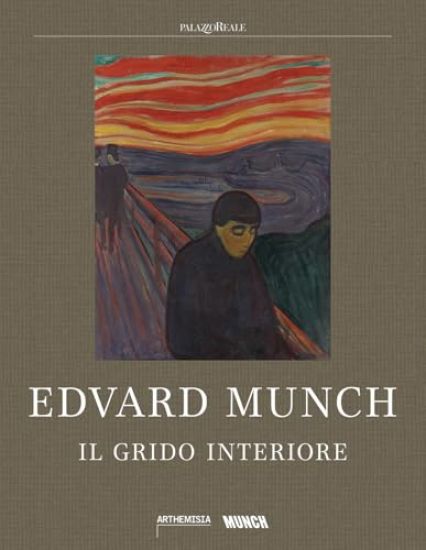
The jarring emptiness following the loss of a loved one, the expansive out-of-body sensation of sensual touch, the lassitude of melancholy and the ecstatic receptivity to sunshine. His ability to capture and convey sensation and feelings through the materials of art, places the Norwegian artist Edvard Munch (1863–1944) at the forefront of European art at the turn of the last century. Interestingly, Munch’s artistic exploration of perception, and his persistent questioning of the objectivity of vision, intersect with ideas that matured within the fields of psychology and experimental optics at the time. Edvard Munch: Il Grido Interiore examines these connections, demonstrating his continuing exploration of the conditions of sight. The essays in this catalogue examine this phenomenon while also probing a lesser-known aspect of the artist’s work: Munch’s relationship to Italy. The first essay, Lasse Jacobsen’s ‘Edvard Munch. Italian Impressions’, explores this connection explicitly, as part of a general overview of Munch’s life and work. The second text, ‘Reflections in Munch’s Inner Eye’ by Patricia G. Berman, charts the art historical context of Munch’s exploration of experience’s subjective dimension. Emil Leth Meilvang’s ‘Seeing without Sight. Munch’s Vision’, on its part, explores the relationship between Munch’s artistic development and simultaneous developments within the perceptual sciences. Edvard Munch:Il Grido Interiore includes essayistic pieces by authors Melania G. Mazzucco and Hanne Ørstavik: ‘I am a Romantic’ and ‘Who Am I’. Each demonstrates Munch’s continuing ability to light the inner fires of other artists. Text in Italian.
Edvard Munch

Edvard Munch

Patricia G. Berman; Melania Mazzucco; Hanne Ørstavik; Lasse Jacobsen; Emil Leth Meilvang

Munch Museum
2024
sidottu
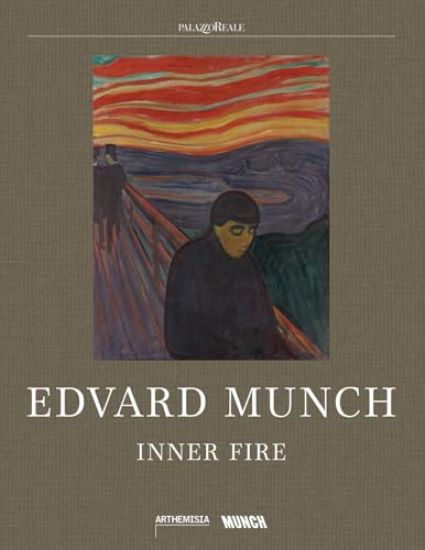
The jarring emptiness following the loss of a loved one, the expansive out-of-body sensation of sensual touch, the lassitude of melancholy and the ecstatic receptivity to sunshine. His ability to capture and convey sensation and feelings through the materials of art, places the Norwegian artist Edvard Munch (1863–1944) at the forefront of European art at the turn of the last century. Interestingly, Munch’s artistic exploration of perception, and his persistent questioning of the objectivity of vision, intersect with ideas that matured within the fields of psychology and experimental optics at the time. Edvard Munch: Inner Fire examines these connections, demonstrating his continuing exploration of the conditions of sight. The essays in this catalogue examine this phenomenon while also probing a lesser-known aspect of the artist’s work: Munch’s relationship to Italy. The first essay, Lasse Jacobsen’s ‘Edvard Munch. Italian Impressions’, explores this connection explicitly, as part of a general overview of Munch’s life and work. The second text, ‘Reflections in Munch’s Inner Eye’ by Patricia G. Berman, charts the art historical context of Munch’s exploration of experience’s subjective dimension. Emil Leth Meilvang’s ‘Seeing without Sight. Munch’s Vision’, on its part, explores the relationship between Munch’s artistic development and simultaneous developments within the perceptual sciences. Edvard Munch. Inner Fire includes essayistic pieces by authors Melania G. Mazzucco and Hanne Ørstavik: ‘I am a Romantic’ and ‘Who Am I’. Each demonstrates Munch’s continuing ability to light the inner fires of other artists.
The Experimental Self

The Experimental Self

Patricia G. Berman; Tom Gunning; MaryClaire Pappas

Munch Museum
2024
sidottu
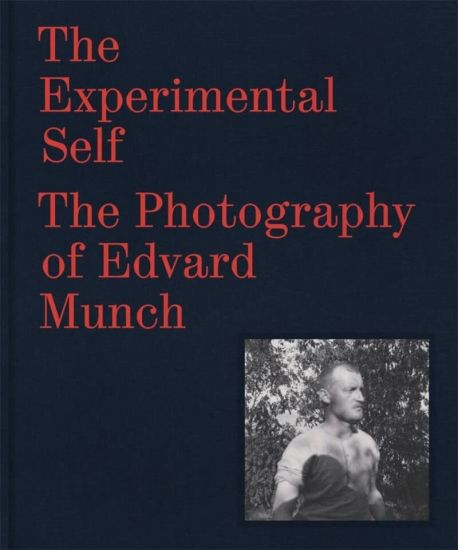
"I have an old camera with which I have taken countless photographs of myself. It often produces astonishing effects", Edvard Munch states in a 1930 interview. "Someday when I am old and have nothing better to do than work on an autobiography, all my photographic self-portraits will see the light of day again." The autobiography was never realised, but the self-portraits have found their way to the pages of The Experimental Self. The Photography of Edvard Munch, which demonstrates the fundamentally experimental nature of the artist’s photographic practice. As a photographer, Munch embraced the freedom provided by the amateur position, and the unpredictable aspects of analogue photographic technology. By playfully approaching his own image in picture after picture, Munch extends his explorations of self-hood in other media through photography. The resulting photographs provide unique access to Munch’s radical artistic vision, which this book studies through eminent essays by Patricia G. Berman, Tom Gunning and MaryClaire Pappas.
Edvard Munch

Edvard Munch

Patricia G. Berman; Claire Bernardi; Øystein Ustvedt; Pierre Wat; Trine Otte Bak Nielsen; Ingrid Junillon; Hilde Bøe

THAMES HUDSON LTD
2023
sidottu
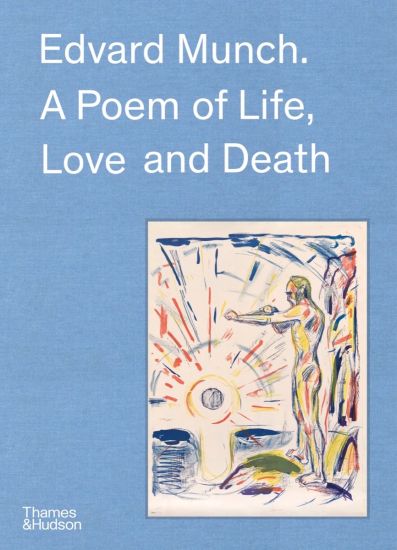
An authoritative new publication that revisits Munch’s work in its entirety. Edvard Munch occupies a pivotal place in artistic modernity. His work is permeated by a singular vision of the world, with a powerful symbolist dimension that goes beyond the masterpieces he created in the 1890s, and which gives his art a great coherence. For Munch, humanity and nature were united in the cycle of life, death and rebirth, which is reflected in the unending recurrence of certain motifs and colour combinations in his work. He wrote: ‘These paintings, which are, admittedly, relatively difficult to understand, will be […] easier to grasp if they are integrated into a whole.’ Published to accompany the major exhibition at the Musée d’Orsay, Edvard Munch: A Poem of Life, Love and Death presents about a hundred works – paintings, drawings, prints and engraved blocks – reflecting the diversity of Munch’s practice. Seven essays explore the artist in his philosophical and scientific milieu and the places that shaped the man and his art, as well as offering a rare glimpse of Munch’s attempts at creative writing. They also examine the historical evolution of his monumental Frieze of Life series and the world-famous Scream. This publication invites readers to revisit the painter’s work in its entirety by following the thread of an ever-inventive pictorial thinking: a vision that is both fundamentally coherent, even obsessive, and at the same time constantly renewed.
Annette Kierulf og Caroline Kierulf

Annette Kierulf og Caroline Kierulf

Jorunn Veiteberg; Lotte Konow Lund; Patricia G. Berman

Fagbokforlaget
2022
sidottu
Annette Kierulf (f. 1964) og Caroline Kierulf (f. 1968) har siden midten av 1990-tallet bidratt til å revitalisere tresnittet som et medium for kritisk refleksjon. Tresnittet var det første massemediet i Europa. Det ble brukt til å spre nyheter og satire i form av flygeblad og plakater. Søstrene Kierulf låner fra denne upretensiøse siden ved tresnittet, sammen med referanser til dets mangfoldige historie som kunstmedium. Landskapsmotiv er det dominerende i Annette Kierulfs kunst, og det har ledet henne til spørsmålet: «Hvordan kan en feministisk nylesning av landskapsmotivet ta form?» Caroline Kierulf har undersøkt forestillinger om kjønn med utgangspunkt i ukemagasinet Alle Kvinners Blad fra 1940- og 50-tallet. Hun har spurt seg: «Kan vi speile oss i ting fra fortiden slik at vi kan se vår egen virkelighet tydeligere?» Begge er opptatt av de mekanismene som former oss som mennesker, enten de er ideologiske, økonomiske eller kulturelle. Boken Å skape en verden gis ut i forbindelse med en større utstilling med samme tittel på KODE Kunstmuseer og komponisthjem høsten 2022. Boken gir en fyldig presentasjon av de utstilte verkene og dokumenterer Kierulf-søstrenes tidligere fellesutstillinger. Kunstner Lotte Konow Lund og kunsthistorikerne Jorunn Veiteberg og Patricia Berman bidrar med lengre essay om de to kunstnerne og deres langvarige samarbeid. Boken er utgitt med støtte fra Fritt ord.
Edvard Munch

Edvard Munch

Jay A. Clarke; Hans-Martin Frydenberg Flaaten; Mai Britt Guleng; Patricia G. Berman; Nils Ohlsen; Øystein Ustvedt; Trine Nordkvelle; Ingeborg W. Owesen; Øivind Storm Bjerke

Skira
2013
sidottu
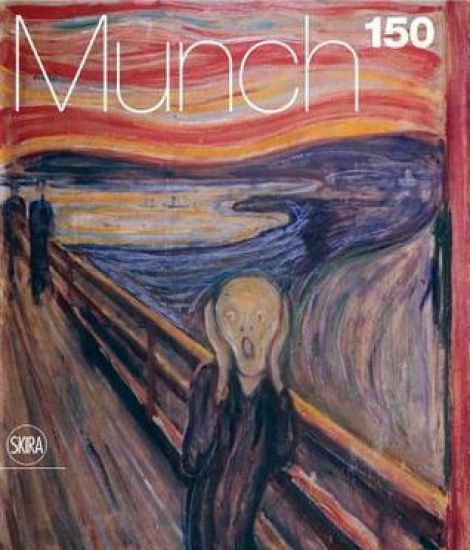
A beautifully illustrated catalogue on the most comprehensive and ambitious full-scale retrospective of Munch’s artistic oeuvre ever. In conjunction with the 150th anniversary of the birth of Edvard Munch (1863–1944) in 2013, a “once in a lifetime” exhibition is produced by the Munch Museum and the National Museum of Art, Architecture, and Design in Oslo. “Munch 150” is the most comprehensive and ambitious full-scale retrospective of Munch’s artistic oeuvre ever. It includes both an exceptional number of highlights, as well as some works that are less known, and is based on extensive loans from public and private collections. The exhibition and its catalogue encompass the entire development of Munch’s art from the 1880s to his death in 1944; the primary focus will be on Munch’s paintings, prints, drawings, and photographs. They cover Munch’s oeuvre in an overarching perspective: Self-presentation and self-portraiture; Places and perception; Visual rhetoric; The Frieze of Life as a lifelong project; Munch and public life; Narration and abstraction; Figure and representation; The staging of gender; and The construction of Munch after 1944. The catalogue also reflects Munch scholarship from recent decades revitalizing the artist’s importance, and include a timeline, a biography, and an index of names and places.