Kirjojen hintavertailu. Mukana 12 595 353 kirjaa ja 12 kauppaa.

Kirjailija

Patricia McDonald

Kirjat ja teokset yhdessä paikassa: 2 kirjaa, julkaisuja vuosilta 2022-2025, suosituimpien joukossa Creating Schools That Work for All of Us. Vertaile teosten hintoja ja tarkista saatavuus suomalaisista kirjakaupoista.

2 kirjaa

Kirjojen julkaisuhaarukka 2022-2025.

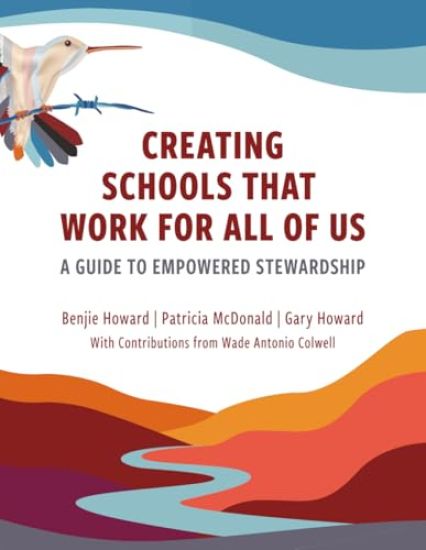
Creating Schools That Work for All of Us

Creating Schools That Work for All of Us

Benjie Howard; Patricia McDonald; Gary Howard

Mimi and Todd Press
2025
pokkari
Creating Schools That Work for All of Us: A Guide to Empowered Stewardship is your invitation to lead with purpose, nurture intergenerational collaboration, and cultivate a school culture where equity is both a value and daily practice. This guidebook is grounded in decades of equity-centered practice and liberatory design aligned to the Seven Commitments of Stewardship. It brings together research-informed frameworks, guiding metaphors, and concrete strategies to help educators take action with courage, clarity, and care. This guide offers accessible entry points to know yourself, know your students, know your practice as a leader, teacher, student, community member, or any other role you may fill. Use it to lead professional learning, deepen your own practice, or co-create conditions for empowered learning with your students and colleagues. Integrates personal, professional, and organizational inquiry into a coherent framework for school transformation Anchors each phase of the journey in equity, joy, and intergenerational learning Includes 40+ adaptable strategies for collaborative teams, leadership development, and classroom practice Aligned with design thinking, culturally responsive pedagogy, and systems-level change Includes vivid visual tools and reflection routines that support sustainable implementation This is not just a professional learning guide; it's a roadmap for cultivating a more just and joyful future, one community at a time.
1–2 Peter and Jude

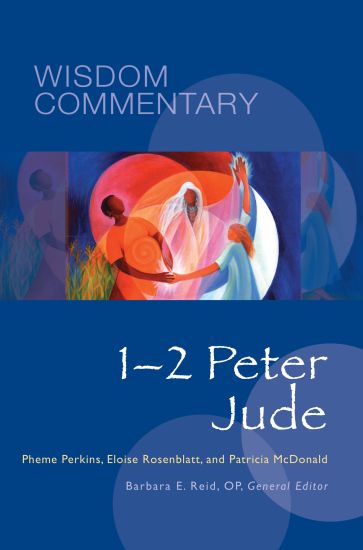
1–2 Peter and Jude

Pheme Perkins; Patricia McDonald; Eloise Rosenblatt

Liturgical Press
2022
sidottu
2023 Catholic Media Association Second Place Award, Scripture – Academic Studies Reading 1 Peter through the lens of feminist and diaspora studies keeps front and center the bodily, psychological, and social suffering experienced by those without stable support of family or homeland, whether they were economic migrants or descendants of those enslaved by Roman armies. In the new “household” of God, believers are encouraged to exhibit a moral superiority to the society that engulfs them. But adoption of “elite” values cannot erase the undertones of randomized verbal abuse, general scorn, and physical violence that women, immigrants, slaves, and freedmen faced as the “facts of life.” First Peter offers the “honor” of identifying with the Crucified, “by his bruises you are healed” (2:24). A Christian liberation ethic would challenge 1 Peter’s approach. Pliny the Younger, governor of Bithynia-Pontus in north-western Asia Minor, is a contemporary of 2 Peter’s writer. The polemical, accusatory genre of 2 Peter, like Jude, originates in Roman judicial rhetoric. The pastor, in the persona of a prosecuting attorney, condemns immoral defendants, including influential women. Their “crimes” encode community tensions over women’s leadership, Gentile-members’ sexual ethics, their syncretistic deviations from Jewish doctrine on creation, and the certainty of divine judgment and punishment. Citations to Elizabeth Cady Stanton’s A Woman’s Bible enliven the commentary. The doctrinal disorder prompts the male pastor to sustain loyalists in their commitment to “Our Lord and Savior Jesus Christ.” Second Peter dramatizes an ecclesial crisis whose “solution” was the eventual imposition of a magisterium to silence dissent. Brief, combative, and assuming a familiarity with a literary culture that most twenty-first-century readers do not have, the Letter of Jude would be an obvious candidate for being the most neglected book of the New Testament. As a model for a pastoral strategy, it can be recommended only with great reservations: almost everyone will find in it something problematic, if not offensive. Yet, in addition to giving a window on a Greek-speaking Jewish-Christian milieu, Jude’s energetic prose testifies to the author’s visceral concern for those attempting to live by the gospel in difficult circumstances. Furthermore, to the extent that over familiarity with parts of the New Testament can blunt their challenge, this letter provides a salutary reminder that the entire canon originated in a world that is radically unfamiliar to us.