Kirjojen hintavertailu. Mukana 12 595 353 kirjaa ja 12 kauppaa.

Kirjailija

Patricia Meyer Spacks

Kirjat ja teokset yhdessä paikassa: 14 kirjaa, julkaisuja vuosilta 1962-2024, suosituimpien joukossa Reading Eighteenth-Century Poetry. Vertaile teosten hintoja ja tarkista saatavuus suomalaisista kirjakaupoista.

14 kirjaa

Kirjojen julkaisuhaarukka 1962-2024.

The Female Imagination

The Female Imagination

Patricia Meyer Spacks

TAYLOR FRANCIS LTD
2024
nidottu
Is there such a thing as a female literary imagination – a special brand of insight and intuition that characterises women’s writing? Is there something about a novel, whether by Jane Austen, Charlotte Brontë or Doris Lessing, that tells us that it could only have been written by a woman? Do the subject matter, form and style that women choose throw light on the way they think and feel?In this brilliant and highly readable book, originally published in 1976, Patricia Spacks analyses the female view of the world. Juxtaposing – sometimes in startlingly original combination some eighty books written between the seventeenth century and the present day she uses both literary and psychological analysis to explore patterns that recur again and again in the stories women tell – whether about their own lives or the lives of their fictional characters. She dissects female experience in the twentieth century as viewed by an array of writers ranging from Kate Millet to Virginia Woolf; examines the interplay of social passivity and psychic power that dominates characters such as Maggie Tulliver and Jane Eyre, the altruism that impels Jane Austen’s and Mrs Gaskell’s heroines, the ‘acceptance’ of Virginia Woolf’s Mrs Ramsey, the personal and social conflicts that beset so many of the adolescent girls that figure in both nineteenth-century and contemporary literature; reveals the complex motives that can be bound up in a women’s deliberate choice of the artist’s role, as appears in the writings of Isadora Duncan’s and Dora Carrington, Marie Bashkirtseff and Mary McCartney – and the surprising forms ‘freedom’ can take, as for Beatrice Webb in the East End of London or Isak Dinerson in the wilds of Africa…The voices echo and re-echo across the years in fascinating counter-point. Their range is enormous – rebels and reformers, actresses and painters, Society ladies and unknown girls in small towns, novels, poems, memoirs, diaries and letters, both English and American, and alongside classics such as Wuthering Heights and well-known modern works such as The Bell Jar, Patricia Spacks introduces an intriguing selection of relatively unknown writers, such as Napoleon’s psychoanalyst great-niece Marie Bonaparte, the Victorian arch-fantasist Mary MacLane and the autobiography of a seventeenth-century Duchess.The Female Imagination is much more than a study of women’s writing. It is an inquiry into the nature of female thought, self-expression and experience. As such it should appeal to every educated woman – and to many men too.
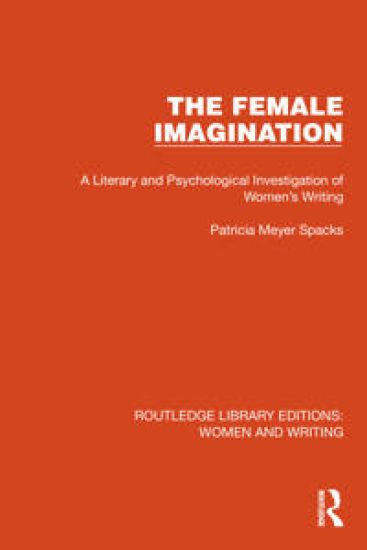
The Female Imagination

The Female Imagination

Patricia Meyer Spacks

TAYLOR FRANCIS LTD
2022
sidottu
Is there such a thing as a female literary imagination – a special brand of insight and intuition that characterises women’s writing? Is there something about a novel, whether by Jane Austen, Charlotte Brontë or Doris Lessing, that tells us that it could only have been written by a woman? Do the subject matter, form and style that women choose throw light on the way they think and feel?In this brilliant and highly readable book, originally published in 1976, Patricia Spacks analyses the female view of the world. Juxtaposing – sometimes in startlingly original combination some eighty books written between the seventeenth century and the present day she uses both literary and psychological analysis to explore patterns that recur again and again in the stories women tell – whether about their own lives or the lives of their fictional characters. She dissects female experience in the twentieth century as viewed by an array of writers ranging from Kate Millet to Virginia Woolf; examines the interplay of social passivity and psychic power that dominates characters such as Maggie Tulliver and Jane Eyre, the altruism that impels Jane Austen’s and Mrs Gaskell’s heroines, the ‘acceptance’ of Virginia Woolf’s Mrs Ramsey, the personal and social conflicts that beset so many of the adolescent girls that figure in both nineteenth-century and contemporary literature; reveals the complex motives that can be bound up in a women’s deliberate choice of the artist’s role, as appears in the writings of Isadora Duncan’s and Dora Carrington, Marie Bashkirtseff and Mary McCartney – and the surprising forms ‘freedom’ can take, as for Beatrice Webb in the East End of London or Isak Dinerson in the wilds of Africa…The voices echo and re-echo across the years in fascinating counter-point. Their range is enormous – rebels and reformers, actresses and painters, Society ladies and unknown girls in small towns, novels, poems, memoirs, diaries and letters, both English and American, and alongside classics such as Wuthering Heights and well-known modern works such as The Bell Jar, Patricia Spacks introduces an intriguing selection of relatively unknown writers, such as Napoleon’s psychoanalyst great-niece Marie Bonaparte, the Victorian arch-fantasist Mary MacLane and the autobiography of a seventeenth-century Duchess.The Female Imagination is much more than a study of women’s writing. It is an inquiry into the nature of female thought, self-expression and experience. As such it should appeal to every educated woman – and to many men too.
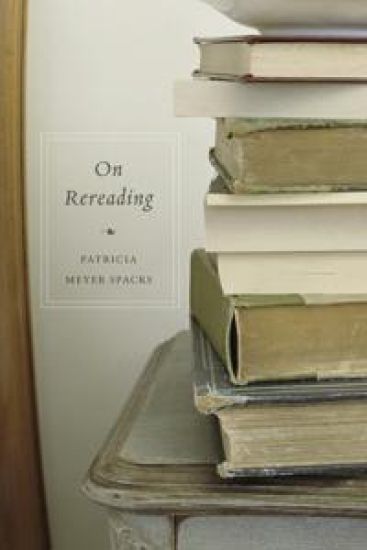
On Rereading

On Rereading

Patricia Meyer Spacks

The Belknap Press
2013
nidottu
After retiring from a lifetime of teaching literature, Patricia Meyer Spacks embarked on a year-long project of rereading dozens of novels: childhood favorites, fiction first encountered in young adulthood and never before revisited, books frequently reread, canonical works of literature she was supposed to have liked but didn’t, guilty pleasures (books she oughtn’t to have liked but did), and stories reread for fun vs. those read for the classroom. On Rereading records the sometimes surprising, always fascinating, results of her personal experiment.Spacks addresses a number of intriguing questions raised by the purposeful act of rereading: Why do we reread novels when, in many instances, we can remember the plot? Why, for example, do some lovers of Jane Austen’s fiction reread her novels every year (or oftener)? Why do young children love to hear the same story read aloud every night at bedtime? And why, as adults, do we return to childhood favorites such as The Hobbit, Alice in Wonderland, and the Harry Potter novels? What pleasures does rereading bring? What psychological needs does it answer? What guilt does it induce when life is short and there are so many other things to do (and so many other books to read)? Rereading, Spacks discovers, helps us to make sense of ourselves. It brings us sharply in contact with how we, like the books we reread, have both changed and remained the same.
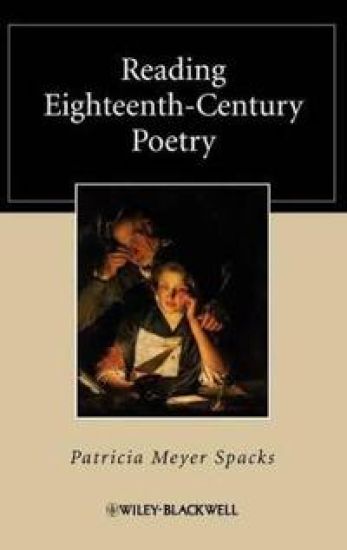
Reading Eighteenth-Century Poetry

Reading Eighteenth-Century Poetry

Patricia Meyer Spacks

Wiley-Blackwell (an imprint of John Wiley Sons Ltd)
2009
nidottu
Reading Eighteenth-Century Poetry recaptures for modern readers the urgency, distinctiveness and rewarding nature of this challenging and powerful body of poetry. An essential guide to reading eighteenth-century poetry, written by world-renowned critic, Patricia Meyer SpacksExposes the multiplicity of forms, tones, and topics engaged by poets during this periodProvides in-depth analysis of poems by established figures such as Alexander Pope and Jonathan Swift, as well as work by less familiar figures, including Anne Finch and Mary LeaporA broadly chronological structure incorporates close reading alongside insightful contextual and historical detailCaptures the power and uniqueness of eighteenth-century poetry, creating an ideal guide for those returning to this period, or delving into it for the first time
Reading Eighteenth-Century Poetry

Reading Eighteenth-Century Poetry

Patricia Meyer Spacks

Wiley-Blackwell (an imprint of John Wiley Sons Ltd)
2009
sidottu
Reading Eighteenth-Century Poetry recaptures for modern readers the urgency, distinctiveness and rewarding nature of this challenging and powerful body of poetry. An essential guide to reading eighteenth-century poetry, written by world-renowned critic, Patricia Meyer SpacksExposes the multiplicity of forms, tones, and topics engaged by poets during this periodProvides in-depth analysis of poems by established figures such as Alexander Pope and Jonathan Swift, as well as work by less familiar figures, including Anne Finch and Mary LeaporA broadly chronological structure incorporates close reading alongside insightful contextual and historical detailCaptures the power and uniqueness of eighteenth-century poetry, creating an ideal guide for those returning to this period, or delving into it for the first time
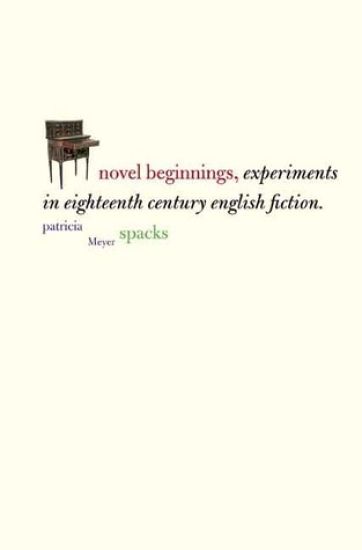
Novel Beginnings

Novel Beginnings

Patricia Meyer Spacks

Yale University Press
2006
sidottu
A celebratory history and appreciation of the varied, wildly experimental nature of fiction in eighteenth-century England In this study intended for general readers, eminent critic Patricia Meyer Spacks provides a fresh, engaging account of the early history of the English novel. Novel Beginnings departs from the traditional, narrow focus on the development of the realistic novel to emphasize the many kinds of experimentation that marked the genre in the eighteenth century before its conventions were firmly established in the nineteenth. Treating well-known works like Tom Jones and Tristram Shandy in conjunction with less familiar texts such as Sarah Fielding’s The Cry (a kind of hybrid novel and play) and Jane Barker’s A Patch-Work Screen for the Ladies (a novel of adventure replete with sentimental verse and numerous subnarratives), the book evokes the excitement of a multifaceted and unpredictable process of growth and change. Investigating fiction throughout the 1700s, Spacks delineates the individuality of specific texts while suggesting connections among novels. She sketches a wide range of forms and themes, including Providential narratives, psychological thrillers, romans à clef, sentimental parables, political allegories, Gothic romances, and many others. These multiple narrative experiments show the impossibility of thinking of eighteenth-century fiction simply as a precursor to the nineteenth-century novel, Spacks shows. Instead, the vast variety of engagements with the problems of creating fiction demonstrates that literary history—by no means inexorable—might have taken quite a different course.
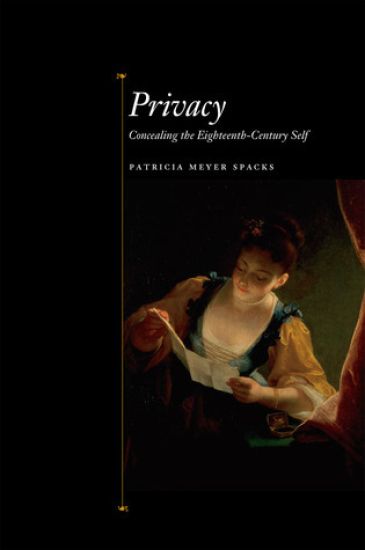
Privacy

Privacy

Patricia Meyer Spacks

University of Chicago Press
2003
sidottu
Today we consider privacy a right to be protected. But in 18th-century England, privacy was seen as a problem, even a threat. Women reading alone and people hiding their true thoughts from one another in conversation generated fears of uncontrollable fantasies and profound anxieties about insincerity. In "Privacy", Patricia Meyer Spacks explores 18th-century concerns about privacy and the strategies people developed to avoid public scrutiny and social pressure. She examines, for instance, the way people hid behind common rules of etiquette to mask their innermost feelings and how, in fact, people were taught to employ such devices. She considers the erotic overtones that privacy aroused in its suppression of deeper desires. And perhaps most important, she explores the idea of privacy as a societal threat - one that bred pretense and hypocrisy in its practitioners. Through inspired readings of novels by Defoe, Richardson, Fielding and Sterne, along with a penetrating glimpse into diaries, autobiographies, poems and works of pornography written during the period, Spacks ultimately shows how writers charted the imaginative possibilities of privacy and its social repercussions. Finely nuanced and elegantly conceived, Spack's new work should interest anyone who has relished concealment or mourned its recent demise.
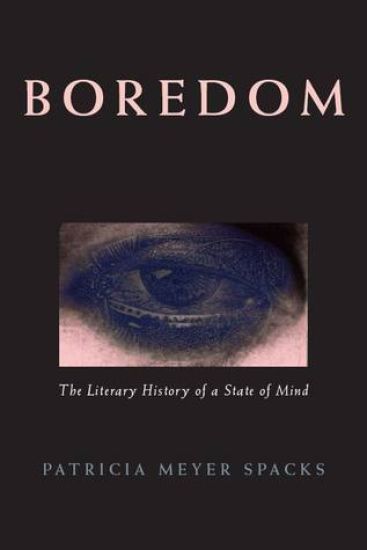
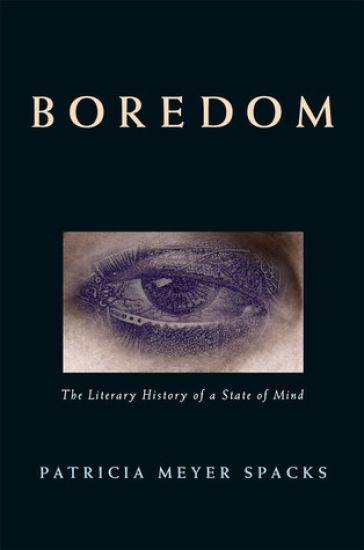
Boredom

Boredom

Patricia Meyer Spacks

University of Chicago Press
1996
nidottu
This text offers an explanation of why boredom both haunts and motivates the literary imagination. Moving from Samuel Johnson and Jane Austen to Donald Barthelme and Anita Brookner, the author shows us how we arrived in a postmodern world where boredom is the all-encompassing name we give our discontent.
Boredom

Boredom

Patricia Meyer Spacks

University of Chicago Press
1995
sidottu
This work offers an explanation of why boredom both haunts and motivates the literary imagination. Moving from Samuel Johnson to Donald Barthelme, from Jane Austen to Anita Brookner, Spacks shows us at last how we arrived in a postmodern world where boredom is the all-encompassing name we give our discontent. Her book aims to provide new insight into the cultural usefulness - and deep interest - of boredom as a state of mind.
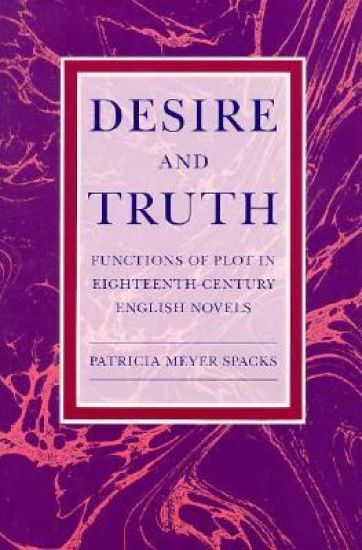
Desire and Truth

Desire and Truth

Patricia Meyer Spacks

University of Chicago Press
1990
sidottu
Desire and Truth offers a major reassessment of the history of eighteenth-century fiction by showing how plot challenges or reinforces conventional categories of passion and rationality. Arguing that fiction creates and conveys its essential truths through plot, Patricia Meyer Spacks demonstrates that eighteenth-century fiction is both profoundly realistic and consistently daring.