Kirjojen hintavertailu. Mukana 12 152 606 kirjaa ja 12 kauppaa.

Kirjailija

Patricia Pulham

Kirjat ja teokset yhdessä paikassa: 5 kirjaa, julkaisuja vuosilta 2006-2022, suosituimpien joukossa Vernon Lee. Vertaile teosten hintoja ja tarkista saatavuus suomalaisista kirjakaupoista.

5 kirjaa

Kirjojen julkaisuhaarukka 2006-2022.

Vernon Lee

Vernon Lee

Patricia Pulham; Catherine Maxwell

Palgrave Macmillan
2006
sidottu
This, the first collection of essays on the aesthete and intellectual Vernon Lee, offers a wide range of critical writings by scholars. Key works are examined including Euphorion, Hauntings: Fantastic Stories and Music and Its Lovers . New light is shed on Lee's relationships with contemporaries such as Lee-Hamilton, Pater and Wilde.
The Sculptural Body in Victorian Literature

The Sculptural Body in Victorian Literature

Patricia Pulham

EDINBURGH UNIVERSITY PRESS
2022
nidottu
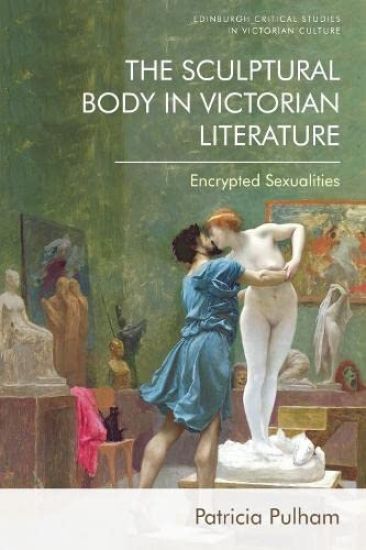
This book argues that, in Victorian literature, desires which cannot be openly acknowledged are often buried and encrypted in the marble bodies of statues. Examining sculpture's ubiquity in Victorian galleries and museums Pulham observes that, while touch is prohibited in these cultural locations, Victorian texts offer 'safe' spaces where statues may be kissed or caressed using metaphors of tactility that work at the intersections of touch and vision to permit the recovery of forbidden love.
The Sculptural Body in Victorian Literature

The Sculptural Body in Victorian Literature

Patricia Pulham

Edinburgh University Press
2020
sidottu
Explores Victorian writers' erotic investment in statuesTheorises the function of the sculptural body in Victorian poetry and proseOffers thorough readings of sculpture in Victorian texts and contextsExamines a wide range of works by well-known and lesser-known writers of the period (e.g. Thomas Hardy, John Ruskin, Oscar Wilde, Walter Pater, Vernon Lee, Olive Custance, Arthur O'Shaughnessy)Extends the British focus to encompass nineteenth-century European and American writings This book argues that, in Victorian literature, transgressive desires that cannot be openly acknowledged are often buried and encrypted in the marble bodies of statues. Examining sculpture's ubiquity in Victorian galleries and museums, Pulham observes that while touch is prohibited in these cultural locations Victorian texts offer 'safe' spaces where sculptures may be kissed or caressed using metaphors of tactility that work at the intersections of touch and vision and permit the recovery of forbidden love.
Art and the Transitional Object in Vernon Lee's Supernatural Tales
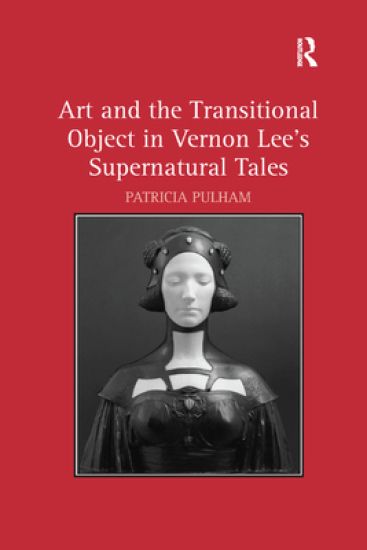
In her persuasively argued study, Patricia Pulham astutely combines psychoanalytic theory with socio-historical criticism to examine a selection of fantastic tales by the female aesthete and intellectual Vernon Lee (Violet Paget, 1856-1935). Lee's own definition of the supernatural in the preface to Hauntings questions the nature of the 'genuine ghost', and argues that this figure is not found in the Society of Psychical Research but in our own psyches, where it functions as a mediator between past and present. Using D.W. Winnicott's 'transitional object' theory, which maintains that adults transfer their childhood engagement with toys to art and cultural artifacts, Pulham argues that the prevalence of the past in Lee's tales signifies not only an historical but a psychic past. Thus the 'ghosts' that haunt Lee's supernatural fiction, as well as her aesthetic, psychological, and historical writings, held complex meanings for her that were fundamental to her intellectual development and allowed her to explore alternative identities that permit the expression of transgressive sexualities.
Art and the Transitional Object in Vernon Lee's Supernatural Tales
In her persuasively argued study, Patricia Pulham astutely combines psychoanalytic theory with socio-historical criticism to examine a selection of fantastic tales by the female aesthete and intellectual Vernon Lee (Violet Paget, 1856-1935). Lee's own definition of the supernatural in the preface to Hauntings questions the nature of the 'genuine ghost', and argues that this figure is not found in the Society of Psychical Research but in our own psyches, where it functions as a mediator between past and present. Using D.W. Winnicott's 'transitional object' theory, which maintains that adults transfer their childhood engagement with toys to art and cultural artifacts, Pulham argues that the prevalence of the past in Lee's tales signifies not only an historical but a psychic past. Thus the 'ghosts' that haunt Lee's supernatural fiction, as well as her aesthetic, psychological, and historical writings, held complex meanings for her that were fundamental to her intellectual development and allowed her to explore alternative identities that permit the expression of transgressive sexualities.