Kirjojen hintavertailu. Mukana 12 657 676 kirjaa ja 12 kauppaa.

Kirjailija

Patricia Southern

Kirjat ja teokset yhdessä paikassa: 19 kirjaa, julkaisuja vuosilta 2008-2024, suosituimpien joukossa The Roman Army. Vertaile teosten hintoja ja tarkista saatavuus suomalaisista kirjakaupoista.

19 kirjaa

Kirjojen julkaisuhaarukka 2008-2024.

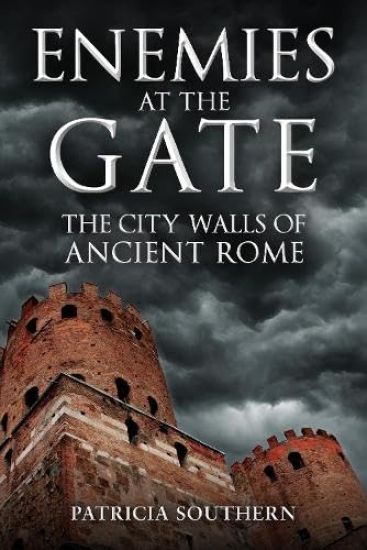
Enemies at the Gate

Enemies at the Gate

Patricia Southern

AMBERLEY PUBLISHING
2024
sidottu
The earliest known wall in Rome encircled the early settlement on the Palatine Hill. Archaeological evidence corroborates the traditional date of the city’s foundation in the eighth century BC. No new wall is known until the early sixth century BC, when King Servius Tullius built the defences named after him. The growth of the Empire and the erection of frontiers by the Emperor Hadrian obviated the need for walls around Rome until the third century AD, when invading tribes crossed the frontiers. Defensive walls were built around several Roman cities, and in AD 274 the Emperor Aurelian constructed a new wall round Rome itself. Most of the Aurelian wall, built of millions of bricks, still stands. During the civil wars of the early fourth century AD, the Emperors Severus II and Galerius besieged Rome but failed to gain entry. The wall was heightened in the early fifth century by the Emperor Honorius, the final version possessing ramparts, artillery platforms, and galleries with arrow slits. Neither frontiers nor walls can ever be impermeable, so Rome was famously taken but not held by Alaric in 410 and later by Totila, King of the Ostrogoths. After some neglect, from the seventh or eighth century AD onwards it was the Popes who kept the wall in repair, as attested by the many commemorative stones set in the brickwork. Repairs are ongoing, of course, to this vast ancient monument.
Rome's Empire

Rome's Empire

Patricia Southern

AMBERLEY PUBLISHING
2023
sidottu
The Roman Empire was forged in war and defended by military might. It also endured because of the Romans’ ability to assimilate and pacify the different peoples and cultures within their provinces. In Rome’s early years it did not annexe territory but created alliances, first with the Italian tribes and then with the leaders of outlying states. Some territories were won without waging war, through rulers who had grown close to Rome. And Rome realised that it profited from these territories, with their agricultural produce, minerals, manpower for armies, slaves, and routes for trade. Government of the provinces was tailored to the character of the lands and people. Unfriendly peoples beyond Rome’s boundaries represented a threat that Rome could now tackle on behalf of those within its sphere. Warlords could be conquered, but they could also be bribed. Native gods were equated as far as possible with Roman ones. Many diverse languages, customs and religions continued under Roman rule. Provincials could rise in status and become full Roman citizens, while inhabitants of towns and cities governed themselves, under the army’s military umbrella. Only groups with such widespread influence that they challenged Rome’s authority were then, often ruthlessly, targeted. The Druids and the Christians were among them. The history of Rome’s Empire is therefore shown to be more complex and impressive than that of a military superpower imposing ‘Pax Romana’.
Hadrian's Wall

Hadrian's Wall

Patricia Southern

Amberley Publishing
2019
pokkari
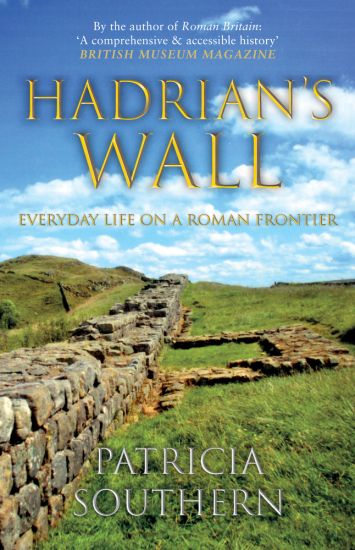
Hadrian’s Wall is a major World Heritage site, set in stunning countryside in Cumbria and Northumberland, where the Wall and its forts are the most visited Roman remains in Britain. It runs through the narrow gap across the Pennines between the Solway Estuary in the west to the appropriately named Wallsend on the River Tyne in the east. For much of its length it is still visible, especially in the central sector where it runs along the north-facing cliff known as Whin Sill. Building started around AD 122 after the Emperor Hadrian visited the north of Britain and inspected sites in person to mark out the line of his new frontier. Hundreds of Roman legionaries from Chester, Caerleon and York marched north to quarry the stone and build the Wall, which took several years to complete. This book tells the story of how the Wall was built and manned by Roman soldiers, what life was like on the frontier and what happened to it when the Romans left.
Julius Caesar

Julius Caesar

Patricia Southern

Amberley Publishing
2018
sidottu
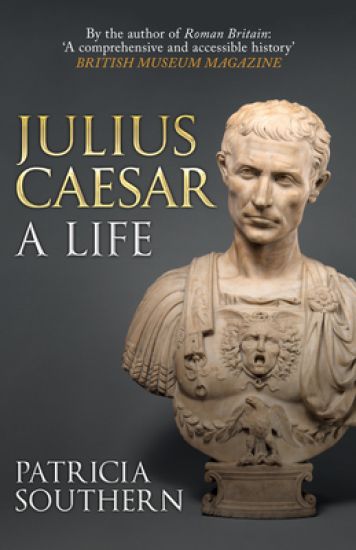
Julius Caesar is part historical figure and part legend. He was a complex individual, a brilliant politician, a successful general, an accomplished psychologist. He grew up in a world where political and military careers were inextricably intertwined, and he excelled at both. In his youth he was considered vain and a little foppish, but showed nerves of steel when he defied the Dictator Sulla – and survived. Bending to someone’s will was not in Caesar’s make-up. He came late to a position of supreme power, and though his policies embraced pragmatic, sensible measures designed to solve the problems that beset the Republic, it was his dictatorial methods rather than his ideas which caused resentment. Unfortunately, when his assassins killed him, hoping to liberate the state from what they saw as his tyranny, they had formulated no plans for the government of the Roman world. By murdering Caesar, the assassins provoked a prolonged series of civil wars, and the rise of Augustus, the all-powerful first Emperor, who took up where Caesar left off. In this new appraisal of his life, Patricia Southern sheds light on the man behind the legend.
Augustus

Augustus

Patricia Southern

Routledge
2017
nidottu
The first Emperor of Rome holds a perennial fascination for anyone with an interest in the Romans and their Empire. Augustus was a truly remarkable man who brought peace after many years of civil wars and laid the foundations of an Empire that lasted for nearly five centuries. Even today the Roman world still underpins modern society. This revised edition of Augustus incorporates new thinking on many aspects of his rule, and how he achieved such power. The image that he projected of himself and his achievements was benign, hopeful, and heroic, but behind this carefully orchestrated self-promotion he was subtle, clever, scheming and ruthless. He has been labelled as a saviour and as a mafia boss. This account of his life shows how he successfully combined the two extremes.
The Roman Army

The Roman Army

Patricia Southern

Amberley Publishing
2016
nidottu
The Roman Army reigned supreme for over 1,000 years. From Britain to Syria, and from the Rhine and Danube to North Africa, there is abundant evidence of the activities of its legionaries and auxiliary soldiers. After the defeat of Antony and Cleopatra in 30 BC Augustus turned the troops of the Republic into the world’s first major standing army, recruiting soldiers from all over the Roman world. Around a third of a million men policed and protected the Empire, eventually guarding frontiers like Hadrian’s Wall. This book covers the complete history of the Roman Army from 753 BC to AD 476, including its successes and failures against Rome’s enemies, such as the Gauls, Carthaginians, Goths and Persians. Life in the Roman Army was not all about fighting battles. Soldiers, centurions and commanding officers left behind a variety of documents, many of which are used in this book to reconstruct their daily lives and their combat experience.
The Roman Empire from Severus to Constantine
The third century of the Roman Empire is a confused and sparsely documented period, punctuated by wars, victorious conquests and ignominious losses, and a recurring cycle of rebellions that saw several Emperors created and eliminated by the Roman armies. In AD 260 the Empire almost collapsed, and yet by the end of the third century the Roman world was brought back together and survived for another two hundred years. In this new edition of The Roman Empire from Severus to Constantine, Patricia Southern examines the anarchic era of the soldier Emperors that preceded the crisis of AD 260, and the reigns of underrated and sometimes maligned Emperors such as Gallienus, Probus and Aurelian, whose determination and hard work reunited and re-established the Empire. Their achievements laid the foundations for the absolutist, sacrosanct rule of Diocletian, honed to ruthless perfection by Constantine, whose reign transformed the pagan Empire into a Christian state. The successes and failures of the rulers of the Roman world of the third century, and the role of the armies and the civilians, are re-assessed in this revised and expanded edition of The Roman Empire from Severus to Constantine, which incorporates the latest thinking of modern scholars and has been extended to cover the reign of Constantine and the foundations he laid on which the Christian empire was built. This is a crucial volume for students of this fascinating period in Roman history, and provides invaluable background for anyone interested in the "fall of Rome", the adoption of Christianity, and the establishment of the Byzantine Empire.
The Roman Empire from Severus to Constantine
The third century of the Roman Empire is a confused and sparsely documented period, punctuated by wars, victorious conquests and ignominious losses, and a recurring cycle of rebellions that saw several Emperors created and eliminated by the Roman armies. In AD 260 the Empire almost collapsed, and yet by the end of the third century the Roman world was brought back together and survived for another two hundred years. In this new edition of The Roman Empire from Severus to Constantine, Patricia Southern examines the anarchic era of the soldier Emperors that preceded the crisis of AD 260, and the reigns of underrated and sometimes maligned Emperors such as Gallienus, Probus and Aurelian, whose determination and hard work reunited and re-established the Empire. Their achievements laid the foundations for the absolutist, sacrosanct rule of Diocletian, honed to ruthless perfection by Constantine, whose reign transformed the pagan Empire into a Christian state. The successes and failures of the rulers of the Roman world of the third century, and the role of the armies and the civilians, are re-assessed in this revised and expanded edition of The Roman Empire from Severus to Constantine, which incorporates the latest thinking of modern scholars and has been extended to cover the reign of Constantine and the foundations he laid on which the Christian empire was built. This is a crucial volume for students of this fascinating period in Roman history, and provides invaluable background for anyone interested in the "fall of Rome", the adoption of Christianity, and the establishment of the Byzantine Empire.
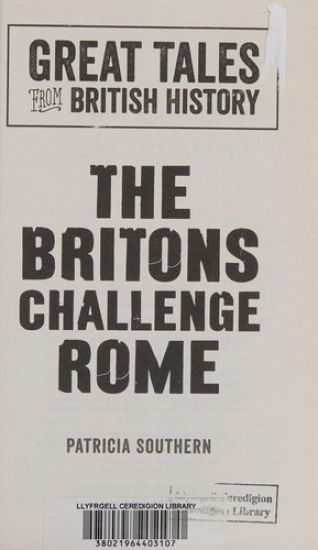
Great Tales from British History: The Britons Challenge Rome
British history is rich in enthralling stories: pivotal moments that changed the future of the country; moments of drama, suspense, intrigue. Dive right into the heart of the action with the Great Tales series. While they fought, Caesar ordered the crews of some of his oared ships to row up towards the beach to threaten the flank of the British tribesmen, and then the standard bearer of the Tenth legion jumped down and started forward, encouraging the troops to follow him. By degrees the Romans managed to gain a foothold on the beach, and the Britons withdrew. From first contact in 55 BC to the defeat of Boudicca, this account captures the moments at the very heart of the British rebellion. Plunging the reader into the middle of the story, this is narrative history at its most evocative and readable. Patricia Southern narrates in gripping detail the struggle of the Britons against the invading Roman forces.
Ancient Rome The Rise and Fall of an Empire 753BC-AD476

Ancient Rome The Rise and Fall of an Empire 753BC-AD476

Patricia Southern

AMBERLEY PUBLISHING
2014
pokkari
The story of Ancient Rome often polarizes opinion: for accusers, the Romans were mean and grasping imperialists with murderous megalomaniac tendencies and the world was well rid of them, but for passionate advocates the Romans were keen administrators and construction engineers who provided the greatest and most long-lasting civilizing force in history. It took a very long time - over thirteen centuries - for the Roman Empire to grow and then fragment. The Romans did not have it their own way all the time. They were defeated on their own ground several times by Hannibal and - albeit temporarily - by Cleopatra in Egypt, Boudica in Britain, and Zenobia in Syria. Patricia Southern's masterly book narrates the history of Rome from a settlement of primitive huts to a sophisticated city ruling and then losing an Empire, the lives of such towering figures as Julius Caesar, Augustus, Caligula and Nero, the successes and setbacks and what the Romans learned on their way to Imperial rule and final disintegration.
Augustus

Augustus

Patricia Southern

Routledge
2013
sidottu
The first Emperor of Rome holds a perennial fascination for anyone with an interest in the Romans and their Empire. Augustus was a truly remarkable man who brought peace after many years of civil wars and laid the foundations of an Empire that lasted for nearly five centuries. Even today the Roman world still underpins modern society. This revised edition of Augustus incorporates new thinking on many aspects of his rule, and how he achieved such power. The image that he projected of himself and his achievements was benign, hopeful, and heroic, but behind this carefully orchestrated self-promotion he was subtle, clever, scheming and ruthless. He has been labelled as a saviour and as a mafia boss. This account of his life shows how he successfully combined the two extremes.
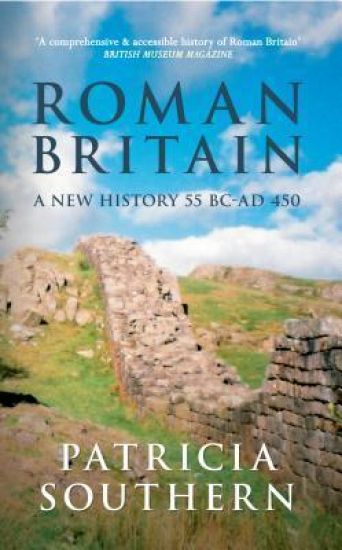
Roman Britain

Roman Britain

Patricia Southern

Amberley Publishing
2013
pokkari
For nearly four centuries, from AD 43 to 410, Britain was a small province on the north-western edge of the vast Roman Empire. Though it was small, it was not insignificant. There were more Roman soldiers in Britain than there were in the provinces of North Africa, and the governors who were appointed by the Emperor were among the most prominent men of their day, at the peak of their careers. People from all classes of Roman Britain's multi-cultural and varied society can still speak to us, indirectly via the works of ancient historians, annalists and biographers, and directly from building inscriptions, religious dedications, gravestones, graffiti, leaden curse tablets, artefacts and coins. But perhaps the most vivid source is the corpus of letters from the fort at Vindolanda in Northumberland, where named individuals talk about birthday parties and complain about the terrible state of the roads. This book uses a variety of sources to document the military, political, and social history of Roman Britain, from Julius Caesar's brief invasions in the first century BC to the fifth century AD when Imperial government came to an end.
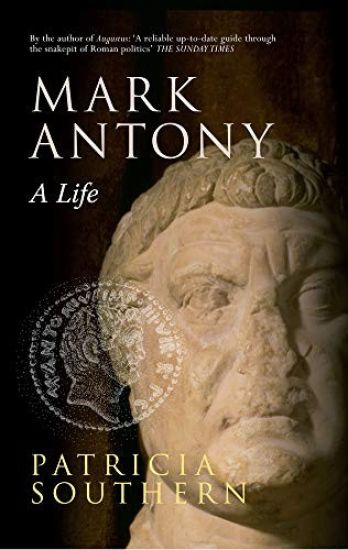
Mark Antony

Mark Antony

Patricia Southern

Amberley Publishing
2012
pokkari
History has not been kind to Mark Antony, but then he was probably his own worst enemy, fatally flawed, too fond of wine and women, extravagant, impetuous, reckless, always in debt, and attached to all the wrong people. There is some truth in this list of Antony's failings, but the propaganda machine of his enemy, Octavian, ensured that these facets of Antony's character were the only ones to survive. There is no mention of the fact that Caesar, who could not afford to promote incompetent assistants, found in Antony a very able lieutenant. Nor is it acknowledged that immediately after the assassination of Caesar in 44 BC, it was Antony and not Octavian who held the state together, when it could so easily have slipped into chaos. In modern eyes, influenced by Shakespeare, Antony is perhaps the ultimate tragic hero, who gave up everything for the love of a woman, Cleopatra VII, ruler of Egypt. Octavian presented Antony as a weakling, completely dominated by Cleopatra, and therefore a threat to Rome by dint of his association with the unbridled ambitions of the Egyptian Queen to rule the world. While Antony attended to the eastern half of the Roman world, shoring up Octavian whenever he needed troops, ships, and money, Octavian eventually planned to bring him down, embarking on a smear campaign to convince the Roman people that Antony should be eliminated. The result was civil war and the defeat of Antony in the naval battle of Actium. In Alexandria, Antony and Cleopatra committed suicide in 30 BC. Octavian buried them side by side, and took total control of Rome and Egypt.
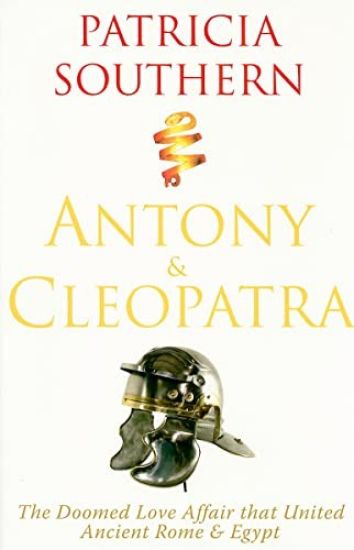
Antony & Cleopatra

Antony & Cleopatra

Patricia Southern

Amberley Publishing
2012
pokkari
The doomed love affair that united Ancient Rome & Egypt. The immortal lovers of novels, plays and films, Antony and Cleopatra were reviled by contemporary Romans, but history has transformed them into tragic heroes. Somewhere between their vilification by Augustus and the judgement of a later age there were two vibrant people whose destinies were entwined after the assassination of Julius Caesar in March 44 BC. Mark Antony's reputation for recklessness, hard drinking, and womanising overshadowed his talents for leadership and astute administration. Cleopatra was determined to reconstitute the ancient empire of the Ptolemies, and Antony as legally appointed ruler of the east gave her much, but not all, of what she desired. Their association went far beyond territorial agreements. They had three children, and may have married according to Egyptian law. This blending of politics and sex led to the ultimate ruin of both, since their main rival Octavian-Augustus was able to portray Cleopatra as the arch enemy of Rome and Antony as her bewitched consort. His propaganda was effective, and in the end Antony's soldiers deserted him. When all was lost, Antony and Cleopatra committed suicide, and were buried side by side in Alexandria.
Ancient Rome The Republic 753BC-30BC

Ancient Rome The Republic 753BC-30BC

Patricia Southern

Amberley Publishing
2011
pokkari
Rome began as a collection of primitive huts on the banks of the Tiber, some considerable time before Romulus founded the great city. Ruled by kings for the first two and a half centuries, the Romans abolished the monarchy and created for their little city state a form of government that was successfully adapted to control an Empire. The Romans learned how to weld together a larger state by integrating other city states and tribes, offering them the benefits and privileges of Roman citizenship in return for services and manpower in the army and government. Roman society was based on wealth, and extreme snobbery permeated every level of the social hierarchy. Upward mobility was rare during the Republic, and equal rights were out of the question. At the bottom of the heap were the slaves, with no rights at all. Although little remains of Roman architecture from this period, the famously straight Roman roads began during the Republic, fanning out from the capital towards all parts of Italy. Patricia Southern charts the rise of Rome from its humble origins to its dominance of the western world, describing the personalities who helped to shape it, such as rebel gladiator Spartacus, Hannibal, the Carthaginian leader who invaded Italy, Caesar and Pompey, and finally Octavian, Cleopatra and Mark Antony.
Antony & Cleopatra

Antony & Cleopatra

Patricia Southern

Amberley Publishing
2009
nidottu
The tragic love affair of Marc Antony and Cleopatra is a staple of popular ancient history, immortalised by Shakespeare and Hollywood and mercilessly parodied in Carry on Cleo. In this dual biography Patricia Southern attempts to rescue both from the stereotypes, portraying their alliance as a mutually advantageous one, and both of them as capable political operators. Southern has a flair for this kind of narrative-history-with-argument, but she has already written extensively on both Antony and Cleopatra as well as Caesar, and for those who have read those earlier books there will be little new here.
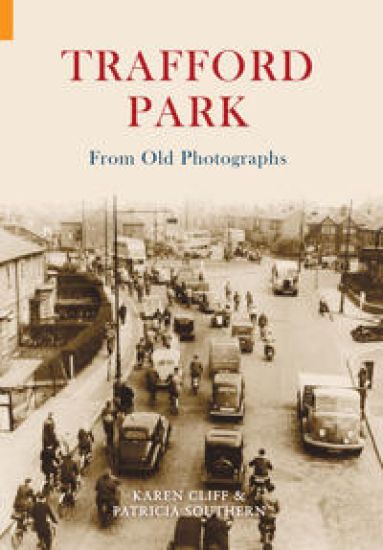
Trafford Park From Old Photographs

Trafford Park From Old Photographs

Patricia Southern; Karen Cliff

Amberley Publishing
2008
nidottu
This is the story of Trafford Park in vintage photographs, once the largest industrialised area in Britain and the workshop of Greater Manchester. The industrial zone known as Trafford Park, between the Manchester Ship Canal and the Bridgewater Canal, began life as an extensive area of parkland surrounding the stately home of the de Trafford family. Finding themselves completely hemmed in by waterways after the establishment of the Manchester Ship Canal, the de Traffords vacated the land, opening up the whole area for industrial development. Gradually the whole area was covered with factories and the ancillary roads and railway lines, as the advantages of the transport links impressed themselves on developers and businessmen.Trafford Park became the largest industrialised area in Great Britain, drawing in a labour force from all over the country. Housing was built in the Park itself to meet the accommodation needs of the incoming workers and their families, and the expansion of nearby towns like Stretford owed much to the proximity of factories and jobs. After a decline in the late sixties and early seventies, Trafford Park is once again a vast centre of industry and business. Ask anyone in the Greater Manchester area about Trafford Park, and they will either have worked there themselves, or know someone who did. It features a wonderful selection of over 200 vintage photographs. It is written by two expert local historians.
The Story of Altrincham

The Story of Altrincham

Patricia Southern

Amberley Publishing
2008
nidottu
This is an accessible and highly illustrated history of Altrincham, a vibrant town in Cheshire. Altrincham, 'the settlement of the people of Aldhere' owes its origin to the initiative and enterprise of its early medieval inhabitants, who established a market, and re-routed the old Roman road from Chester to Manchester so that travellers passed through the town instead of around it. The market was probably well established before it received its official charter in 1290, making it the focal point for buying and selling for the people of the surrounding settlements and villages of Bowdon, Hale, Timperley and Dunham Massey. Good transport links contributed to the expansion of the town. In the later eighteenth century the extension of the Bridgewater canal, the first artificial navigation in England, passed through the environs of Altrincham on its route from Manchester to Runcorn, giving easy access sea lanes of the west coast.From the mid-nineteenth century the steam railway with its terminals at Manchester and Altrincham linked the industrial cotton mills with the more rural market town. The ease of transport encouraged a number of wealthy Manchester cotton magnates and businessmen to build large mansions in and near Altrincham, so that they could live in a healthy semi-rural environment and commute to their offices in the city.The steam trains were replaced in the 1930s by the electrified railway, another 'First' for the area, and latterly by the Metro, continuing the transport link between Altrincham and Manchester. Since the 1960s there have been far-reaching changes in Altrincham, buildings have disappeared, new ones have been built, and in some cases street layouts have altered. This book shows how Altrincham used to look and documents the changes. This is the story of Altrincham by an expert local historian. It is the only history of Altrincham available. It is highly illustrated with over 200 illustrations and old photographs.