Kirjojen hintavertailu. Mukana 12 390 323 kirjaa ja 12 kauppaa.
Kirjailija
Patrick Alan Danaher
Kirjat ja teokset yhdessä paikassa: 7 kirjaa, julkaisuja vuosilta 2009-2026, suosituimpien joukossa Educational Learning and Development. Vertaile teosten hintoja ja tarkista saatavuus suomalaisista kirjakaupoista.
Margaret Baguley; Patrick Alan Danaher; Andy Davies; L. De George-Walker; Janice K. Jones; Karl J. Matthews; Warren Midgley; Catherine H. Arden; Linda De George-Walker
Through ten research projects, this book explores the topic of educational learning and development in order to examine issues that are impacting, either positively or negatively, on current research in this area. The authors explore the capacity building potential of the projects and what factors impacted on or assisted their development.
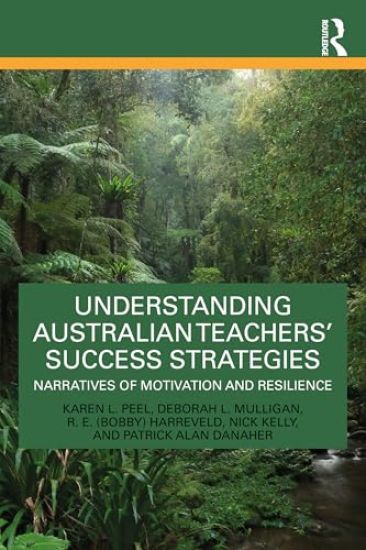
This book presents new insights into the success strategies of Australian teachers. It analyses interviews with 42 experienced teachers across a range of school contexts to examine ‘what works’ in those contexts. The authors organise teachers’ work and identities around 10 distinct roles: designers for learning, emotional labourers, narrative constructors and deconstructors, pandemic navigators, policy refractors, relationship brokers, self-regulated learners, situated ethicists, teaching idealists and technology reframers. The chapters explore two separate but interrelated arcs of analysis simultaneously. Teachers’ work is examined around four nodes: complexities, challenges, contradictions and comforts. Five dimensions of that work are considered as well: psychosocial; profession and professionalism; changes and continuities; naming, framing and shaming; and teaching by design. The Australian study is part of a five-nation international research project focused on teacher motivation and resilience, with the other countries including Brazil, Chile, Ecuador and Spain. The authors are affiliated with the University of Southern Queensland, Central Queensland University and the Queensland University of Technology. What emerges is the understanding that Australian teachers acknowledge the challenging complexity of their work, while they mobilise their constrained agency in innovative ways in diverse contexts. Their success strategies cluster around four distinct types – value-driven, agentic, adaptable and relational – with important implications for current and future teachers alike. It is an essential read for both in-service and pre-service teachers, as well as a viable resource for education researchers and research students, and general lay readers with an interest in the future of education.
Patrick Alan Danaher; Andy Davies; L. De George-Walker; Janice K. Jones; Karl J. Matthews; Warren Midgley; Catherine H. Arden; Linda De George-Walker; Margaret Baguley
Education is generally supposed to help learners to develop new capacities and to be able to apply them in work and life - yet we still know very little about how to build useful capacities. This book investigates nine research projects, exploring why particular capacities are successful in some situations but not in others.
This book presents new insights into the success strategies of Australian teachers. It analyses interviews with 42 experienced teachers across a range of school contexts to examine ‘what works’ in those contexts. The authors organise teachers’ work and identities around 10 distinct roles: designers for learning, emotional labourers, narrative constructors and deconstructors, pandemic navigators, policy refractors, relationship brokers, self-regulated learners, situated ethicists, teaching idealists and technology reframers. The chapters explore two separate but interrelated arcs of analysis simultaneously. Teachers’ work is examined around four nodes: complexities, challenges, contradictions and comforts. Five dimensions of that work are considered as well: psychosocial; profession and professionalism; changes and continuities; naming, framing and shaming; and teaching by design. The Australian study is part of a five-nation international research project focused on teacher motivation and resilience, with the other countries including Brazil, Chile, Ecuador and Spain. The authors are affiliated with the University of Southern Queensland, Central Queensland University and the Queensland University of Technology. What emerges is the understanding that Australian teachers acknowledge the challenging complexity of their work, while they mobilise their constrained agency in innovative ways in diverse contexts. Their success strategies cluster around four distinct types – value-driven, agentic, adaptable and relational – with important implications for current and future teachers alike. It is an essential read for both in-service and pre-service teachers, as well as a viable resource for education researchers and research students, and general lay readers with an interest in the future of education.
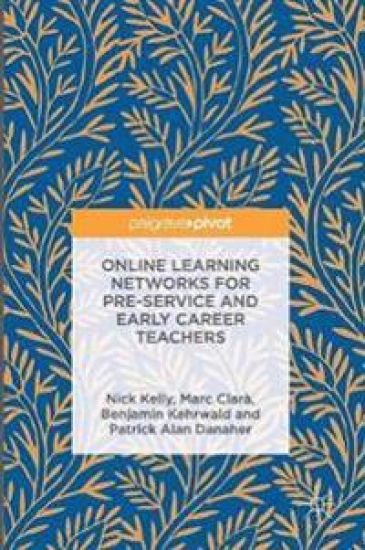
How can we improve support for teachers as they negotiate the pathways into the profession? This books highlights how strong networks of connections with other teachers and with resources have been shown to make a big difference. Online learning networks are one way to help pre-service and early career teachers to foster these connections and the greater community of teachers has an interest in helping new teachers to enter the profession. New technologies have allowed teachers to be connected anywhere, anytime; this book discusses principles for the design and implementation of learning networks that can use this connectivity to improve support for beginning teachers. It addresses foundational principles of types of teacher communities (online and offline), types of knowledge relevant to beginning teachers, the idea of presence within a network and methodologies for studying and nurturing communities of teachers, providing recent examples of each.
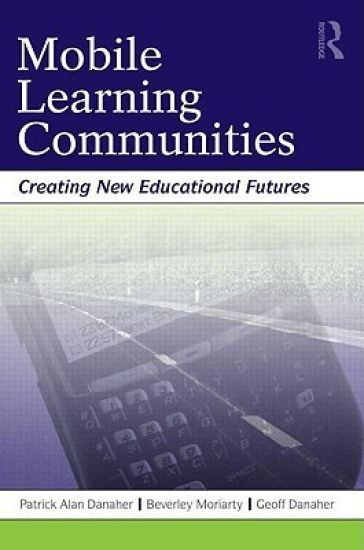
Mobile Learning Communities explores the diverse ways in which traveling groups experience learning ‘on the run’. This book provides empirical evidence that draws on the authors’ 17 years of continuing research with international occupational Travelers. It engages with themes such as workplace learning, globalization, multiliteracies, and emerging technologies which impinge on the ways mobile groups make sense of themselves as learning communities. International in focus, this book deals with an issue of increasing global significance and shows the complexities of the lives and learning experiences of such mobile cultures and their strategies for earning, learning, and living, thus challenging simplistic and stereotypical images of traveling groups still found in mainstream media and popular culture.Mobile Learning Communities brings together for the first time mobilities and learning communities into a single and comprehensive focus. It provides a detailed analysis of how mobile groups position themselves and how they are positioned by others. This text will appeal to scholars in the field of distance education and educational technology and to researchers in education, cultural studies, and sociology. It will also be of interest to educational instructors, policy-makers, and administrators, as well as teacher educators and pre-service teachers. It paints a vivid picture of the experience of mobility through the words of the mobile learners themselves, but also critiques existing notions of learning and suggests ways of creating new educational futures for all learners and educators.
Mobile Learning Communities explores the diverse ways in which traveling groups experience learning ‘on the run’. This book provides empirical evidence that draws on the authors’ 17 years of continuing research with international occupational Travelers. It engages with themes such as workplace learning, globalization, multiliteracies, and emerging technologies which impinge on the ways mobile groups make sense of themselves as learning communities. International in focus, this book deals with an issue of increasing global significance and shows the complexities of the lives and learning experiences of such mobile cultures and their strategies for earning, learning, and living, thus challenging simplistic and stereotypical images of traveling groups still found in mainstream media and popular culture.Mobile Learning Communities brings together for the first time mobilities and learning communities into a single and comprehensive focus. It provides a detailed analysis of how mobile groups position themselves and how they are positioned by others. This text will appeal to scholars in the field of distance education and educational technology and to researchers in education, cultural studies, and sociology. It will also be of interest to educational instructors, policy-makers, and administrators, as well as teacher educators and pre-service teachers. It paints a vivid picture of the experience of mobility through the words of the mobile learners themselves, but also critiques existing notions of learning and suggests ways of creating new educational futures for all learners and educators.