Kirjojen hintavertailu. Mukana 12 390 323 kirjaa ja 12 kauppaa.

Kirjailija

Patrick Boucheron

Kirjat ja teokset yhdessä paikassa: 8 kirjaa, julkaisuja vuosilta 2018-2025, suosituimpien joukossa The Power of Images. Vertaile teosten hintoja ja tarkista saatavuus suomalaisista kirjakaupoista.

8 kirjaa

Kirjojen julkaisuhaarukka 2018-2025.

Political Fictions

Political Fictions

Patrick Boucheron

OTHER PRESS LLC
2025
pokkari
An acclaimed historian illuminates today's political situation by examining the relationship between governing and storytelling, from the Middle Ages to the "post-truth" present, in these engaging essays. In the wake of Donald Trump's election, renowned medievalist Patrick Boucheron delivered a powerful, probing series of lectures on "political fictions" in the context of rising authoritarianism and populism. Adapted here for the first time in English, they offer key insights into how we arrived at our current global moment and what history can teach us about moving forward. Long before Trump parlayed his reality TV character into a presidential victory with the MAGA movement, aspiring rulers have used the art of storytelling and the power of fable to control others. Discussing seminal works from Machiavelli's The Prince and Hobbes's Leviathan to Orwell's 1984 and the writings of Nazi jurist Carl Schmitt, Boucheron explores the profound interconnectedness of political theory and fiction, and the tension between politics and the political.
Trace And Aura

Trace And Aura

Patrick Boucheron; Willard Wood; Lara Vergnaud

OTHER PRESS LLC
2022
sidottu
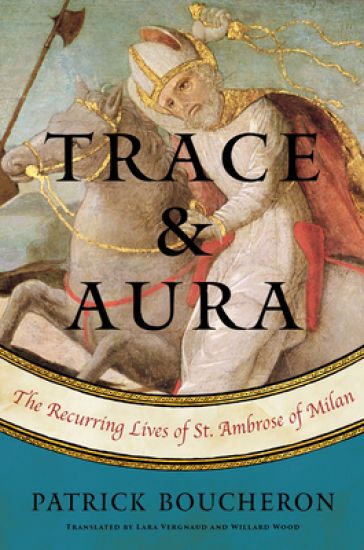
From one of the foremost medievalists of our time, a groundbreaking work on history and memory that goes well beyond the life of this influential saint. Elected bishop of Milan by popular acclaim in 374, Ambrose went on to become one of the four original Doctors of the Church. There is much more to this book, however, than the compelling story of the bishop who baptized Saint Augustine in the fourth century. Trace and Aura investigates how a crucial figure from the past can return in different guises over and over again, in a city that he inspired and shaped through his beliefs and political convictions. His recurring lives actually span more than ten centuries, from the fourth to the fourteenth. In the process of following Ambrose's various reincarnations, Patrick Boucheron draws compelling connections between religion, government, tyranny, the Italian commune, Milan's yearning for autonomy, and many other aspects of this fascinating relationship between a city and its spiritual mentor who strangely seems to resist being manipulated by the needs and ambitions of those in power.
Machiavelli

Machiavelli

Patrick Boucheron

Pushkin Press
2020
nidottu
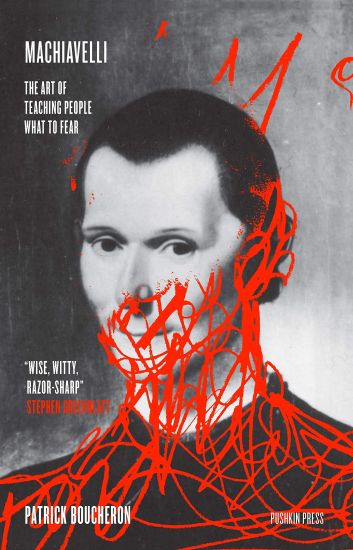
We turn to Machiavelli at every tumultuous period in history - he is the one who knows how to philosophize in dark times. In fact, since his death in 1527, we have never stopped reading him, always to pull ourselves out of a torpor. But what do we really know about this man? Is there more to his work than that term for political evil, Machiavellianism? It was Machiavelli's luck to be disappointed by every statesman he encountered - that was why he had to create his paper Prince. Today, the question that remains is not why he wrote, but for whom - for princes or for those who want to resist them? What is the art of governing? Is it to take power, or to keep it? In this timely book, Patrick Boucheron undoes many of our assumptions about Machiavelli, showing how his rich, complex thought is key to understanding his time, and may be crucial to interrogating our own.
Machiavelli

Machiavelli

Patrick Boucheron

Other Press LLC
2020
nidottu
In a series of poignant vignettes, a preeminent historian makes a compelling case for Machiavelli as an unjustly maligned figure with valuable political insights that resonate as strongly today as they did in his time. Whenever a tempestuous period in history begins, Machiavelli is summoned, because he is known as one for philosophizing in dark times. In fact, since his death in 1527, we have never ceased to read him to pull ourselves out of torpors. But what do we really know about this man apart from the term invented by his detractors to refer to that political evil, Machiavellianism? It was Machiavelli's luck to be disappointed by every statesman he encountered throughout his life--that was why he had to write The Prince. If the book endeavors to dissociate political action from common morality, the question still remains today, not why, but for whom Machiavelli wrote. For princes, or for those who want to resist them? Is the art of governing to take power or to keep it? And what is "the people?" Can they govern themselves? Beyond cynical advice for the powerful, Machiavelli meditates profoundly on the idea of popular sovereignty, because the people know best who oppresses them. With verve and a delightful erudition, Patrick Boucheron sheds light on the life and works of this unclassifiable visionary, illustrating how we can continue to use him as a guide in times of crisis.
The Power of Images

The Power of Images

Patrick Boucheron

Polity Press
2018
sidottu
Where can the danger be lurking? Two soldiers are huddled together, one gazing up at the sky, the other darting a sideward glance. They derive a tacit reassurance from their weapons, but they are both in their different ways alone and scared. They were painted by Ambrogio Lorenzetti in the Palazzo Pubblico in Siena, and they seem symptomatic of a state of emergency: the year was 1338, and the spectre of the signoria, of rule by one man, was abroad in the city, undermining the very idea of the common good. In this book, distinguished historian Patrick Boucheron uncovers the rich social and political dimensions of the iconic ‘Fresco of Good Government’. He guides the reader through Lorenzetti’s divided city, where peaceful prosperity and leisure sit alongside the ever-present threats of violence, war and despotism. Lorenzetti’s painting reminds us crucially that good government is not founded on the wisdom of principled or virtuous rulers. Rather, good government lies in the visible and tangible effects it has on the lives of its citizens. By subjecting it to scrutiny, we may, at least for a while, be able to hold at bay the dark seductions of tyranny. From fourteenth-century Siena to the present, The Power of Images shows the latent dangers to democracy when our perceptions of the common good are distorted and undermined. It will appeal to students and scholars in art history, politics and the humanities, as well as to anyone interested in the nature of power.
The Power of Images

The Power of Images

Patrick Boucheron

Polity Press
2018
nidottu
Where can the danger be lurking? Two soldiers are huddled together, one gazing up at the sky, the other darting a sideward glance. They derive a tacit reassurance from their weapons, but they are both in their different ways alone and scared. They were painted by Ambrogio Lorenzetti in the Palazzo Pubblico in Siena, and they seem symptomatic of a state of emergency: the year was 1338, and the spectre of the signoria, of rule by one man, was abroad in the city, undermining the very idea of the common good. In this book, distinguished historian Patrick Boucheron uncovers the rich social and political dimensions of the iconic ‘Fresco of Good Government’. He guides the reader through Lorenzetti’s divided city, where peaceful prosperity and leisure sit alongside the ever-present threats of violence, war and despotism. Lorenzetti’s painting reminds us crucially that good government is not founded on the wisdom of principled or virtuous rulers. Rather, good government lies in the visible and tangible effects it has on the lives of its citizens. By subjecting it to scrutiny, we may, at least for a while, be able to hold at bay the dark seductions of tyranny. From fourteenth-century Siena to the present, The Power of Images shows the latent dangers to democracy when our perceptions of the common good are distorted and undermined. It will appeal to students and scholars in art history, politics and the humanities, as well as to anyone interested in the nature of power.