

Kirjailija
Patrick Butler
Kirjat ja teokset yhdessä paikassa: 11 kirjaa, julkaisuja vuosilta 2013-2027, suosituimpien joukossa The Assassins. Vertaile teosten hintoja ja tarkista saatavuus suomalaisista kirjakaupoista.
11 kirjaa
Kirjojen julkaisuhaarukka 2013-2027.
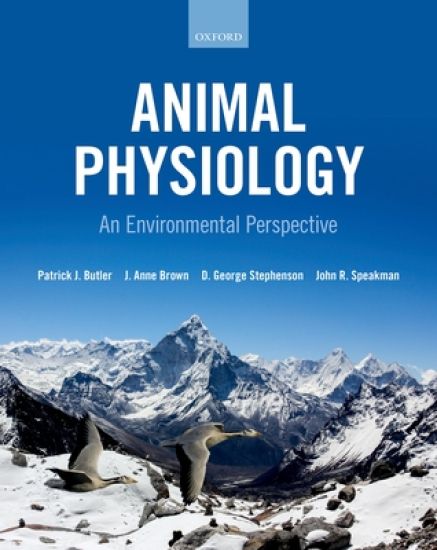
Animal Physiology: an environmental perspective
Patrick Butler; Anne Brown; George Stephenson; John Speakman
Oxford University Press
2021
nidottu
Wild animals survive in a variety of complex environments; they are exposed to predictable and unpredictable changes in their particular environment on a daily or seasonal basis. However, we live in a time when almost all natural environments are undergoing relatively rapid change, and many of these changes, such as the pollution of air and water, removal of natural food sources, environment fragmentation, and climate change, are the result of human activity. Animal Physiology: an environmental perspective shows how an understanding of the physiology of animals in their natural habitats helps us to understand not only how and why animals evolved the way they did, but how we can act to protect at least some of them from the extreme effects of the changes affecting their environments. Part One sets the foundation for the topics covered in the remainder of the book by introducing a range of fundamental processes that are essential to life. It considers the diversity of habitats on Earth in which animals live, and examines animal groups and their evolutionary relationships. It then explores the different feeding strategies used by animals to obtain the energy they require to carry out all the essential functions of life, and how animals convert the chemical energy in food molecules into the energy they need to power all body functions. Finally, it explores the general properties of animal cells, and how animals maintain a suitable internal environment in which their cells are protected from external influences. We then examine those fundamental principles governing the main exchanges between the cells within animals, and between an animal and its environment. Parts two to four of the book explore how different organ systems - respiratory and circulatory systems, excretory organs and endocrine systems - enable animals to interact with their environment, and how environmental temperature profoundly affects the physiology of animals. Part five considers how the sensory and nervous systems provide animals with information on their internal as well as their external environment, and how they, together with the endocrine system, are involved in the control and co-ordination of muscles, reproduction, salt and water balance, and the cardio-respiratory systems. Digital formats and resources Animal Physiology: an environmental perspective is supported by online resources and is available for students and institutions to purchase in a variety of formats. The e-book offers a mobile experience and convenient access along with functionality tools, navigation features and links that offer extra learning support: www.oxfordtextbooks.co.uk/ebooks The book's online resources include: For students: - Original articles: a list of original articles consulted during the writing of each chapter so that you can explore the original research for yourself. - Additional case studies and experimental approach panels to augment those in the printed book. - Answers to numerical questions: full solutions to numerical questions so that you can verify your working. For registered adopters of the text: - Digital image library: Includes electronic files in JPG format of every illustration, photo, graph and table from the text
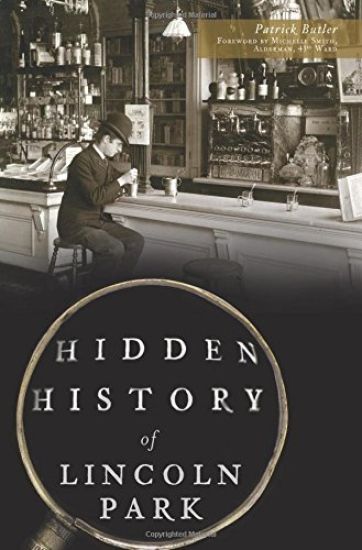
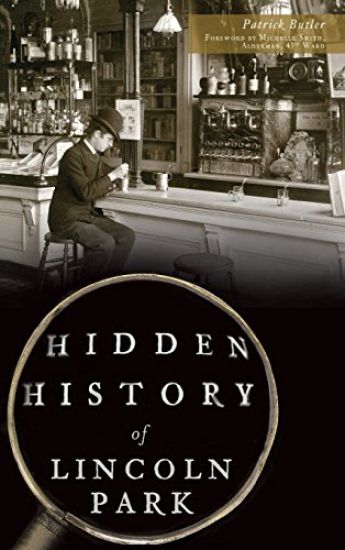
Before Lincoln Park cemented its trendy reputation, plenty of odd and unruly history managed to settle into its foundation. A Viking ship, mob henchmen and ladies of the evening all took up residence in the same part of town where Dwight L. Moody went from selling soles to saving souls. Thanks to a Confederate ferryboat crewman, many of Lincoln's personal effects belong to the neighborhood named after him. Patrick Butler uncovers Lincoln Park's forgotten contributions to Chicago's heritage, from the Pleasure Wheel on Navy Pier to the city's cycling craze.
Key Case Law Rules for Government Contract Formation
Patrick Butler
Management Concepts, Inc
2014
sidottu
Go Beyond the FAR! The guidance contained in the almost 2000 pages of the Federal Acquisition Regulation and the various agency supplements are just a part of the resources government acquisition professionals need to do their jobs effectively. Accessing and understanding case law is equally important to a thorough understanding of government contracting. Legal decisions explain the Government Accountability Office’s and the courts’ views on how procurement statutes and regulations apply in a wide range of situations. Case law also gives potential bid protesters and agencies a way to gauge the likely outcome of a protest. Until now, it has been difficult to find and understand the legal decisions that could be relevant to a particular situation. Key Case Law Rules for Government Contract Formation changes that by organizing and explaining the most important protest grounds in a readily accessible and comprehensible way. With an emphasis on more recent cases, the book is organized around the key protest grounds, such as pricing issues, allegations that the government wrongfully prevented competition, or improper sealed-bidding procedures. Bridging the gap of understanding between the legal and the contracting communities, this book is a much-needed addition to the essential resources for acquisition professionals.
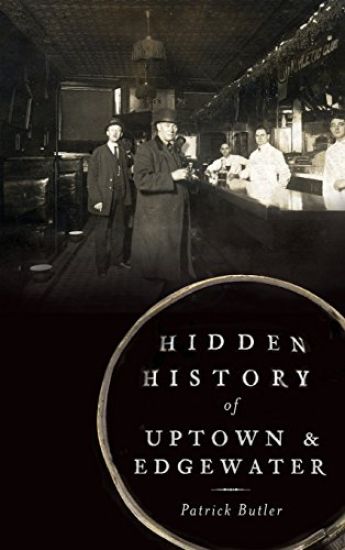
If there's any place in Chicago that's been all things to all men, it has to be the corner of the city that is occupied by Edgewater and Uptown. Babe Ruth and Mahatma Gandhi found a place of refuge at the Edgewater Beach Hotel, but the locale has also been a sanctuary for Appalachian coal miners and Japanese Americans released from internment camps. Al Capone reportedly moved booze through a secret tunnel connecting the Green Mill and the Aragon Ballroom, Burglar Cops" moonlit out of the Summerdale police station and a "Kitchen Revolt" by some not-very-ordinary housewives sent once-invulnerable machine ward boss Marty Tuchow on his way to Club Fed. Ferret out the hidden history of Uptown and Edgewater with veteran beat reporter Patrick Butler in this curio shop of forgotten people and places.."
If any place in Chicago has been all things to all men, it has to be the corner of the city that is occupied by Edgewater and Uptown.Babe Ruth and Mahatma Gandhi found a place of refuge at the Edgewater Beach Hotel, but the locale has also been a sanctuary for Appalachian coal miners and Japanese Americans released from internment camps. Al Capone reportedly moved booze through a secret tunnel connecting the Green Mill and the Aragon Ballroom, Burglar Cops moonlit out of the Summerdale police station, and a Kitchen Revolt by some not-very-ordinary housewives sent once-invulnerable machine ward boss Marty Tuchow on his way to Club Fed. Ferret out the hidden history of Uptown and Edgewater with veteran beat reporter Patrick Butler in this curio shop of forgotten people and places..
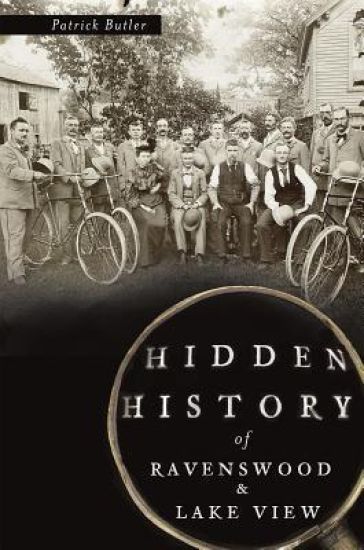
It's easy to get caught up in the hidden history of Ravenswood and Lake View, like the Harm's Park picnic that lasted fifty-four years or the political gimmickry of the Cowboy Mayor" of Chicago. Who can resist a double take over folk like the "Father of Ravenswood," who kept Chicago from falling to the Confederacy, or the "North Side's Benedict Arnold," who was sent to the electric chair during World War II? If you want to visit the days when the Cubs were the Spuds or debate whether Ravenswood is an actual neighborhood or just a state of mind, do it with longtime North Side journalist Patrick Butler in this curio shop of forgotten people and places."
Hidden History of Ravenswood and Lake View
Patrick Butler
History Press Library Editions
2013
sidottu
It's easy to get caught up in the hidden history of Ravenswood and Lake View, like the Harm's Park picnic that lasted fifty-four years or the political gimmickry of the Cowboy Mayor" of Chicago. Who can resist a double take over folk like the "Father of Ravenswood," who kept Chicago from falling to the Confederacy, or the "North Side's Benedict Arnold," who was sent to the electric chair during World War II? If you want to visit the days when the Cubs were the Spuds or debate whether Ravenswood is an actual neighborhood or just a state of mind, do it with longtime North Side journalist Patrick Butler in this curio shop of forgotten people and places."