Kirjojen hintavertailu. Mukana 12 327 213 kirjaa ja 12 kauppaa.

Kirjailija

Patrick Colm Hogan

Kirjat ja teokset yhdessä paikassa: 38 kirjaa, julkaisuja vuosilta 1990-2025, suosituimpien joukossa American Literature and American Identity. Vertaile teosten hintoja ja tarkista saatavuus suomalaisista kirjakaupoista.

38 kirjaa

Kirjojen julkaisuhaarukka 1990-2025.

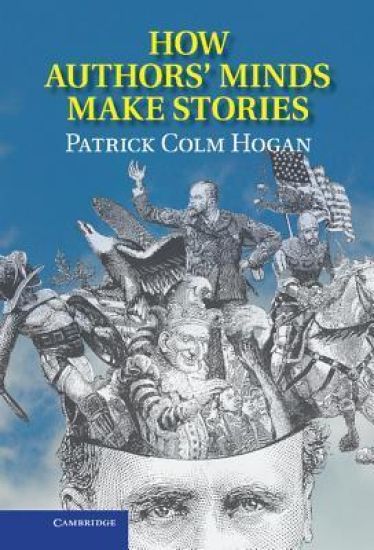
How Authors' Minds Make Stories

How Authors' Minds Make Stories

Patrick Colm Hogan

Cambridge University Press
2014
pokkari
This book explores how the creations of great authors result from the same operations as our everyday counterfactual and hypothetical imaginations, which cognitive scientists refer to as 'simulations'. Drawing on detailed literary analyses as well as recent research in neuroscience and related fields, Patrick Colm Hogan develops a rigorous theory of the principles governing simulation that goes beyond any existing framework. He examines the functions and mechanisms of narrative imagination, with particular attention to the role of theory of mind, and relates this analysis to narrative universals. In the course of this theoretical discussion, Hogan explores works by Austen, Faulkner, Shakespeare, Racine, Brecht, Kafka and Calvino. He pays particular attention to the principles and parameters defining an author's narrative idiolect, examining the cognitive and emotional continuities that span an individual author's body of work.
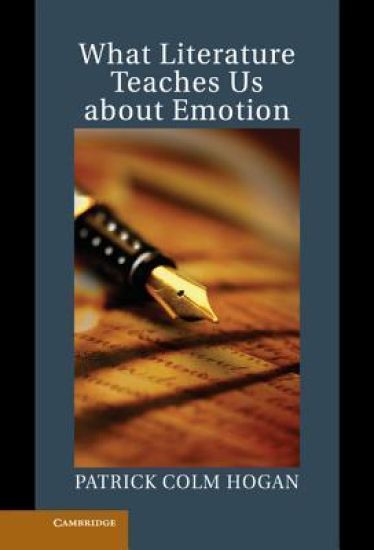
What Literature Teaches Us about Emotion

What Literature Teaches Us about Emotion

Patrick Colm Hogan

Cambridge University Press
2014
nidottu
Literature provides us with otherwise unavailable insights into the ways emotions are produced, experienced and enacted in human social life. It is particularly valuable because it deepens our comprehension of the mutual relations between emotional response and ethical judgment. These are the central claims of Hogan's study, which carefully examines a range of highly esteemed literary works in the context of current neurobiological, psychological, sociological and other empirical research. In this work, he explains the value of literary study for a cognitive science of emotion and outlines the emotional organization of the human mind. He explores the emotions of romantic love, grief, mirth, guilt, shame, jealousy, attachment, compassion and pity - in each case drawing on one work by Shakespeare and one or more works by writers from different historical periods or different cultural backgrounds, such as the eleventh-century Chinese poet Li Ch'ing-Chao and the contemporary Nigerian playwright Wole Soyinka.
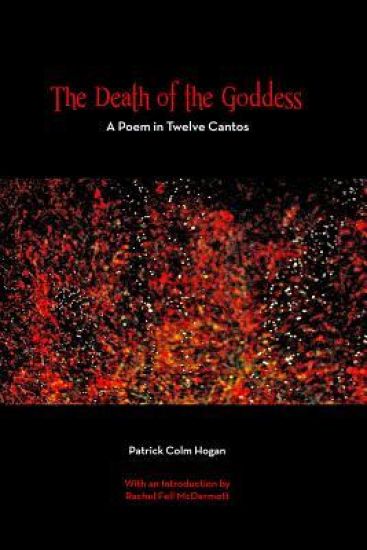
The Death of the Goddess – A Poem in Twelve Cantos
THE DEATH OF THE GODDESS is an epic, narrative poem that is a moving account of affection, personal loss, and grief. Inspired by Buddhism, Indic thought and Hogan's reading of the BHAGAVAD GITA, the central figures of THE DEATH OF THE GODDESS is two lovers who refuse to accept unjust social hierarchies and suffer separation and death for that choice. In this groundbreaking narrative, Patrick Colm Hogan sets out to re-synthesize ancient Indian philosophy and myth, with a beauty and literary feeling (called rasa in Sanskrit) that are the central aspects of this poem. THE DEATH OF THE GODDESS is an excellent literary achievement to be read by serious poetry lovers and students of mythology or epic literature alike.
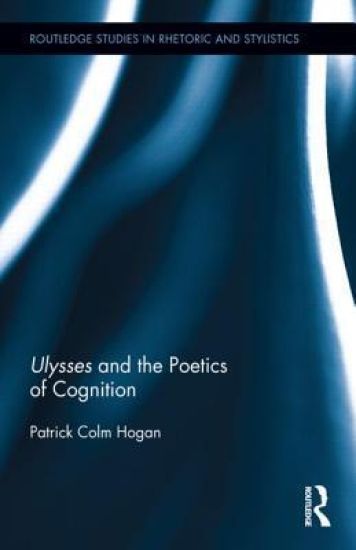
Ulysses and the Poetics of Cognition

Ulysses and the Poetics of Cognition

Patrick Colm Hogan

Routledge
2013
sidottu
Given Ulysses’ perhaps unparalleled attention to the operations of the human mind, it is unsurprising that critics have explored the work’s psychology. Nonetheless, there has been very little research that draws on recent cognitive science to examine thought and emotion in this novel. Hogan sets out to expand our understanding of Ulysses, as well as our theoretical comprehension of narrative—and even our views of human cognition. He revises the main narratological accounts of the novel, clarifying the complex nature of narration and style. He extends his cognitive study to encompass the anti-colonial and gender concerns that are so obviously important to Joyce’s work. Finally, through a combination of broad overviews and detailed textual analyses, Hogan seeks to make this notoriously difficult book more accessible to non-specialists.
How Authors' Minds Make Stories

How Authors' Minds Make Stories

Patrick Colm Hogan

Cambridge University Press
2013
sidottu
This book explores how the creations of great authors result from the same operations as our everyday counterfactual and hypothetical imaginations, which cognitive scientists refer to as 'simulations'. Drawing on detailed literary analyses as well as recent research in neuroscience and related fields, Patrick Colm Hogan develops a rigorous theory of the principles governing simulation that goes beyond any existing framework. He examines the functions and mechanisms of narrative imagination, with particular attention to the role of theory of mind, and relates this analysis to narrative universals. In the course of this theoretical discussion, Hogan explores works by Austen, Faulkner, Shakespeare, Racine, Brecht, Kafka and Calvino. He pays particular attention to the principles and parameters defining an author's narrative idiolect, examining the cognitive and emotional continuities that span an individual author's body of work.
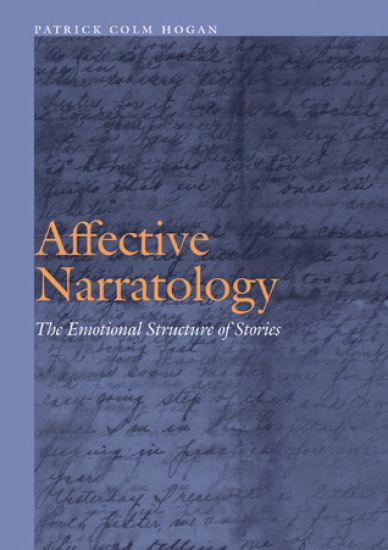
Affective Narratology

Affective Narratology

Patrick Colm Hogan

University of Nebraska Press
2011
sidottu
Stories engage our emotions. We've known this at least since the days of Plato and Aristotle. What this book helps us to understand now is how our own emotions fundamentally organize and orient stories. In light of recent cognitive research and wide reading in different narrative traditions, Patrick Colm Hogan argues that the structure of stories is a systematic product of human emotion systems. Examining the ways in which incidents, events, episodes, plots, and genres are a function of emotional processes, he demonstrates that emotion systems are absolutely crucial for understanding stories. Hogan also makes a case for the potentially integral role that stories play in the development of our emotional lives. He provides an in-depth account of the function of emotion within story—in widespread genres with romantic, heroic, and sacrificial structures, and more limited genres treating parent/child separation, sexual pursuit, criminality, and revenge—as these appear in a variety of cross-cultural traditions. In the course of the book Hogan develops interpretations of works ranging from Tolstoy's Anna Karenina to African oral epics, from Sanskrit comedy to Shakespearean tragedy. Integrating the latest research in affective science with narratology, this book provides a powerful explanatory account of narrative organization.
Tagore's Best Short Stories

Tagore's Best Short Stories

Patrick Colm Hogan

FRONTPAGE PUBLICATIONS
2011
sidottu
In commemoration of Rabindranath Tagore's [1861-1941] 150 years anniversary, this new collection of English translation of his selected short stories opens up the possibility of an English reading global audience discovering relevance in Tagore's creations more than a century after they were penned in India.
What Literature Teaches Us about Emotion

What Literature Teaches Us about Emotion

Patrick Colm Hogan

Cambridge University Press
2011
sidottu
Literature provides us with otherwise unavailable insights into the ways emotions are produced, experienced and enacted in human social life. It is particularly valuable because it deepens our comprehension of the mutual relations between emotional response and ethical judgment. These are the central claims of Hogan's study, which carefully examines a range of highly esteemed literary works in the context of current neurobiological, psychological, sociological and other empirical research. In this work, he explains the value of literary study for a cognitive science of emotion and outlines the emotional organization of the human mind. He explores the emotions of romantic love, grief, mirth, guilt, shame, jealousy, attachment, compassion and pity - in each case drawing on one work by Shakespeare and one or more works by writers from different historical periods or different cultural backgrounds, such as the eleventh-century Chinese poet Li Ch'ing-Chao and the contemporary Nigerian playwright Wole Soyinka.
The Mind and its Stories

The Mind and its Stories

Patrick Colm Hogan

Cambridge University Press
2009
pokkari
There are profound, extensive, and surprising universals in literature, which are bound up with universals in emotion. Hogan maintains that debates over the cultural specificity of emotion are misdirected because they have ignored a vast body of data that bear directly on the way different cultures imagine and experience emotion - literature. This is the first empirically and cognitively based discussion of narrative universals. Professor Hogan argues that, to a remarkable degree, the stories people admire in different cultures follow a limited number of patterns and that these patterns are determined by cross-culturally constant ideas about emotion. In formulating his argument, Professor Hogan draws on his extensive reading in world literature, experimental research treating emotion and emotion concepts, and methodological principles from the contemporary linguistics and the philosophy of science. He concludes with a discussion of the relations among narrative, emotion concepts, and the biological and social components of emotion.
On Interpretation

On Interpretation

Patrick Colm Hogan

University of Georgia Press
2008
pokkari
On Interpretation challenges a number of entrenched assumptions about being and knowing that have long kept theorists debating at cross purposes. Patrick Colm Hogan first sets forth a theory of meaning and interpretation and then develops it in the context of the practices and goals of law, psychoanalysis, and literary criticism. In his preface, Hogan discusses developments in semantics and related fields that have occurred over the decade since the book first appeared.
Understanding Indian Movies

Understanding Indian Movies

Patrick Colm Hogan

University of Texas Press
2008
pokkari
Indian movies are among the most popular in the world. However, despite increased availability and study, these films remain misunderstood and underappreciated in much of the English-speaking world, in part for cultural reasons. In this book, Patrick Colm Hogan sets out through close analysis and explication of culturally particular information about Indian history, Hindu metaphysics, Islamic spirituality, Sanskrit aesthetics, and other Indian traditions to provide necessary cultural contexts for understanding Indian films. Hogan analyzes eleven important films, using them as the focus to explore the topics of plot, theme, emotion, sound, and visual style in Indian cinema. These films draw on a wide range of South Asian cultural traditions and are representative of the greater whole of Indian cinema. By learning to interpret these examples with the tools Hogan provides, the reader will be able to take these skills and apply them to other Indian films. But this study is not simply culturalist. Hogan also takes up key principles from cognitive neuroscience to illustrate that all cultures share perceptual, cognitive, and emotional elements that, when properly interpreted, can help to bridge gaps between seemingly disparate societies. Hogan locates the specificity of Indian culture in relation to human universals, and illustrates this cultural-cognitive synthesis through his detailed interpretations of these films. This book will help both scholars and general readers to better understand and appreciate Indian cinema.
Empire and Poetic Voice

Empire and Poetic Voice

Patrick Colm Hogan

State University of New York Press
2006
pokkari
Explores the relation of post-colonization authors to literary traditions.In Empire and Poetic Voice Patrick Colm Hogan draws on a broad and detailed knowledge of Indian, African, and European literary cultures to explore the way colonized writers respond to the subtle and contradictory pressures of both metropolitan and indigenous traditions. He examines the work of two influential theorists of identity, Judith Butler and Homi Bhabha, and presents a revised evaluation of the important Nigerian critics, Chinweizu, Jemie, and Madubuike. In the process, he presents a novel theory of literary identity based equally on recent work in cognitive science and culture studies. This theory argues that literary and cultural traditions, like languages, are entirely personal and only appear to be a matter of groups due to our assertions of categorical identity, which are ultimately both false and dangerous.
Cognitive Science, Literature, and the Arts
The rise cognitive science has been one of the most important intellectual developments of recent years, stimulating new approaches to everything from philosophy to film studies. This is an introduction to what cognitive science has to offer the humanities and particularly the study of literature. Hogan suggests how the human brain works and makes us feel in response to literature. He walks the reader through all of the major theories of cognitive science that are important for the humanities in order to understand the production and reception of literature.
Cognitive Science, Literature, and the Arts
The rise cognitive science has been one of the most important intellectual developments of recent years, stimulating new approaches to everything from philosophy to film studies. This is an introduction to what cognitive science has to offer the humanities and particularly the study of literature. Hogan suggests how the human brain works and makes us feel in response to literature. He walks the reader through all of the major theories of cognitive science that are important for the humanities in order to understand the production and reception of literature.
The Culture of Conformism

The Culture of Conformism

Patrick Colm Hogan

Duke University Press
2001
pokkari
“[Hogan’s] goal is not merely to explain but to provide tools of understanding that will be of practical value to those who struggle for justice and freedom. Drawing from an impressive array of sources, his valuable study advances both ends considerably, no mean accomplishment.”-Noam ChomskyIn this wide-ranging and informative work, Patrick Colm Hogan draws on cognitive science, psychoanalysis, and social psychology to explore the cultural and psychological components of social consent. Focusing in particular on Americans’ acquiescence to a system that underpays and underrepresents the vast majority of the population, Hogan moves beyond typical studies of this phenomenon by stressing more than its political and economic dimensions.With new insights into particularly insideous forms of consent such as those manifest in racism, sexism, and homophobia, The Culture of Conformism considers the role of emotion as it works in conjunction with belief and with the formation of group identity. Arguing that coercion is far more pervasive in democratic societies than is commonly recognized, Hogan discusses the subtle ways in which economic and social pressures operate to complement the more obviously violent forces of the police and military. Addressing issues of narcissism, self-esteem, and empathy, he also explains the concept of “rational” conformity-that is, the degree to which our social consent is based on self-interest-and explores the cognitive factors that produce and sustain social ideology.Social activists, economic theorists, social psychologists, and political scientists will be intrigued and informed by this book.
The Culture of Conformism

The Culture of Conformism

Patrick Colm Hogan

Duke University Press
2001
sidottu
“[Hogan’s] goal is not merely to explain but to provide tools of understanding that will be of practical value to those who struggle for justice and freedom. Drawing from an impressive array of sources, his valuable study advances both ends considerably, no mean accomplishment.”-Noam ChomskyIn this wide-ranging and informative work, Patrick Colm Hogan draws on cognitive science, psychoanalysis, and social psychology to explore the cultural and psychological components of social consent. Focusing in particular on Americans’ acquiescence to a system that underpays and underrepresents the vast majority of the population, Hogan moves beyond typical studies of this phenomenon by stressing more than its political and economic dimensions.With new insights into particularly insideous forms of consent such as those manifest in racism, sexism, and homophobia, The Culture of Conformism considers the role of emotion as it works in conjunction with belief and with the formation of group identity. Arguing that coercion is far more pervasive in democratic societies than is commonly recognized, Hogan discusses the subtle ways in which economic and social pressures operate to complement the more obviously violent forces of the police and military. Addressing issues of narcissism, self-esteem, and empathy, he also explains the concept of “rational” conformity-that is, the degree to which our social consent is based on self-interest-and explores the cognitive factors that produce and sustain social ideology.Social activists, economic theorists, social psychologists, and political scientists will be intrigued and informed by this book.
The Politics of Interpretation

The Politics of Interpretation

Patrick Colm Hogan

Oxford University Press Inc
1990
sidottu
While affirming the profound importance of political analysis, Hogan is critical of prevalent doctrines. Specifically, Hogan examines and criticizes several influential post-structuralist positions, advocating logical analysis and empirical enquiry, guided by Kantian ethics, in their stead.