Kirjailija
Patrick Elliott
Kirjat ja teokset yhdessä paikassa: 15 kirjaa, julkaisuja vuosilta 2005-2024, suosituimpien joukossa Amazing World of M.C. Escher. Vertaile teosten hintoja ja tarkista saatavuus suomalaisista kirjakaupoista.
15 kirjaa
Kirjojen julkaisuhaarukka 2005-2024.

Grayson Perry
Grayson Perry; Victoria Coren Mitchell; Patrick Elliott; Tor Scott
NATIONAL GALLERIES OF SCOTLAND
2023
nidottu
"The Turner Prize winner leads a visual tour through his life in six artworks - from college days to knighthood." — Telegraph Grayson Perry is one of Britain’s most celebrated contemporary artists and cultural figures. This book, which includes first sight of new and previously unpublished works, is published to accompany the largest-ever retrospective of Perry’s art. It offers a vibrant insight into his life and work, from his youth in rural Essex to sell-out stage shows at the Royal Albert Hall. Grayson Perry vividly reflects on his art, life and career, remembering the sources of inspiration and influences along the way. Victoria Coren Mitchell’s thought-provoking contribution considers the role of humour in Perry’s art, highlighting the often-underestimated effort involved in being at once a serious artist and a lovable character. Patrick Elliott provides an illuminating biographical essay of the artist. The reader is also given a fascinating glimpse into the technique and process behind Perry’s prints, pots and tapestries. Showcasing 75 exhibited works, the book covers the full range and breadth of his astonishing career.
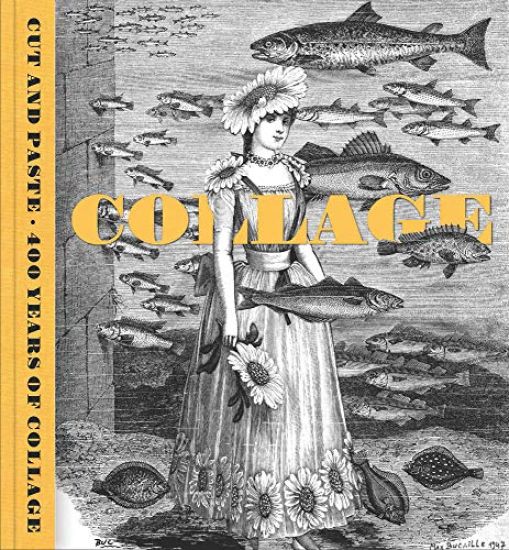
Cut and Paste
Patrick Elliott; Freya Gowrley; Yuval Etgar
National Galleries of Scotland
2022
nidottu
Collage is one of the most popular and pervasive of all art-forms, yet this is the first historical survey book ever published on the subject. Featuring over 200 works, ranging from the 1500s to the present day, it offers an entirely new approach. Hitherto, collage has been presented as a twentieth-century phenomenon, linked in particular to Pablo Picasso and Cubism in the years just before the First World War. In Cut and Paste: 400 Years of Collage, we trace its origins back to books and prints of the 1500s, through to the boom in popularity of scrapbooks and do-it-yourself collage during the Victorian period, and then through Cubism, Futurism, Dada and Surrealism. Collage became the technique of choice in the 1960s and 1970s for anti-establishment protest, and in the present day is used by millions of us through digital devices. The definition of collage employed here is a broad one, encompassing cut-and-pasted paper, photography, patchwork, film and digital technology and ranging from work by professionals to unknown makers, amateurs and children. Published to accompany an exhibition at the National Gallery of Scotland, June-October 2019.

In 1951, Joan Eardley visited the coastal fishing village of Catterline in north-east Scotland for the first time. Her visit sparked a fascination that would last the rest of her life. She made the village her home and found inspiration in the dramatic light and rapidly changing weather. The gentle landscapes and wild rolling seascapes she painted of Catterline in wind, snow, rain and sun are among her best-loved works. Unpublished archival material and interviews with many of those who knew her shed new light on Eardley’s life in Catterline. A vivid portrait is painted both of Eardley and of the village, showing the vital part Catterline played in her development as an artist. The story of her experiences on the wild Scottish coast is evocatively told and beautifully illustrated with some of her most remarkable drawings and paintings.
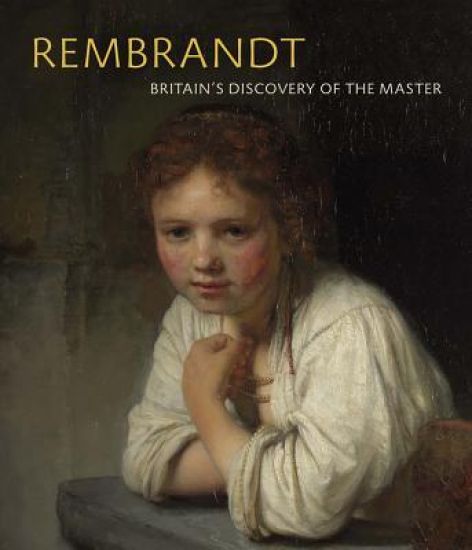
Rembrandt
Christian Tico Seifert; Peter Black; Stephanie S. Dickey; Patrick Elliott; Donato Esposito; M. J. Ripps; Jonathan Yarker
National Galleries of Scotland
2018
nidottu
This is the exceptionally rich story of Rembrandt’s fame and influence in Britain. No other nation has witnessed such a passionate – and sometimes eccentric – craziness for Rembrandt’s works. His imagery has become ubiquitous, making him one of the most recognised artists in history. In this book, the world’s leading experts reveal how the taste for Rembrandt’s paintings, drawings and prints evolved, growing into a mania that gripped collectors and art lovers across the country. This reached a fever pitch in the late 1700s, before the dawn of a new century ushered in a re-evaluation of Rembrandt’s reputation and opportunities for the wider public to see his masterpieces for themselves. The story of Rembrandt’s profound and inspirational impact on the British imagination is illustrated by over 130 lavish paintings and drawings by the master himself, as well as by some of Britain’s best-loved artists, including William Hogarth, James Abbott McNeill Whistler, Eduardo Paolozzi and John Bellany.

Raqib Shaw is one of the most extraordinary and sought-after artists working in the world today. Born in Calcutta in 1974 and raised in Kashmir, he came to London to study in 1998 and has lived there ever since. Inspired by a broad range of influences, including the old masters, Indian miniatures, Persian carpets and the Pre-Raphaelites, his paintings are infused with memories and longing for his homeland in Kashmir. His technique constitutes a completely unique kind of enamel painting. Spending months on preparatory drawings, tracings and photographic studies, he then transfers the composition onto prepared wooden panels, establishing an intricate design with acrylic liner, which leaves a slightly raised line. He adds the enamel paint using needle-fine syringes and a porcupine quill, with which he manoeuvres the paint. The finished works are intricate, magical and breathtaking in their colour and complexity. This book accompanies an exhibition of eight paintings by Raqib Shaw at the Scottish National Gallery of Modern Art, alongside two paintings which have long obsessed him and have influenced specific works: Sir Joseph Noel Paton's The Quarrel of Oberon and Titania, 1849 (National Gallery of Scotland) and Lucas Cranach's An Allegory of Melancholy, 1528 (private collection). The book includes the first full-length biographical study of the artist.
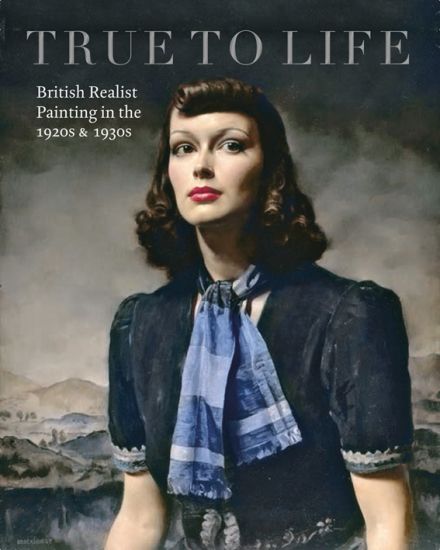
British realist art of the 1920s and 1930s is visually stunning - strong, seductive and demonstrating extraordinary technical skill. Despite this, it is often overshadowed by abstract art. This book presents the very first overview of British realist painting of the period, showcasing outstanding works from private and public collections across the UK. Of the forty artists featured in the show, many were major figures in the 1920s and 1930s but later passed out of fashion as abstraction and Pop Art became the dominant trends in the post-war years. In the last decade their work has re-emerged and interest in them has grown. Interwar realist art embraces a number of different styles, but is characterised by fine drawing, meticulous craftsmanship, a tendency towards classicism and an aversion to impressionism and visible brushwork. Artists such as Gerald Leslie Brockhurst, Meredith Frampton, James Cowie and Winifred Knights combine fastidious Old Master detail with 1920s modernity. Stanley Spencer spans various camps while Lucian Freud's early work can be seen as a realist coda which continued into the 1940s and beyond.Featuring many Scottish and women artists, this book promises a fascinating insight into this captivating period of British art. Exhibition to be held at the Scottish National Gallery of Modern Art, Edinburgh from 1 July to 29 October 2017.
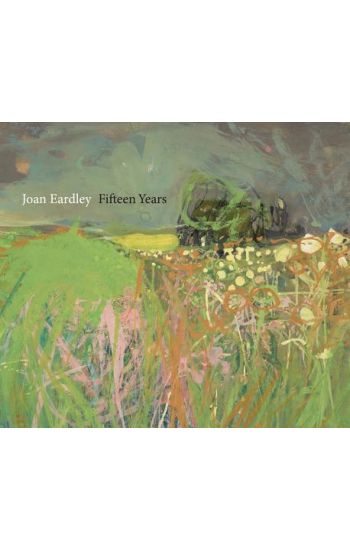
Joan Eardley (1921-1963) is one of Scotland's most admired artists. During a career that lasted barely fifteen years, she concentrated on two very distinct themes: children in the Townhead area of central Glasgow, and the fishing village of Catterline, just south of Aberdeen, with its leaden skies and wild sea. The contrast between this urban and rural subject matter is self-evident, but the two are not, at heart, so very different. Townhead and Catterline were home to tight-knit communities, living under extreme pressure: Townhead suffered from overcrowding and poverty, and Catterline from depopulation brought about by the declining fishing industry. Eardley was inspired by the humanity she found in both places. These two intertwining strands are the focus of this book, which looks in detail at Eardley's working processes. Her method can be traced from rough sketches and photographs through to pastel drawings and large oil paintings. Identifying many of Eardley's subjects and drawing on unpublished letters, archival records and interviews, the authors provide a new and remarkably detailed account of Eardley's life and art.
A Brief and Literal History of the World
Patrick Elliott
Createspace Independent Publishing Platform
2015
nidottu
Pull up a chair and sit quietly in the corner. Try not to draw attention to yourself. We all know gods, even the benign ones, react in anger if interrupted when holding court. Order a drink and relax while you are regaled with this satirical tale. Just imagine it, Jesus retelling how his father created the world. You have never heard this version before. Listen to his breathtaking story of addiction and redemption as he recounts the lost years of his life. Take this trip with him, and some friends you never knew he had. Witness it all as he recounts it all for the first time, in all of time. Patrick Elliott ordains you as a priest in the order of the Lord's Confessors. The offering? Exalted stories, denied by any official record, too wonderful to be true. They come encased in a faux-faux-leather tome, but only for a Brief and Literal History of the World.
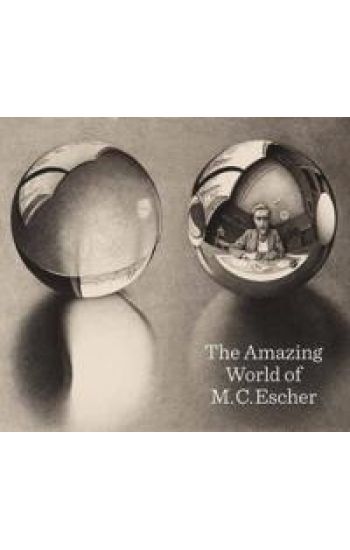
Amazing World of M.C. Escher
Micky Piller; Patrick Elliott; Frans Peterse
National Galleries of Scotland
2015
nidottu
The Dutch artist M.C. Escher (1898-1972) created some of the most celebrated and extraordinary images in twentieth-century art, yet he remains an elusive figure. In the 1960s, when his reputation sky-rocketed, he was championed on the one hand by leading mathematicians who admired his grasp of geometry, and on the other by hippies who claimed him as the godfather of psychedelic art. Rock stars and teenagers were equally amazed by Escher's ingenuity and imagination, yet the art world looked upon him - and still looks upon him - with reserved judgement; in short, his work is ripe for rediscovery and reappraisal. This catalogue accompanies a major exhibition - the largest ever held in the UK - of nearly 100 of Escher's greatest drawings and prints. Based on the world-renowned M.C. Escher collection at the Gemeentemuseum in The Hague, the Netherlands, it has been organised by the Scottish National Gallery of Modern Art in Edinburgh, and tours to the Dulwich Picture Gallery in London.

In empty places darkness lives; hidden in small towns citizens find themselves traversing tales that others know to be safely confined in storybooks. Mr. Edward opens bookstores in these hamlets, selling rare works and indoctrinating children into "The Program" for lessons in the art of writing. Despite his oddness there is something about the gentleman that demands enough respect and admiration from the locals and his prot g s for him to quietly go about his business. Thomas, one of Mr. Edward's most promising pupils, admires and perhaps even loves the old man who nurtures his burgeoning talent for writing and introduces him to Samantha, who will grow to be the love of his life. Sensing something wrong Thomas begins to wonder if the darkness is in him and not his mentor. Between the old shop owner and the love of his life, Thomas's story takes many twists that his loving mother does not approve of. Mr. Edward's motives would thrill the devil himself. Warily keeping his most promising pupil off balance, he mercilessly culls from "The Program" those too weak to serve his sinister ends. Finally only Thomas remains; finding that everything he loves is on the line as he faces the greatest challenge yet, a monster with a familiar face. Two masters of words and magic go head to head with the young author's soul up for grabs as he challenges one of the great truths of the universe; that no one can write their own happy ending.