Kirjojen hintavertailu. Mukana 12 595 353 kirjaa ja 12 kauppaa.

Kirjailija

Patrick Ffrench

Kirjat ja teokset yhdessä paikassa: 6 kirjaa, julkaisuja vuosilta 2007-2021, suosituimpien joukossa After Bataille. Vertaile teosten hintoja ja tarkista saatavuus suomalaisista kirjakaupoista.

6 kirjaa

Kirjojen julkaisuhaarukka 2007-2021.

After Bataille

After Bataille

Patrick Ffrench

Routledge
2020
nidottu
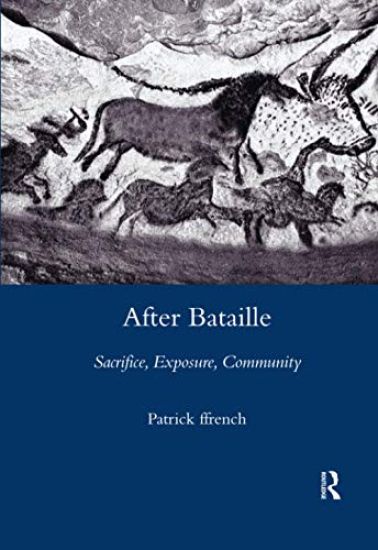
This book maps French intellectual history in the twentieth century through an interpretative engagement with the thought and legacy of Georges Bataille. It highlights the influence of Bataille and the movement of the concept of sacrifice through his work and in its wake.
Roland Barthes and Film

Roland Barthes and Film

Patrick ffrench

Bloomsbury Academic
2021
nidottu
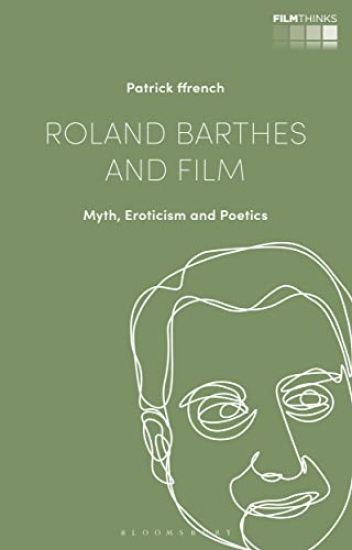
Suspicious of what he called the spectator’s “sticky” adherence to the screen, Roland Barthes had a cautious attitude towards cinema. Falling into a hypnotic trance, the philosopher warned, an audience can become susceptible to ideology and “myth”. In this book, Patrick Ffrench explains that although Barthes was wary of film, he engaged deeply with it. Barthes’ thought was, Ffrench argues, punctuated by the experience of watching films – and likewise his philosophy of photography, culture, semiotics, ethics and theatricality have been immensely important in film theory.Focusing particularly on the essays ‘The Third Meaning’ and ‘On Leaving the Cinema’ and the acclaimed book Camera Lucida, Ffrench examines Barthes’ writing and traces a persistent interest in films and directors, from Fellini and Antonioni, to Eisenstein, the Marx Brothers and Hitchcock. Ffrench explains that although Barthes found pleasure in “leaving the cinema” – disconnecting from its dangerous allure by a literal exit or by forcefully breaking the trance – he found value in returning to the screen anew. Barthes delved beneath the pull of progressing narrative and the moving image by becoming attentive to space and material aesthetics. This book presents an invaluable reassessment of one of the most original and subtle thinkers of the twentieth-century: a figure indebted to the movies.
Thinking Cinema with Proust

Thinking Cinema with Proust

Patrick Ffrench

Legenda
2020
pokkari
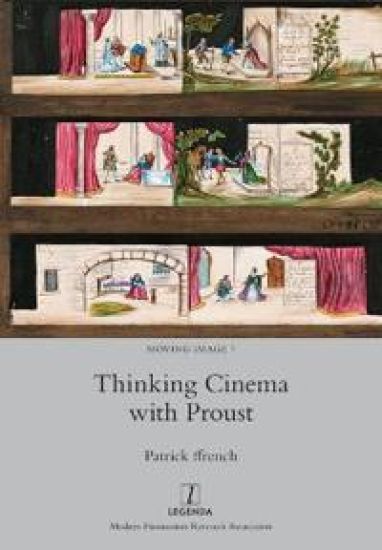
How can Proust's A la recherche du temps perdu prompt us to re-imagine the cinema? Although no-one goes to the cinema in the novel, and its narrator is critical of a 'merely' cinematographic account of reality, the proposition of Thinking Cinema with Proust is that the Recherche can provide a powerful catalyst for re-thinking the cinema, and that the 'structural absence' of cinema from Proust's novel is rich in implications. Drawing on a complex terrain of intersections and overlaps between the experience of the spectator and that of Proust's narrator and reader, the book is focused around a series of motifs - reverie, the camera obscura, the magic lantern, projection, gesture and 'screen memory' - which enable a fluid movement back and forth between Proust and film theory.Patrick ffrench is Professor of French at King's College London.
Roland Barthes and Film

Roland Barthes and Film

Patrick ffrench

Bloomsbury Academic
2019
sidottu
Suspicious of what he called the spectator’s “sticky” adherence to the screen, Roland Barthes had a cautious attitude towards cinema. Falling into a hypnotic trance, the philosopher warned, an audience can become susceptible to ideology and “myth”. In this book, Patrick Ffrench explains that although Barthes was wary of film, he engaged deeply with it. Barthes’ thought was, Ffrench argues, punctuated by the experience of watching films – and likewise his philosophy of photography, culture, semiotics, ethics and theatricality have been immensely important in film theory.Focusing particularly on the essays ‘The Third Meaning’ and ‘On Leaving the Cinema’ and the acclaimed book Camera Lucida, Ffrench examines Barthes’ writing and traces a persistent interest in films and directors, from Fellini and Antonioni, to Eisenstein, the Marx Brothers and Hitchcock. Ffrench explains that although Barthes found pleasure in “leaving the cinema” – disconnecting from its dangerous allure by a literal exit or by forcefully breaking the trance – he found value in returning to the screen anew. Barthes delved beneath the pull of progressing narrative and the moving image by becoming attentive to space and material aesthetics. This book presents an invaluable reassessment of one of the most original and subtle thinkers of the twentieth-century: a figure indebted to the movies.
Thinking Cinema with Proust

Thinking Cinema with Proust

Patrick Ffrench

Legenda
2018
sidottu
How can Proust's A la recherche du temps perdu prompt us to re-imagine the cinema? Although no-one goes to the cinema in the novel, and its narrator is critical of a 'merely' cinematographic account of reality, the proposition of Thinking Cinema with Proust is that the Recherche can provide a powerful catalyst for re-thinking the cinema, and that the 'structural absence' of cinema from Proust's novel is rich in implications. Drawing on a complex terrain of intersections and overlaps between the experience of the spectator and that of Proust's narrator and reader, the book is focused around a series of motifs - reverie, the camera obscura, the magic lantern, projection, gesture and 'screen memory' - which enable a fluid movement back and forth between Proust and film theory.Patrick ffrench is Professor of French at King's College London.
After Bataille

After Bataille

Patrick Ffrench

Maney Publishing
2007
sidottu
This book maps French intellectual history in the twentieth century through an interpretative engagement with the thought and legacy of Georges Bataille. It highlights the influence of Bataille and the movement of the concept of sacrifice through his work and in its wake.