Kirjojen hintavertailu. Mukana 12 595 353 kirjaa ja 12 kauppaa.

Kirjailija

Patrick J. McGrady

Kirjat ja teokset yhdessä paikassa: 3 kirjaa, julkaisuja vuosilta 2002-2008, suosituimpien joukossa The Poetry of Line. Vertaile teosten hintoja ja tarkista saatavuus suomalaisista kirjakaupoista.

3 kirjaa

Kirjojen julkaisuhaarukka 2002-2008.

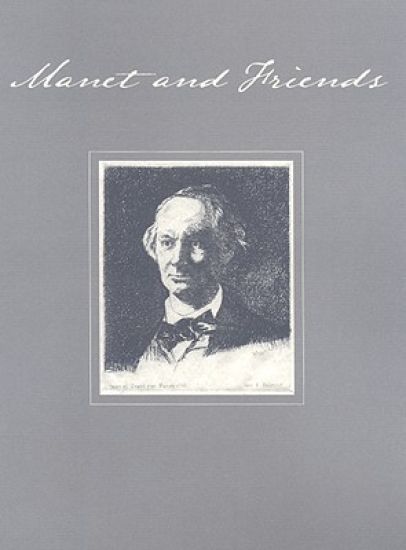
Manet and Friends

Manet and Friends

Patrick J. McGrady

Palmer Museum of Art
2008
pokkari
Manet and Friends accompanies an exhibition of the same name organized by the Palmer Museum of Art in memory of the Manet scholar and Penn State distinguished professor of art history George Mauner, who passed away in 2004. The catalogue focuses on the printmaking milieu of Paris during the 1860s and early 1870s, when Édouard Manet produced the majority of his graphic works. Seventeen of Manet’s etchings and lithographs are discussed, as are an equal number of prints by several of his colleagues and associates, including Félix Bracquemond, Alphonse Legros, and Marcellin Desboutin. Nancy Locke’s feature essay examines Manet’s prints in light of the French concept of les moeurs—customs, habits, or manners, but also ethics—about which mid-nineteenth-century writers and artists were deeply concerned. In discussing the confrontational manner in which Manet regularly posed his subjects, Locke speculates on how the viewer might have been expected to respond to such portrayals. The catalogue entries were written by Patrick McGrady.
Will Barnet

Will Barnet

Patrick J. McGrady

Palmer Museum of Art
2004
pokkari
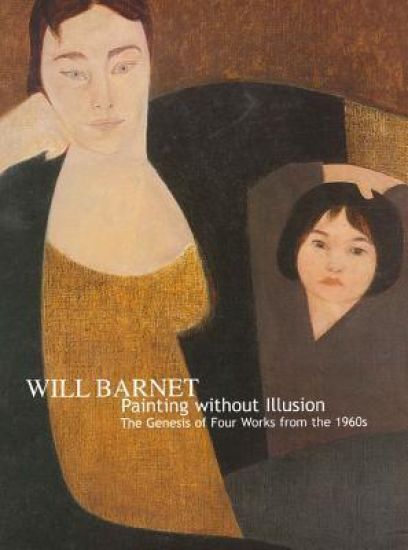
“My interest has been in developing further the plastic convictions that have been evolving in my abstract paintings; so that a portrait, while remaining a portrait, becomes in this sense an abstraction: the idea of a person in its most intense and essential aspect.” —Will Barnet, 1962 Will Barnet (1911–), much like Chuck Close and Alex Katz, has approached painting through sustained exploration of the relationship between abstract, geometric forms and the processes of perception. In this book, which accompanied an exhibition of the same name at the Palmer Museum of Art and the Alexandre Gallery, Patrick J. McGrady examines the paintings, drawings, and prints Barnet made in the 1960s, the decade when Barnet portrayed his family and renegotiated his commitment to pure abstraction. As McGrady traces work during this decisive period in Barnet’s career, he shows how drawing became increasingly important in the evolution of such major paintings as Mother and Child, The Blue Robe, and Eden. In addition, McGrady provides a richly documented discussion of critics’ responses to the profound changes in Barnet’s art and Barnet’s own commentary on his goals as an abstract artist. Will Barnet illustrates many of the forty-nine works in the 2003 exhibition and includes a checklist of the exhibition as well as reproductions of comparative works.
The Poetry of Line

The Poetry of Line

Patrick J. McGrady

Palmer Museum of Art
2002
pokkari
Published by the Palmer Museum of Art Henry Pearson is often linked to the Op Art movement of the 1960s because his best-known paintings feature a labyrinth of undulating parallel lines. Yet his work, although included in the landmark exhibition of 1965, "The Responsive Eye," has an intuitive rhythm and poetic elegance that fall well outside the calculated, often hard-edged structures favored by most Op artists. World War II interrupted Pearson’s first career in theater design but led to a prolonged contact with Japanese culture and a passion for painting. Back in New York City, Pearson studied at the Art Students League and, as early as 1959, began to develop drawings he had made during the war from secret Japanese survey maps. Gradually, he transformed a topography of mountains and valleys into nonobjective forms that reflect a personal vision and herald a new era of linear abstraction in his work. The Poetry of Line accompanied an exhibition of Pearson’s drawings from 1959 to the mid-1970s, the years when the artist moved toward geometric abstraction. This work is crucial from the standpoint of draftsmanship because it achieves a status above that of a sketch or study and makes an artistic statement at once complete and intimate.