Kirjojen hintavertailu. Mukana 12 595 353 kirjaa ja 12 kauppaa.

Kirjailija

Patrick M. Whitehead

Kirjat ja teokset yhdessä paikassa: 9 kirjaa, julkaisuja vuosilta 2016-2023, suosituimpien joukossa Autonomy-Supportive Teaching in Higher Education. Vertaile teosten hintoja ja tarkista saatavuus suomalaisista kirjakaupoista.

Mukana myös kirjoitusasut: Patrick M Whitehead

9 kirjaa

Kirjojen julkaisuhaarukka 2016-2023.

Autonomy-Supportive Teaching in Higher Education

Autonomy-Supportive Teaching in Higher Education

Patrick M. Whitehead

BLOOMSBURY PUBLISHING PLC
2023
sidottu
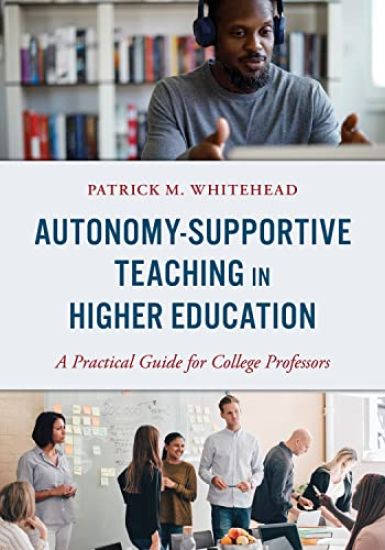
Using ordinary everyday language, Autonomy Supportive Teaching in Higrher Education: A Practical Guide for College Professors organizes and summarizes the mountain of research that has been conducted using autonomy supportive teaching (AST) in the classroom. Hundreds of books, articles, and presentations have been synthesized into a series of chapters and easy-to-follow workshops. By using this book, interested faculty can begin applying the principles of self-determination theory to their classrooms today.This resource is divided into three sections: 1) AST in Theory, which summarizes the state of the art of motivation psychology in the classroom; 2) AST in Practice, which provides eight workshops where readers are led through dozens of evidence-based and classroom tested strategies for applying AST to their own classrooms; and 3) AST Results, which explores faculty and student reflections on the strengths and weaknesses of AST as it was applied by a group of faculty at an American university.This book is for college faculty who are tired of student apathy, disinterest, and confrontation, who are interested in helping their students cultivate inner motivational resources. Autonomous learners are interested in more than getting a good grade or doing as they’re told. These are the motivations that increase need satisfaction, lead to lifelong learning, and support a wide variety of independent learning objectives.
Autonomy-Supportive Teaching in Higher Education

Autonomy-Supportive Teaching in Higher Education

Patrick M. Whitehead

BLOOMSBURY PUBLISHING PLC
2023
nidottu
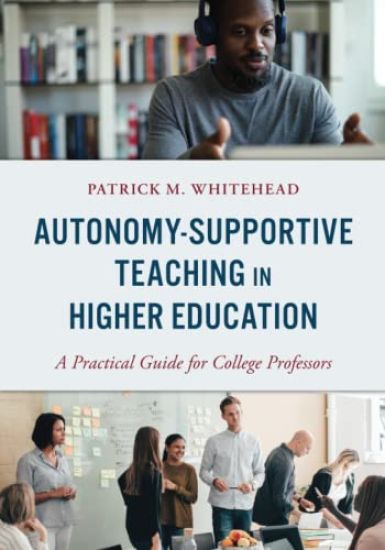
Using ordinary everyday language, Autonomy Supportive Teaching in Higrher Education: A Practical Guide for College Professors organizes and summarizes the mountain of research that has been conducted using autonomy supportive teaching (AST) in the classroom. Hundreds of books, articles, and presentations have been synthesized into a series of chapters and easy-to-follow workshops. By using this book, interested faculty can begin applying the principles of self-determination theory to their classrooms today.This resource is divided into three sections: 1) AST in Theory, which summarizes the state of the art of motivation psychology in the classroom; 2) AST in Practice, which provides eight workshops where readers are led through dozens of evidence-based and classroom tested strategies for applying AST to their own classrooms; and 3) AST Results, which explores faculty and student reflections on the strengths and weaknesses of AST as it was applied by a group of faculty at an American university.This book is for college faculty who are tired of student apathy, disinterest, and confrontation, who are interested in helping their students cultivate inner motivational resources. Autonomous learners are interested in more than getting a good grade or doing as they’re told. These are the motivations that increase need satisfaction, lead to lifelong learning, and support a wide variety of independent learning objectives.
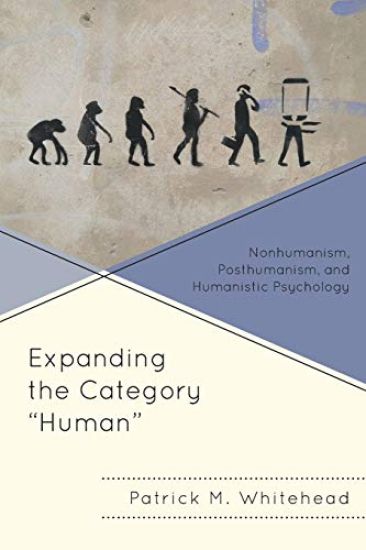
Expanding the Category "Human"

Expanding the Category "Human"

Patrick M. Whitehead

Lexington Books
2019
nidottu
The climate within the discipline of psychology has changed considerably since the middle of the twentieth century. More specifically, what it means to be a human has changed. In Expanding the Category “Human”: Nonhumanism, Posthumanism, and Humanistic Psychology, Patrick M. Whitehead argues that the metaphysical problems that psychologists faced sixty years ago are not the same ones they face today. Humanistic psychologists could once choose to protect the integrity of human beings as well as to engage in open inquiry and accept all human beings, but Whitehead contends that a choice between the two must now be made. This book is recommended for scholars and practitioners of psychology and philosophy.
Existential Health Psychology

Existential Health Psychology

Patrick M. Whitehead

Springer Nature Switzerland AG
2019
sidottu
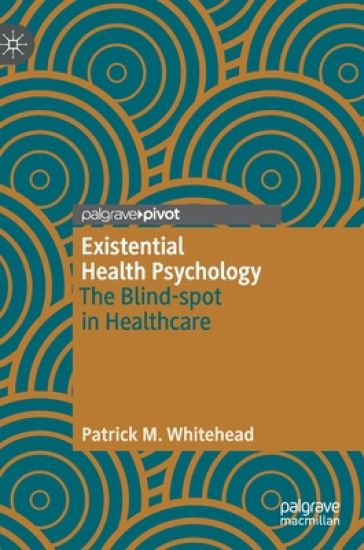
This volume critiques the increasingly reductive, objectifying, and technologized orientation in mainstream biomedicine. Drawing on the methods of hermeneutic phenomenology and existential analysis in the work of Martin Heidegger, Kurt Goldstein, Medard Boss, and Hans-Georg Gadamer, the author seeks to expose this lacuna and explore the ways in which it misrepresents (or misunderstands) the human condition. Whitehead begins by examining the core distinction in the sociology of medicine between “disease” and “illness” and how this distinction maps onto a more fundamental distinction between the corporeal/objective body and the experiential/lived body. Ultimately, the book exposes the tendency in modern medicine to medicalize the human condition and forwards a reorientation framed by what the author terms “existential health psychology.”
Resituating Humanistic Psychology

Resituating Humanistic Psychology

Patrick M. Whitehead; Miles Groth

Lexington Books
2019
sidottu
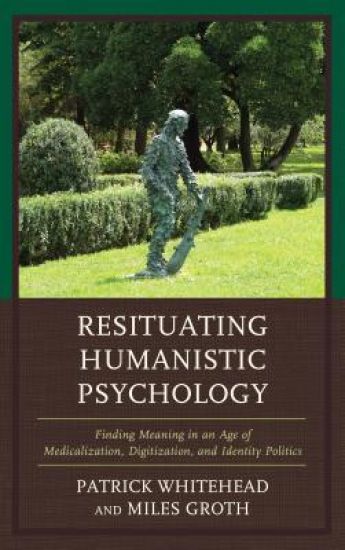
In Resituating Humanistic Psychology, Patrick Whitehead and Miles Groth urge psychologists to return to the aims and goals of psychology as it first emerged. Illustrating how the field has veered from its initial conception, Whitehead and Groth trace its growth from the late 1800s to the humanistic revolution of the 1960s to the current period of social unrest. Whitehead and Groth touch on Wilhelm Wundt’s and William James’s vision for the field; the lasting changes made to clinical psychology, methods of investigation, and psychology of learning in the 1960s; and the effects of isolation, extreme connectivity, and social politics on psychology today. This book is recommended for scholars and students of psychology, history, and philosophy.
Education in a Postfactual World

Education in a Postfactual World

Patrick M Whitehead

Brown Walker Press (FL)
2018
pokkari
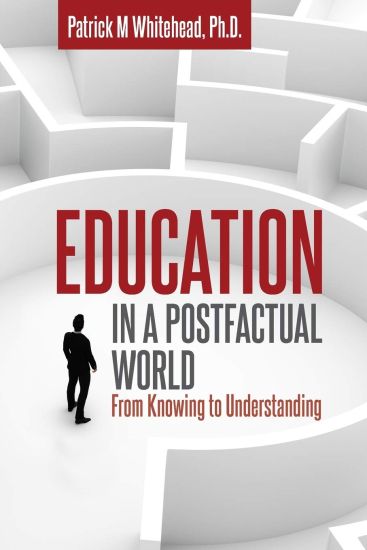
In this book, Whitehead argues against the fact-minded orientation of education and the practice of science. It is not that facts are unhelpful, but they have become a substitute for learning (learning is now tantamount to fact memorization). This change handicaps students by eliminating the possibility of creativity, curiosity, and critical thinking; it handicaps science by limiting the kinds of questions that can be asked and where to look for answers; and ultimately puts people out of touch with their experience. The problem is fact-mindedness. Facts are the relics of enlightenment thinking. They represent unbiased and unquestionable truth about our universe. The more you collect, the more you know; the more you know, the more powerful you are; the more powerful you are.... You get the picture. It is a familiar theme from the middle of this past century, and has been described by contemporary physicists, theoretical biologists, continental philosophers, humanistic psychologists, learner-centered teachers, among many, many others. Unfortunately, college students are seldom exposed to these ideas, and have to wait until they reach graduate school before they wonder if their learning experience may have been different. The goal is to make those ideas accessible here by translating the cumbersome, obscure, and turgid expression of these ideas into twenty-first century examples that are more applicable and meaningful for undergraduates and the educated public. It is argued that judgment must always be applied to matters of fact. That is to say, the fact is not the end of the story. That gravity compels bodies does not substantiate itself: it is a way of describing the relationships between bodies. Gravity helps us better understand physical relationships, but by itself and outside of any meaningful context that fact of gravity is useless.
Expanding the Category "Human"

Expanding the Category "Human"

Patrick M. Whitehead

Lexington Books
2017
sidottu
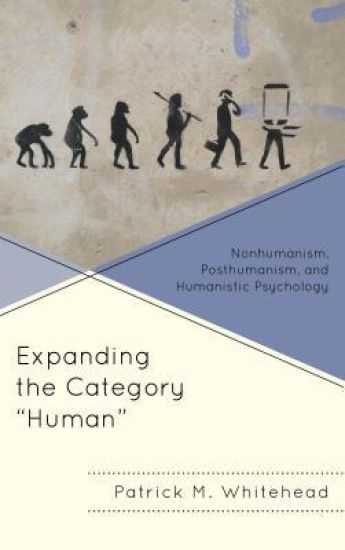
The climate within the discipline of psychology has changed considerably since the middle of the twentieth century. More specifically, what it means to be a human has changed. In Expanding the Category “Human”: Nonhumanism, Posthumanism, and Humanistic Psychology, Patrick M. Whitehead argues that the metaphysical problems that psychologists faced sixty years ago are not the same ones they face today. Humanistic psychologists could once choose to protect the integrity of human beings as well as to engage in open inquiry and accept all human beings, but Whitehead contends that a choice between the two must now be made. This book is recommended for scholars and practitioners of psychology and philosophy.
Psychologizing

Psychologizing

Patrick M. Whitehead

Rowman Littlefield
2016
nidottu
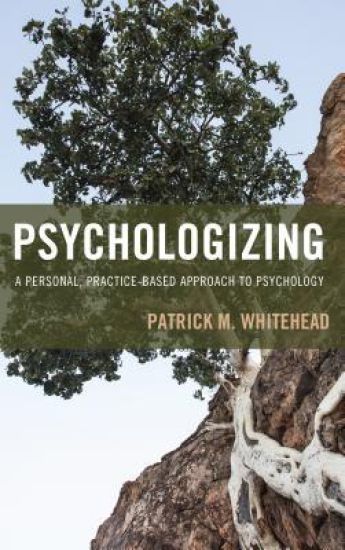
Psychologizing introduces students to the study of psychology by encouraging them to approach the subject on a personal level. Classroom-tested, the psychologizing model emphasizes learning through practice. A conversational and highly engaging narrative prompts students to begin thinking like psychologists as they examine key concepts, including learning, development, personality, and emotion. Based on the practice of phenomenology, Psychologizing emphasizes meaning and context. Chapters include a discussion of influential psychologists who have adopted this attitude and, in doing so, have forever changed the way that we understand thinking and learning. By exploring how experience is always meaningful, and how meaning can only be understood within a context, students will sharpen and develop critical thinking, and reflect on how they identify and shape meaning in their own lives. This book is accompanied by ancillaries designed to enhance the experience of both instructors and students: Instructor’s Manual. This valuable resource provides a sample syllabus, open response activities for discussion, suggested research paper guidelines, and sample rubrics. Test Bank. For every chapter in the text, the Test Bank includes questions in multiple choice, true/false, and essay formats.
Psychologizing

Psychologizing

Patrick M. Whitehead

Rowman Littlefield
2016
sidottu
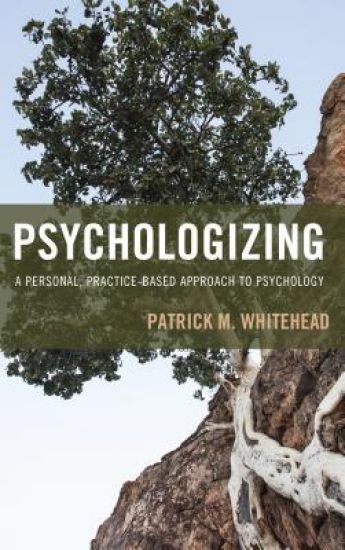
Psychologizing introduces students to the study of psychology by encouraging them to approach the subject on a personal level. Classroom-tested, the psychologizing model emphasizes learning through practice. A conversational and highly engaging narrative prompts students to begin thinking like psychologists as they examine key concepts, including learning, development, personality, and emotion. Based on the practice of phenomenology, Psychologizing emphasizes meaning and context. Chapters include a discussion of influential psychologists who have adopted this attitude and, in doing so, have forever changed the way that we understand thinking and learning. By exploring how experience is always meaningful, and how meaning can only be understood within a context, students will sharpen and develop critical thinking, and reflect on how they identify and shape meaning in their own lives. This book is accompanied by ancillaries designed to enhance the experience of both instructors and students: Instructor’s Manual. This valuable resource provides a sample syllabus, open response activities for discussion, suggested research paper guidelines, and sample rubrics. Test Bank. For every chapter in the text, the Test Bank includes questions in multiple choice, true/false, and essay formats.