Kirjojen hintavertailu. Mukana 12 595 353 kirjaa ja 12 kauppaa.

Kirjailija

Patrick Maley

Kirjat ja teokset yhdessä paikassa: 3 kirjaa, julkaisuja vuosilta 2019-2023, suosituimpien joukossa Theatre History Studies 2022, Volume 41. Vertaile teosten hintoja ja tarkista saatavuus suomalaisista kirjakaupoista.

3 kirjaa

Kirjojen julkaisuhaarukka 2019-2023.

Theatre History Studies 2022, Volume 41

Theatre History Studies 2022, Volume 41

Lisa Jackson-Schebetta; Lisa Milner; Matthieu Chapman; Courtney Elkin Mohler; Trevor Boffone; Alex Vermillion; Ryan J. Douglass; Jeanmarie Higgins; Michael Schweikardt; Samer Al-Saber; Angela K. Ahlgren; Victoria Fortuna; Bethany Wood; Joanna Dee Das; Jay Buchanan; Heidi L. Nees; Giulia Taddeo; Melissa Blanco Borelli; Kelly I. Aliano; Gordon Alley-Young; Christiana Molldrem Harkulich; Alani Hicks-Bartlett; Erin Rachel Kaplan; Heather Kelley; Patrick Maley; Karin Maresh; Heather S. Nathans; Sebastian Samur; Teresa Simone

THE UNIVERSITY OF ALABAMA PRESS
2023
nidottu
The official journal of the Mid-America Theatre ConferenceTheatre History Studies is the official journal of the Mid-America Theatre Conference, Inc. (MATC). The conference is dedicated to the growth and improvement of all forms of theatre throughout a twelve-state region that includes the states of Illinois, Iowa, Nebraska, Kansas, Missouri, Minnesota, North Dakota, South Dakota, and Wisconsin. Its purposes are to unite people and organizations within this region and elsewhere who have an interest in theatre and to promote the growth and development of all forms of theatre. Published annually since 1981, Theatre History Studies provides critical, analytical, and descriptive essays on all aspects of theatre history and is devoted to disseminating the highest quality peer-review scholarship in the field.
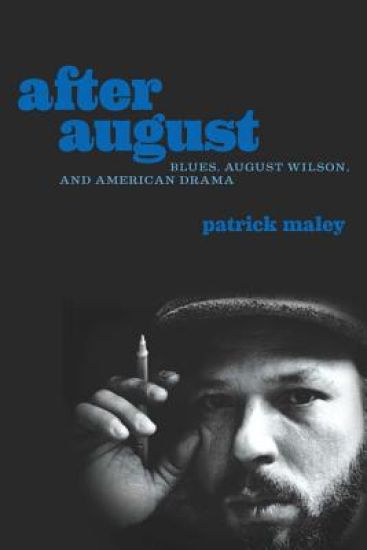
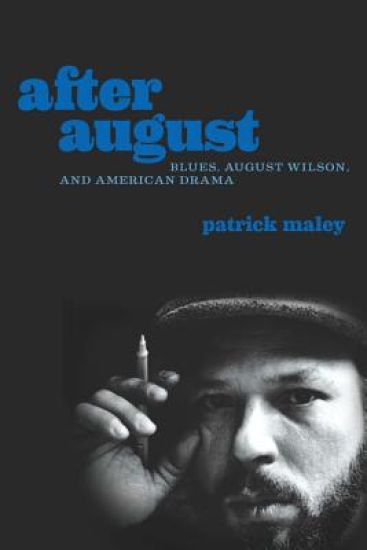
After August

After August

Patrick Maley

University of Virginia Press
2019
sidottu
Critics have long suggested that August Wilson, who called blues "the best literature we have as black Americans," appropriated blues music for his plays. After August insists instead that Wilson's work is direct blues expression. Patrick Maley argues that Wilson was not a dramatist importing blues music into his plays; he was a bluesman, expressing a blues ethos through drama.Reading Wilson's American Century Cycle alongside the cultural history of blues music, as well as Wilson's less discussed work--his interviews, the polemic speech "The Ground on Which I Stand," and his memoir play How I Learned What I Learned--Maley shows how Wilson's plays deploy the blues technique of call-and-response, attempting to initiate a dialogue with his audience about how to be black in America.After August further contends that understanding Wilson as a bluesman demands a reinvestigation of his forebears and successors in American drama, many of whom echo his deep investment in social identity crafting. Wilson's dramaturgical pursuit of culturally sustainable black identity sheds light on Tennessee Williams's exploration of oppressive limits on masculine sexuality and Eugene O'Neill's treatment of psychologically corrosive whiteness. Today, the contemporary African American playwrights Katori Hall and Tarell Alvin McCraney repeat and revise Wilson's methods, exploring the fraught and fertile terrain of racial, gender, and sexual identity. After August makes a significant contribution to the scholarship on Wilson and his undeniable impact on American drama.
After August

After August

Patrick Maley

University of Virginia Press
2019
pokkari
Critics have long suggested that August Wilson, who called blues "the best literature we have as black Americans," appropriated blues music for his plays. After August insists instead that Wilson’s work is direct blues expression. Patrick Maley argues that Wilson was not a dramatist importing blues music into his plays; he was a bluesman, expressing a blues ethos through drama.Reading Wilson’s American Century Cycle alongside the cultural history of blues music, as well as Wilson’s less discussed work - his interviews, the polemic speech "The Ground on Which I Stand", and his memoir play How I Learned What I Learned - Maley shows how Wilson’s plays deploy the blues technique of call-and-response, attempting to initiate a dialogue with his audience about how to be black in America.After August further contends that understanding Wilson as a bluesman demands a reinvestigation of his forebears and successors in American drama, many of whom echo his deep investment in social identity crafting. Wilson’s dramaturgical pursuit of culturally sustainable black identity sheds light on Tennessee Williams’s exploration of oppressive limits on masculine sexuality and Eugene O’Neill’s treatment of psychologically corrosive whiteness. Today, the contemporary African American playwrights Katori Hall and Tarell Alvin McCraney repeat and revise Wilson’s methods, exploring the fraught and fertile terrain of racial, gender, and sexual identity. After August makes a significant contribution to the scholarship on Wilson and his undeniable impact on American drama.