Kirjojen hintavertailu. Mukana 12 152 606 kirjaa ja 12 kauppaa.

Kirjailija

Patrick Moore

Kirjat ja teokset yhdessä paikassa: 43 kirjaa, julkaisuja vuosilta 1966-2025, suosituimpien joukossa The Scientists. Vertaile teosten hintoja ja tarkista saatavuus suomalaisista kirjakaupoista.

43 kirjaa

Kirjojen julkaisuhaarukka 1966-2025.

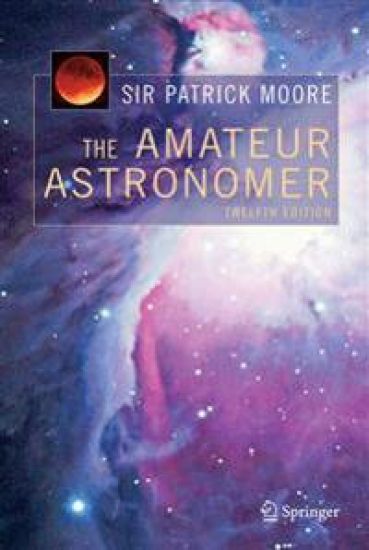
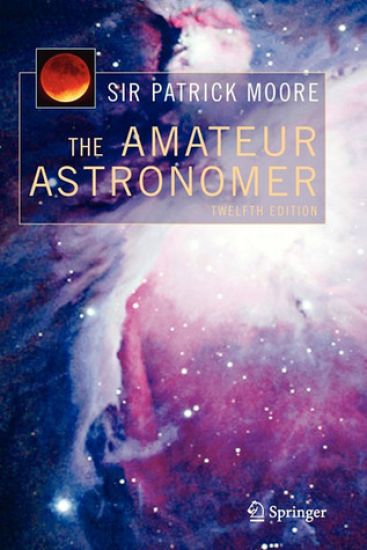
The Amateur Astronomer

The Amateur Astronomer

Patrick Moore

Springer London Ltd
2010
nidottu
any popular books upon astronomy have been written during the Mpast few years, but most of them cater either for the casual dabbler who is content to learn from the depths of his armchair or else for the serious amateur who already knows the main facts.What I have done, or tried to do, is to strike a happy mean. This book has been aimed at the needs of the beginner who knows nothing whatsoever,but who is nevertheless anxious to make a start with what equipment he can collect at limited cost. All astronomers,professional or amateur,were beginners once,and all have had to draw upon the experience of those who have learned before them.I feel some dif?dence about offering myself as a guide,but at least I have one quali?cation: in my early days as an observer I made almost every mistake that it is possible to make! This explains the frequent occurrence of such phrases as “I once saw.…”and “I rem- ber that when I.…” I hope therefore that what I have written may prevent others from falling into the same ridiculous traps.
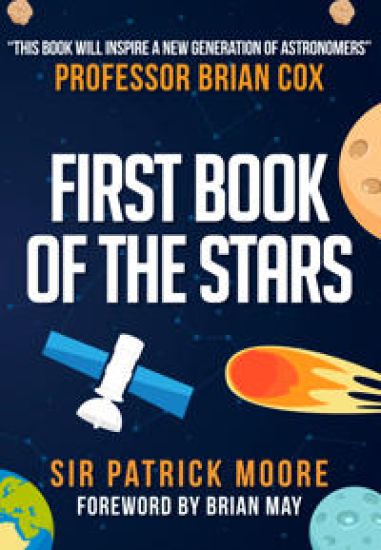
First Book of Stars

First Book of Stars

Patrick Moore

Amberley Publishing
2010
nidottu
Patrick Moore introduces the stars and the night sky to complete beginners and children in this brand new, highly illustrated guide. Using simple terms, he brings the mysteries of the sky to a new audience. 'Are you interested in the stars? If so, I will try and help you make a start. Look up in the daytime, when there are no clouds. The sky is blue and the Sun is very bright. Do not look at the Sun for long, or you will hurt your eyes. At night you will see the stars, and for many nights each month you will see the moon too. You cannot see stars in the daytime, because the sky is too bright. The Sun is a star, and seems so bright and hot only because it is much closer than the other stars. If it were just as far away, it would be just like the other stars. The Sun is much larger than the Earth. It is not solid and rocky. Like all stars it is made up of hot gas. Some of the stars you see at night are really much bigger and hotter than the Sun ...'
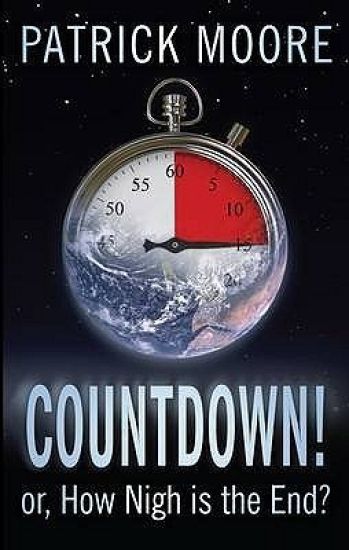
Countdown!

Countdown!

Patrick Moore

The History Press Ltd
2009
nidottu
Written with his trademark combination of wit and accessible science, and updated to include the latest theories on asteroids and climate change, this is a must-read book for anyone with an interest in popular science in general, and how the world might end in particular.
Legends of the Stars

Legends of the Stars

Patrick Moore

The History Press Ltd
2009
sidottu
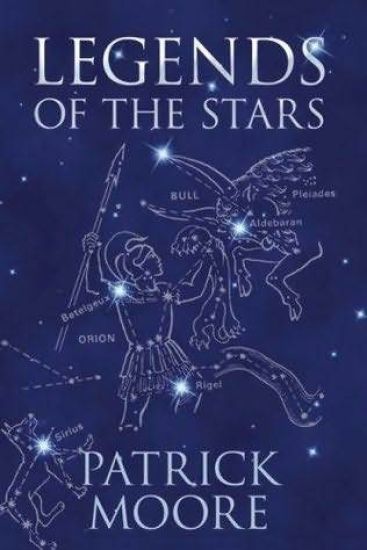
Have you ever wondered how the constellations got their names? Or wanted to know the stories of the gods and heroes immortalised in the night sky? In Legends of the Stars, Patrick Moore, Britain's best-loved astronomer and presenter of The Sky at Night for over fifty years, re-tells some of the stories behind these star-groups, and explains how to look for them in the heavens. From the great hunter Orion to his nemesis the Scorpion, and from Pegasus the flying horse to Jason's ship the Argo, he guides the reader through the celestial picture book, bringing alive some of greatest tales ever told. In an age when the ancient myths are seldom taught in schools, this is an ideal book for anyone who has ever gazed at the stars and asked themselves how the names of the constellations came about.
Can You Play Cricket on Mars?

Can You Play Cricket on Mars?

Patrick Moore

The History Press Ltd
2008
sidottu
Can You Play Cricket on Mars? answers questions like: is there a dark side to the Moon? What happens when a comet hits the Sun? Do the Martian canals have any water in them? Is the Moon hot inside? What would happen if the Sun were to collide with a black hole? Mars has polar ice caps: could polar bears live there? If I could go back to the time of the dinosaurs, would the sky look the same as it does today? and many more.
Un anno intero sotto il cielo

Un anno intero sotto il cielo

Patrick Moore

Springer Verlag
2007
nidottu
Ci sono 365 notti in un anno (366 se bisestile) e per l’astrofilo non ce ne sono mai due uguali. Il cielo ogni notte propone un suo show che ha per protagonisti migliaia di oggetti come stelle, costellazioni, pianeti, nebulose, da riconoscere uno ad uno, da ammirare e studiare. Sir Patrick Moore – celeberrimo conduttore televisivo inglese, astrofilo e divulgatore noto in tutto il mondo – ha scritto questo libro per suggerire all’amante del cielo quali oggetti di particolare interesse possono essere osservati in ciascuna diversa notte dell’anno. Vengono proposte mappe stellari di facile interpretazione, mentre il testo tratta di fisica, delle stelle e della loro storia, di sistemi binari, galassie, della Luna e dei pianeti: di tutto ciò che la volta celeste offre all’astrofilo curioso. Cosa hanno detto della prima edizione: "…ben scritto e pieno di entusiasmo." New Scientist "Patrick Moore si è ripetuto. Che libro eccellente è questo." Astronomy and Space
The Principles

The Principles

Patrick Moore

12th street jam books
2007
pokkari
The Principles presents some of the great lessons offered by the world's religions as well as spiritual programs such as the 12-steps. It simply doesn't matter what your religious or spiritual background is because the Principles are broad enough to help anyone. For the first time, in this book, the nine Principles are gathered together and presented not only as ideas but as practical, daily exercises for solving your problems.
Moore on Mercury

Moore on Mercury

Patrick Moore

Springer London Ltd
2006
nidottu
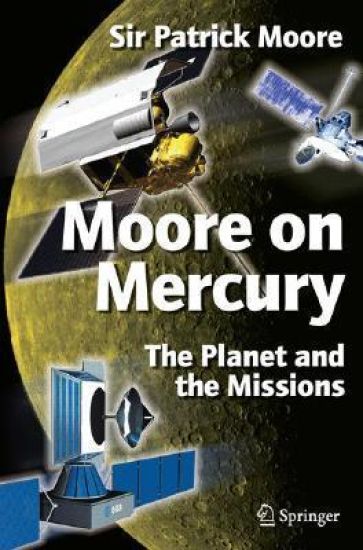
Mercury is one of the more difficult objects for amateur astronomers to observe because of its close proximity to the Sun. For the same reason, it is also one of the most fascinating and strange planets. Mercury is not much larger that our Moon, but orbits the Sun at an average distance of only 58 million km, compared to the Earth’s 150 million km. On its sunlit side, Mercury’s surface temperature can exceed 450C while the night side freezes at –180C. Amateur astronomers can see Mercury and its ever-changing phases all year, and sometimes watch it transit the Sun – the next transit is in November 2006, followed by one in May 2016. In his inimitable, easy-going style, Patrick Moore describes Mercury, the professional astronomers who have observed it over the centuries, amateur observations, and the past, present and future space missions to this extraordinary world.
The Amateur Astronomer

The Amateur Astronomer

Patrick Moore

Springer London Ltd
2005
sidottu
any popular books upon astronomy have been written during the Mpast few years, but most of them cater either for the casual dabbler who is content to learn from the depths of his armchair or else for the serious amateur who already knows the main facts.What I have done, or tried to do, is to strike a happy mean. This book has been aimed at the needs of the beginner who knows nothing whatsoever,but who is nevertheless anxious to make a start with what equipment he can collect at limited cost. All astronomers,professional or amateur,were beginners once,and all have had to draw upon the experience of those who have learned before them.I feel some dif?dence about offering myself as a guide,but at least I have one quali?cation: in my early days as an observer I made almost every mistake that it is possible to make! This explains the frequent occurrence of such phrases as “I once saw.…”and “I rem- ber that when I.…” I hope therefore that what I have written may prevent others from falling into the same ridiculous traps.
Beyond Shame

Beyond Shame

Patrick Moore

BEACON PRESS
2004
pokkari
The radical sexuality of gay American men in the 1970s is often seen as a shameful period of excess that led to the AIDS crisis. Beyond Shame claims that when the gay community divorced itself from this allegedly tainted legacy, the tragic result was an intergenerational disconnect because the original participants were unable to pass on a sense of pride and identity to younger generations. Indeed, one reason for the current rise in HIV, Moore argues, is precisely due to this destructive occurrence, which increased the willingness of younger gay men to engage in unsafe sex. Lifting the'veil of AIDS, ' Moore recasts the gay male sexual culture of the 1970s as both groundbreaking and creative-provocatively comparing extreme sex to art. He presents a powerful yet nuanced snapshot of a maligned, forgotten era. Moore rescues gay America's past, present, and future from a disturbing spiral of destruction and AIDS-related shame, illustrating why it's critical for the gay community to reclaim the decade.
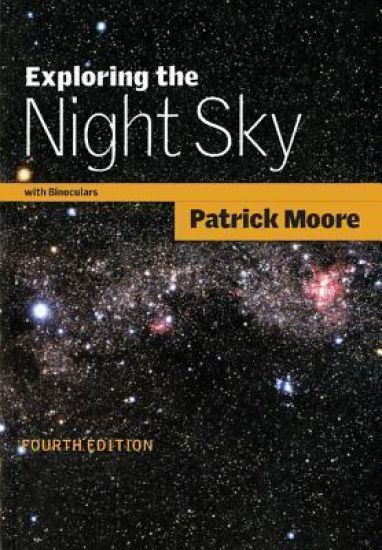
Exploring the Night Sky with Binoculars

Exploring the Night Sky with Binoculars

Patrick Moore

Cambridge University Press
2000
pokkari
On a clear, starry night, the jewelled beauty and unimaginable immensity of our universe is awe-inspiring. Star-gazing with binoculars is rewarding and may begin a lifelong hobby! Patrick Moore has painstakingly researched Exploring the Night Sky with Binoculars to describe how to use binoculars for astronomical observation. He explains basic astronomy and the selection of binoculars, then discusses the stars, clusters, nebulae and galaxies that await the observer. The sky seen from both the northern and southern hemispheres is charted season by season, with detailed maps of all the constellations. The reader can also observe the Sun, Moon, planets, comets and meteors. With many beautiful illustrations, this handbook will be helpful and encouraging to casual observers and those cultivating a more serious interest. The enjoyment of amateur astronomy is now available to everybody.
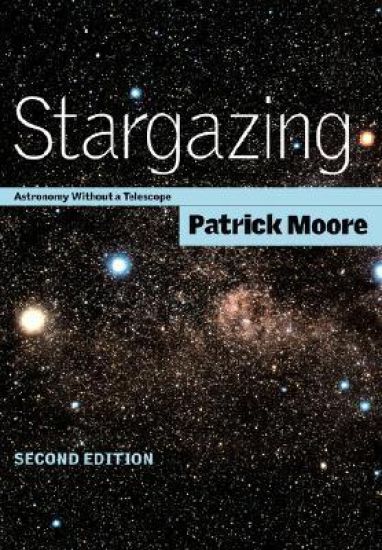
Stargazing

Stargazing

Patrick Moore

Cambridge University Press
2000
pokkari
On a clear night, the vastness and beauty of the star-filled sky is awe-inspiring. In Stargazing: Astronomy without a Telescope Patrick Moore, Britain’s best known astronomer explains all you need to know about the universe visible to the naked eye. With the aid of charts and illustrations he examines how to ‘read’ the stars, to know which constellations lie overhead, their trajectory throughout the seasons, and the legends ascribed to them. In a month by month guide he describes using detailed star maps the night skies of both the northern and southern hemispheres. He also takes a look at the planets, the Sun and the Moon and their eclipses, comets, meteors, as well as aurorae and other celestial phenomena - all in accessible scientific detail. Astronomy is for everyone, and even with just the naked eye, it can become a fascinating and rewarding hobby for life.
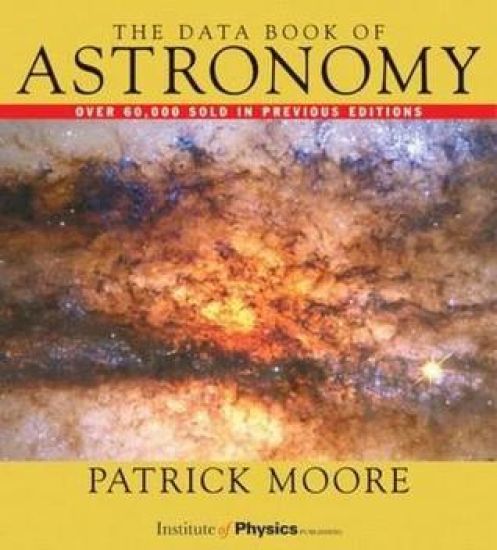
The Data Book of Astronomy

The Data Book of Astronomy

Patrick Moore

Institute of Physics Publishing
2000
sidottu
The Data Book of Astronomy is a one-stop reference for astronomers at all levels of experience, from beginners to experienced observers. Filled with data about the Earth, Moon, the planets, the stars, our Galaxy, and the myriad galaxies in deep space, it also reveals the latest scientific discoveries about black holes, quasars, and the origins of the Universe. Written by a premier astronomy expert, this book begins with a discussion of the Sun, from sunspots to solar eclipses. It then features over 100 tables on characteristics of the Moon, and the names, positions, sizes, and other key descriptors of all the planets and their satellites. The book tabulates solar and lunar eclipse, comets, close-approach asteroids, and significant meteor showers dates. Twenty-four maps show the surface features of the planets and their moons. The author then looks to the stars, their distances and movements, and their detailed classification and evolution. Forty-eight star charts cover both northern and southern hemispheres, enabling you to track down and name the main stars in all the constellations. The maps are supported by detailed tables of the names, positions, magnitudes, and spectra of the main stars in each constellation, along with key data on galaxies, nebulae, and clusters. There is a useful catalogue of the world's great telescopes and observatories, a history of astronomy and of space research, and biographies of 250 astronomers who have been most influential in developing the current understanding of the subject.
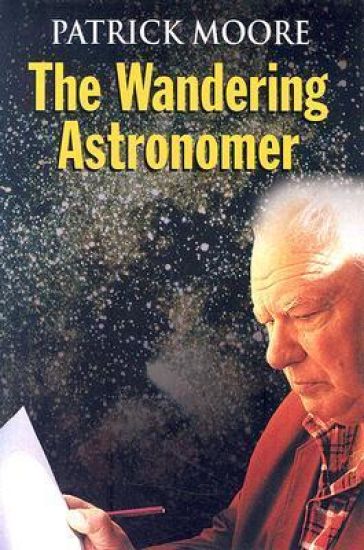
The Wandering Astronomer

The Wandering Astronomer

Patrick Moore

Institute of Physics Publishing
2000
sidottu
Drawing on his vast knowledge and direct experience of most of the key events in astronomy and space exploration during this century, Patrick Moore takes a sideways look at the historical reports and contemporary thought behind a wide range of astronomical topics. The Wandering Astronomer presents his personal accounts of the towering characters of 20th-century astronomy, intriguing facts about puzzling astronomical phenomena, and amusing stories about the quirkier side of astronomy and space exploration. This collection of essays covers everything from the case of vanishing planets to UFOs over Selsey.
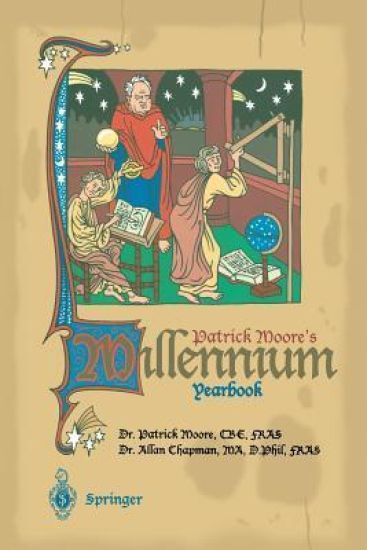
Patrick Moore’s Millennium Yearbook

Patrick Moore’s Millennium Yearbook

Patrick Moore; Allan Chapman

Springer London Ltd
1999
nidottu
In a year that will probably be remembered almost as much for books about the millennium as for the turn of 2000 A.D itself, Patrick Moore's Millennium Yearbook celebrates.....well, the wrong millennium! This thoroughly entertaining book - which is for everyone, not just astronomers - contains articles on King Alfred's chronological work, reviews of the new Star Catalogue by the Arab Al-Sufi and the latest edition of Ptolemy's Almagast. And foreshadowing the change to metric units by 1000 years, the book uses arabic numbers instead of Roman - but there is a conversion table if you have trouble with the idea of "zero" and prefer the older system.
Transit When Planets Cross the Sun

Transit When Planets Cross the Sun

Michael Maunder; Patrick Moore

Springer London Ltd
1999
nidottu
Although transits of planets across the Sun are rare (only Mercury and Venus orbit the Sun closer than us, and so can transit the Sun's disc) amateur astronomers can observe, record and image other kinds of transit, which are very much more frequent. Transit is in two parts, the first telling the fascinating story of the early scientific expeditions to observe transits. The second part is for practical observers, and explains how to observe transits of all sorts - even transits of aircraft as they fly between the observer and the Sun!
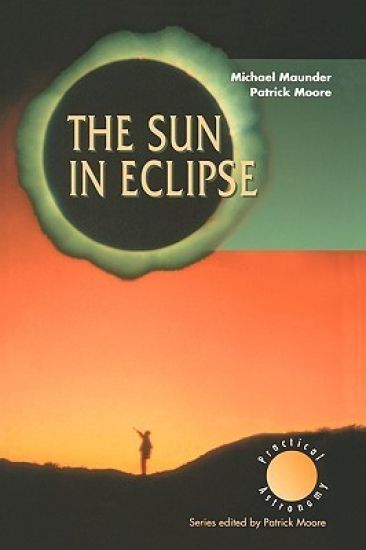
The Sun in Eclipse

The Sun in Eclipse

Michael Maunder; Patrick Moore

Springer-Verlag Berlin and Heidelberg GmbH Co. K
1997
nidottu
A total eclipse of the Sun is due in August 1999. It will attract alot of interest because - unusually - it will be visible in much of Europe and the UK. A total Solar Eclipse is always fascinating. This book is for everyone that wants to know 1. What a Solar Eclipse is 2. The phenomena one can expect to see 3. How to photograph an eclipse using a variety of methods 4. How to plan for an eclipse expedition. The book not only covers the 1999 eclipse but also past and future eclipses which we can look forward to. This book is also interesting to "armchair astronomers" as it contains alot of historical and anecdotal information. There's even a final chapter on "Eclipse Mishaps and Oddities" including the American eclipse expedition of 1780 that missed the total eclipse because they went to the wrong location!
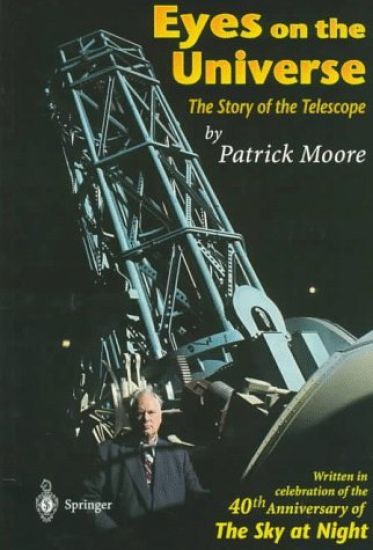
Eyes on the Universe

Eyes on the Universe

Patrick Moore

Springer-Verlag Berlin and Heidelberg GmbH Co. K
1997
nidottu
Eyes on the Universe is an illustrated history of the telescope, beginning with pre-telescopic observatories and the refractors of Galileo, Lippershey and Digges, and ending with the most modern instruments including - of course - the Hubble Space Telescope. Written by Dr Patrick Moore CBE, to celebrate the 40th Anniversary of the world's longest-running television programme, the BBC's The Sky at Night, the book takes an enthusiastic look at the development of astronomical telescopes. It provides its readers with a fascinating overview of the way astronomical telescopes have evolved with technology during the past 450 years. Amateur and professional astronomers alike will find this book both entertaining and instructive.