Kirjailija
Patrick O'Brian
Kirjat ja teokset yhdessä paikassa: 93 kirjaa, julkaisuja vuosilta 1991-2026, suosituimpien joukossa H. M. S. Surprise. Vertaile teosten hintoja ja tarkista saatavuus suomalaisista kirjakaupoista.
Mukana myös kirjoitusasut: Patrick O’Brian
93 kirjaa
Kirjojen julkaisuhaarukka 1991-2026.
Fjortende bind i Patrick O'Brians verdensberømte romanserie om den temperamentsfulle kapteinen Jack Aubrey, som seiler i den britiske marinen, og Stephen Maturin, skipslegen som også arbeider for britisk etterretning. Patrick O'Brian er av mange regnet som den største moderne engelskspråklige forfatteren av historiske romaner. I "Fra seilernes øy" er Jack Aubrey og Stephen Maturin strandet på en øde øy i Nederlandsk Østindia, angrepet av ville malayiske pirater. De klarer å unnslippe, men etter et opphold i Batavia, bytte av skip og en nattlig jakt i farlige farvann, blir de trukket inn i de langt mer lumske konfliktene i den grufulle straffekolonien i New South Wales. "Fra seilernes øy" er nok en velskrevet og spennende bok i serien om kaptein Jack Aubrey og skipslegen Stephen Maturin.
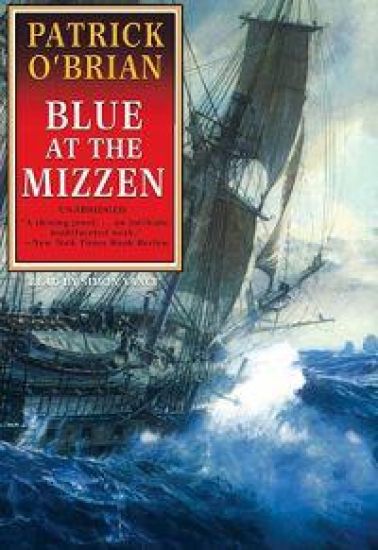
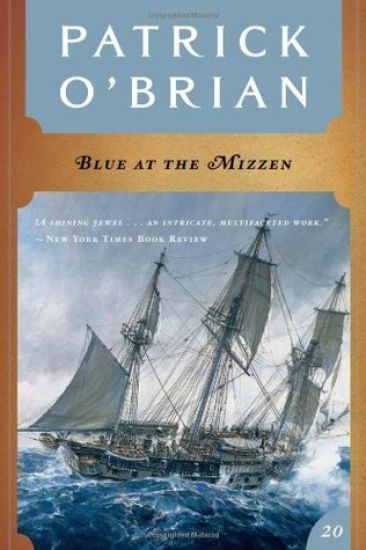
Blue at the Mizzen (novel #20) ended with Jack Aubrey getting the news, in Chile, of his elevation to flag rank: Rear Admiral of the Blue Squadron, with orders to sail to the South Africa station. The next novel, unfinished and untitled at the time of the author's death, would have been the chronicle of that mission, and much else besides. The three chapters left on O'Brian's desk are presented here both in printed version-including his corrections to the typescript-and a facsimile of his manuscript, which goes several pages beyond the end of the typescript to include a duel between Stephen Maturin and an impertinent officer who is courting his fiancee. Of course we would rather have had the whole story; instead we have this proof that O'Brian's powers of observation, his humor, and his understanding of his characters were undiminished to the end."
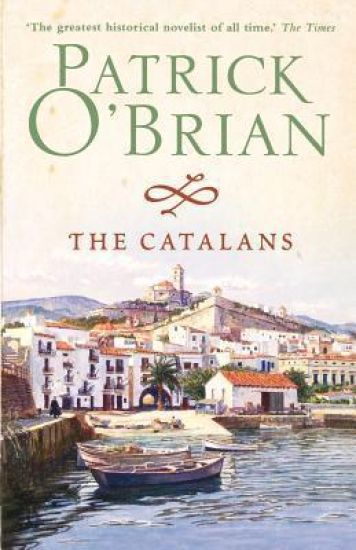
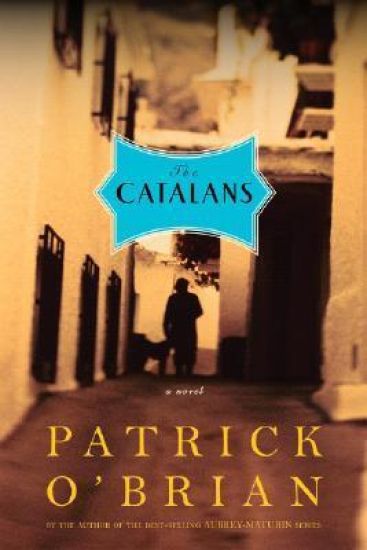
Set amongst the rolling vineyards and gentle courtyards of a small seaside village in Catalonia, Patrick O'Brian's second novel is a poignant story of tumultuous love, complex faith and one man's desperate bid to reclaim his humanity. Summoned from his medical practice in China by a bevy of anxious aunts, Alain Roig returns to his Catalan hometown to discover he has been nominated by family members with vested interests in the ancestral property to prevent an impending marriage between his cold, ascetic cousin Xavier and Madeleine, a quiet, introspective village girl of unusual beauty. As Alain seeks to understand his cousin's complex motivations for wooing the unhappy girl, he is slowly drawn into Xavier's dark crisis of faith, the well-worn pattern of the sleepy Catalan days and the tight circle of village gossip that surrounds Madeleine. Throughout, Patrick O'Brian's slow, seductive narrative lures the reader into the landscapes, rhythms and passions of Catalonia, while his subtle, insightful characterisation paints a psychological portrait of a unique way of life and two very different men – one generous and impulsive, the other desperate to revive in his soul the dying flames of affection which he senses could be his salvation. With themes and characters that in many ways prefigure his enormously successful Aubrey/Maturin series, THE CATALANS demonstrates all the insight, lyricism and psychological drama that made O'Brian one of the best storytellers of his generation.
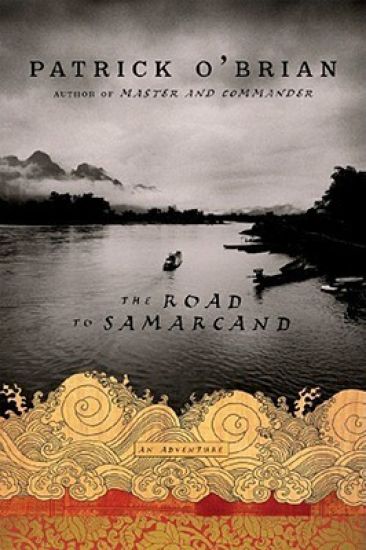
This story begins where Patrick O'Brian's devoted fans would want it to, with a sloop in the South China Sea barely surviving a killer typhoon. The time is the 1930s and the protagonist a teenaged American boy whose missionary parents have just died. In the company of his rough seafaring uncle and an elderly English cousin, an eminent archaeologist, Derrick sets off in search of ancient treasures in central Asia. Along the way they encounter a charismatic Chinese bandit and a host of bad characters, including Russian agents fomenting unrest. The narrative touches on surprising subjects: astronomy, oriental philosophy, the correct identification of ancient Han bronzes, and some very local cuisine. It ends in an ice-bound valley, with the party caught between hostile Red-Hat monks and the Great Silent Ones, the Tibetan designation for the yeti.
The protagonist of this World War II novel is a prisoner of the German army in France. In order to keep himself sane while denying the charges and absorbing the beatings of his captors, Richard Temple conducts a minute examination one might almost call it a prosecution of his own life. Temple escapes from a blighted childhood and his widowed, alcoholic mother thanks to an artistic gift, the one thing of value he has to his name. His life as a painter in London of the '30s is cruelly deprived. In order to eat, he squanders this one asset by becoming a forger of art, specializing in minor works by Utrillo. He is rescued by the love of a beautiful and wealthy woman, and it is the failure of this relationship and the outbreak of war that propel him into the world of espionage."
This novel is a powerful successor to Testimonies, Patrick O'Brian's first novel written for adults. It is set in that corner of France that became O'Brian's adopted home, where the long, dark wall of the Pyrenees runs headlong to meet the Mediterranean. Alain Roig returns to Saint-Feliu after years in the East and finds his family in crisis. His dour, middle-aged cousin Xavier, the mayor and most powerful citizen of the town, has fallen in love and plans to marry Madeleine, the young daughter of the local grocer. The Roig family property is threatened by this union, and Madeleine's relatives object on different grounds. Xavier is a tragic figure, damned by what he perceives as a lack of feeling; Madeleine is to be his salvation. Unfortunately she does not return his affection, and, as the feasts and harvest festivals of Saint-Feliu are played out, she finds herself falling in love with Alain."
Dette er tredje boken om skipskapteinen Jack Aubreys reiser med Nelsons flåte. Med seg på skipet har han sin gode venn skipslegen Stephen Maturin som også er medlem av den britiske etterretning. Når Jack får i oppdrag å frakte en britisk ambassadør til de ostindiske øyer begir han seg ut på nok en farlig eventyr. De reiser gjennom farvann som er styrt av franske maktsyke herrer og Jack får flere utfordringer som han må hanskes med.
This is the story of Richard Temple – prisoner of war, sometime adventurer, lover and artist – told with insight, empathy and drama by one of the world's master storytellers. Captive in a brutal German prison towards the end of World War II, Richard Temple has been stripped of everything that once defined him: pride, courage, his very identity have all been surrendered in a desperate bid to protect his secrets from the Nazis. But with the real Richard Temple suppressed to the point of near-extinction, a sudden respite in his torture allows him a moment of rare release, when he can lower his guard and remember who he is. Huddled in his cell, too badly beaten to move, the action of the novel takes place in the Richard’s mind as he retraces a convoluted course from an unhappy childhood, through a vague and uncertain adolescence to a complex, compromised adulthood, shot through with artistic sensibility and the myriad impulses that make a man. Patrick O'Brian's signature combination of narrative flair, intuitive sympathy and psychological insight make this a fascinating exploration of how passive resistance can be a form of courage and what it truly means to be a hero.
The recent release of the film Master and Commander: The Far Side of the World has focused even more attention on the publishing phenomenon of the late Patrick O'Brian's Aubrey/Maturin novels about the Royal Navy in the age of Nelson. These five volumes, beautifully produced and boxed, contain over 7,000 pages of what has often been described as a single, continuous narrative. They are a perfect tribute to such a literary achievement, and a perfect gift for the serious O'Brian enthusiast.
Here is the maiden voyage of O'Brian's acclaimed Aubrey-Maturin series, which follows the unique friendship between Captain Aubrey, R.N., and Stephen Maturin, ship's surgeon and intelligence agent. It is the dawn of the nineteenth century; Britain is at war with Napoleon's France. When Jack Aubrey, a young lieutenant in Nelson's navy, is promoted to captain, he inherits command of HMS Sophie, an old, slow brig unlikely to make his fortune. But Captain Aubrey is a brave and gifted seaman, his thirst for adventure and victory immense. With the aid of his friend Stephen Maturin, Aubrey and his crew engage in one thrilling battle after another, their journey culminating in a stunning clash with a mighty Spanish frigate against whose guns and manpower the tiny Sophie is hopelessly outmatched. O'Brian renders in riveting detail the life aboard a man-of-war in Nelson's navy: the conversational idiom of the officers in the ward room and the men on the lower deck, the food, the floggings, the mysteries of the wind and the rigging, and the roar of broadsides as the great ships close in battle.
It is still the War of 1812. Patrick O'Brian takes his hero Jack Aubrey and his tetchy, sardonic friend Stephen Maturin on a voyage to the south Atlantic to intercept a powerful American frigate outward bound to play havoc with the British whaling trade.
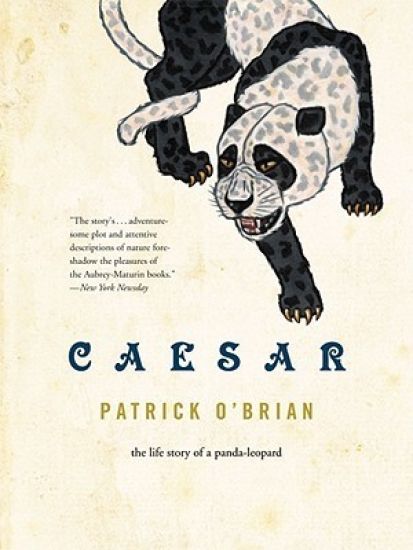
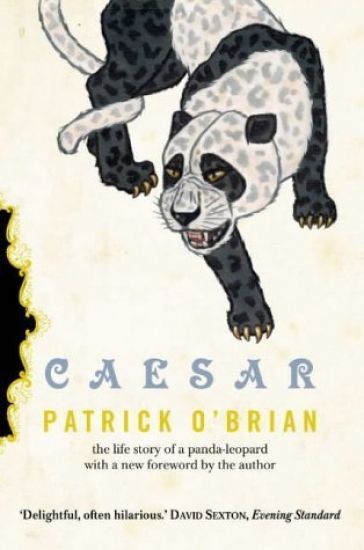
A stark tale encompassing the cruelty and beauty of the natural world, and a clear demonstration of the storytelling gift that would later flower in the Aubrey/Maturin series. When he was fourteen years old and beset by chronic ill health, Patrick O'Brian began creating his first fictional character. "I did it in my bedroom, and a little when I should have been doing my homework," he confessed in a note on the original dust-jacket. Caesar tells the picaresque, enchanting, and quite bloodthirsty story of a creature whose father is a giant panda and whose mother is a snow leopard. Through the eyes and voice of this fabulous creature, we learn of his life as a cub, his first hunting exploits, his first encounters with man, his capture and taming. Caesar was published in 1930, three months after O'Brian's fifteenth birthday, but the dry wit and unsentimental precision O'Brian readers savor in the Aubrey/Maturin series is already in evidence. The book combines Stephen Maturin's fascination and encyclopedic knowledge of natural history with the narrative charm of Rudyard Kipling's The Jungle Book. It was published in England and the United States, and in translation in Sweden, Norway, Denmark, and Japan. Reviews hailed the author as the "boy-Thoreau." "We can see here a true storyteller in the making....a gripping narrative, which holds the reader's attention and never flags." The Spectator"
Caesar is a tale of survival, love, and loyalty, by a young O'Brian who was rightly hailed, even at fifteen, as the 'boy-Thoreau'. The fascinating career of the literary genius behind Aubrey-Maturin began here.
Lobscouse and Spotted Dog
Anne Chotzinoff Grossman; Lisa Grossman Thomas; Patrick O'Brian
WW Norton Co
2000
nidottu
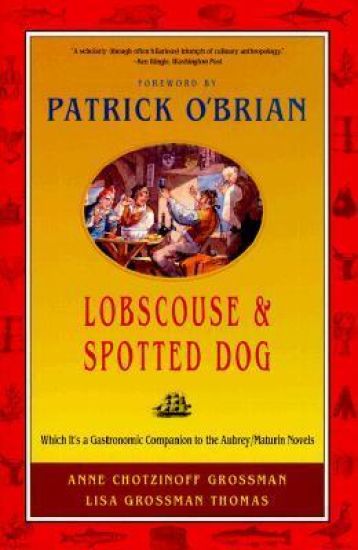
Celebrate the joys of Patrick O'Brian's acclaimed Aubrey/Maturin series with this delightful cookbook, full of the food and drink that so often complement Jack Aubrey and Stephen Maturin's travels. Collected here are authentic and practical recipes for such eighteenth- and early-nineteenth- century dishes as Burgoo, Drowned Baby, Sea-Pie, Solomongundy, Jam Roly-Poly, Toasted Cheese, Sucking Pig, Treacle-Dowdy, and, of course, Spotted Dog. Also included are historical notes on the origins of the dishes as well as sections on the preparing of roasts, puddings, and raised pies."[A] splendid cookbook...graced with erudite bits of naval and gastronomical history....Deftly researched and written in prose nearly as funny as O'Brian's own."—Publishers Weekly "A thoroughly readable cookbook, as well as a useful appendix to a great series of novels and a newly opened window into a time now nearly 200 years gone."—San Jose Mercury News
Napoleon has been defeated at Waterloo, and the ensuing peace brings with it both the desertion of nearly half of Captain Aubrey's crew and the sudden dimming of Aubrey's career prospects in a peacetime navy. When the Surprise is nearly sunk on her way to South America--where Aubrey and Stephen Maturin are to help Chile assert her independence from Spain--the delay occasioned by repairs reaps a harvest of strange consequences. The South American expedition is a desperate affair; and in the end Jack's bold initiative to strike at the vastly superior Spanish fleet precipitates a spectacular naval action that will determine both Chile's fate and his own.
For a man of war, peacetime is the ultimate challenge. Leaving behind them a Europe still taking stock after the definitive battle of Waterloo, Jack Aubrey and his friend Stephen Maturin set sail for Chile. But even with the newly minted peace, life at sea remains beset with danger and imminent disaster, and the political turmoil of the South American continent is equal to any threat they have yet faced. Out of loss – of purpose, of love – can the two friends rescue what they most desire? ‘Beyond his superbly elegant writing, wit and originality, [O’Brian] showed an understanding of the nature of a floating world at the mercy of the wind and sea which has never been surpassed.’ MAX HASTINGS, Evening Standard ‘From the opening page I was addicted to what I judge to be one of the greatest cycles of storytelling in the English language.’ WILLIAM WALDEGRAVE, Daily Telegraph
Napoleon, escaped from Elba, pursues his enemies across Europe like a vengeful phoenix. If he can corner the British and Prussians before their Russian and Austrian allies arrive, his genius will lead the French armies to triumph at Waterloo. In the Balkans, preparing a thrust northwards into Central Europe to block the Russians and Austrians, a horde of Muslim mercenaries is gathering. They are inclined toward Napoleon because of his conversion to Islam during the Egyptian campaign, but they will not move without a shipment of gold ingots from Sheik Ibn Hazm which, according to British intelligence, is on its way via camel caravan to the coast of North Africa. It is this gold that Jack Aubrey and Stephen Maturin must at all costs intercept. The fate of Europe hinges on their desperate mission.