Kirjojen hintavertailu. Mukana 12 595 353 kirjaa ja 12 kauppaa.

Kirjailija

Patrick O'Mahony

Kirjat ja teokset yhdessä paikassa: 8 kirjaa, julkaisuja vuosilta 1998-2025, suosituimpien joukossa Communicative Reason. Vertaile teosten hintoja ja tarkista saatavuus suomalaisista kirjakaupoista.

Mukana myös kirjoitusasut: Patrick O’Mahony

8 kirjaa

Kirjojen julkaisuhaarukka 1998-2025.

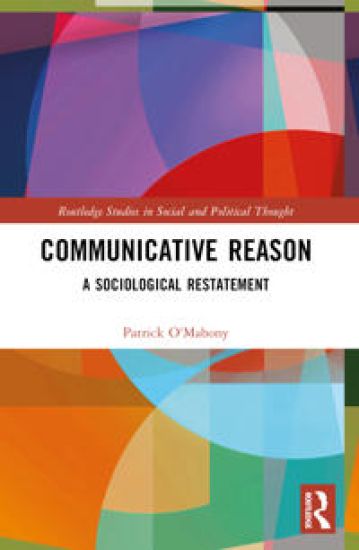
Communicative Reason

Communicative Reason

Patrick O'Mahony

TAYLOR FRANCIS LTD
2025
nidottu
The book examines philosophical and sociological approaches within critical theory and more widely from the vantage point of communicative reason. It seeks to revitalize the sociological dimension of critical theory by advancing a critical sociology of reason. It does so fully in the knowledge that reason is a contentious concept in sociology and other disciplines. Nonetheless, building on Habermas’s original insight, it argues that an extensively modified version of communicative reason is indispensable. This modified approach will draw extensively from Peirce’s pragmatist semiotics and critical cognitive sociology. Such a focus has significant implications for meta-theoretical, theoretical-empirical, and methodological approaches in critical theory, critical sociology, and related disciplines. This book will be of interest to readers in the social sciences, humanities, and philosophy who value the importance of a social theory of a reasonable society for their disciplines and for increasingly essential interdisciplinary activities. The book will also appeal to many in critical theory and beyond who are interested in the cognitive foundations of normative orders, including unjust or pathological as well as actually or potentially just foundations. The book emphasizes both validity and critique within communicative reason and critical theory and accordingly presents a distinctive perspective on critical-reconstructive research.
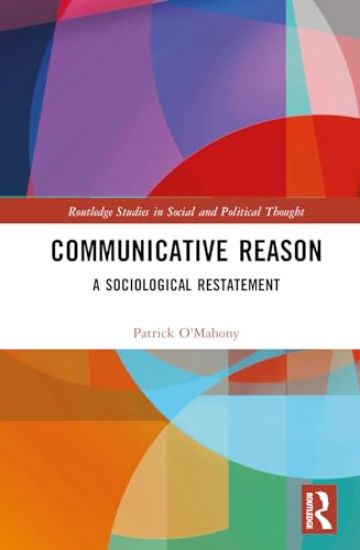
Communicative Reason

Communicative Reason

Patrick O'Mahony

TAYLOR FRANCIS LTD
2024
sidottu
The book examines philosophical and sociological approaches within critical theory and more widely from the vantage point of communicative reason. It seeks to revitalize the sociological dimension of critical theory by advancing a critical sociology of reason. It does so fully in the knowledge that reason is a contentious concept in sociology and other disciplines. Nonetheless, building on Habermas’s original insight, it argues that an extensively modified version of communicative reason is indispensable. This modified approach will draw extensively from Peirce’s pragmatist semiotics and critical cognitive sociology. Such a focus has significant implications for meta-theoretical, theoretical-empirical, and methodological approaches in critical theory, critical sociology, and related disciplines. This book will be of interest to readers in the social sciences, humanities, and philosophy who value the importance of a social theory of a reasonable society for their disciplines and for increasingly essential interdisciplinary activities. The book will also appeal to many in critical theory and beyond who are interested in the cognitive foundations of normative orders, including unjust or pathological as well as actually or potentially just foundations. The book emphasizes both validity and critique within communicative reason and critical theory and accordingly presents a distinctive perspective on critical-reconstructive research.
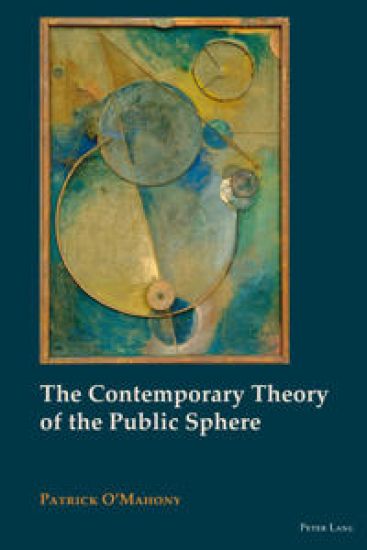
The Contemporary Theory of the Public Sphere

The Contemporary Theory of the Public Sphere

Patrick O’Mahony

Peter Lang International Academic Publishers
2019
nidottu
Normative democratic theory does not lie securely above societal argumentation but is rather part of it. We need to know not just how the public should ideally reason, but how it actually does or could in better foreseeable circumstances. For the health and the necessary extension of democracy, given general societal and cosmopolitan challenges, fundamentally depends on the reasoning capacities of publics. The concept of the public sphere is intrinsic to understanding this process, but it has long been limited by its division into the twin approaches of normative argumentation in democratic theory and empirical-theoretical application in the social sciences. This book aims to go beyond this entrenched divide to show how democratic theory can become empirically applicable and the social sciences normatively relevant. It does this by linking democratic theory to the theory of society and relating both to a cognitive-communicative account of public culture. The book contributes significantly to exchanges within and between sociology, philosophy, cultural and communication studies, political science, and cognate disciplines. It also addresses a long-established concern of critical theory to combine empirical and normative perspectives to advance the goal of a better society.
The Contemporary Theory of the Public Sphere

The Contemporary Theory of the Public Sphere

Patrick O’Mahony

Peter Lang AG, Internationaler Verlag der Wissenschaften
2013
sidottu
Normative democratic theory does not lie securely above societal argumentation but is instead a crucial part of it. We need to know not just how the public should reason, but how it actually does reason, or could reason in better foreseeable circumstances. After all, given the general societal and cosmopolitan challenges that we face, the health and the necessary extension of democracy fundamentally depends on the reasoning capacities of the public. The concept of the public sphere is intrinsic to understanding this process, but it has long been limited by its division into the twin approaches of normative argumentation in democratic theory and empirical-theoretical application in the social sciences. This book aims to go beyond this entrenched divide to show how democratic theory can become empirically applicable and the social sciences normatively relevant. It does this by linking democratic theory to the theory of society and relating both to a cognitive-communicative account of public culture. The book contributes significantly to exchanges within and between sociology, philosophy, cultural and communication studies, political science, and cognate disciplines. It also aims to address a long-established concern of critical theory by combining empirical and normative perspectives to advance the goal of a better society.
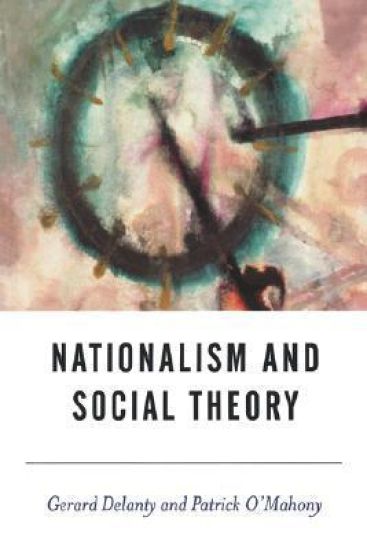
Nationalism and Social Theory

Nationalism and Social Theory

Gerard Delanty; Patrick O'Mahony

SAGE Publications Inc
2002
sidottu
Why has nationalism proved so durable? What are the roots of its appeal? This sharp and accessible book slices through the myths surrounding nationalism and provides an important new perspective on this perennial subject. The book argues that: nationalism is persistent, not merely because of its specific ideological appeal, but because it expresses some of the major conflicts in modernity; nationalism reflects and reinforces four key trends in western social development: state formation, democratization, capitalism and the rationalization of culture; the forms of nationalism can be organized into a comprehensive typology which is outlined in the course of this study; post-nationalism and cosmopolitanism are significant innovations in the debate about nation-states and nationalism; and that the new radical nationalisms have become powerful new movements in the global age.
Nationalism and Social Theory

Nationalism and Social Theory

Gerard Delanty; Patrick O'Mahony

SAGE Publications Inc
2002
nidottu
Why has nationalism proved so durable? What are the roots of its appeal? This sharp and accessible book slices through the myths surrounding nationalism and provides an important new perspective on this perennial subject. The book argues that: nationalism is persistent, not merely because of its specific ideological appeal, but because it expresses some of the major conflicts in modernity; nationalism reflects and reinforces four key trends in western social development: state formation, democratization, capitalism and the rationalization of culture; the forms of nationalism can be organized into a comprehensive typology which is outlined in the course of this study; post-nationalism and cosmopolitanism are significant innovations in the debate about nation-states and nationalism; and that the new radical nationalisms have become powerful new movements in the global age.
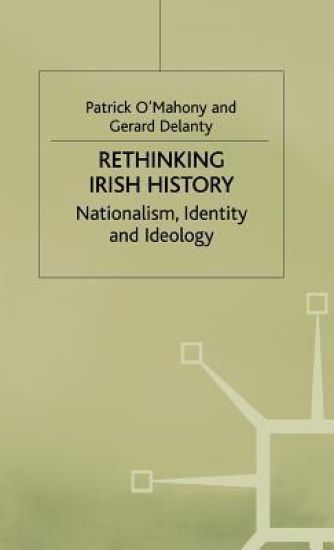
Rethinking Irish History

Rethinking Irish History

Patrick O'Mahony; Gerard Delanty

Palgrave Macmillan
1998
sidottu
This book provides a critical interpretation of the construction of Irish national identity in the longer perspective of history. Drawing on recent sociological theory, the authors demonstrate how national identity was invented and codified by a nationalist intelligentsia in the late nineteenth century. The trajectory of this national identity is traced as a process of crisis and contradiction. One of the central arguments is that the negative implications of Irish national identity have never been fully explored by social science.
Rethinking Irish History

Rethinking Irish History

Patrick O'Mahony; Gerard Delanty

Palgrave Macmillan
1998
nidottu
This book provides a critical interpretation of the construction of Irish national identity in the longer perspective of history. Drawing on recent sociological theory, the authors demonstrate how national identity was invented and codified by a nationalist intelligentsia in the late nineteenth century. The trajectory of this national identity is traced as a process of crisis and contradiction. One of the central arguments is that the negative implications of Irish national identity have never been fully explored by social science.