Kirjojen hintavertailu. Mukana 12 595 353 kirjaa ja 12 kauppaa.

Kirjailija

Patrick Wilcken

Kirjat ja teokset yhdessä paikassa: 5 kirjaa, julkaisuja vuosilta 2005-2016, suosituimpien joukossa Claude L?vi-Strauss: The Father of Modern Anthropology. Vertaile teosten hintoja ja tarkista saatavuus suomalaisista kirjakaupoista.

5 kirjaa

Kirjojen julkaisuhaarukka 2005-2016.

Claude L?vi-Strauss: The Father of Modern Anthropology
When Claude L vi-Strauss passed away in 2009 at age 100, France celebrated the life and contributions of not only a preeminent anthropologist, but one of the defining intellectuals of the 20th century. Just as Freud had shaken up the antiquarian discipline of psychiatry, so had L vi-Strauss revolutionized anthropology, transforming it from the colonial-era study of "exotic" tribes to one consumed with fundamental questions about the nature of humanity and civilization itself. Remarkably, there has never been a biography in English of the enigmatic Claude L vi-Strauss. Drawing on a welter of original research and interviews with the anthropologist, Patrick Wilcken's Claude L vi-Strauss fills this void. In rich detail, Wilcken recreates Levi-Strauss's peripatetic life: his groundbreaking fieldwork in some of the remotest reaches of the Amazon in the 1930s; his years as a Jew in Nazi-occupied France and an emigr in wartime New York; and his return to Paris in the late 1940s, where he clashed with Jean-Paul Sartre and fundamentally influenced fellow postwar thinkers from Jacques Lacan to Michel Foucault and Roland Barthes. It was in France that structuralism, the school of thought he founded, first took hold, creating waves far beyond the field of anthropology. In his heyday, Levi-Strauss was both a hero to contemporary intellectuals, and an international celebrity. In Claude Levi-Strauss, Wilcken gives the reader a fascinating intellectual tour of the anthropologist's landmark works: Tristes Tropiques, his most famous book, a literary meditation on his travels and fieldwork; The Savage Mind, which showed that "primitive" people are driven by the same intellectual curiosities as their Western counterparts, and finally his monumental four-volume Mythologiques, a study of the universal structures of native mythology in the Americas. In the years that L vi-Strauss published these pioneering works, Wilcken observes, tribal societies seemed to hold the answers to the most profound questions about the human mind. Following the great anthropologist from S o Paulo to the Brazilian interior, and from New York to Paris, Patrick Wilcken's Claude L vi-Strauss is both an evocative journey and an intellectual biography of one of the 20th century's most influential minds.
Myth and Meaning

Myth and Meaning

Claude Lévi-Strauss; Patrick Wilcken

Routledge
2016
sidottu
The anthropologist Claude Levi-Strauss was one of the greatest intellectuals of the twentieth century. His work has had a profound impact not only within anthropology but also linguistics, sociology and philosophy. In this short book he examines the nature and role of myth in human history, distilling a lifetime of writing into a few sharp insights. It is a crystalline overview of many of the basic ideas underlying his work, including the theory of structuralism and the difference between 'primitive' and 'scientific' thought and shows why Levi-Strauss remains a hugely important intellectual figure.With a new foreword by Patrick Wilcken.
Myth and Meaning

Myth and Meaning

Claude Lévi-Strauss; Patrick Wilcken

Routledge
2013
nidottu
The anthropologist Claude Levi-Strauss was one of the greatest intellectuals of the twentieth century. His work has had a profound impact not only within anthropology but also linguistics, sociology and philosophy. In this short book he examines the nature and role of myth in human history, distilling a lifetime of writing into a few sharp insights. It is a crystalline overview of many of the basic ideas underlying his work, including the theory of structuralism and the difference between 'primitive' and 'scientific' thought and shows why Levi-Strauss remains a hugely important intellectual figure.With a new foreword by Patrick Wilcken.
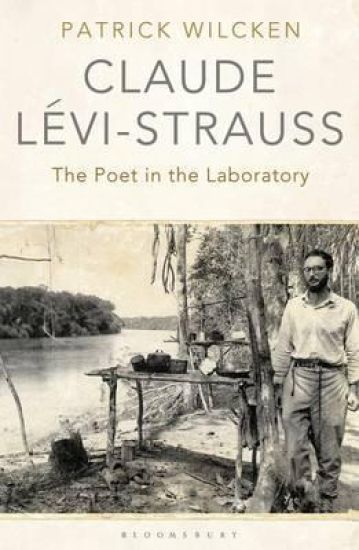
Claude Lévi-Strauss

Claude Lévi-Strauss

Patrick Wilcken

Bloomsbury Publishing PLC
2011
nidottu
The first comprehensive biography of ‘the father of modern anthropology'‘An intellectual biography that briskly and brilliantly assesses the great, original, creative ideas and their origins in the context of Lévi-Strauss's life from the 1930s to the 1960s in Brazil, New York and Paris' The Times, Biographies of the Year‘Lays out the life with clarity, efficiency, readability and occasionally dissent ... A superbly thrilling life' GuardianClaude Lévi-Strauss, the ‘father of modern anthropology' and author of the classic Tristes tropiques, was one of the most influential intellectuals of the second half of the twentieth century. Dislodging Sartre, Camus and de Beauvoir from the pinnacle of French intellectual life in the 1950s, he brought about a sea change in Western thought and inspired a generation of thinkers and writers, including Michel Foucault, Roland Barthes and Jacques Lacan with his structuralist theories.Lévi-Strauss's bohemian childhood and later studies of the emerging discipline of anthropology in the field and the university led him to mix with intellectuals, artists and poets from all over Europe. Tracing the evolution of his ideas through interviews with the man himself, research into his archives and conversations with contemporary anthropologists, Wilcken explores and explains Lévi-Strauss's theories, revealing an artiste manqué who infused his academic writing with an artistic and poetic sensibility.
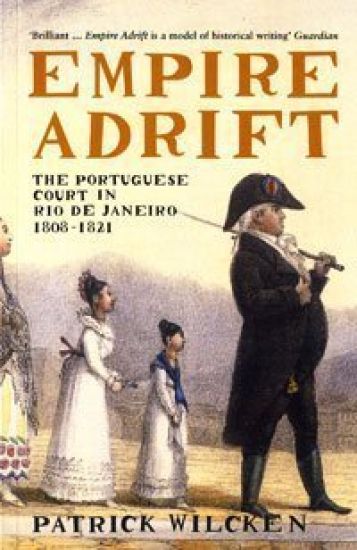
Empire Adrift

Empire Adrift

Patrick Wilcken

Bloomsbury Publishing PLC
2005
nidottu
In 1807, the Portuguese prince regent Dom Joao made an extraordinary decision. Although horrified by the idea of sea travel, Napoleon's troops were closing in on Lisbon so he opted to transplant his entire court and government to Portugal's largest colony, Brazil. 10,000 aristocrats, ministers, priests and servants clambered aboard the rickety fleet. After a rough passage they spilled off their ships bedraggled and lice-ridden to the astonishment of their new-world subjects. Thus began a thirteen-year period of imperial rule from a 'tropical Versailles' set against the city's jungle-clad mountains. But this only partially obscured the brutal workings of what was then the largest slaving port in the Americas. While the court grappled with the dark side of its own empire, Brazil was coming of age. Patrick Wilcken brings this remarkable period to the life, blending vivid contemporary testament with a rich evocation of a time in history when European royalty went native.