Kirjojen hintavertailu. Mukana 12 390 323 kirjaa ja 12 kauppaa.
Kirjailija
Patrik Aspers
Kirjat ja teokset yhdessä paikassa: 11 kirjaa, julkaisuja vuosilta 2005-2026, suosituimpien joukossa Inramningar - - att förstå och använda ramanalytiska perspektiv. Vertaile teosten hintoja ja tarkista saatavuus suomalaisista kirjakaupoista.
Jonatan Nästesjö; Anders Persson; Patrik Aspers; Ingrid Bosseldal; Johan Fagerberg; Gary Alan Fine; Filippa Maria Flaherty; Henrik Fürst; Katarina Lundin; Max Persson; Torgny Roxå; Edvin Sandström; Paul Strand; David Wästerfors
Hur vet vi vad som pågår i en social situation? Hur orienterar vi oss i de regler, normer och förväntningar som präglar möten mellan människor? Och vad händer när dessa förståelser utmanas eller bryts? Dessa frågor står i centrum för ramanalys. I Inramningar – att förstå och använda ramanalytiska perspektiv introduceras ramanalys som teori och metod. Med Erving Goffmans klassiska verk Frame Analysis som gemensam utgångspunkt visar bokens kapitel hur ramar fungerar som organiserande principer för mänsklig samvaro – hur de både skapar stabilitet och öppnar för osäkerhet, förhandling och förändring. Genom en kombination av teoretiska resonemang och empiriska exempel belyser antologin hur ramanalytiska perspektiv kan förstås och användas i praktiken. Bidragen spänner över flera samhällsvetenskapliga discipliner och behandlar teman som grupp, makt, identitet, utbildning, konst och politik. Boken erbjuder en samlad introduktion till ramanalysens centrala begrepp och en fördjupning i dess analytiska och metodologiska möjligheter. Den vänder sig till studenter och forskare som vill förstå, utveckla och tillämpa ramanalytiska perspektiv.

This is an open access title available under the terms of a CC BY-NC-ND 4.0 International licence. It is free to read on the Oxford Academic platform and offered as a free PDF download from OUP and selected open access locations. In Uncertainty, Patrik Aspers provides detailed analysis of publicly available means of uncertainty reduction. Drawing on phenomenology, social constructionism, and the sociology of knowledge, Aspers considers the meaningful differences between uncertainty and risk, the different ways people cope and have coped with uncertainty through history, the importance of knowledge and science to reducing uncertainty, and the trade-offs involved in reducing forms of uncertainty while leaving open opportunities for others. People may have access to unique and private knowledge that reduces their uncertainty when making decisions. Publicly available knowledge is central for building a society that enables communication based on shared ideas and understanding, instead of falling into bubbles, echo chambers, and private truths. Examples include institutions, laws, standards, evaluation, competition, and ranking. The book addresses how these reduce uncertainty and how these ways are created. Examining what people can and in fact do to reduce uncertainty, Aspers addresses the existential dimension of uncertainty, the collective efforts and socially produced outcomes that lead to reduced uncertainty, and the social order that results.
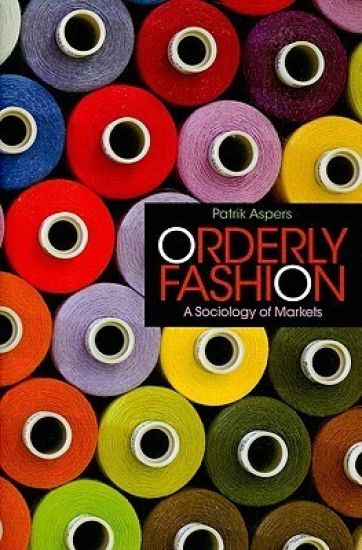
For any market to work properly, certain key elements are necessary: competition, pricing, rules, clearly defined offers, and easy access to information. Without these components, there would be chaos. Orderly Fashion examines how order is maintained in the different interconnected consumer, producer, and credit markets of the global fashion industry. From retailers in Sweden and the United Kingdom to producers in India and Turkey, Patrik Aspers focuses on branded garment retailers--chains such as Gap, H&M, Old Navy, Topshop, and Zara. Aspers investigates these retailers' interactions and competition in the consumer market for fashion garments, traces connections between producer and consumer markets, and demonstrates why market order is best understood through an analysis of its different forms of social construction. Emphasizing consumption rather than production, Aspers considers the larger retailers' roles as buyers in the production market of garments, and as potential objects of investment in financial markets. He shows how markets overlap and intertwine and he defines two types of markets--status markets and standard markets. In status markets, market order is related to the identities of the participating actors more than the quality of the goods, whereas in standard markets the opposite holds true. Looking at how identities, products, and values create the ordered economic markets of the global fashion business, Orderly Fashion has wide implications for all modern markets, regardless of industry.
Den här boken är en hyllning till skönlitteraturens rikedom och till den sociologiska fantasin. Skönlitteraturen illustrerar samhällsvetenskapliga kärnresonemang, den väcker nya frågor om människans existentiella villkor och den sprider nytt ljus över vårt sätt att se på världen. Men trots att samhällsvetenskapen kan sägas ha uppstått under samma epok som den moderna litteraturen, och trots att de har fascinationen inför samhället och det sociala samspelet gemensamt, så har skönlitteraturen märkligt nog inte någon naturlig plats i samhällsvetarens verktygslåda. Sociologi genom litteratur tjänar både som en reflektion över samhällsvetenskapens egenart och som en inbjudan till samhällsvetare att använda skönlitteraturen som ett fönster mot den sociala verkligheten. Bokens redaktörer, Christofer Edling och Jens Rydgren, är professorer i sociologi vid Lunds respektive Stockholms universitet. Författarna representerar flera generationer av i dag verksamma svenska sociologer. Medverkande författare: Ola Agevall, Göran Ahrne, Patrik Aspers, Reza Azarian, Paavo Bergman, Stina Bergman Blix, Alexandra Bogren, Christofer Edling, Hedvig Ekerwald, Marie Evertsson, Mats Franzén, Magnus Haglunds, Carl-Göran Heidegren, Antoinette Hetzler, Bo Isenberg, Magnus Karlsson, Jonas Lindström, Gunnar Olofsson, Anders Persson, Abby Peterson, Jens Rydgren, Lambros Roumbanis, Lisbeth Stenberg, Lotta Stern, Mikaela Sundberg, Stefan Svallfors, Richard Swedberg, Maria Törnqvist, Denny Vågerö, Åsa Wettergren, Malin Åkerström.
Unser Leben wird von Märkten bestimmt. Sie sind für die kapitalistischen Volkswirtschaften weltweit konstitutiv und haben von Anfang an viele öffentliche Debatten ausgelöst. Während Märkte für die Einen der unübertroffene Modus der Handlungskoordination sind, werden sie von Anderen als Quelle vieler gesellschaftlicher Übel eingestuft und bekämpft. Dieses Buch vereint das Wissen über Märkte von Soziologie, Ökonomie und Anthropologie und untersucht systematisch die verschiedenen Formen von Märkten, denen wir täglich in unserem Leben begegnen.
Interest in contemporary cultural industries has grown in the past decade, as they take on a greater significance in our increasingly consumer-led society. Focusing on the world of fashion photography, this book presents an interdisciplinary approach in which this and other aesthetic markets, such as advertising, modelling, art, music and more, can be viewed.The main thrust of this groundbreaking book, is in developing a theory for these cultural markets, characterized by insecurity, and where status and aesthetic diversity generate order and price differentiation. In these industries, services and products are offered that are a mix of the aesthetic and the economic, and for fashion photographers such as those studied here, it is necessary to carefully position themselves in the market by developing unique photographic styles and separating themselves from competitors. Yet the markets in which these industries operate differ from the type of exchange markets depicted by neoclassical economists, and therefore cannot be considered using such modes of analysis. Instead Aspers conducts his study using empirical phenomenology, an original approach presented here for the first time, which can be easily used in other empirical studies. He draws on original empirical material; participant observation and interviews generated in New York and Stockholm; which bring a depth of analysis and a relevance to this book which academics, researchers and those with a vested interest in such industries will value. Written by one of the world's brightest young economic sociologists, this fascinating book (previously published in Sweden and enthusiastically received) is endorsed by recognized industry authorities. A noteworthy book, it provides a foothold in the burgeoning sub discipline of economic sociology, and a significant analysis of the economics of the fashion photography industry.
Etnografiska metoder behandlar avancerad forskning med betoning på metoder som intervju och deltagande observation. Ett genomgående tema är att metoder och analys presenteras i relation till teori, förklaring och vetenskapsteoretiska överväganden. Boken tar upp konkreta problem vid förstudie, teorival, analys och kodning, samt arbete i olika kulturer.Den andra upplagan har genomgått en generell uppdatering och kompletterats med nya avsnitt, framför allt om kodning, om skrivprocessen och om vad kvalitativ forskning är.Boken vänder sig till verksamma inom företagsekonomi, socialt arbete, socialantropologi, sociologi och statsvetenskap samt andra som vill fördjupa sina kunskaper inom kvalitativt arbete.Om författarenPatrik Aspers är professor i sociologi, verksam vid sociologiska institutionen och SCORE vid Stockholms universitet, samt vid Textilhögskolan i Borås. Han har publicerat en rad böcker och artiklar om teori och genomfört flera empiriska studier med etnografi ska metoder.
Our lives have gradually become dominated by markets. They are not only at the heart of capitalistic economies all over the world, but also central in public debates. This insightful book brings together existing knowledge on markets from sociology, economics and anthropology, and systematically investigates the different forms of markets we encounter daily in our social lives. Aspers starts by defining what a market actually is, analyzing its essential elements as well as its necessary preconditions and varied consequences. An important theme in the book is that a whole host of markets are embedded within one other and in social life at large, and Aspers discusses these in the context of other forms of economic coordination, such as networks and organizations. Combining theory with empirical examples, the book cuts to the core of understanding how different markets function, the role they have played in history, and how they come into being. This accessible and theoretically rich book will be essential reading for upper-level students seeking to make sense of markets and their complex role in social life.
For any market to work properly, certain key elements are necessary: competition, pricing, rules, clearly defined offers, and easy access to information. Without these components, there would be chaos. Orderly Fashion examines how order is maintained in the different interconnected consumer, producer, and credit markets of the global fashion industry. From retailers in Sweden and the United Kingdom to producers in India and Turkey, Patrik Aspers focuses on branded garment retailers--chains such as Gap, H&M, Old Navy, Topshop, and Zara. Aspers investigates these retailers' interactions and competition in the consumer market for fashion garments, traces connections between producer and consumer markets, and demonstrates why market order is best understood through an analysis of its different forms of social construction. Emphasizing consumption rather than production, Aspers considers the larger retailers' roles as buyers in the production market of garments, and as potential objects of investment in financial markets. He shows how markets overlap and intertwine and he defines two types of markets--status markets and standard markets. In status markets, market order is related to the identities of the participating actors more than the quality of the goods, whereas in standard markets the opposite holds true. Looking at how identities, products, and values create the ordered economic markets of the global fashion business, Orderly Fashion has wide implications for all modern markets, regardless of industry.
Interest in contemporary cultural industries has grown in the past decade, as they take on a greater significance in our increasingly consumer-led society. Focusing on the world of fashion photography, this book presents an interdisciplinary approach in which this and other aesthetic markets, such as advertising, modelling, art, music and more, can be viewed.The main thrust of this groundbreaking book, is in developing a theory for these cultural markets, characterized by insecurity, and where status and aesthetic diversity generate order and price differentiation. In these industries, services and products are offered that are a mix of the aesthetic and the economic, and for fashion photographers such as those studied here, it is necessary to carefully position themselves in the market by developing unique photographic styles and separating themselves from competitors. Yet the markets in which these industries operate differ from the type of exchange markets depicted by neoclassical economists, and therefore cannot be considered using such modes of analysis. Instead Aspers conducts his study using empirical phenomenology, an original approach presented here for the first time, which can be easily used in other empirical studies. He draws on original empirical material; participant observation and interviews generated in New York and Stockholm; which bring a depth of analysis and a relevance to this book which academics, researchers and those with a vested interest in such industries will value. Written by one of the world's brightest young economic sociologists, this fascinating book (previously published in Sweden and enthusiastically received) is endorsed by recognized industry authorities. A noteworthy book, it provides a foothold in the burgeoning sub discipline of economic sociology, and a significant analysis of the economics of the fashion photography industry.